
Setting up a functional home office in the Philippines requires careful consideration of your storage infrastructure. While standard wooden bookshelves or lightweight plastic racks might suffice for a few novels, they quickly buckle under the weight of extensive professional libraries, legal binders, desktop towers, and heavy-duty printers. Choosing heavy-duty metal shelves offers a durable, long-term solution, but finding the right unit involves looking beyond generic marketing claims. You must evaluate the physical specifications, structural design, and material finishes to ensure the shelving can withstand both heavy loads and the challenges of a tropical climate.
In the Philippines, high relative humidity and seasonal moisture fluctuations can severely impact the longevity of office furniture. A poorly chosen metal rack can rust within a few seasons, while inadequate shelving material can sag or warp, risking damage to expensive equipment and valuable documents. By understanding how to assess load capacities, structural joints, and environmental protections, you can select a metal shelving unit that provides safe, stable, and organized storage for your home study.
Core Requirements for Heavy-Duty Home Office Storage
Before browsing local hardware stores or online marketplaces, you must define your specific storage requirements. The first step is to calculate the estimated total load your shelves will carry. Books are deceptively heavy; a single linear meter of tightly packed hardcover textbooks, legal reference manuals, or academic journals can easily weigh between 30 and 45 kilograms. If you plan to store multiple rows of books alongside office hardware like an uninterruptible power supply (UPS), a laser printer, or a network-attached storage (NAS) device, the total weight can quickly accumulate to several hundred kilograms.
Products mentioned in this guide
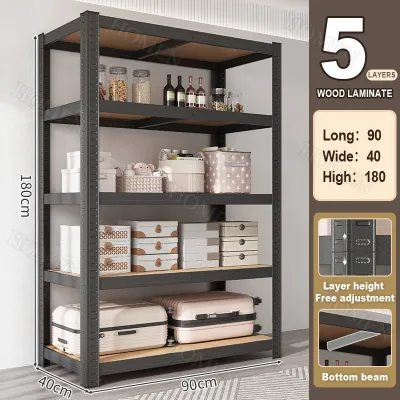
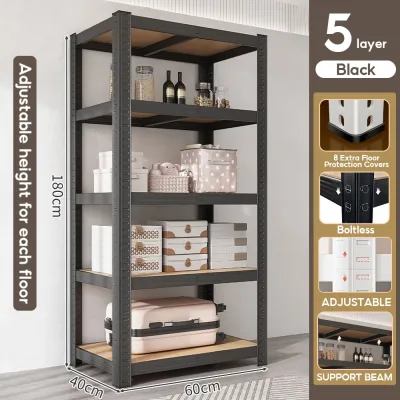
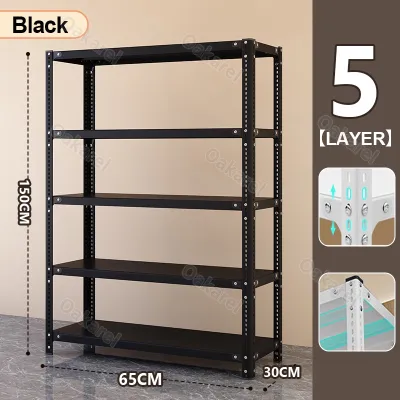
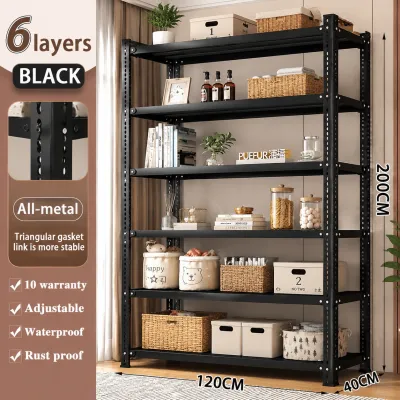
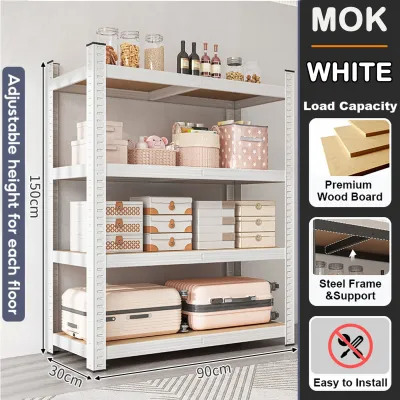
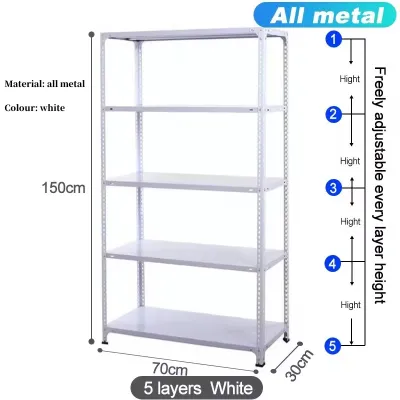
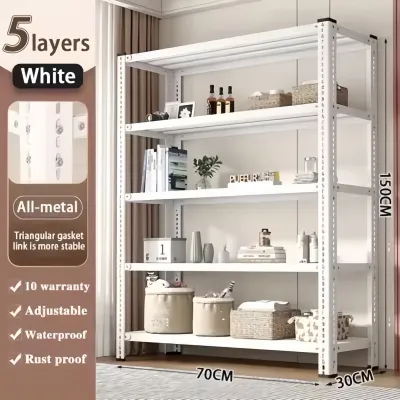
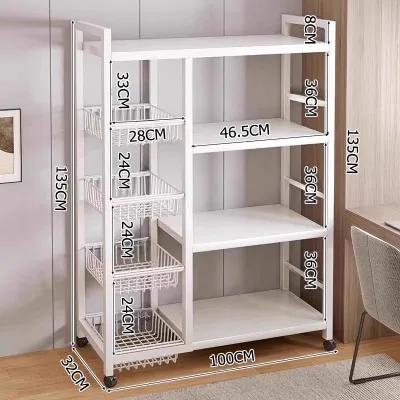
Prices are valid at publication and may change. Please refer to the product page for the latest price.
Once you have estimated the weight, measure your available floor and vertical space with high precision. Do not rely on visual estimates. In many Philippine residential layouts, particularly high-rise condominiums in urban centers or multi-story townhouses, space is highly constrained. You must measure the exact footprint where the shelf will stand, ensuring it does not block light switches, electrical outlets, or air conditioning vents. Equally important is measuring the delivery and assembly path. Ensure that the individual components—especially long upright posts or wide shelf panels—can easily pass through your doorways, narrow hallways, stairwells, and condo elevator doors.
Environmental factors play a critical role in material selection. The tropical climate of the Philippines is characterized by high humidity, which often exceeds 80% during the monsoon season. If your home office is located in a non-air-conditioned room or an area with natural ventilation, the metal will be constantly exposed to moisture. This exposure accelerates oxidation, leading to rust. Therefore, you must identify the environmental conditions of your workspace and select a shelf with a surface treatment specifically designed to resist moisture, such as a high-quality powder coating or a galvanized finish.
Key Structural Features to Evaluate
To verify whether a metal shelf is truly “heavy-duty,” you must inspect its structural specifications rather than relying on product titles. Start by checking the gauge of the steel used for the upright posts and horizontal beams. In steel manufacturing, a lower gauge number indicates thicker, stronger steel. For reliable home office storage, look for frames constructed from 14-gauge to 18-gauge steel. Thinner steel, such as 20-gauge or higher, is prone to twisting or bending when subjected to heavy, unevenly distributed loads.

Next, examine the shelf deck material, which is the surface where your items will rest. The three most common options are wire mesh, solid steel panels, and engineered wood boards like medium-density fiberboard (MDF) or particle board. While MDF is common and cost-effective, it is highly susceptible to moisture absorption in humid environments. Over time, humid air can cause MDF decks to swell, warp, sag, and even develop mold, which can ruin your books and documents. For a tropical climate, solid steel panels or heavy-duty wire mesh decks are far more durable, as they do not absorb moisture and are easy to clean.
The presence of reinforced crossbeams or center support bars is another critical indicator of load capacity. A high-quality heavy-duty shelf will feature horizontal support channels welded or bolted underneath each shelf deck. These support bars prevent the center of the shelf from bowing or sagging under concentrated weight, ensuring that the load is distributed evenly across the frame. If a shelf lacks these under-deck reinforcements, it is likely designed for light-duty residential use rather than heavy office equipment.
Connection methods significantly influence the long-term stability of the shelving unit. Boltless rivet systems, which use keyhole slots on the upright posts and rivets on the beams, are highly popular because they allow for quick assembly and easy shelf height adjustment. However, the stability of a boltless system depends entirely on the precision of the interlocking joints; loose or poorly stamped keyholes can cause the frame to wobble. Bolted systems, on the other hand, use heavy-duty bolts and nuts to secure the joints. While bolted racks take longer to assemble and are harder to adjust, they offer superior structural rigidity and are less likely to loosen over time.
Finally, always verify the explicit weight capacity ratings directly on the manufacturer’s specification sheets or product labels. Look for the Uniformly Distributed Load (UDL) rating, which indicates the maximum weight a single shelf can safely support when the load is spread evenly across the surface. A genuine heavy-duty shelf should have a UDL rating of at least 150 to 250 kilograms per shelf. Avoid products that only list a “total unit capacity” without specifying individual shelf limits, as this can lead to dangerous overloading of single tiers.
Safety, Stability, and Installation Checks
Ensuring safe assembly and long-term stability is paramount when installing heavy-duty metal shelves in a home office. A fully loaded shelving unit can become top-heavy, creating a severe tip-over hazard. This risk is particularly high in households with young children, active pets, or uneven flooring. To mitigate this danger, you should always anchor the shelving unit to the wall. Use heavy-duty wall brackets and appropriate anchors—such as expansion bolts for concrete walls or toggle bolts for drywall studs—to secure the top of the frame.
Floor leveling is another critical factor that affects structural integrity. Many residential floors in the Philippines, especially those finished with ceramic tiles or concrete screed, may have slight slopes or uneven surfaces. If a heavy-duty shelf is placed on an uneven floor, the frame will distort, placing unequal stress on the joints and significantly reducing its load capacity. To prevent this, choose shelving units equipped with adjustable leveling feet. If the unit does not have adjustable feet, use high-density plastic or metal shims to level the frame, and ensure the structure is perfectly plumb using a spirit level.
Protecting your flooring from damage is also essential. The concentrated weight of a fully loaded metal rack can easily scratch, dent, or crack delicate flooring materials such as vinyl planks, laminate wood, or ceramic tiles. Always place heavy-duty rubber pads, caster cups, or protective plastic caps under the metal feet of the upright posts to distribute the weight and prevent direct metal-to-floor contact.
Before beginning assembly, review the manufacturer’s instructions and gather the necessary tools. Most boltless shelving units require a rubber mallet to secure the beams into the upright posts; using a standard steel hammer can chip the protective powder coating, leaving the bare steel vulnerable to rust. Always wear protective work gloves during assembly to avoid cuts from sharp metal edges or stamped keyholes. If you are planning an exceptionally tall installation, or if you are unsure about the load-bearing capacity of your floor, consult a structural professional or hire experienced installation services to ensure a safe setup.
Building Your Shortlist: Sourcing and Verification
When sourcing heavy-duty metal shelves in the Philippines, comparing different retail channels will help you find a reliable product. Specialized hardware stores and dedicated office furniture showrooms are excellent options because they allow you to physically inspect the build quality. In a showroom, you can feel the thickness of the steel, test the rigidity of the joints, and verify the quality of the powder-coated finish before making a purchase.
Online marketplaces and ecommerce platforms offer a wider variety of designs and the convenience of home delivery, which is highly beneficial for bulky, heavy items. However, buying online requires extra vigilance. To avoid low-quality imitations, restrict your search to official brand stores or highly rated authorized distributors. Carefully read customer reviews, paying close attention to feedback regarding shipping damage, missing hardware, and whether the actual material thickness matches the product description.
Always cross-reference the listed product dimensions and weight limits with the manufacturer’s official documentation or technical datasheets. Some online listings may use misleading terminology, such as labeling a light-duty utility rack as “industrial heavy-duty.” If a seller cannot provide a clear, official specification sheet detailing the steel gauge, UDL rating, and material composition, it is best to look for another option. Additionally, verify the seller’s return policy and the availability of a manufacturer’s warranty covering structural defects, ensuring you are protected if the unit arrives damaged or fails under normal use.
Frequently Asked Questions (FAQ)
How can I prevent metal shelves from rusting in a humid environment? (FAQ)
To protect your metal shelves from rust in the humid Philippine climate, establish a regular maintenance routine. Dust the shelves weekly with a dry microfiber cloth, as accumulated dust can attract and hold moisture against the metal surface. Avoid using harsh chemical cleaners, bleach, or abrasive scrubbing pads, which can scratch and degrade the protective powder-coated or galvanized finish. If you notice any chips, scratches, or signs of wear on the frame, clean the area immediately and apply a rust-inhibiting touch-up paint to seal the exposed steel and prevent oxidation from spreading.
Is it safe to place heavy office equipment like printers on the top shelf? (FAQ)
Placing heavy office equipment like laser printers, desktop towers, or UPS units on the top shelf is not recommended because it raises the overall center of gravity, making the shelving unit unstable and prone to tipping. For optimal safety, always place your heaviest items on the bottom shelves to keep the center of gravity as low as possible. If you must place a printer on an upper shelf, ensure it does not exceed the shelf’s UDL rating, anchor the frame securely to the wall, and verify that the shelf is rigid enough to absorb the vibrations of the active machinery without wobbling.

Community discussion
Share your experience or ask a question. Comments are reviewed before publication.