
Finding the right balance between storage and open space is a common challenge in compact Philippine homes, such as urban condominiums and townhouses. A foldable storage cabinet offers a practical solution, serving as a buffet server during meals and folding away to reclaim valuable floor space afterward. To make the most of this versatile furniture piece, you must evaluate how it fits your room, how its mechanisms operate, and how to keep it stable under daily use.
By focusing on precise measurements, hardware quality, and proper installation, you can find a cabinet that enhances your dining area without causing clutter. This guide outlines the essential steps to select, place, and maintain a foldable cabinet that suits your home’s layout and lifestyle.
Assessing Your Dining Space and Clearance Requirements
Before purchasing any foldable storage cabinet, you must map out the physical limits of your dining area. Start by measuring the available floor footprint where the cabinet will stand in both its folded and fully expanded states. Use a metal measuring tape to record the wall width and ceiling height, making sure to subtract the thickness of baseboards, which can prevent a cabinet from sitting flush against the wall. Note the locations of electrical outlets, light switches, and wall-mounted fans or air conditioning units to ensure the cabinet does not block access or airflow.
Products mentioned in this guide
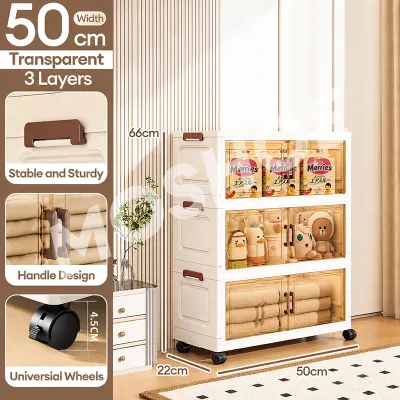
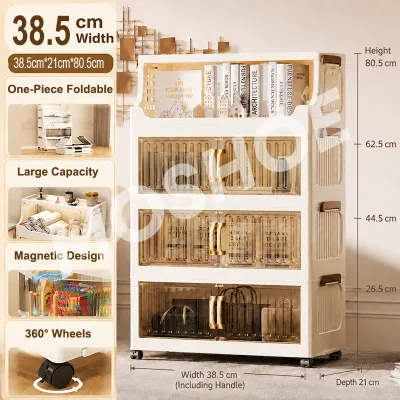
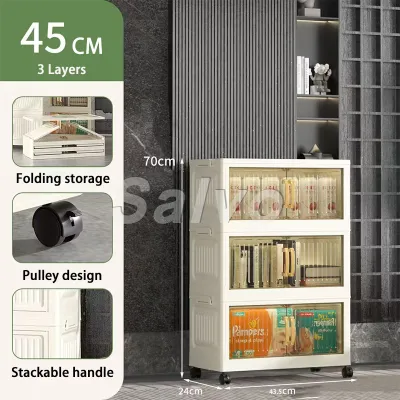
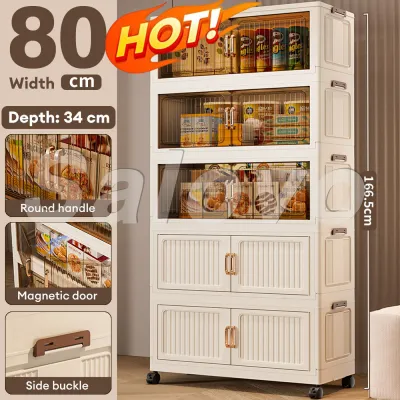
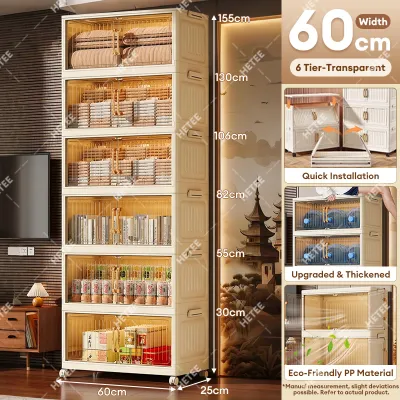
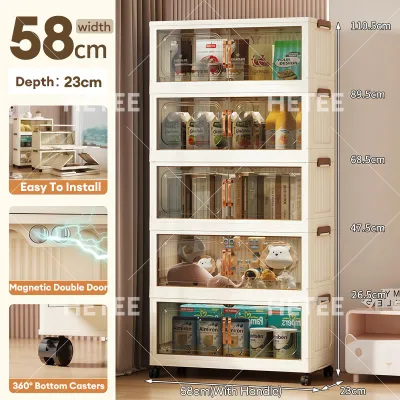
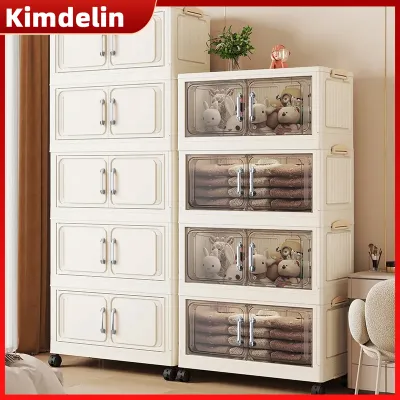
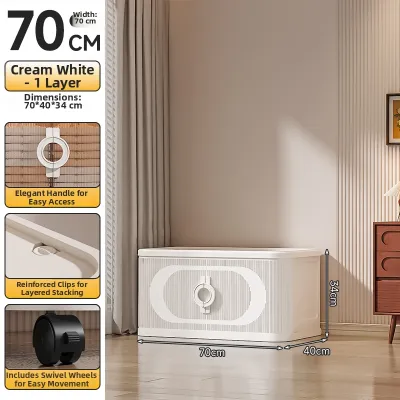
Prices are valid at publication and may change. Please refer to the product page for the latest price.
Next, calculate the clearance required for comfortable movement around the dining table and chairs. A standard dining chair requires sufficient clearance behind it to allow a person to pull the chair out and sit down comfortably. When the cabinet’s folding leaves or tables are fully extended, there should still be a clear walking path of at least 90 centimeters between the edge of the cabinet and any adjacent walls or furniture. This prevents the dining area from feeling cramped and ensures safe passage when carrying hot dishes.
Finally, do not overlook the delivery path. Measure the width and height of your main entrance door, hallway corners, elevator doors, and stairwells. Many foldable cabinets are delivered semi-assembled or in large, flat-packed boxes that require wide turning radiuses. Verifying these dimensions beforehand prevents the frustration of receiving a package that cannot physically navigate the corners of your home.
Evaluating Foldable Mechanisms and Structural Stability
The longevity of a foldable storage cabinet depends heavily on its mechanical design and the quality of its moving parts. Common configurations include drop-leaf extensions that hang flat against the sides when not in use, fold-out dining tables that swing out on gated legs, and collapsible shelving units that fold flat for storage. Your choice should align with how often you plan to expand the unit; for instance, a daily-use dining extension requires more robust hardware than a cabinet expanded only for occasional weekend gatherings.

Examine the hardware closely before committing to a purchase. Look for heavy-duty steel or brass hinges, smooth-running tracks, and secure locking pins or brackets that hold the extended sections firmly in place. In the tropical climate of the Philippines, high humidity can cause wood to swell and metal components to rust. Opting for hardware with rust-resistant coatings and checking that wooden joints have sufficient clearance to accommodate seasonal expansion will help prevent the mechanisms from jamming over time.
Always review the manufacturer’s specified load capacity for both the fixed and extended surfaces. Fold-out sections and drop leaves naturally have lower weight limits than the central, structurally supported frame. Overloading an extended leaf can warp the hinges, strip the mounting screws, or cause the entire cabinet to tip forward. Ensure the rated capacity matches your intended use, whether that involves holding light serving platters or supporting heavier dining items.
Matching Cabinet Dimensions to Compact Room Layouts
To select a cabinet that complements your layout, compare your measured wall space against potential cabinet dimensions. A cabinet that is too deep will encroach on your dining footprint, while one that is too wide might block natural light from windows or obstruct adjacent doorways. For highly restricted spaces, a depth of 30 to 40 centimeters when folded is generally suitable, as it provides enough storage for dinnerware without protruding excessively into the room.
The profile of the cabinet also dictates how space is utilized. Vertical profiles, such as tall, narrow pantry cabinets with fold-down desks or shelves, utilize upward wall space and are excellent for homes with high ceilings but limited floor area. Horizontal profiles, like low-profile sideboards with drop-leaf tops, preserve sightlines and make the room feel more open, while also providing a convenient surface for serving food buffet-style during family gatherings.
Multi-functional designs offer excellent utility in compact layouts. Look for units that integrate hidden storage compartments for folding stools, built-in cutlery drawers, or adjustable interior shelves. Some models feature dual-purpose panels that transform from a cabinet door into a sturdy support leg for an attached table, allowing a single piece of furniture to transition seamlessly from a storage console to a full dining setup.
Assembly, Placement, and Safety Checks
Proper assembly is critical to the structural integrity of any foldable storage cabinet. Carefully follow the manufacturer’s step-by-step instructions, ensuring that every screw, dowel, and locking cam is fully tightened. Avoid using high-torque power drills on engineered wood panels, as this can strip the pre-drilled holes and weaken the joints. Pay close attention to the alignment of hinges and folding brackets, as even a minor misalignment can cause uneven wear and compromise the stability of the extended surfaces.
Safety must be a priority, particularly in households with active children or pets. Tall or top-heavy cabinets, as well as units with heavy fold-out components, present a serious tip-over hazard when fully extended. Always anchor these units securely to the wall using the safety brackets and wall anchors provided by the manufacturer. Ensure you use the correct wall plugs for your specific wall type, whether it is concrete, hollow block, or drywall.
Before placing any items on the cabinet, perform a thorough stability test. Fully expand all foldable sections and apply gentle downward pressure to the outer edges to check for wobbling, flexing, or uneven weight distribution. Ensure the cabinet sits level on your floor; if your dining area has uneven tiling or flooring, use adjustable leveling feet or shim pads to stabilize the base before loading it with dinnerware.
Frequently Asked Questions (FAQ)
How do I maintain the hinges and moving parts of a foldable cabinet?
Regular maintenance helps prevent the moving parts of your cabinet from stiffening or squeaking. Periodically inspect the hinges, tracks, and support brackets to clear away dust, pet hair, or food crumbs that can accumulate in the crevices. Wipe the hardware with a dry microfiber cloth to remove moisture from humidity. If the manufacturer’s care instructions permit, apply a small amount of silicone-based lubricant to the pivot points once or twice a year to ensure smooth, effortless operation.
Can a foldable storage cabinet support heavy kitchen appliances when expanded?
You should exercise caution when placing appliances on the expanded sections of a foldable cabinet. Always consult the manufacturer’s load-bearing specifications, as extended leaves and fold-out tables are generally designed for light dining use rather than heavy storage. Avoid placing heavy, vibrating, or heat-generating appliances—such as microwave ovens, rice cookers, or air fryers—on these temporary surfaces. Doing so can strain the hinges, damage the protective finish, or create a safety hazard if the appliance shifts during operation.
Community discussion
Share your experience or ask a question. Comments are reviewed before publication.