
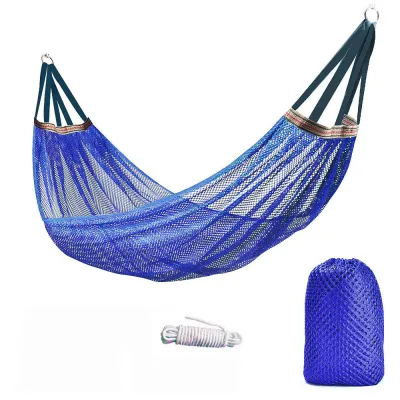
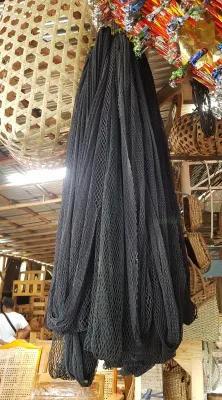
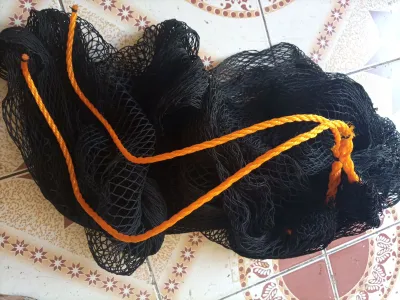
In the tropical climate of the Philippines, finding ways to stay cool while relaxing outdoors is a constant priority. Whether you are looking to unwind on a high-rise balcony in Metro Manila or lounge under the shade of mango trees in a provincial garden, investing in a high-quality duyan net lambat is one of the most effective ways to transform your outdoor space into a personal sanctuary. Unlike solid fabric alternatives that trap heat and moisture, a net hammock provides the ultimate combination of ventilation, flexibility, and comfort, making it uniquely suited to local weather conditions.
However, choosing the right net hammock involves more than simply picking an appealing design. The high humidity, intense solar radiation, and heavy seasonal rainfall characteristic of the Philippine climate place severe demands on outdoor furniture. Selecting the wrong material or failing to install the hammock securely can lead to rapid product degradation, structural failure, or personal injury. By understanding the specific material properties, space requirements, and installation safety standards, you can select a net hammock that offers both long-lasting durability and peace of mind.
Why a Net Hammock (Lambat) Suits Tropical Outdoor Spaces
The primary advantage of a net hammock, locally referred to as a lambat design, is its exceptional breathability. In a country where relative humidity regularly exceeds 80 percent, solid canvas, quilted fabric, or synthetic parachute silk hammocks can quickly become sticky and uncomfortable. The open-weave pattern of a net hammock allows air to circulate freely around your entire body, facilitating natural evaporative cooling. This continuous airflow prevents the buildup of sweat and heat, ensuring a comfortable resting experience even during the hottest afternoon hours.
Products mentioned in this guide
![[BAZZAR] Portable Cotton Rope Outdoor Hammock Duyan](https://img.lazcdn.com/g/p/b19a47f5cfbe15c149ec7e1699df4a1a.jpg_400x400q80.jpg_.webp)
Prices are valid at publication and may change. Please refer to the product page for the latest price.
Beyond its functional superiority, the duyan holds a deep cultural significance in Filipino households. For generations, the traditional duyan has served as a central hub for relaxation, afternoon siestas, and casual socialization in rural yards and open-air verandas. Integrating a modern net hammock into your living space preserves this comforting tradition while upgrading the structural materials and design to suit contemporary homes, bridging the gap between nostalgic comfort and modern outdoor styling.
When planning your setup, you must account for the distinct environmental differences between balconies and gardens. Balconies are typically constrained by rigid concrete walls, limited floor areas, and strict building association guidelines, often requiring self-supporting structures or specialized masonry anchors. Gardens, conversely, offer natural anchoring points like mature trees or wooden posts, but they expose the hammock to direct sunlight, falling organic debris, insects, and ground moisture. Identifying these environmental factors early will guide your choice of materials, suspension systems, and structural designs.
Essential Buying Criteria for a Duyan Net Lambat
Material Composition and Weather Resistance
When evaluating a duyan net lambat on e-commerce platforms or at local home improvement centers, the material composition is your first line of defense against premature wear. Natural cotton rope is highly favored for its exceptional softness, traditional aesthetic, and natural elasticity, which conforms comfortably to the contours of your body. However, cotton is highly absorbent and slow to dry. In the humid Philippine climate, a cotton hammock left outdoors will quickly become a breeding ground for mold, mildew, and rot, which compromises both hygiene and fiber strength.

For continuous outdoor exposure in gardens or open balconies, synthetic fibers such as polyester or high-density nylon are highly recommended. Polyester ropes offer excellent tensile strength, minimal stretching, and superior resistance to moisture, drying rapidly after sudden tropical downpours. Nylon provides excellent elasticity and shock absorption, though it can stretch more when wet. When purchasing a synthetic net hammock, always check the product specifications or manufacturer labels to verify if the fibers have been treated with UV inhibitors, as untreated synthetics will degrade, become brittle, and fade under intense sunlight.
Weave Density and Support
The density of the net weave directly influences both comfort and safety. Tight, closely woven micro-mesh patterns distribute your body weight more evenly across the net, minimizing pressure points and preventing the rope from digging into your skin. Tighter weaves also reduce the risk of buttons, zippers, jewelry, or small fingers and toes getting caught in the loops. Conversely, wider, open-loop weaves maximize airflow and provide a lighter, more traditional look, but they require greater care when entering and exiting to avoid snagging and uneven weight distribution.
Weight Capacity and Safety Margins
Never guess or assume the load capacity of a hammock. Manufacturers specify weight limits based on static loads, which do not account for the sudden forces generated by sitting down quickly, swinging, or shifting weight. For a single-user hammock, look for a certified weight capacity of at least 120 to 150 kilograms. If you anticipate that multiple family members or children will share the hammock, select a double or family-sized model rated for 200 to 250 kilograms. Maintaining a generous safety margin protects the fibers from overstretching and prevents sudden structural failure.
Hardware and Suspension Components
The longevity of your hammock setup depends heavily on the quality of its suspension hardware. The high humidity and salt-laden air in coastal regions of the Philippines accelerate the oxidation of metal components. Ensure all carabiners, S-hooks, chains, and wall mounts are made from marine-grade 304 or 316 stainless steel, or heavy-duty galvanized steel with a rust-resistant powder coating. Suspension ropes or straps should be rated for outdoor climbing or utility use, featuring low-stretch polyester webbing and UV-stabilized stitching to prevent fraying and sudden snapping.
Recommended Net Hammock Types Based on Your Space
Freestanding Hammocks with Stands for Balconies
For condominium residents or renters, drilling permanent holes into balcony walls or ceilings is often prohibited by building administrations. In these scenarios, a freestanding hammock stand is the most practical solution. These stands are typically constructed from powder-coated steel tubing or weather-treated hardwoods, providing a stable, self-supporting frame that can be positioned anywhere on your balcony without damaging the building structure.
Before purchasing a freestanding setup, you must carefully measure your balcony’s finished dimensions. A standard adult hammock stand typically requires a spatial footprint of 2.5 to 3.5 meters in length and approximately 1 to 1.2 meters in width. Ensure you have at least 60 centimeters of clear clearance on all sides of the stand to allow for gentle swaying without colliding with concrete railings, glass doors, or balcony furniture. Additionally, verify that the stand will fit through your doorways or service elevators during delivery and assembly.
Stability is paramount when using a freestanding stand on a balcony. The stand must be placed on a completely flat, level, and non-slip concrete or tiled surface. Any slope or unevenness can cause the frame to wobble, slide, or tip over during use. Always check the manufacturer’s documentation to verify the weight limit of the stand itself, as it may differ from the weight limit of the net hammock; always adhere to the lower of the two weight capacities to ensure safe operation.
Classic Rope Hammocks for Garden Trees and Posts
If you have a spacious garden with mature trees or sturdy wooden posts, a classic rope hammock offers an iconic, open-air resting experience. These hammocks are designed to stretch between two vertical anchor points, suspended by ropes or specialized tree straps. They are highly portable, easy to detach, and allow you to enjoy the natural shade and breeze of your garden.
When selecting a classic rope hammock, you must choose between a spreader-bar design and a gathered-end design. Spreader-bar hammocks feature wood or metal bars at each end that keep the net spread flat and wide. While this makes the hammock easier to enter and keeps the net open for sunbathing, it raises your center of gravity, making the hammock inherently less stable and prone to tipping if you shift your weight off-center. Gathered-end hammocks lack spreader bars; the net bunches together at the ends, creating a cocoon-like cradle that lowers your center of gravity, making it virtually impossible to flip over.
To install a garden hammock safely, the distance between your anchor points should typically be 3 to 4.5 meters, depending on the overall length of the hammock and its suspension lines. To protect the health of your garden trees, never use bare ropes, metal chains, or nails driven directly into the trunk. Instead, use wide, flat polyester tree-saver straps (at least 5 centimeters wide). These straps distribute the load across a larger surface area, preventing the suspension system from cutting into the bark and damaging the tree’s vital vascular system.
Compact Hanging Net Chairs for Tight Corners
When horizontal space is extremely limited, a hanging net chair offers a space-saving alternative that provides the comfort of a net hammock within the footprint of a standard armchair. These suspended chairs require only a single overhead anchor point, making them ideal for narrow verandas, small balconies, or cozy garden nooks under a single sturdy tree branch.
Because a hanging net chair suspends your entire weight from a single point, the structural requirements for the overhead anchor are exceptionally high. For balcony installations, the mounting hook must be anchored directly into a solid, reinforced concrete ceiling slab or structural beam. Never attempt to mount a hanging chair to decorative gypsum board, drywall ceilings, wooden soffits, or light-gauge aluminum frames. In a garden setting, the overhead tree branch must be healthy, mature, and possess a minimum diameter of 15 to 20 centimeters to safely bear the dynamic, moving weight of an adult.
Safe Installation Practices for Concrete and Wood Structures
Balcony and Concrete Installation Steps
Mounting a hammock directly to concrete walls or ceilings requires specialized hardware and precise execution. You must locate solid structural concrete using a stud finder or by consulting your building’s architectural blueprints. Avoid drilling near edges, joints, or areas showing signs of cracking or moisture damage. If you reside in a modern condominium, always consult the building administration or a qualified structural engineer before drilling, as many high-rise structures utilize post-tensioned concrete slabs containing high-tension steel cables that can cause catastrophic structural failure if severed.
Once a safe drilling location is confirmed, use a heavy-duty hammer drill equipped with a masonry bit to drill holes matching the specifications of your expansion anchors. Use heavy-duty, stainless steel sleeve anchors or drop-in anchors specifically rated for overhead or lateral tension loads. Insert the anchors, tighten them to the manufacturer’s specified torque to ensure they expand fully within the concrete, and attach a heavy-duty eye plate or ring. Avoid using standard plastic wall plugs or simple wood screws, as they will quickly pull out under the dynamic forces of a swinging hammock.
Garden and Wood Installation Steps
For garden installations utilizing wooden posts or trees, structural integrity is your primary concern. If you are installing dedicated wooden posts, use pressure-treated timber rated for ground contact (such as treated pine or yakal) with minimum dimensions of 10×10 centimeters. The posts must be buried at least 1 meter deep into the ground, anchored with a gravel base for drainage, and encased in a solid concrete footing to prevent the posts from leaning or pulling inward under the lateral tension of the occupied hammock.
When anchoring to trees, conduct a thorough visual inspection of the selected trunks. Look for signs of decay, deep fungal growth, hollow cavities, termite activity, or dead branches directly overhead that could fall during use. Select healthy, mature hardwood trees with a trunk diameter of at least 20 to 30 centimeters. Ensure your tree straps are positioned at a height of approximately 1.5 to 1.8 meters from the ground, creating a suspension angle of roughly 30 degrees when the hammock is occupied, which provides the optimal balance between comfort and structural tension.
Strict Safety Boundaries and Testing Protocols
If you encounter any uncertainty regarding the load-bearing capacity of a concrete ceiling, wall, wooden post, or tree branch, stop immediately and seek professional assistance from a licensed contractor or structural specialist. Never guess or estimate weight capacities when human safety is at stake.
Before allowing anyone to use a newly installed hammock, perform a rigorous load test. Slowly apply static weight to the center of the hammock using heavy, non-fragile items such as sandbags, concrete blocks, or water jugs equivalent to the maximum intended user weight. Leave the weight in place for at least 15 to 30 minutes, then carefully inspect all anchors, ropes, knots, and hardware for signs of slipping, cracking, bending, or excessive stretching. Once the installation passes this static test, lower yourself into the hammock slowly, keeping your feet firmly on the ground until you are certain the structure is completely stable. Avoid any sudden bouncing, jumping, or violent swinging, as these actions multiply the dynamic forces exerted on the anchors.
Weatherproofing and Maintenance for Longevity
Routine Care and Cleaning
To maximize the lifespan of your duyan net lambat, establish a regular maintenance routine. In outdoor garden settings, organic debris such as leaves, twigs, seeds, and bird droppings will inevitably accumulate in the net. Shake out the hammock thoroughly after each use, and use a soft-bristled brush to gently sweep away dry dirt and dust from the knots. Allowing organic matter to remain in the weave traps moisture against the fibers, accelerating the growth of mold, mildew, and fungal rot.
When the hammock requires deeper cleaning, always consult the manufacturer’s care label first. If hand washing is recommended, submerge the net in a large tub of lukewarm water mixed with a mild, pH-neutral liquid detergent. Gently agitate the net by hand, paying close attention to the heavily soiled areas near the center and the end loops. Avoid using harsh chemical bleaches, fabric softeners, or high-pressure water hoses, as these can degrade synthetic coatings, weaken fiber tensile strength, and loosen the structural knots. If machine washing is explicitly permitted by the manufacturer, place the hammock inside a heavy-duty mesh laundry bag to prevent the long suspension ropes and delicate net loops from tangling or wrapping around the washing machine’s agitator.
Drying and Storage Protocols
Proper drying is critical to preventing fiber degradation. After washing, or after the hammock has been exposed to a sudden rain shower, hang it to air dry in a shaded, well-ventilated outdoor area. Never place a synthetic or cotton net hammock in a mechanical clothes dryer, as the high heat can shrink, melt, or weaken the fibers. Avoid drying the hammock in direct, intense afternoon sunlight, as prolonged UV exposure while wet can accelerate the breakdown of synthetic polymers.
During the monsoon season, or during extended periods of non-use, do not leave your hammock exposed to the elements. Even highly durable synthetic net hammocks will degrade prematurely under continuous rain and subsequent sun exposure. Take the hammock down, ensure it is completely dry to prevent mold growth, and store it in a cool, dry indoor closet or a breathable storage bag. For freestanding setups, if the metal stand cannot be easily dismantled and moved indoors, protect it with a heavy-duty, waterproof, and UV-resistant furniture cover to prevent rust and paint chipping.
Frequently Asked Questions (FAQ)
Can I leave my net hammock outside during the rainy season?
No, you should not leave your net hammock exposed to constant rain during the wet season. Even if the hammock is constructed from weather-resistant synthetic materials like polyester or nylon, continuous moisture accelerates the degradation of the fibers and encourages the growth of unsightly mold and mildew. Furthermore, prolonged exposure to moisture can cause metal rings, chains, and carabiners to rust, compromising their structural safety. To extend the lifespan of your duyan, always take it down and store it in a dry, indoor location when heavy rain is forecasted or when it will not be used for an extended period.
How do I prevent the net weave from stretching over time?
All net hammocks will experience a natural degree of stretching as the knots tighten under your body weight and the fibers adjust to tension. Natural cotton fibers stretch significantly more than synthetic alternatives. To manage this natural sag, check the manufacturer’s instructions for breaking in the hammock. You can compensate for stretching over time by utilizing adjustable suspension straps, daisy-chain webbing, or metal chains. These tools allow you to easily shorten the connection points and raise the hammock back to its optimal hanging height, ensuring that the lowest point of the occupied hammock remains safely suspended between 30 to 50 centimeters above the ground.
Community discussion
Share your experience or ask a question. Comments are reviewed before publication.