
To maximize storage in a small Philippine kitchen, the most effective approach is to choose a Uniplus kitchen cabinet that prioritizes vertical height over floor footprint, or a highly maneuverable mobile cart that can be tucked away when not in use. Compact kitchens in local condominiums, townhouses, and traditional homes often suffer from limited floor space and high relative humidity. Opting for a durable, rust-proof, and termite-proof polypropylene cabinet provides long-term structural integrity while keeping daily cooking essentials organized and protected.
Quick Strategy: Maximizing Storage in Compact Spaces
Maximizing storage in a compact cooking space requires a shift in perspective from horizontal expansion to vertical utilization. In a small kitchen, floor space is the most valuable commodity. Adding wide, bulky furniture can quickly crowd walkways and make meal preparation uncomfortable. To solve this, always prioritize vertical volume. This means selecting cabinets that occupy a minimal floor footprint but extend upward to capture unused wall space.
Before making a purchase, calculate the usable storage volume versus the physical space the cabinet will occupy. To do this, multiply the depth, width, and height of the internal shelves to find the total storage capacity, then compare it to the external floor footprint (width multiplied by depth). A highly efficient cabinet will offer a high ratio of internal storage volume to external footprint, ensuring you get the maximum possible storage without sacrificing precious floor space.
Products mentioned in this guide
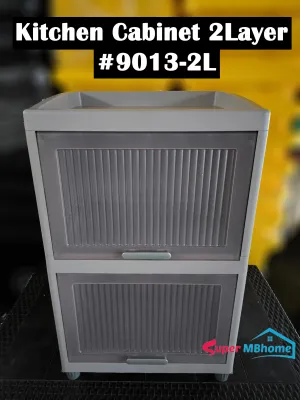
Prices are valid at publication and may change. Please refer to the product page for the latest price.
The primary decision path for a small kitchen involves choosing between three main configurations based on your specific layout constraints. If your kitchen layout is fixed and you have narrow, unused wall segments, tall vertical pantries are the ideal choice to stack dry goods and small appliances. If you require flexible workspace that can adapt to different tasks, freestanding mobile units or kitchen carts offer both storage and temporary prep surfaces. For kitchens with existing countertops but awkward gaps, modular under-counter extensions can seamlessly slide into place to provide targeted storage where you need it most.
Top Storage Features to Look for in Small Kitchen Cabinets
Selecting the right storage features is crucial for transforming a cramped kitchen into an organized, highly functional workspace. It is not just about having shelves; it is about how those shelves accommodate your specific kitchen items, from heavy rice dispensers to small spice jars.

Tall and Vertical Storage Units
Tall, vertical storage units are exceptionally efficient at reclaiming underutilized space up to the ceiling. In many small Philippine kitchens, the space above standard countertops or refrigerators remains empty. Narrow, tall utility cabinets or pull-out pantry units allow you to stack dry ingredients, canned goods, baking sheets, and small kitchen appliances vertically, keeping them off your countertops. This vertical stacking keeps your most-used items at eye level while storing less-frequently used items higher up.
Before purchasing a tall cabinet, it is critical to measure the exact vertical clearance between the floor and your ceiling, as well as the clearance beneath any existing wall-mounted fixtures. You must also account for the swing radius of the cabinet doors. Ensure that when the doors are fully opened, they do not collide with ceiling fans, light fixtures, range hoods, or open kitchen entryways. A door that cannot open past 90 degrees will severely limit your access to the interior shelves.
Another essential feature to look for is adjustable internal shelving. Kitchen storage needs change over time; you might need to store tall bottles of cooking oil, vinegar, and soy sauce one month, and stackable plastic containers the next. Cabinets with fixed shelves often lead to wasted vertical space, as small items leave empty gaps above them that cannot be utilized. Adjustable shelves allow you to customize the interior height of each compartment, maximizing every cubic inch of available space.
Mobile Kitchen Carts and Islands
Freestanding, movable kitchen carts and utility islands offer an excellent alternative to permanent cabinetry, especially in rental properties or multi-functional spaces. These units provide a dual benefit: they act as a mobile storage unit for kitchen tools and ingredients, and their top surface can serve as an extra food preparation station when your main countertops are crowded.
The defining feature of a high-quality mobile cart is the inclusion of heavy-duty locking casters. These wheels allow you to easily roll the cart out of the way when you need clear walkways, and lock it securely in place when you are chopping vegetables or operating a small appliance on top. When planning your kitchen layout, verify that you have a designated parking spot for the cart where it will not block main pathways, refrigerator doors, or oven openings when not in use.
When evaluating mobile carts, look for built-in storage enhancements that maximize external utility. Side-mounted towel racks, utensil hooks, and spice wire baskets keep frequently used items within arm’s reach without consuming internal shelf space. Lower wire baskets are particularly useful in the Philippines for storing root vegetables like garlic, onions, and potatoes, which require good air circulation to prevent premature spoiling in hot, humid weather. Deep drawers at the bottom are ideal for organizing heavy pots, pans, or baking dishes.
Always verify the manufacturer’s stated weight capacity and the physical base width of the cart before purchasing. A cart with a narrow base and a high center of gravity can become unstable and prone to tipping when loaded with heavy items or moved over uneven floor transitions. Ensure the base is wide enough to provide a stable foundation, and distribute weight evenly, placing the heaviest items on the lowest shelves.
Corner and Under-Sink Solutions
Corner areas and the spaces beneath kitchen sinks are notorious for being awkward, hard-to-reach zones that often end up as wasted space. In standard kitchen layouts, deep corner cabinets can become dark zones where stored items are pushed to the back and forgotten because they are difficult to see or reach.
To reclaim these corner spaces, look for specialized internal mechanisms such as Lazy Susans or pull-out corner shelving systems. A Lazy Susan features rotating trays that bring items from the very back of the cabinet directly to the front with a simple spin. Pull-out corner systems utilize articulated glides that pull the entire shelving unit out of the cabinet when the door is opened, making every single item fully visible and accessible without requiring you to bend down and reach into deep corners.
The area under the kitchen sink is another high-value storage zone that is frequently underutilized due to the presence of drainpipes, water supply lines, and garbage disposals. Standard shelves cannot fit in this space, but specialized under-sink organizers are designed with adjustable, modular shelves that can be positioned around the plumbing. These organizers typically feature sliding drawers or multi-tiered racks that allow you to maximize vertical storage for dish soaps, sponges, cleaning cloths, and trash bags.
Before purchasing any under-sink or corner organizer, you must carefully measure the internal dimensions of your cabinet. Take precise measurements of the width, depth, and height, and map out the exact path of your plumbing pipes, shut-off valves, and drain connections. Standard, off-the-shelf organizers may not fit if your plumbing is configured uniquely, so verifying these clearances beforehand prevents the frustration of buying an incompatible storage solution.
How to Read and Verify Uniplus Cabinet Specifications
When shopping for a Uniplus kitchen cabinet, reading the product specifications accurately is the key to ensuring the unit will fit your physical space, withstand the local environment, and safely support your kitchen gear. Do not rely solely on product photos, which can often make cabinets appear larger or sturdier than they are in reality.
Dimensions and Clearances Begin by analyzing the detailed dimension diagram provided by the manufacturer. You must measure and map out the exact footprint of the cabinet in your kitchen, but your planning should not stop there. You must also calculate the clearance required for the cabinet’s moving parts. This includes the door swing radius—the semi-circular space needed for doors to open fully—and the extension depth of any drawers or pull-out trays. For example, if a cabinet drawer has a depth of 40 centimeters, you will need at least 50 to 60 centimeters of clear space in front of the cabinet to stand comfortably while pulling the drawer out. Ensure these moving parts do not block main kitchen traffic paths, collide with adjacent walls, or obstruct the doors of major appliances like your refrigerator or oven.
Material and Finish Verification Uniplus is highly regarded in the Philippines for its durable, heavy-duty plastic (polypropylene) storage cabinets. Polypropylene is an exceptional material choice for tropical climates because it is completely waterproof, rust-proof, and impervious to termites and other pests that commonly plague wooden cabinetry in humid environments. However, if you are considering other cabinet lines that utilize engineered wood composites like medium-density fiberboard (MDF) or particleboard, you must exercise caution. Material names alone do not guarantee moisture resistance or long-term durability. In a high-humidity kitchen, unsealed engineered wood can absorb moisture from the air or from accidental spills, leading to swelling, warping, and structural weakening. To verify the quality of a wooden or composite cabinet, inspect the edge banding closely. High-quality edge banding should be thick, perfectly aligned, and completely sealed with no visible gaps or loose edges where moisture could seep in. Additionally, check the manufacturer’s care instructions and surface treatment specifications to ensure the finish is designed to resist water exposure and can be cleaned easily without degrading. For plastic cabinets, verify that the material is thick-walled and structurally reinforced to prevent bowing under load.
Load Capacity and Stability Every cabinet has structural limits, and exceeding them can lead to bowing shelves, cracked joints, or a catastrophic tip-over. Locate the maximum weight capacity specifications for both the individual shelves and the overall cabinet unit. These limits are usually expressed in kilograms. When planning your storage, remember that these weight limits assume a uniformly distributed load. Placing a single heavy item, such as a 10-kilogram sack of rice or a heavy cast-iron Dutch oven, in the center of a shelf exerts far more stress than spreading that same weight evenly across the entire shelf surface. For tall, narrow cabinets, maintaining structural stability is a critical safety consideration. Always place your heaviest items—such as large pots, canned goods, and heavy appliances—on the lowest shelves of the cabinet. This lowers the unit’s overall center of gravity, significantly reducing the risk of the cabinet tipping forward when the doors are opened or when someone accidentally bumps into it.
Hardware and Mechanisms The longevity of any kitchen cabinet depends heavily on the quality of its moving hardware. In a busy kitchen, doors and drawers are opened and closed dozens of times a day, placing constant stress on hinges and drawer slides. Check the product specifications for high-quality hardware components, such as soft-close hinges and heavy-duty, ball-bearing drawer slides. Soft-close hinges are particularly valuable in compact spaces because they prevent doors from slamming shut, which can cause vibrations that shake the cabinet and displace delicate items stored inside. Ball-bearing drawer slides ensure that drawers glide smoothly and remain stable even when fully loaded with heavy cutlery, tools, or canned food. Avoid cabinets that use cheap plastic runners or flimsy metal hinges, as these components are prone to bending, rusting, or breaking under daily wear and tear.
Space Planning and Safe Installation Checklist
Once you have selected the perfect cabinet, ensuring a successful delivery, proper assembly, and safe installation is the final step to transforming your kitchen. Proper planning prevents damage to your new furniture and, more importantly, protects your household from safety hazards.
Delivery and Access Before placing your order, walk the exact path the delivery team will take to transport the cabinet from the delivery vehicle to your kitchen. This is especially important for residents of high-rise condominiums, apartments, or tight townhouse developments in urban areas. Measure the width and height of all doorways, narrow hallways, stairwell turns, and elevator doors. If you live in a condo, check the interior dimensions of the service elevator to ensure the packaged cabinet box—or the fully assembled unit—can fit inside. Forgetting to measure these access points can result in a cabinet that cannot be delivered to your unit, forcing you to deal with costly return shipping fees or difficult returns.
Floor Leveling and Assembly Many homes in the Philippines have floors that are not perfectly flat, whether due to settling concrete, uneven floor tiles, or sloping screeds in utility areas. When a tall or wide cabinet is placed on an uneven floor, the cabinet frame can twist slightly under its own weight. This twisting misaligns the door hinges, causing the doors to hang crookedly or fail to close properly, and can cause drawers to bind, stick, or jam. Before assembling your cabinet, use a spirit level to check the flatness of the floor area where the cabinet will stand. If your floor is uneven, look for cabinets that feature adjustable leveling feet, which allow you to compensate for slopes by raising or lowering individual corners. If the cabinet does not have adjustable feet, you must use sturdy, non-slip shims placed under the base to level the unit. Always assemble the cabinet on a clean, flat surface—preferably on a protective cardboard sheet or blanket—to prevent scratching the finish during the assembly process.
Anchoring and Anti-Tip Safety Tall, freestanding cabinets—especially those over 120 centimeters in height—pose a serious tip-over hazard if they are not secured to the wall. This risk is amplified when drawers are fully extended, when heavy items are stored on upper shelves, or in households with curious children or pets who might attempt to climb the shelves. To guarantee safety, tall cabinets must be anchored securely to the wall structure. In typical Philippine residential construction, walls are made of concrete hollow blocks (CHB) finished with plaster, which requires a hammer drill, masonry drill bits, and appropriate plastic wall plugs (commonly known as tox plugs) paired with sturdy screws. If your walls are made of drywall or gypsum board, you must locate the vertical metal or wooden studs behind the wall and screw directly into them, or use heavy-duty toggle bolts. If the cabinet does not include wall-anchoring hardware, or if you are unsure of your wall’s material and load-bearing capacity, consult a qualified professional handyman or carpenter to perform the installation safely. Never skip this step, as an unanchored tall cabinet is a major safety hazard in any home.
Frequently Asked Questions (FAQ)
Can I assemble a tall kitchen cabinet by myself?
While many flat-pack kitchen cabinets are designed for DIY assembly, attempting to assemble and erect a tall, heavy cabinet entirely by yourself is not recommended. The initial steps of putting the frame together can often be managed individually, but lifting the completed unit upright, aligning large doors, and anchoring the cabinet to the wall safely require a second person. Attempting to lift a heavy cabinet alone can put excessive stress on the joint fasteners, potentially cracking the cabinet panels or stripping the pre-drilled screw holes, and carries a high risk of personal injury.
How do I prevent kitchen cabinets from warping in high humidity?
In the tropical, high-humidity climate of the Philippines, protecting your cabinetry from moisture damage requires consistent, proactive maintenance. Ensure your kitchen is well-ventilated by running an exhaust fan or range hood during and after cooking to pull damp air out of the room. Always wipe up liquid spills, condensation, and splashes immediately using a dry microfiber cloth, paying close attention to seams, joints, and edges where water can seep in. When cleaning, refer to the manufacturer’s care guidelines; avoid using soaking wet mops or harsh, abrasive chemical cleaners that can degrade protective surface finishes and expose the underlying material to moisture absorption.
Are mobile kitchen carts stable enough for heavy appliances?
Yes, mobile kitchen carts can be highly stable platforms for heavy appliances like microwave ovens, rice cookers, or air fryers, provided you adhere to specific safety conditions. Always verify the manufacturer’s stated weight limits for both the top surface and the individual shelves before placing any heavy equipment on the cart. To maximize stability, place your heaviest appliances on the lowest shelves to keep the unit’s center of gravity as low as possible. Additionally, ensure the cart’s wheel locks are fully engaged whenever the appliances are in use to prevent the cart from shifting or rolling due to operational vibrations.
Community discussion
Share your experience or ask a question. Comments are reviewed before publication.