
The best wall desk table for a small condo or apartment in the Philippines depends on your daily work habits, the structural strength of your walls, and your space constraints. For multi-purpose rooms or micro-studios where floor space is at a premium, a fold-down (or drop-leaf) wall desk is the ideal choice because it can be folded flat against the wall when not in use. For dedicated remote workers who use heavy equipment like dual monitors, external keyboards, and desktop accessories, a fixed floating wall desk offers superior stability, structural integrity, and permanent storage solutions.
Selecting the right model requires balancing physical dimensions with the specific layout of your unit. Because space is limited in typical urban developments across Metro Manila, Cebu, and other metropolitan hubs, a wall-mounted setup must serve your productivity needs without obstructing daily foot traffic or violating condominium association rules.
Assess Your Space and Wall Conditions Before Buying
Before purchasing a wall desk table, you must accurately assess the physical dimensions of your room and the structural composition of the wall where you plan to mount it. Failing to do so can lead to structural damage, installation failures, or a workspace that is physically uncomfortable to use.
Products mentioned in this guide
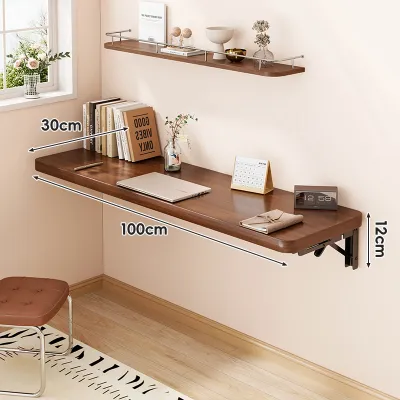
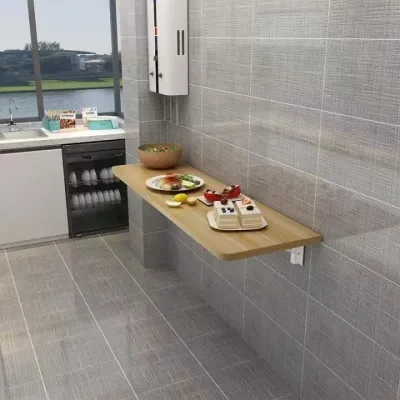
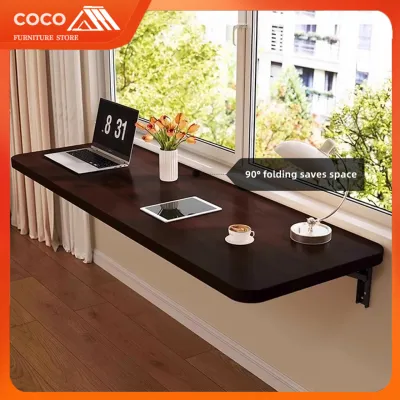
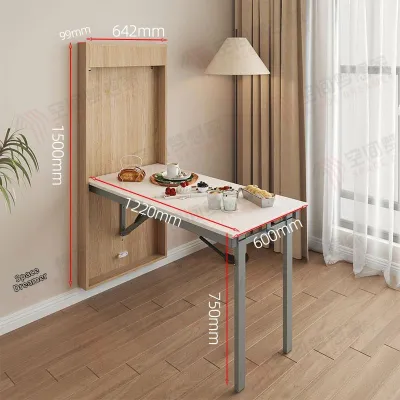
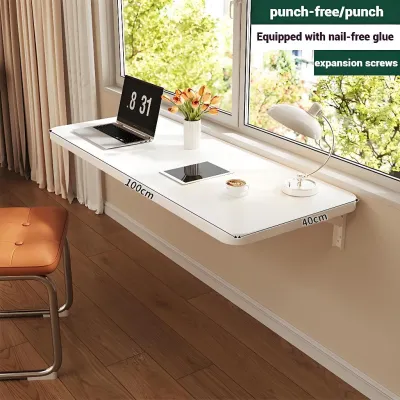
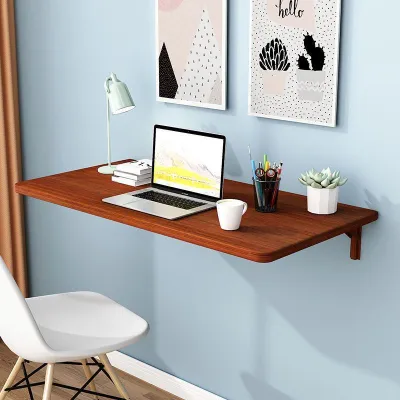
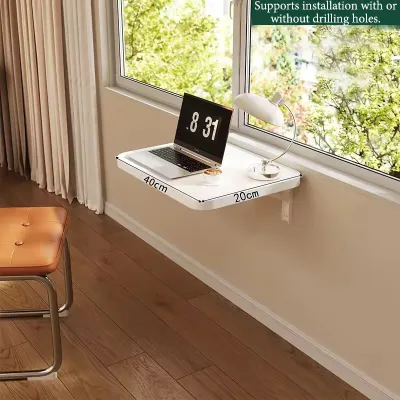
Prices are valid at publication and may change. Please refer to the product page for the latest price.
First, measure the available wall width and depth, keeping in mind the clearance required for your office chair and your own body. A standard office chair requires at least 70 to 80 centimeters of clear space behind the desk to allow you to push back, stand up, and walk around comfortably. If the desk is placed in a high-traffic pathway, such as a narrow hallway or near a kitchen counter, ensure that the fully extended desk does not block emergency exit routes or daily movement.
Next, identify the material of your wall, as this dictates the type of mounting hardware you need and the maximum weight capacity your desk can support:
- Solid Concrete or Pre-Cast Panels: Very common in modern Philippine high-rise condominiums (such as those built by SMDC, Megaworld, or Ayala Land). These walls offer the highest load capacity but require a heavy-duty hammer drill, carbide-tipped masonry drill bits, and plastic or metal expansion anchors to secure the desk brackets.
- Concrete Hollow Blocks (CHB): Often found in older apartments or low-rise residential buildings. While strong, they contain hollow pockets. You must use specialized sleeve anchors or toggle bolts designed for hollow masonry to ensure the brackets do not pull out under load.
- Drywall or Gypsum Board Partitions: Commonly used to divide bedrooms or dens from the main living area. You must never mount a wall desk directly onto gypsum board using standard plastic plugs. Instead, you must locate the vertical metal or wooden studs behind the drywall using a stud finder and secure the mounting brackets directly into these structural studs. If the studs do not align with your desired desk placement, a backing board may need to be installed first.
Finally, check for hidden utilities before drilling. Scan the wall for electrical conduits, light switches, water pipes (especially on walls shared with bathrooms or kitchens), and structural columns. Ensure the desk placement allows easy access to electrical outlets for your laptop, monitor, and charger without requiring long, unsightly extension cords draped across the floor.
Comparing Wall Desk Types for Limited Spaces
Wall-mounted desks generally fall into two main design categories: fold-down mechanisms and fixed floating setups. Each type offers distinct advantages depending on whether your priority is maximizing floor space or maximizing structural stability.

| Feature | Fold-Down / Drop-Leaf Desks | Fixed Floating Desks |
|---|---|---|
| Primary Benefit | Maximizes floor space when closed | Superior stability and permanent storage |
| Ideal Use Case | Occasional work, studio units, dining-to-work | Dedicated home office, heavy computer setups |
| Visual Footprint | Extremely low (folds flat to 5–10 cm) | Moderate (always projects into the room) |
| Weight Capacity | Typically lower (10–25 kg) | Typically higher (25–50+ kg depending on studs) |
| Cable Management | Must be unplugged/cleared to fold | Permanent routing channels and power strip storage |
Fold-down desks are highly valued for their ability to “disappear” at the end of the workday, helping you maintain a healthy work-life boundary in a single-room studio. However, they require you to clear your laptop, mouse, and papers every time you want to fold the desk away. Fixed floating desks, on the other hand, remain permanently extended. While they take up constant physical space, they allow you to keep your monitor, keyboard, and desk organizers permanently in place, saving you setup time each morning.
Fold-Down and Drop-Leaf Desks
Fold-down wall desks are the ultimate space-savers for compact apartments. These units feature a desktop panel attached to a wall frame via hinges, allowing the surface to swing upward or downward when needed. Some designs even fold up into a shallow wall cabinet that reveals small storage cubbies for stationery, notebooks, and pens.
When shopping for a fold-down wall desk table, pay close attention to the quality of the hinges and support brackets. Look for heavy-duty steel piano hinges or gas-strut assist mechanisms that prevent the desktop from slamming down when opened. The support brackets—whether they are triangular folding brackets or a swing-out wooden gateleg—must lock securely into place to prevent accidental collapse if you lean on the desk during a long working session.
Fixed and Floating Wall Desks
Fixed floating desks are permanently mounted to the wall and do not have legs extending to the floor. This design maintains a clean, continuous visual line across your room, making the floor area appear larger and making it much easier to sweep or vacuum underneath.
These desks are built for durability and can easily support multiple monitors, desktop speakers, and heavy books, provided they are anchored correctly. Because they are permanent fixtures, many models include integrated under-desk shelves, drawers, or dedicated cable management trays. This allows you to hide power strips, power bricks, and messy charging cables out of sight, keeping your small condo looking organized and clutter-free.
Sizing Your Wall Desk Table for Daily Tasks
Choosing the correct dimensions for your wall desk table is crucial for both physical comfort and visual harmony in a small apartment. A desk that is too small will leave you cramped and unproductive, while a desk that is too large will overwhelm your living space.
To find the right size, match the desk’s dimensions to your primary work tools:
- Laptop-Only Setups: If you work solely on a laptop with a mouse and a small notebook, a compact desk measuring 60 to 80 centimeters in width and 40 to 45 centimeters in depth is sufficient. This size fits easily into small corners, alcoves, or beside a bed.
- Desktop or External Monitor Setups: If you use an external monitor, a separate keyboard, and a mouse, you need a larger surface. Opt for a width of 100 to 120 centimeters and a depth of 50 to 60 centimeters. A depth of less than 50 centimeters will place the monitor too close to your eyes, leading to eye strain and leaving insufficient room for your keyboard and wrists.
Ergonomics are particularly critical for fixed wall desks because you cannot easily adjust the height once the unit is drilled into the wall. The standard recommended desk height for most adults is between 72 and 76 centimeters from the floor. Before drilling, sit in your preferred office chair, hold your elbows at a 90-degree angle, and measure the distance from the floor to your undersides of your forearms. This measurement is your ideal desk height.
Additionally, consider the material and finish of the desk. In the humid tropical climate of the Philippines, cheap particle board or poorly sealed MDF (medium-density fiberboard) can absorb moisture from the air, causing the wood to swell, warp, or peel over time. Look for wall desks made of solid wood (such as plantation-grown mahogany or rubberwood), high-quality plywood with water-resistant laminates, or engineered wood with thick, professionally sealed PVC edge banding to ensure long-term durability.
Installation Requirements and Safety Checks
Mounting a heavy piece of furniture to a wall carries inherent safety risks. A poorly installed wall desk table can pull away from the wall, damaging your concrete or drywall, destroying your expensive computer equipment, and potentially causing physical injury.
Always check the manufacturer’s weight limit specifications for both the desk assembly and the individual mounting brackets. Remember that the rated weight limit includes the weight of the desk itself; you must subtract the desk’s weight to determine how much equipment you can safely place on top. Furthermore, factor in dynamic weight—the temporary downward force applied when you lean your forearms on the desk or write in a notebook.
Before drilling, consult your condominium’s Property Management Office (PMO) or building administration. Most managed properties in the Philippines require a work permit for drilling or noisy construction activities, and they often restrict drilling to specific hours (usually 9:00 AM to 5:00 PM on weekdays). The PMO can also provide structural guidelines or blueprints showing where load-bearing columns and utility lines are located within your unit’s walls.
If you do not own a high-quality hammer drill, are unsure of your wall’s composition, or feel uncomfortable handling heavy mounting hardware, hire a qualified local handyman or professional installer. If the manufacturer’s installation instructions conflict with the instructions on your third-party wall anchors, always defer to the manufacturer’s guidelines or consult a structural professional before proceeding.
Common Sizing and Placement Mistakes to Avoid
To ensure you are fully satisfied with your new wall desk table, avoid these common spatial planning mistakes:
- Ignoring the "Chair Trap": Many buyers measure the desk surface but forget to account for the physical space their office chair occupies when they are sitting in it. Ensure there is enough room to slide the chair completely under the desk (if it is a fixed model) or fold the chair and store it nearby (if using a fold-down model) so it does not block walkways when you are not working.
- Overlooking Screen Glare: Avoid placing your wall desk directly opposite a bright window. The intense Philippine sun can cause severe screen glare, leading to headaches and eye strain. Instead, position your desk perpendicular to windows, or install high-quality blackout roller blinds to control the incoming light.
- Neglecting the Folded Profile: For fold-down desks, check the thickness of the unit when it is completely closed. Some models still protrude 15 to 20 centimeters from the wall due to built-in shelves or thick frames. If mounted in a narrow hallway or behind a door, this protrusion can catch on clothing, block doors from opening fully, or become a constant bumping hazard.
- Forgetting Cable Routing: A beautiful floating desk can quickly look messy if power cables, HDMI cords, and charger wires hang loosely down the wall. Plan your cable management before mounting the desk. Use adhesive cable clips, paintable plastic wire covers, or mount a power strip directly to the underside of the desk frame to keep all cords neatly bundled and hidden from view.
Community discussion
Share your experience or ask a question. Comments are reviewed before publication.