
Finding the right bed frame for a compact condominium bedroom requires balancing personal comfort with the physical realities of limited floor space. In urban residential developments, where bedrooms often double as home offices or storage hubs, an oversized or poorly designed bed frame can quickly make a room feel cramped and restrict daily movement. To optimize your layout, you must select a frame that matches your mattress requirements while preserving enough open floor area for walking paths, wardrobe access, and ventilation. By focusing on precise measurements, low-profile designs, and integrated storage solutions, you can create a restful sleeping environment that feels spacious and remains highly functional.
Measure Your Room and Calculate Clearances
Before browsing styles or purchasing furniture, you must establish the exact physical boundaries of your bedroom. Begin by measuring the length and width of the room from wall to wall using a reliable tape measure. Mark the precise locations of permanent fixtures, including entry doors, built-in closets, windows, electrical outlets, and air conditioning units. Drawing a simple floor plan on paper helps visualize how a bed frame will interact with these fixed elements.
Adequate walking clearance is essential for maintaining a comfortable flow and preventing a claustrophobic atmosphere. Aim for a minimum clearance of 60 to 70 centimeters on any side of the bed that you intend to walk past. This space allows you to move freely, change bed linens without straining, and navigate the room safely. If the bedroom is shared, maintaining this clearance on both sides of the bed is ideal, whereas a single occupant might push one side of the bed against a wall to maximize open floor space elsewhere.
Products mentioned in this guide
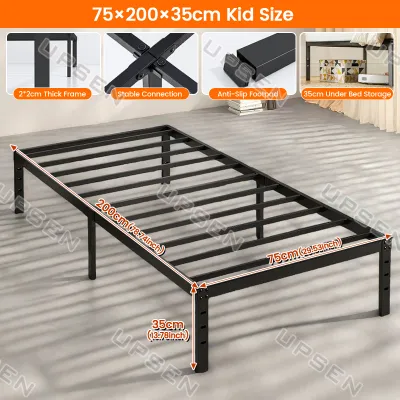

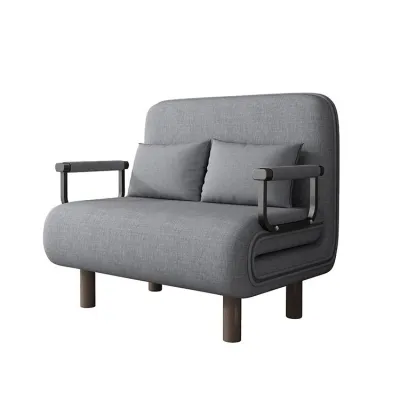


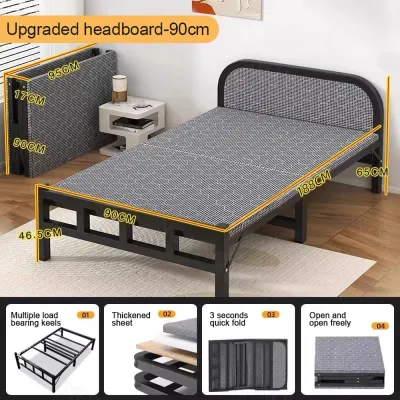
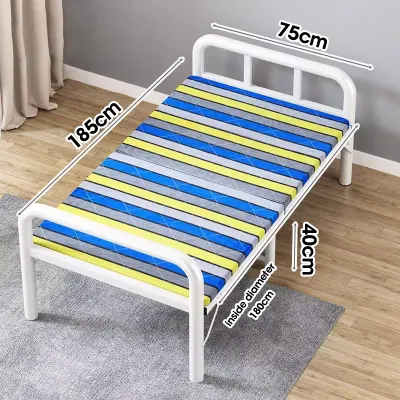
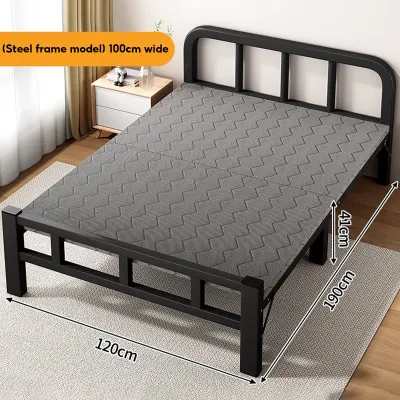
Prices are valid at publication and may change. Please refer to the product page for the latest price.
You must also account for the functional clearance of other furniture pieces and architectural features. Measure the swing radius of your bedroom door and closet doors to ensure they can open fully without striking the bed frame. If your wardrobe features pull-out drawers, measure their depth when fully extended to confirm they will not collide with the side of the mattress. Neglecting these operational clearances can lead to daily frustration and potential damage to your furniture finishes.
Match Bed Frame Sizes to Your Available Floor Space
Selecting the right mattress and bed frame size is a direct trade-off between sleeping comfort and usable room area. In small condo units, the most common options are Single, Double, and Queen sizes. A Single bed (typically 36 by 75 inches) is highly efficient for solo sleepers or guest rooms, leaving ample space for a desk or wardrobe. A Double bed (54 by 75 inches) offers a reasonable compromise for couples or individuals who prefer more sleeping width, though it significantly reduces walking paths in tight rooms.

A Queen bed (60 by 80 inches) provides excellent sleeping comfort for couples but requires careful spatial planning in a small condo. If your bedroom is your primary sanctuary and you prioritize sleep quality above all else, choosing a Queen bed may be worth sacrificing extra floor space. However, if you need the room to accommodate a workstation or a large wardrobe, opting for a Double or Single bed is often the more practical choice to preserve daily activity space.
When shopping, always verify the outer dimensions of the bed frame rather than relying solely on standard mattress sizes. Many upholstered frames, wingback headboards, and thick wooden platform designs add significant bulk to the overall footprint. A frame with thick side rails or an oversized headboard can easily add 10 to 20 centimeters to both the length and width of the bed. For tight spaces, look for slim, minimalist frames where the outer dimensions closely match the mattress size to reclaim every possible centimeter of floor space.
Choose Space-Saving Styles and Storage Features
The design style of your bed frame plays a critical role in both the visual openness and the storage capacity of a small bedroom. Low-profile and platform beds are excellent choices for compact spaces because they lower the visual center of gravity in the room. By keeping the mattress closer to the floor, these designs create the illusion of higher ceilings and a more open atmosphere. However, when selecting a low-profile frame, check the bottom clearance to ensure it accommodates your cleaning preferences, such as whether a robot vacuum can pass underneath, and verify that the design allows for adequate mattress ventilation in humid tropical climates.
Storage beds represent a highly efficient way to utilize the often-wasted space beneath your mattress. Frames equipped with built-in drawers are ideal for organizing extra linens, seasonal clothing, or personal items. Before purchasing a drawer-style storage bed, carefully measure the surrounding clearance to ensure the drawers can slide out fully without hitting walls, nightstands, or doors. Alternatively, hydraulic lift beds allow you to access the entire under-bed area by lifting the mattress platform upward, making them an excellent option when side clearance is too tight for drawers.
To further minimize the physical footprint of your bed, consider headboard-free designs or frames with ultra-slim headboards. Standard decorative headboards can consume valuable centimeters of length, pushing the bed further into the walking path at the foot of the bed. A wall-mounted headboard, a slim wooden panel, or omitting the headboard entirely allows you to push the bed frame flush against the wall. This simple adjustment can reclaim critical space, making it much easier to walk around the foot of the bed.
Plan for Delivery, Assembly, and Final Placement
A common oversight when purchasing furniture for a condominium is failing to plan the logistics of delivery and assembly. Even if a bed frame fits perfectly within your bedroom, it must first navigate the journey from the delivery truck to your unit. Measure the height and width of the condo elevator doors, the clearance of tight hallway corners, and the width of your apartment’s entry door. Choosing a bed frame that ships in flat-packed boxes or features a split-frame design ensures that the components can be transported safely without getting stuck in tight common areas.
Once the components are inside your unit, consider the physical space required for assembly. Many bed frames require flat floor space to lay out slats, side rails, and hardware during the construction process. If your bedroom is exceptionally small, you may need to assemble the frame in your living room and carry it in, or verify that the assembly instructions allow for piecemeal construction directly in the designated sleeping area. Check if the manufacturer provides clear, step-by-step guides and whether specialized tools are required.
Finally, plan the placement of your bed frame in relation to the room’s utilities and environmental factors. Position the headboard so that it does not block essential electrical outlets or light switches, ensuring easy access for charging devices and operating bedside lamps. Additionally, consider the airflow from your air conditioning unit; avoid placing the bed directly under a heavy draft or in a position that completely blocks the natural ventilation from windows. Proper placement ensures a comfortable sleeping temperature and protects your bedding from excess moisture accumulation.
Frequently Asked Questions (FAQ)
Can a king-size bed work in a small condo bedroom?
While it is physically possible to squeeze a king-size bed into some small condo bedrooms, it is rarely practical. To evaluate feasibility, calculate the ratio of the bed frame’s footprint to the total room area; a bed should ideally occupy no more than one-third of the usable floor space. Sacrificing all your walking clearance for a larger mattress makes daily tasks, such as changing sheets, cleaning, and opening closets, incredibly difficult. If you must have a larger bed, consider placing one side against a corner to maximize remaining space, though this limits access for one sleeper and complicates bed-making.
Are Murphy beds or sofa beds better than standard bed frames for small spaces?
Murphy beds and sofa beds offer excellent space-saving benefits but come with distinct daily trade-offs. A Murphy bed folds vertically into a wall cabinet, instantly freeing up floor space during the day, but it requires a secure, load-bearing wall for installation and must be cleared of bedding before folding. Sofa beds provide dual-purpose utility for studio units but often feature thinner mattresses that may not offer the same long-term support as a standard bed frame. For daily use, a standard bed frame with integrated storage is often more convenient, while folding options are ideal for multi-functional rooms or occasional guest use.
Community discussion
Share your experience or ask a question. Comments are reviewed before publication.