
Finding a suitable cabinet for clothes storage in a compact bedroom requires balancing floor space, vertical height, and protection against tropical humidity. In small rooms, sliding door wardrobes and modular stackable cabinets generally perform exceptionally well because they eliminate the need for door-swing clearance. For renters or those with irregular room layouts, freestanding modular units offer the flexibility to adapt to tight corners without permanent structural changes. Homeowners, on the other hand, can maximize vertical space with floor-to-ceiling built-in designs that utilize every inch of available wall space. Selecting the ideal option depends on a careful assessment of your room’s physical boundaries, your specific wardrobe mix, and the local climate conditions.
Assessing Your Bedroom Space and Storage Needs
Before browsing online marketplaces or visiting local furniture showrooms, you must establish the exact physical boundaries of your bedroom. Start by measuring the available floor area where you plan to place the cabinet, taking note of the maximum width, depth, and height. It is equally critical to measure the entry points of your home, including doorways, narrow hallways, stairwells, and elevator cabins. Many homeowners and renters purchase pre-assembled wardrobes only to find they cannot clear the turn in a stairwell or fit through a bedroom door frame.
Next, evaluate the specific items you need to store to determine the internal configuration of your cabinet. If your wardrobe consists primarily of formal wear, uniforms, and dresses, you will require a cabinet with a taller hanging section. Conversely, if you mostly store casual wear, t-shirts, and folded garments, a cabinet dominated by shelves, drawers, or pull-out baskets will maximize your storage capacity. Grouping your clothes by category allows you to estimate how many linear meters of hanging space and how many cubic meters of shelving you actually need.
Products mentioned in this guide
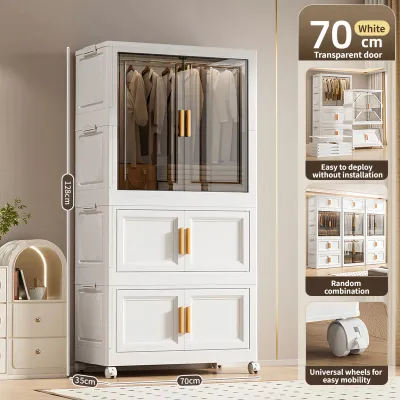
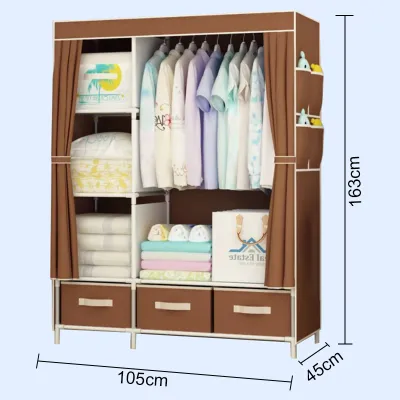
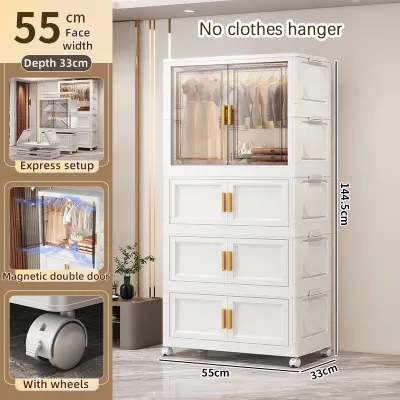
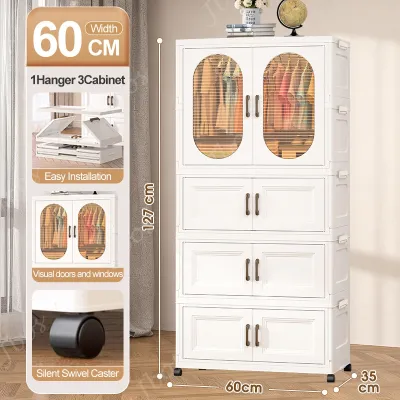
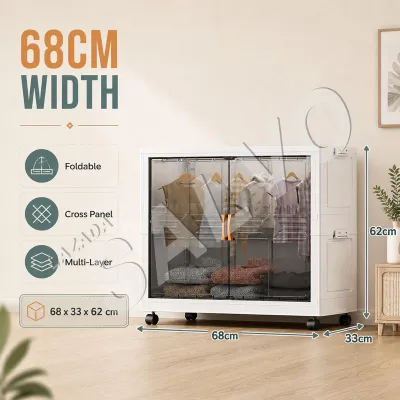
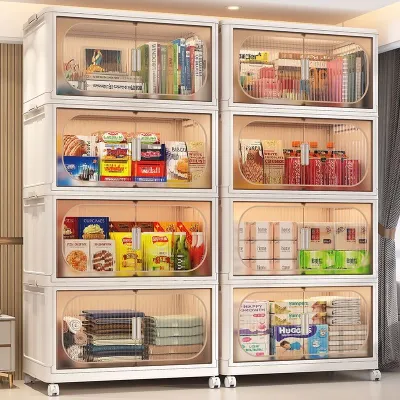
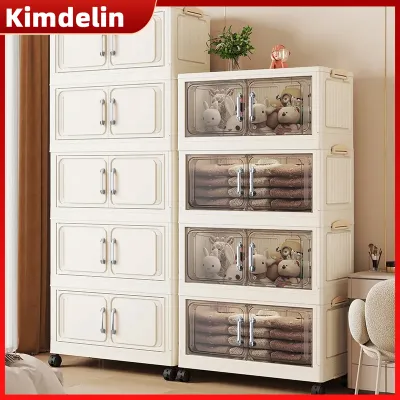
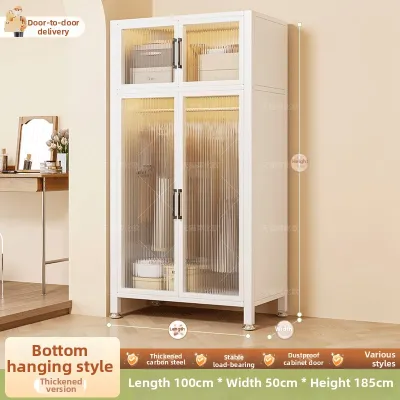
Prices are valid at publication and may change. Please refer to the product page for the latest price.
Finally, map out the physical obstacles within the room that could interfere with the cabinet’s placement or daily use. Look for wall outlets, light switches, air conditioning units, windows, and baseboards that might prevent a cabinet from sitting flush against the wall. Blocking an electrical outlet or obstructing a window breeze can make a small room feel even more cramped and uncomfortable. Ensure there is sufficient clearance around the cabinet so that you can access these fixtures safely and maintain proper room ventilation.
Evaluating Cabinet Types for Limited Spaces
Different cabinet configurations offer distinct advantages and trade-offs when space is at a premium. Sliding door wardrobes are highly popular for narrow bedrooms because the doors glide horizontally within the frame, requiring zero clearance in front of the unit. This allows you to place the cabinet close to the bed or other furniture without blocking walkways. However, the sliding track mechanism itself adds depth to the overall cabinet frame, which slightly reduces the actual internal storage depth available for hanging clothes.

Open garment racks or doorless cabinets provide a visually light alternative that can make a small room feel more open and spacious. Because they lack solid doors, they eliminate clearance worries entirely and allow for quick, convenient access to your daily outfits. The primary trade-off is exposure; clothes stored on open racks are susceptible to dust accumulation and require meticulous organization to prevent the room from looking cluttered. In tropical environments, open storage also exposes garments directly to ambient humidity fluctuations.
Modular or stackable storage cubes offer excellent flexibility for irregular layouts, awkward corners, or under-window spaces. These systems allow you to configure shelves, drawers, and cubbies in a layout that matches your specific room shape and storage needs. They are particularly well-suited for folded items, accessories, and lightweight seasonal wear. While highly adaptable and easy to transport for renters, modular plastic or lightweight composite cubes may have lower weight capacities compared to solid wood or metal-framed units, requiring careful distribution of heavier items.
Built-in or fitted wardrobes represent a highly efficient way to utilize vertical space, extending from the floor directly to the ceiling. By eliminating the gap at the top of the cabinet, they prevent dust accumulation and provide extra storage for less frequently used items like luggage or spare bedding. The main limitations of built-in units are their semi-permanent installation and higher initial cost. They cannot be easily moved or reconfigured, making them less suitable for renters or those who plan to rearrange their bedroom layout in the future.
Key Dimensions and Structural Features to Check
When selecting a cabinet for clothes storage, verifying specific dimensional standards ensures your garments fit properly without being crushed. For standard hanging space, an internal depth of at least 55 to 60 centimeters is typically recommended to accommodate standard adult hangers without the sleeves catching on the doors. If you are dealing with an exceptionally shallow cabinet, look for alternative hanging configurations, such as pull-out valet rods that allow clothes to hang facing forward rather than sideways. For folded items, a shelf depth of 35 to 40 centimeters is generally sufficient to store neat stacks of clothing without wasting space.
Vertical space utilization is another critical factor in a compact bedroom. Evaluate how the top and bottom zones of the cabinet are configured relative to your height and daily reach. The highly accessible zone—between hip and shoulder height—should be reserved for daily-wear hanging items or frequently used drawers. Lower sections are ideal for heavy drawers or shoe storage, while the highest shelves should be reserved for lightweight, seasonal, or rarely used items. Choosing a cabinet with adjustable shelving tracks allows you to customize these zones as your storage needs change over time.
Stability is a paramount safety consideration, especially for tall, narrow cabinets placed in high-traffic walkways. Narrow wardrobes with a high center of gravity can become unstable when drawers are fully extended or when heavy items are placed on upper shelves. When purchasing a tall cabinet, verify whether the manufacturer includes an anti-tip kit or wall-anchoring hardware. Check the wall type in your bedroom—such as concrete, drywall, or hollow block—to ensure you use the correct wall plugs and screws for secure anchoring.
Material and Finish Considerations for Humid Climates
In tropical climates where humidity levels fluctuate significantly, the durability of your cabinet depends heavily on its surface treatments and structural hardware. Rather than relying solely on the base material name, such as particleboard, medium-density fiberboard (MDF), or solid wood, inspect the quality of the protective finishes. Look for cabinets with high-quality melamine laminates, water-resistant veneers, or complete PVC edge banding. These protective layers act as a barrier, helping to prevent moisture from penetrating the core material and causing swelling, warping, or structural degradation.
The hardware components of a cabinet are highly vulnerable to moisture-induced damage over time. Check the product specifications to verify that hinges, drawer slides, and sliding door tracks feature rust-resistant coatings, such as zinc plating, powder coating, or stainless steel construction. Poorly protected metal hardware can corrode quickly in humid environments, leading to squeaky hinges, stuck drawers, and misaligned doors that compromise the usability of the entire cabinet.
Airflow is essential for preventing mold and mildew growth inside enclosed storage spaces. When evaluating cabinet designs, look for built-in ventilation features that promote continuous air circulation. Louvered doors, breathable back panels, or small ventilation grilles allow fresh air to enter the cabinet, reducing the buildup of stagnant, humid air. If the cabinet you select is completely sealed, plan to leave the doors open periodically or use moisture-absorbing products to maintain a dry internal environment.
Creating Your Conditional Shortlist
To find the most suitable cabinet for clothes storage, compile a shortlist of candidates by matching your spatial constraints with your housing situation. Start by filtering your options based on door clearance: if your bed sits close to the wardrobe area, prioritize sliding doors or open garment racks. If you have ample walkway space, classic hinged doors remain a viable option, offering full access to the cabinet interior at a single glance.
Next, align the installation type with your current living arrangement. Renters should focus on freestanding, modular, or lightweight flat-pack wardrobes that are easy to disassemble, transport, and reassemble in a new home. Homeowners can explore semi-permanent built-in options or heavy solid-wood wardrobes that maximize vertical space and offer long-term durability.
Before finalizing any purchase from an online marketplace or local retailer, cross-check the product’s detailed specification labels and dimension diagrams. Verify the exact external dimensions against your bedroom measurements, leaving a buffer of at least a few centimeters for assembly and positioning. Reading user feedback and reviews can also provide valuable insights into the actual assembly difficulty, structural stability, and material feel of the cabinet in real-world conditions.
Frequently Asked Questions (FAQ)
Can I use a standard-depth wardrobe in a very narrow bedroom?
Using a standard-depth wardrobe (typically 60 centimeters deep) in a narrow bedroom is possible only if you maintain a comfortable walkway clearance. Ideally, you should have at least 60 to 70 centimeters of open space in front of the cabinet to stand, walk, and access your clothes comfortably. If a standard-depth unit blocks this path or prevents other furniture from functioning, consider a shallow-depth cabinet (around 35 to 40 centimeters deep). To hang clothes in a shallow cabinet, look for pull-out valet rods or transverse hanging rails, which allow garments to hang facing forward rather than sideways, saving significant floor space.
How do I prevent clothes from getting musty in a doorless cabinet?
Preventing mustiness in an open or doorless cabinet requires active airflow management and moisture control. Avoid packing garments too tightly on the hanging rod; leave a gap of at least two to three centimeters between hangers to allow air to circulate freely around the fabric. Place safe, reusable moisture-absorbing dehumidifier tubs or silica gel packets on shelves and inside nearby drawers to capture excess ambient moisture. Finally, establish a routine to regularly air out, shake, and rotate your stored items, ensuring that clothes at the back or bottom of stacks do not sit undisturbed in humid air for extended periods.
Community discussion
Share your experience or ask a question. Comments are reviewed before publication.