
Finding the right counter top kitchen setup in a compact home often feels like a puzzle. In many Filipino households, from cozy studio condominiums in metropolitan areas to traditional row houses, kitchen space is at a premium. Introducing a countertop kitchen storage cart can instantly expand your preparation area and organize your cookware, but finding the right one requires balancing a compact footprint, vertical storage capacity, and reliable mobility. To make a smart addition to your home, you must evaluate your specific layout, verify material limits, and choose features that adapt to your daily cooking habits.
Measuring Your Space: Dimensions and Clearances for Compact Kitchens
Before browsing online catalogs, grab a physical measuring tape. Accurate measurements prevent the frustration of buying a cart that blocks your path or prevents cabinet doors from opening. Start by measuring the exact floor area where you plan to park the cart. You need to measure the width, depth, and height clearance of this designated spot. If you plan to roll the cart under an existing counter top kitchen overhang or next to a dining table, ensure you account for protruding cabinet handles, baseboards, and wall moldings that can steal valuable centimeters.
Next, evaluate the traffic flow in your kitchen. Aisle widths are critical in compact layouts. A standard kitchen aisle should ideally allow enough room for you to bend down and open an oven door, refrigerator, or low cabinet without hitting the cart. Measure the swing clearance of all nearby appliance doors. If your cart sits too close to the refrigerator, a simple trip to grab ingredients can become a clumsy obstacle course.
Products mentioned in this guide
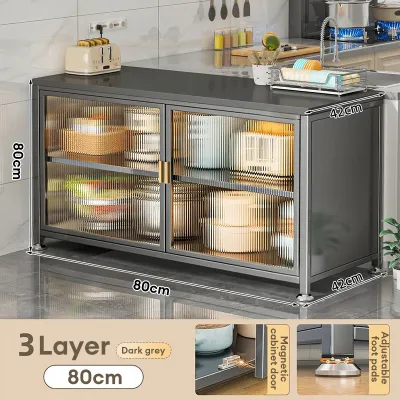
![[Vodool]3-Tier Kitchen Countertop Cabinet Dustproof Kitchen Storage Cabinet with Double Door Kitchen Organizer](https://img.lazcdn.com/g/p/5a20a5622854ea62ec4f756a4f53ebcf.jpg_400x400q80.jpg_.webp)
Prices are valid at publication and may change. Please refer to the product page for the latest price.
Additionally, consider the journey the cart takes to reach your kitchen. If you live in a high-rise condominium, verify that the packaged box dimensions can easily fit through your building’s lift doors, narrow hallways, and your main entryway. A cart that is too bulky to transport up the elevator or through a tight doorway will cause unnecessary delivery headaches.
Finally, map out the fixed obstacles in your kitchen. Many Filipino homes feature large water dispenser jugs, trash bins, or LPG tanks that occupy specific floor areas. Ensure your cart’s path does not block access to these essentials. Additionally, locate your wall outlets. If you plan to use the cart’s top surface as an appliance station, it must sit close enough to an outlet so that power cords do not stretch across walkways, creating a safety hazard.
Space-Saving Features to Look for in a Kitchen Cart
When space is limited, vertical design is your greatest ally. Look for carts that offer multiple vertical tiers rather than a wide, sprawling footprint. Adjustable shelf heights are particularly valuable because they allow you to customize the storage space. Instead of leaving empty air above short spice jars, you can lower a shelf to fit tall oil bottles, rice dispensers, or stockpots on the bottom tier, maximizing every cubic inch of your counter top kitchen cart.

For those who need extra prep space but cannot afford a permanently large cart, foldable or drop-leaf extensions are an excellent solution. These hinged wooden or metal panels fold flat against the side of the cart when not in use. When you are chopping garlic, onions, and ginger for a family meal, you can simply lift the leaf and lock it into place to instantly expand your workspace. Once the prep work is done, folding it down restores your kitchen’s open floor space.
Mobility is another key feature, but it must be balanced with stability. Look for carts equipped with heavy-duty casters that roll smoothly over tile grout lines. Crucially, at least two of these wheels must feature robust, easy-to-operate locking mechanisms. Locking the wheels ensures the cart remains completely stationary when you are slicing vegetables or mixing ingredients, preventing dangerous slips.
Do not overlook the utility of the cart’s outer edges. Side attachments like built-in towel racks, S-hooks for hanging utensils, and exterior spice wire baskets turn wasted vertical space into highly accessible storage. Hanging your ladles, pot holders, and dish towels on the side of the cart keeps your main counter top kitchen surfaces clear and clutter-free.
Checking Material Durability and Structural Stability
The tropical climate in the Philippines presents unique challenges for kitchen furniture. High humidity levels, steam from boiling pots, and frequent splashes can quickly degrade poorly made materials. When evaluating a cart, do not rely solely on attractive product photos. Instead, check the manufacturer’s specifications for rust-resistant treatments, such as powder-coated steel frames or heavy-duty chrome plating. If the cart features wooden elements, look for sealed finishes or water-resistant coatings that prevent moisture from seeping into the wood grain and causing warping or mold.
Remember that a material name like “stainless steel” or “solid wood” alone does not guarantee long-term durability. You must actively check the quality of the protective finish, inspect the joints for gaps, and review the manufacturer’s care instructions to ensure the cart can withstand the actual moisture levels of your cooking environment. Regular wiping and keeping the cart away from direct water pooling will extend its lifespan significantly.
Structural stability is directly tied to how the cart is put together. Inspect the product details for robust joint connections, reinforced welding points, and secure wheel mounting plates. A cart with thin metal tubes or flimsy plastic joints will likely wobble under the weight of heavy kitchen tools.
Always verify the load capacity ratings. Responsible manufacturers specify weight limits per shelf rather than just a single overall weight capacity. A cart might claim to hold 50 kilograms in total, but if an individual shelf can only support 5 kilograms, placing a heavy rice cooker or a stack of ceramic plates on it could cause the shelf to sag or buckle. Look for clear, tier-by-tier weight limits to ensure the cart can handle your specific storage needs.
Shortlisting and Verifying Options on E-commerce Platforms
Shopping on online marketplaces requires a methodical approach to avoid buyer’s remorse. Start by ignoring stylized promotional images, which often use clever angles to make carts look larger or sturdier than they actually are. Instead, scroll directly to the detailed specification table. Compare the listed dimensions—width, depth, and height—directly against the physical measurements you took in your kitchen.
Customer reviews are a goldmine of real-world information. Filter the reviews to look for feedback on assembly difficulty, wheel durability, and actual load-bearing performance. Pay close attention to photos and videos uploaded by actual buyers in the Philippines. These media files show how the cart looks in a real home environment, helping you assess the true color, finish quality, and structural sturdiness before you commit to a purchase.
Many carts require self-assembly, so check if the package includes all necessary tools and clear instructions, or if you will need to prepare your own screwdriver and wrench. Reading about other buyers’ assembly experiences can help you gauge whether you can put the cart together yourself or if you will need an extra pair of hands.
Finally, evaluate the seller’s credibility and the total transaction cost. Check the seller’s overall rating, response rate, and return policies in case the product arrives damaged or with missing parts. Because kitchen carts can be heavy and bulky, shipping fees can vary significantly. Always calculate the total cost, including shipping fees in ₱, to ensure the purchase fits comfortably within your household budget.
Frequently Asked Questions (FAQ)
Can a countertop cart support heavy appliances like a microwave or air fryer?
Yes, many kitchen carts can support heavy appliances, but you must verify their specifications first. Check the manufacturer’s weight limit specifically for the top tier, as this is where appliances are typically placed. To prevent the cart from becoming top-heavy and tipping over, ensure the unit has a wide, stable base and that you place heavier items, like cast-iron pans or canned goods, on the bottom shelves to lower the center of gravity. Additionally, verify that the top surface material is heat-resistant if you plan to operate appliances like air fryers or toaster ovens, which can radiate significant heat from their bases during use.
How do I prevent a rolling kitchen cart from damaging my floor tiles?
To protect your kitchen floor tiles from scratches and scuffs, pay close attention to the wheel material. Avoid hard plastic or bare metal wheels, which can easily scratch ceramic or porcelain tiles when rolling under a heavy load. Instead, look for casters made of soft rubber, polyurethane, or thermoplastic elastomer. You can also place a low-profile, durable kitchen mat or runner rug in the high-traffic area where you most frequently roll the cart to absorb friction. Finally, make it a habit to regularly wipe down the wheels to remove trapped dirt, grit, or food crumbs, which can act like sandpaper under the weight of the cart.
Community discussion
Share your experience or ask a question. Comments are reviewed before publication.