
Setting up a dedicated study corner for the back-to-school season requires more than just a desk; the right seating is crucial for maintaining focus and supporting healthy posture. As children spend hours reading, writing, and attending online classes, an ill-fitting chair can lead to slouching, restlessness, and fatigue. Choosing a suitable kids study chair involves balancing physical comfort with the practical constraints of your home layout. By focusing on adjustable features, spatial compatibility, and durable materials, you can create an inviting learning environment that grows alongside your child.
Assessing Your Study Corner Space and Desk Dimensions
Before browsing online marketplaces or visiting local showrooms, you must establish the exact physical boundaries of your child’s study area. Start by measuring the available floor space dedicated to the study corner. A common oversight is forgetting to account for the clearance needed to push the chair back when your child stands up or sits down. Ensure there is at least 60 to 75 centimeters of unobstructed space behind the desk so the chair can glide or slide back safely without hitting walls, wardrobes, or electrical outlets.
Next, measure the height of your existing desk from the floor to the underside of the desktop. This measurement is critical because it dictates the maximum height of the chair’s seat and armrests. If the desk features a thick drawer unit directly beneath the work surface, this reduces the vertical clearance for your child’s thighs. You must ensure that the chair’s armrests, if present, can slide completely under the desk when not in use to save space in compact bedrooms or shared living areas.
Products mentioned in this guide
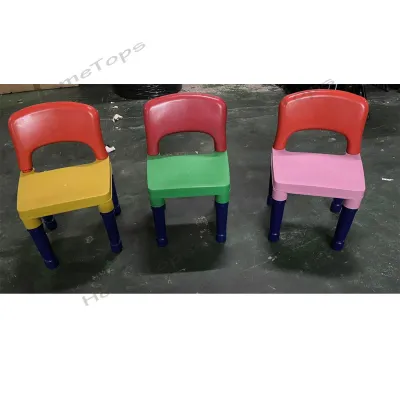
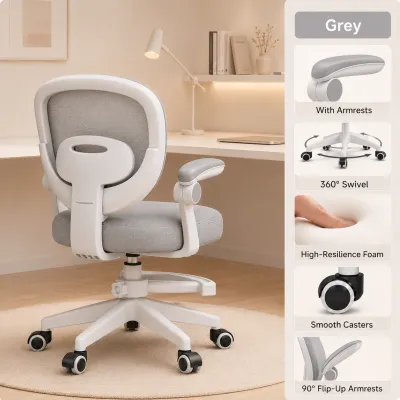
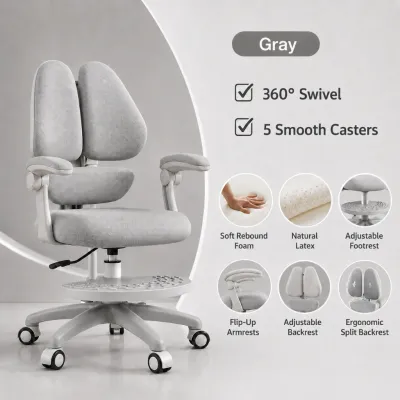
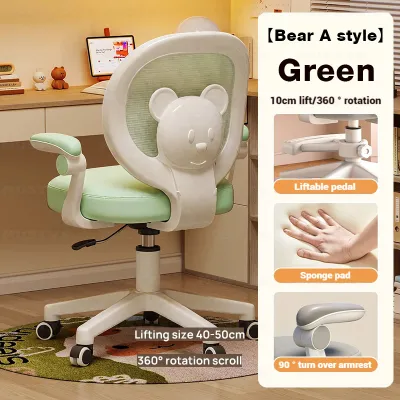
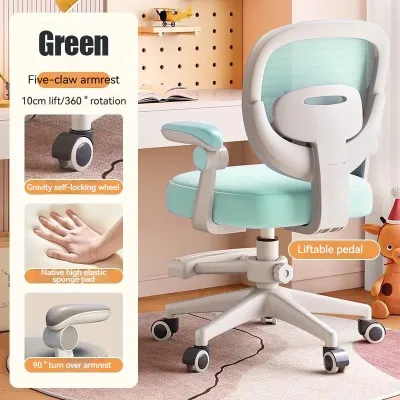
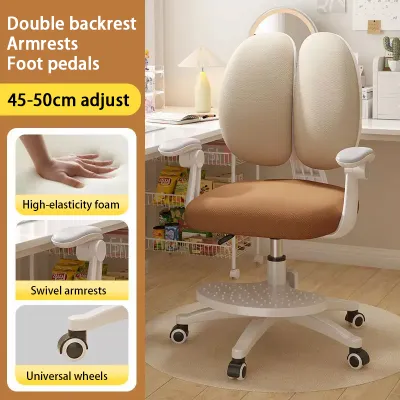
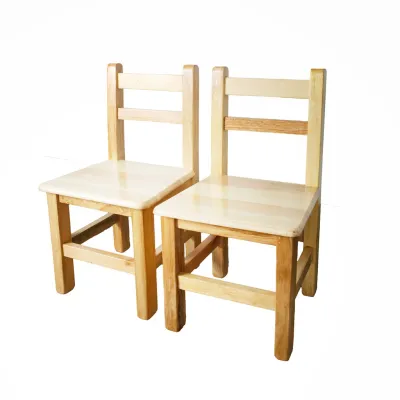
Prices are valid at publication and may change. Please refer to the product page for the latest price.
Do not overlook the logistics of getting the furniture into your home. Verify the widths of your doorways, hallways, and stairwells to ensure the packaged box or fully assembled chair can pass through without damaging walls. In many homes in the Philippines, tight corners or narrow doorways can make moving pre-assembled furniture challenging. Opting for flat-packed models that you assemble directly inside the study room can bypass these spatial hurdles.
Additionally, consider the layout of the room in relation to local environmental factors. Position the chair and desk setup to allow optimal airflow from electric fans or air conditioning units, ensuring your child remains cool during warm afternoons. Avoid placing the chair directly in front of high-traffic pathways where family members frequently pass, as this can cause distractions and increase the risk of accidental bumps.
Essential Features to Evaluate in a Kids Study Chair
An effective kids study chair must adapt to a child’s rapidly changing height and proportions over multiple school years. Look for models featuring a reliable pneumatic gas lift or manual screw mechanism to adjust the seat height. The adjustment range should allow your child’s feet to rest completely flat on the floor while keeping their thighs parallel to the ground. Some advanced models also offer adjustable seat depth, which prevents the edge of the seat from pressing against the back of the child’s knees.

Ergonomic support is another vital factor to verify through manufacturer specifications and product labels. Check for built-in lumbar support that mirrors the natural curve of the lower spine. While some chairs feature fixed lumbar curves, adjustable lumbar pads provide a more customized fit as your child grows taller. If the chair offers a recline function, ensure it features a tension control or lock mechanism so the backrest remains stable and supportive during active writing or typing tasks.
The choice of materials plays a significant role in both comfort and longevity, especially in tropical climates. High-humidity environments require highly breathable upholstery to prevent heat buildup and sweating. Mesh backrests are excellent for promoting continuous airflow, keeping your child cool during long study sessions. If you prefer cushioned seats, check the manufacturer’s specifications for high-density foam that retains its shape over time, and look for removable, washable covers to simplify maintenance.
Finally, evaluate the base of the chair and its compatibility with your flooring. A five-star base design offers the greatest stability and minimizes the risk of the chair tipping over when your child leans. If the chair uses casters, verify whether they are designed for hard floors like ceramic tiles and polished concrete, or soft surfaces like area rugs. For tiled floors common in local homes, soft polyurethane casters are preferable as they glide quietly and reduce the risk of scratching the surface.
Matching Chair Designs to Different Study Habits
Children have diverse learning styles and physical habits, meaning a chair that works perfectly for one child might cause discomfort or distraction for another. For highly focused, structured tasks like writing, drawing, or typing, a traditional stationary task chair or a lockable swivel chair is often the most practical choice. These designs encourage a stable, forward-facing posture that helps keep your child aligned with their learning materials.
Conversely, some children are naturally restless and benefit from active seating options. If your child tends to fidget, wiggle, or shift positions constantly, consider a chair with self-braking casters or a specialized active learning stool. These designs allow for subtle micro-movements that can help channel excess energy, improving concentration without compromising safety. However, ensure that any active seating option still provides a stable base to prevent accidental falls.
The presence of armrests is another design element that should align with your child’s primary study activities. If your child spends most of their time typing on a keyboard or using a tablet, adjustable armrests can support the forearms and reduce strain on the shoulders. However, if their study routine involves a lot of sketching, painting, or reading large textbooks spread across the desk, armrests can sometimes get in the way or prevent them from pulling the chair close enough to the work surface. In such cases, armless chairs or models with flip-up armrests offer greater flexibility.
Multi-purpose chairs are highly beneficial if the study corner serves multiple functions, such as transitioning from homework to casual reading or creative play. Look for versatile designs that can easily adapt to different postures. A chair that allows your child to sit comfortably while leaning back to read a novel, yet easily locks into an upright position for mathematics homework, ensures the study corner remains a comfortable space for all types of cognitive development.
Safety, Stability, and Maintenance Checks
Before finalizing your purchase, always review the manufacturer’s weight capacity limits and age recommendations printed on the product packaging or specification sheet. Kids study chairs are engineered to support specific weight ranges, and exceeding these limits can compromise the structural integrity of the gas lift or base. Choosing a chair with a weight capacity that accommodates your child’s projected growth ensures the furniture remains safe to use for several years.
Inspect the overall design for tipping risks, particularly if your child is prone to sudden movements. Look for chairs with a wide, low-profile base that lowers the center of gravity. Some models feature weight-activated braking systems that lock the wheels when a child sits down, preventing the chair from rolling away unexpectedly when they try to sit or stand. Check that all joints, screws, and adjustment levers are tightly secured and do not wobble during use.
Maintaining the chair is essential for preserving its safety features and hygienic condition, especially in humid tropical environments where dust and moisture can accumulate. Establish a routine to inspect and tighten any loose bolts every few months. Clean the upholstery according to the manufacturer’s care instructions; for fabric seats, regular vacuuming and prompt spot-cleaning of spills will prevent deep stains and odor buildup. Keep the moving parts, such as the caster wheels and gas lift cylinder, free of hair, dust, and debris to ensure smooth operation.
Frequently Asked Questions (FAQ)
How do I know if a study chair is the right height for my child's desk?
To check the height alignment, have your child sit all the way back in the chair with their feet resting flat on the floor. Their knees should bend at a comfortable 90-degree angle, and there should be a small gap between the back of their knees and the front edge of the seat. When you pull the chair close to the desk, their elbows should also bend at approximately 90 degrees, allowing their forearms to rest parallel to the work surface without forcing them to hunch their shoulders or stretch upward.
Should I choose a chair with wheels or stationary legs for a kids study corner?
The choice depends on your child’s age, attention span, and your home’s flooring. Chairs with rolling casters offer excellent mobility, making it easy for older children to pull themselves close to the desk or reach for reference books nearby. However, for younger children or those who are easily distracted, stationary legs or chairs with weight-locking casters provide a more grounded, stable seating experience that minimizes spinning and rolling during study time. If you choose wheels, consider using a protective floor mat to shield delicate tiles or wooden floors from wear.

Community discussion
Share your experience or ask a question. Comments are reviewed before publication.