
Living in a compact high-rise condominium in Metro Manila means making every square meter count. When your living room must double as a guest room or a daily sleeping space, a sofa bed pull out bed is one of the most practical investments you can make. However, choosing the wrong mechanism can quickly turn your cozy sanctuary into a cramped, frustrating obstacle course.
To find the best option for your layout, you must evaluate how the bed expands, how much physical effort it takes to set up, and where the clearance is required. While a trundle sofa bed is often the most space-efficient choice because it sits flush against the wall, other mechanisms like fold-outs and modular convertibles offer distinct benefits depending on your daily routine. Understanding these differences will help you select a piece that keeps your home functional and comfortable.
Understanding Trundle, Fold-Out, and Convertible Mechanisms
Before comparing space efficiency, it is essential to understand how the three primary sofa bed mechanisms operate. Each system has a unique footprint and mechanical design that dictates where it can be placed in a room.
Products mentioned in this guide
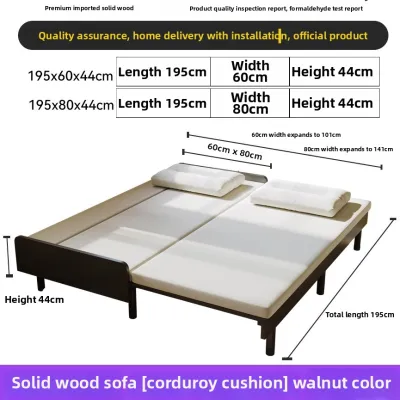
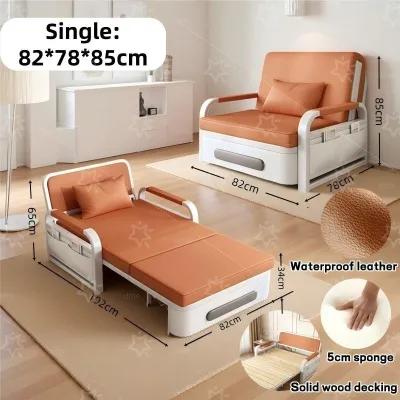
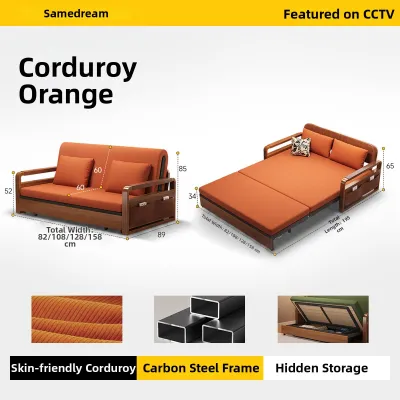
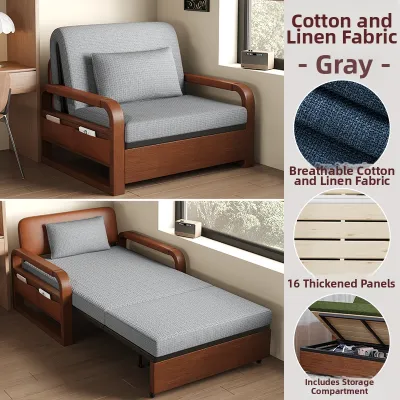
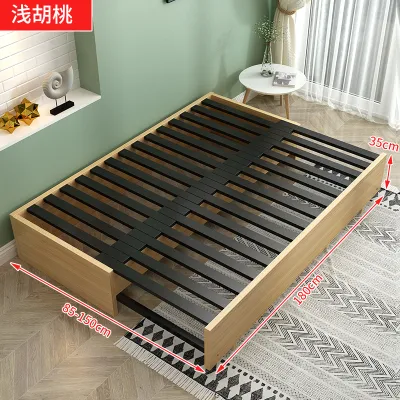
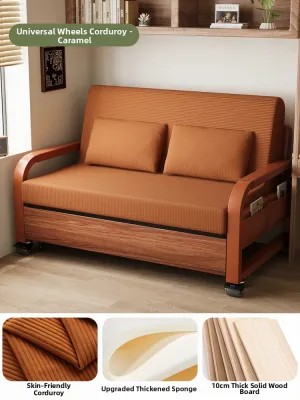
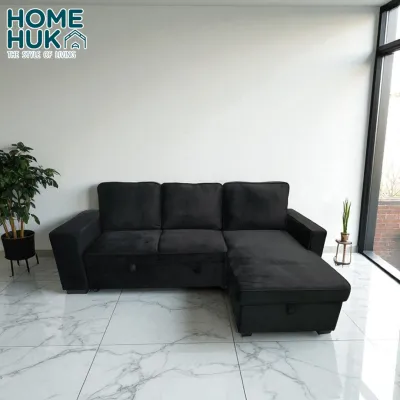
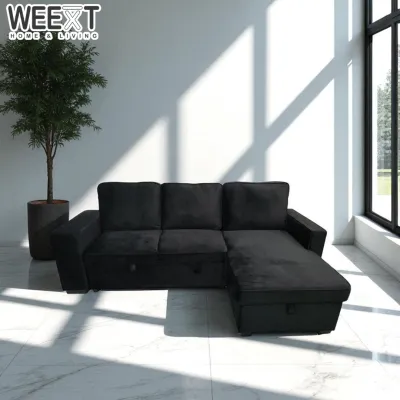
Prices are valid at publication and may change. Please refer to the product page for the latest price.
Trundle (Pop-Up or Low-Profile)
The trundle mechanism utilizes a secondary frame and mattress hidden directly beneath the main sofa seat. To deploy it, you pull the lower frame forward on casters, sliding it out like a drawer. In low-profile models, the trundle remains close to the floor, while pop-up versions feature spring-loaded legs or levers that lift the lower mattress to align perfectly with the main seat, creating a larger, uniform sleeping surface.
Because the entire expansion happens toward the front, a trundle sofa bed requires zero rear clearance. You can place the back of the sofa flush against your living room wall, which is highly advantageous for narrow layouts. Keep in mind that frame materials alone do not dictate weight capacity; you must check the manufacturer’s product tags to verify the exact structural load limits for both the main frame and the pull-out section.
Fold-Out (Click-Clack or Bi-Fold)
A fold-out mechanism, often referred to as a click-clack or bi-fold system, relies on a hinged backrest that folds downward to form a flat sleeping surface. To operate it, you typically pull the seat forward until the hinge clicks, then release it to lay the backrest flat. This design is highly valued for its mechanical simplicity and quick transition from seating to sleeping.
However, fold-out models present a major spatial trade-off. Many designs require a gap of several inches between the back of the sofa and the wall to allow the backrest to recline fully. If you place it directly against a wall, you will need to pull the entire heavy sofa forward every time you want to sleep. Additionally, because the backrest serves as half of the bed, these models often feature firmer, thinner cushioning to maintain a balanced sleeping surface, which can affect overall seating depth and comfort.
Convertible (Modular or Futon-Style)
Convertible or modular sofa beds rely on independent, movable pieces rather than a single integrated mechanism. These setups often feature a standard sofa paired with a matching ottoman, chaise, or removable cushions that you manually rearrange to assemble a cohesive sleeping platform.
While modular convertibles offer incredible flexibility for changing your living room layout on a whim, they have distinct drawbacks for tight condo spaces. They rarely include built-in storage compartments because the space inside the frames is occupied by structural supports. Furthermore, they generally require a larger overall floor area to accommodate the separate pieces, making them less suitable for highly restricted layouts where every centimeter of floor space must remain clear.
How to Measure Your Condo Living Room for a Pull-Out Bed
A common mistake when shopping for a sofa bed pull out bed is relying solely on the standard sofa dimensions listed on the showroom tag. In a small condo, precise measurements are the difference between a functional living space and a blocked emergency exit.

First, measure the exact footprint of the sofa in both of its states. You must know the width and depth when it is configured as an upright three-seater, as well as the total extended depth when the bed is fully deployed. Use painter’s tape on your living room floor to outline these two configurations. This visual aid will help you verify if you can comfortably walk around the bed when it is open.
Next, identify potential spatial conflicts within the room. Ensure the extended bed does not block the swing path of balcony sliding doors, kitchen cabinets, or entryways. In the Philippines, where many condos feature floor-to-ceiling glass doors to access small balconies, blocking these pathways can restrict natural ventilation and create safety hazards. You must also account for existing furniture, such as coffee tables and media consoles, ensuring you have a designated spot to move them when the bed is open.
Do not forget to plan the delivery route from the building’s entrance to your living room. High-rise condo living introduces unique logistical challenges. Measure the height and width of your building’s service elevator doors, the interior cabin depth, the width of the common hallways, and the clear opening of your unit’s front door frame. Many standard residential door frames in the Philippines are 80 to 90 centimeters wide; if the boxed dimensions of your chosen sofa bed exceed these limits, the delivery team may not be able to bring it inside.
Finally, leave adequate operational clearance around the unit. You need enough physical space to stand in front of or beside the sofa to operate the pull-out mechanism without scraping your walls or pinching your fingers against adjacent furniture. Ensure the open bed does not block the direct airflow of your split-type or window-type air conditioner, as improper air circulation can lead to uneven cooling and increased energy consumption in our tropical climate.
Which Mechanism Maximizes Small Space Efficiency?
To determine which sofa bed pull out bed mechanism is best suited for your specific condo layout, it helps to compare their spatial requirements and functional advantages side by side.
| Mechanism Type | Space Required to Open | Best Layout Application | Built-in Storage Potential |
|---|---|---|---|
| Trundle | Front clearance only; zero rear clearance needed. | Long, narrow living rooms; placed flush against a main wall. | High; often features drawers or under-seat compartments. |
| Fold-Out | Minimal front clearance; requires 10–15 cm of rear clearance. | Open-concept studios; placed in the center of a room or away from walls. | Low to none; frame space is occupied by the hinge mechanism. |
| Convertible | Variable; requires floor space to rearrange separate modules. | Square layouts; flexible, multi-functional open zones. | Low; separate ottomans rarely offer deep storage. |
When maximizing daytime floor space is your absolute priority, the trundle mechanism is the clear winner. Because it tucks completely under the main seating frame, it leaves your entire living room open for daily activities. However, this efficiency comes with a physical trade-off. Pulling out and lifting a heavy pop-up trundle frame requires moderate physical strength. If you plan to use the bed daily, ensure you are comfortable with this lifting motion.
For studio-style condos where the living area and sleeping area are integrated, a fold-out click-clack model is highly efficient. It transitions from a sofa to a bed in seconds with a simple push-and-pull motion. The main drawback is that because the backrest folds flat, the seat depth in sofa mode is often shallower, and you must accept a firmer sleeping surface since there is no separate mattress.
Convertible modular options work best in larger, open-plan condos where you want the freedom to host guests or lounge in different configurations. However, they require manual labor to rearrange the heavy cushions or ottomans every single night, which can become tedious if used as a primary bed.
When choosing, you must weigh mattress comfort against compact storage. Integrated pull-out mattresses are often thinner to allow them to fold into the frame. If you plan to use the sofa bed for daily sleep, prioritize models that can accommodate a thicker, supportive mattress, even if it means choosing a slightly bulkier sofa frame. For occasional guest use, a more compact fold-out model with a thinner cushion is usually sufficient and saves valuable square footage.
Common Sizing and Placement Mistakes to Avoid
Avoiding common pitfalls during the planning phase will save you from costly return fees and damaged property.
One of the most frequent errors is forgetting to measure the fully extended length of the bed, which can trap you inside your own home. If the bed extends too close to your kitchen counter or balcony door, it can block essential pathways, making it impossible to move around safely at night. Always maintain a minimum walkway clearance of 60 centimeters around the perimeter of the extended bed.
Another critical consideration is floor protection. Pull-out trundle frames often rely on metal casters or hard plastic wheels to slide across the floor. In Philippine condos, where large-format ceramic tiles, vinyl planks, or engineered wood are standard, these hard wheels can easily leave permanent scratches or scuff marks. To prevent this damage, check if the manufacturer uses soft polyurethane wheels, or place a low-pile, durable area rug beneath the sofa to act as a protective barrier.
Additionally, pay close attention to the seat height in both sofa and bed modes. Some fold-out models sit quite high in seating mode but drop significantly lower when laid flat. If your coffee table is a standard 45-centimeter height, a low-profile bed might make reaching for a glass of water or a phone charger uncomfortable. Ensure your surrounding furniture heights complement both configurations.
Lastly, never assume that a sofa labeled “compact” or “condo-sized” will easily pass through your building’s freight elevator or unit doorway. Always request the exact packaged or boxed dimensions from the retailer before making a purchase. Compare these figures against your building’s clearance measurements to avoid the heartbreak of a sofa that must be returned at the lobby door.
Frequently Asked Questions (FAQ)
Will a pull-out sofa bed fit through standard condo doors and elevators?
Yes, provided you verify the boxed dimensions before purchase. To ensure a smooth delivery, measure the diagonal depth of the sofa box and compare it to your condo’s elevator door height, cabin depth, and unit entrance. Many high-quality sofa beds are designed specifically for urban living and feature removable legs, detachable armrests, or a split-frame construction that allows the pieces to navigate tight corridors and standard 80-centimeter door frames with ease.
Which mechanism is easier to operate daily in a tight space?
For daily use in a restricted layout, a fold-out (click-clack) mechanism is generally the easiest to operate because it requires minimal physical lifting and transitions in seconds. However, if you prefer a traditional mattress feel and have the physical strength to pull and lift a hidden frame, a pop-up trundle is highly efficient. Because lightweight frames are easier to maneuver but may have lower weight capacities, always check the manufacturer’s specifications to ensure the frame is rated for daily operational stress and meets your structural weight requirements.
Community discussion
Share your experience or ask a question. Comments are reviewed before publication.