
Finding the ideal single sofa bed size for a compact Philippine apartment requires balancing tight floor plans with the clean, functional minimalism of Japandi design. In typical urban condominiums where every square meter counts, a standard single-size sofa bed—measuring between 75 to 90 centimeters in width as a chair and extending to 180 to 190 centimeters in length when fully unfolded—offers the most practical footprint. This size provides comfortable seating for one person and a functional sleeping surface for overnight guests without overwhelming the room’s visual flow. Achieving a harmonious balance, however, goes beyond choosing a standard label; it requires analyzing how the furniture interacts with your specific room layout, its mechanical clearance, and the airy, light-filled principles of Japandi styling.
Selecting the right dimensions ensures that your living room remains a serene sanctuary rather than a cluttered obstacle course. Because Japandi style relies heavily on simplicity, natural light, and open pathways, the physical and visual footprint of your sofa bed must be carefully calculated. By understanding how to measure your space, evaluate different mechanical configurations, and apply minimalist design rules, you can find a versatile piece that serves your daily lifestyle while honoring the quiet beauty of your home.
Assessing Your Space for a Single Sofa Bed
Before browsing online catalogs or visiting local furniture showrooms, you must establish the precise physical boundaries of your room. Measuring for a single sofa bed is a two-phase process because the furniture occupies two entirely different footprints depending on the time of day. To begin, map out the available floor area using a simple variable template: measure the maximum width ($W$) available along your wall, the maximum depth during the day ($D_{sofa}$), and the maximum depth when the bed is fully extended at night ($D_{bed}$). Using painter’s tape to outline these dimensions directly on your floor is an excellent way to visualize how much physical space the unit will occupy in both configurations.
Products mentioned in this guide
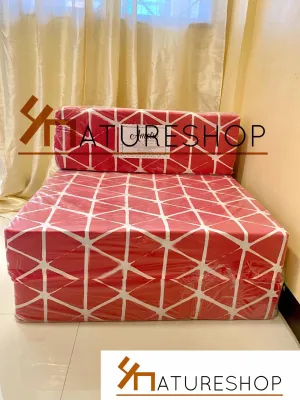
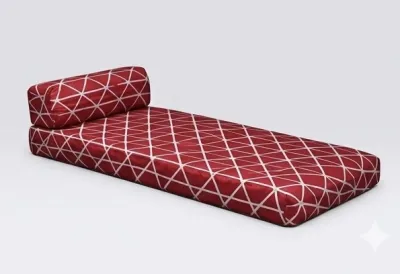

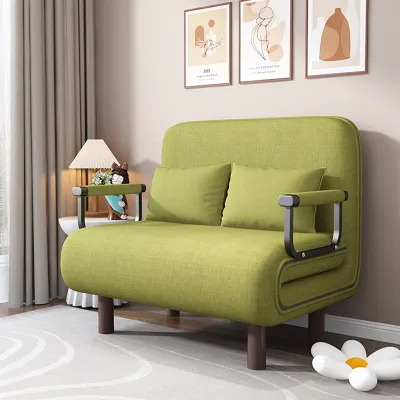
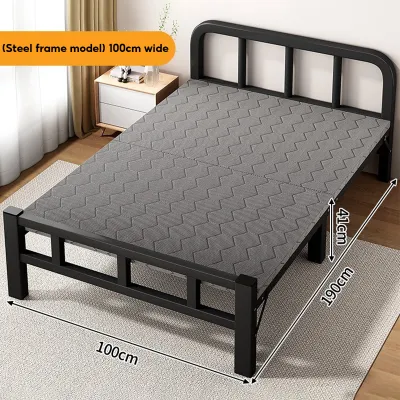
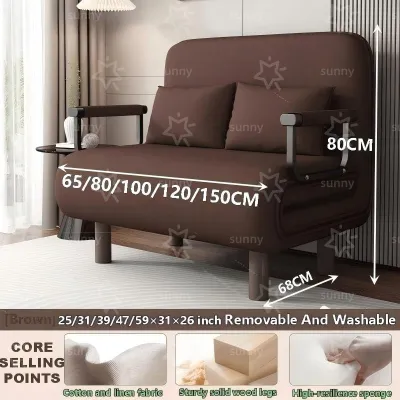

Prices are valid at publication and may change. Please refer to the product page for the latest price.
Beyond the physical frame of the sofa bed, you must calculate the necessary walking clearance to ensure comfortable daily movement. A cramped layout disrupts the peaceful flow essential to Japandi interiors. Ideally, you should maintain an unobstructed pathway around the extended bed so that you do not have to climb over other furniture to move through the room. Take note of adjacent items such as coffee tables, sideboards, or TV consoles; these pieces must either remain clear of the unfolding path or be light enough to move easily when transitioning the room for sleep.
Finally, do not overlook the logistical journey of the furniture from the delivery truck to your living room. Many apartment dwellers in high-density areas of Manila encounter significant challenges during delivery due to narrow service elevators, tight stairwells, and sharp hallway corners. Measure the height and width of your apartment’s entry door, the clearance of any interior hallways, and the dimensions of the building’s elevator cabin. Comparing these figures with the manufacturer’s packaged shipping dimensions prevents the frustration of purchasing a beautiful piece of furniture only to find it cannot clear the building’s entryway.
Aligning Dimensions with Japandi Design Principles
Japandi design is a harmonious fusion of Japanese minimalism and Scandinavian warmth, prioritizing functionality, natural materials, and a sense of quiet spaciousness. When selecting a single sofa bed, the physical dimensions must align with these aesthetic goals to prevent the room from feeling crowded. Prioritizing a low-profile frame is one of the most effective ways to maintain this balance. Furniture with a lower overall height keeps the visual plane close to the floor, which naturally makes apartment ceilings feel higher and the entire room feel more expansive and airy.

Intentional negative space is another cornerstone of the Japandi aesthetic. Negative space refers to the empty areas around and between furniture pieces, allowing the eyes to rest and creating a sense of calm. Instead of squeezing the largest possible sofa bed into a tight corner, choose a single-size model that leaves breathing room on either side. This deliberate spacing highlights the clean lines of the furniture and prevents the cramped, chaotic look that often plagues small urban apartments.
To further enhance this spatial flow, look for single sofa beds featuring exposed legs and elevated base structures. Elevating the main body of the sofa off the floor allows light to pass underneath, creating the illusion of additional floor space. In tropical climates like the Philippines, an elevated base also serves a highly practical purpose: it promotes better air circulation near the floor, which helps mitigate the buildup of moisture and dust in humid environments. This combination of visual lightness and practical ventilation beautifully embodies the functional elegance of Japandi living.
Evaluating Single Sofa Bed Configurations and Mechanisms
The mechanism that converts your sofa into a bed plays a critical role in determining both the required clearance and the daily usability of the piece. Different configurations have distinct spatial demands that must be matched to your room’s layout. For instance, a traditional fold-out sleeper chair typically extends straight forward, requiring substantial front clearance but very little side clearance. This makes it highly suitable for long, narrow rooms where wall space is limited but the path ahead is relatively open.
In contrast, click-clack mechanisms operate by folding the backrest downward to create a flat sleeping surface. While these models are often highly streamlined and visually appealing, they frequently require a designated clearance gap between the back of the sofa and the wall. If your layout does not allow for this gap, you will find yourself dragging the heavy frame away from the wall every time you transition to bed mode, which quickly becomes tedious and can scratch your flooring. Alternatively, pull-out drawer mechanisms slide forward from the base, requiring smooth floor transitions; you must verify that the rollers or wheels will not damage delicate vinyl, laminate, or wood flooring common in modern apartments.
When evaluating these mechanisms, you must also balance mattress thickness with the overall seat height and structural stability of the unit. A thicker mattress generally provides better support for sleeping, but it can result in a bulkier frame or an uncomfortably high seating position when folded. For a comfortable sitting experience, aim for a seat height of approximately 40 to 45 centimeters. Ensure the frame feels stable and robust during the transition process, and check whether the design includes integrated under-seat storage, which can provide valuable extra space for linens without adding to the furniture’s external dimensions.
Creating a Sizing and Selection Checklist
To ensure a successful purchase, consolidate your spatial measurements, delivery route checks, and aesthetic preferences into a final verification checklist. This step-by-step review helps prevent oversight and ensures that the chosen single sofa bed fits seamlessly into both your physical space and your design vision.
- Step 1: Verify Floor Footprint. Confirm that the room can accommodate both the daytime sofa dimensions ($W \times D_{sofa}$) and the nighttime extended dimensions ($W \times D_{bed}$) while leaving adequate walking paths.
- Step 2: Check Delivery Access. Cross-reference the packaged product dimensions with your building's elevator door, hallway corners, and apartment entryway.
- Step 3: Assess Mechanical Clearance. Ensure there is sufficient wall clearance for click-clack models or front clearance for fold-out designs.
- Step 4: Evaluate Japandi Styling. Confirm the unit features a low-profile silhouette, neutral tones, and an elevated base with exposed legs to maintain visual lightness.
- Step 5: Review Manufacturer Specifications. Always consult the official manufacturer specification sheets for exact tolerances, weight capacities, and assembly requirements.
If you encounter any stop conditions during this check—such as a delivery path that is too narrow for the packaged box, or an extended bed footprint that completely blocks your apartment’s primary exit—do not force the purchase. Instead, pause and consult the manufacturer regarding modular options, white-glove assembly services, or alternative compact configurations that can safely accommodate your space.
Frequently Asked Questions (FAQ)
How much walking clearance should I leave around a sofa bed?
For comfortable daily movement, aim to leave at least 50 to 60 centimeters of walking clearance on at least one side of the single sofa bed when it is fully extended. This secondary access route ensures you can easily get in and out of bed, open nearby wardrobe doors, or access the bathroom without obstruction. If the room layout is exceptionally tight, you may reduce this clearance slightly on non-primary sides, but the main walkway through the living room should always remain completely clear to maintain safety and a relaxed, uncluttered atmosphere.
Do Japandi sofa beds require specific fabric or material choices?
To complement the Japandi aesthetic, prioritize natural textures, neutral tones, and matte finishes that evoke a sense of calm and connection to nature. Fabrics such as linen blends, textured cotton, or high-quality woven polyester in shades of beige, cream, oatmeal, or soft grey work beautifully. Because the Philippine climate can be warm and humid, it is highly recommended to check the manufacturer’s care labels for cleaning instructions and fabric suitability. Opting for durable, moisture-resistant, or removable and washable covers will help maintain the pristine, minimalist look over time.
Community discussion
Share your experience or ask a question. Comments are reviewed before publication.