
Finding the right storage solution for a compact condominium kitchen in the Philippines requires balancing your vertical footprint and floor mobility. The ideal choice depends on your primary bottleneck: if you lack surface area for daily meal prep, a mobile kitchen cart with locking casters provides an adaptable workspace; if your counters are cluttered with small appliances, a dedicated countertop kitchen cabinet maximizes vertical space. Selecting the best fit involves evaluating your kitchen’s physical dimensions, ventilation needs, and the tropical humidity that affects furniture durability.
Measure Your Condo Kitchen Space and Layout Constraints
Before purchasing any storage unit, you must map out the exact physical boundaries of your kitchen. Start by measuring your existing countertop depth and the clear vertical space between the counter and the upper cabinets. Many Philippine condos feature a standard countertop depth of 60 centimeters, meaning any countertop kitchen cabinet should ideally be shallower—around 30 to 40 centimeters—to leave usable workspace in front of it. For floor-standing kitchen carts, measure the available floor area when you are standing at the sink or stove to ensure you still have at least 90 centimeters of walking clearance.
Walkway clearance is only half the equation; you must also account for the dynamic swing paths of existing doors and drawers. Open your refrigerator, oven, microwave, and under-sink cabinets completely, then measure the remaining clearance. A mobile cart parked in a narrow galley kitchen can easily block these essential paths, turning daily meal preparation into a frustrating obstacle course. Ensure that the placement of a new cabinet or cart leaves enough room for two people to pass or for you to safely bend down to access a low oven.
Products mentioned in this guide
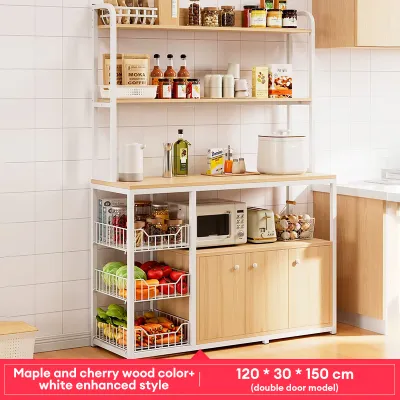
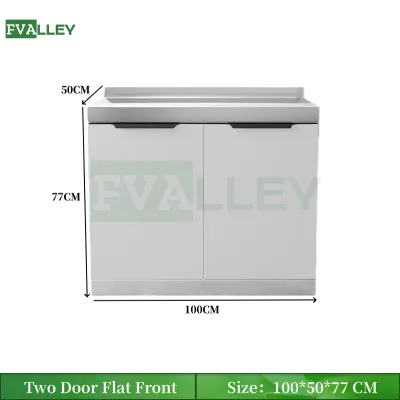
![[Vodool Park City][Vodool Park City] 2 Tier Tabletop Kitchen Pantry Cabinet with Lid Drawer Steel Pantry Small Kitchen Rack Multifunctional for Dining Room Living Room Solid Construction](https://img.lazcdn.com/g/p/d8a915bd1c012f18f1b3a26b963258d5.jpg_400x400q80.jpg_.webp)
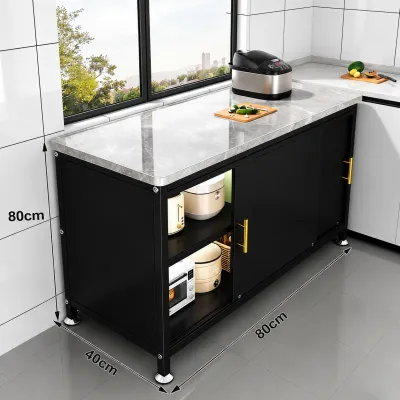
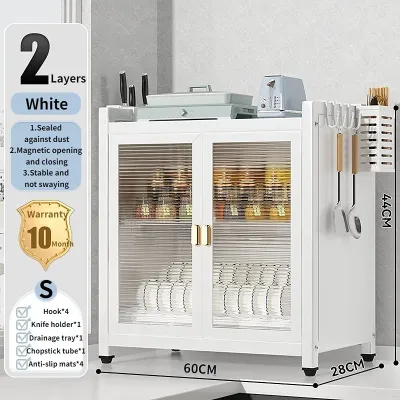
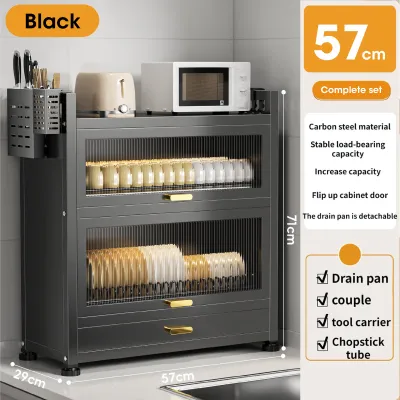
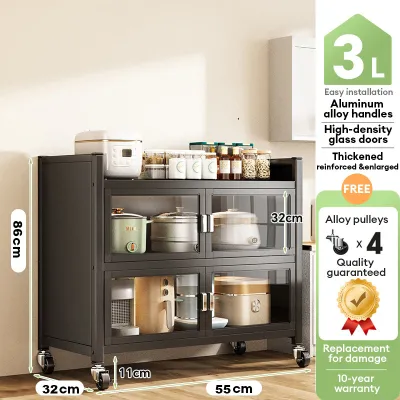
Prices are valid at publication and may change. Please refer to the product page for the latest price.
Utility mapping is another critical step that condo dwellers often overlook. Identify the locations of all electrical outlets, light switches, water lines, and ventilation zones. Placing a heavy countertop cabinet directly in front of your only kitchen outlet limits your appliance options and can create a safety hazard if cords are bent or pinched. Similarly, ensure that your storage unit does not block the airflow of a range hood or sit too close to the wet zone of your kitchen sink, where constant splashing can degrade the furniture’s finish.
Finally, remember that your purchase must actually make it inside your unit. High-rise condominium buildings in Manila and other urban hubs often have strict property management rules, narrow corridors, and small service elevators. Measure the height, width, and diagonal clearance of your building’s elevator doors, lobby entryways, and your own front door. If you are buying a pre-assembled unit, these dimensions will dictate the maximum size you can safely order; if you choose a flat-pack unit, ensure the individual boxes can be easily maneuvered through tight stairwells and corners.
Countertop Cabinets vs. Kitchen Carts: Choosing the Right Fit
Deciding between a stationary countertop cabinet and a mobile kitchen cart requires a clear understanding of your daily kitchen habits. While both solutions aim to declutter small spaces, they solve fundamentally different problems. A countertop cabinet is a structural addition designed to organize static items, whereas a kitchen cart serves as a dynamic, multi-functional island that can adapt to changing needs throughout the day.

Countertop Kitchen Cabinets for Fixed Storage
A countertop kitchen cabinet is specifically designed to sit on your existing counter, utilizing unused vertical space to hide clutter and organize daily essentials. These units are perfect for creating dedicated coffee bars, spice stations, or housing small appliances like air fryers and blenders that would otherwise crowd your main prep area. By enclosing these items behind sliding or swinging doors, you instantly create a cleaner, more organized visual profile in an open-concept condo layout.
When shopping for a countertop cabinet, always verify the manufacturer’s stated weight capacity and shelf reinforcement. Placing a heavy microwave or a premium espresso machine inside a cabinet made of thin, unreinforced backing can cause the unit to sag, warp, or collapse entirely. Look for models that specify their load limits per shelf, and ensure the base of the cabinet has non-slip pads to prevent it from sliding on smooth granite or quartz countertops.
It is equally important to measure the internal dimensions of the cabinet rather than relying solely on external measurements. Compare these internal specs with the physical dimensions of the appliances you plan to store inside, factoring in an extra 5 to 10 centimeters of clearance on all sides. This extra space is necessary not only for physical fit but also to allow you to easily plug in and unplug cords without straining the connections.
Kitchen Carts for Flexible Prep and Mobility
For kitchens where counter space is at a premium, a mobile kitchen cart acts as an adjustable island that can be rolled into place during meal prep and tucked away when guests arrive. These carts typically feature a solid wood, stainless steel, or tiled top that serves as an extra cutting and chopping station. The open or closed shelving below provides excellent storage for larger pots, pans, or dry pantry goods that do not fit in your main cabinets.
The defining feature of a reliable kitchen cart is a set of heavy-duty, 360-degree swiveling casters, with at least two of them featuring secure locking mechanisms. Never compromise on the quality of these locks; a cart that shifts or wobbles while you are chopping vegetables or handling hot liquids poses a serious safety risk. Test the locking mechanism to ensure it grips the floor firmly, particularly on slick tiled floors common in Philippine condominiums.
When calculating whether a cart will fit into your kitchen layout, look beyond the main body dimensions to find the total footprint. Manufacturers often omit protruding accessories like towel racks, spice shelves, or push handles from the primary width and depth measurements. These small additions can add 10 to 15 centimeters to the overall size, which can prevent the cart from fitting into a designated nook or blocking a doorway when parked.
Space-Saving Features and Proportional Dimensions to Look For
To maximize every square inch of a small condo kitchen, you must look for specific design details that optimize utility without adding physical bulk. Choosing furniture with smart, proportional dimensions ensures your kitchen remains highly functional and visually spacious.
- Proportional Depth: Standard kitchen countertops in residential developments are typically 60 centimeters deep. When choosing a countertop kitchen cabinet, select a model with a depth of 30 to 35 centimeters. This proportional sizing leaves a comfortable 25 to 30 centimeters of open counter space directly in front of the cabinet, allowing you to place bowls, cutting boards, or ingredients down while you work. For floor carts, a depth of 45 to 50 centimeters is ideal, as it provides a stable prep surface while keeping walkways open.
- Vertical Utilization: Look for units that extend upward rather than outward. Countertop cabinets with multi-tier shelving, adjustable internal dividers, or integrated under-cabinet hooks allow you to store mugs, utensils, and spices vertically. This keeps your most frequently used items within arm's reach while keeping the actual countertop clear of small, loose items that contribute to a cluttered feel.
- Expandable Surfaces: If you frequently cook complex meals but have limited floor space, prioritize kitchen carts with expandable features. Drop-leaf extensions or pull-out cutting boards can instantly increase your prep surface by up to 50 percent when needed. Once your meal preparation is complete, these extensions fold flat against the side of the cart, restoring your kitchen's open floor plan and preventing accidental bumps.
- Material and Finish Checks: The tropical climate of the Philippines introduces high humidity levels that can severely damage poorly finished furniture. Rather than assuming a cabinet is durable simply because it is labeled as wood or steel, carefully check the product specifications for protective coatings. Look for moisture-resistant finishes on engineered wood, rust-resistant powder coatings on steel frames, and sealed joints that prevent water from seeping into the core material. Always review the manufacturer's care instructions to verify how the surface should be cleaned and maintained to prevent mold, warping, or corrosion over time.
Common Sizing and Placement Mistakes to Avoid
Even a high-quality cabinet or cart can become a daily frustration or a safety hazard if it is poorly positioned or overloaded. Avoiding these common layout and usage mistakes will keep your kitchen safe and efficient.
- Blocking Clearance: Never position your kitchen cart or countertop cabinet where it interferes with the full operation of major appliances. Placing a cart too close to a dishwasher or oven door can prevent you from opening the appliance fully to load or unload heavy trays. Always test the clearance by physically opening every door and drawer in the immediate vicinity to its maximum angle before deciding on a permanent location.
- Ignoring Heat Dissipation: Enclosing heat-generating appliances like microwave ovens, air fryers, or toaster ovens inside a countertop cabinet without proper ventilation is a serious fire hazard. These appliances release significant amounts of heat and steam during operation. Always check the appliance manufacturer's manual for the required clearance distances—often 10 to 15 centimeters of open space at the top, back, and sides—and ensure your cabinet has an open back or dedicated ventilation slats to allow heat to escape safely.
- Overloading: Every piece of kitchen furniture has structural limits. Exceeding the stated weight capacity of a shelf or the top surface of a cart can lead to bowed shelves, cracked joints, or sudden structural failure. Heavy items like cast-iron cookware, stand mixers, and bulk pantry items should always be stored on the lowest shelves of a cart to keep the center of gravity low and prevent tipping.
- Tipping Hazards: Tall, narrow countertop cabinets can easily become top-heavy when loaded with dishes or small appliances. If you live in an earthquake-prone region like the Philippines, or if you have children or pets in your home, this poses a major safety risk. Check the product instructions for wall-anchoring requirements, and use the provided anti-tip hardware to secure tall units directly to the wall studs or backsplash whenever possible.
Frequently Asked Questions (FAQ)
Can I use a kitchen cart as a permanent countertop extension?
Yes, you can use a kitchen cart as a permanent extension of your existing countertop, provided you meet several stability and safety requirements. First, check that the cart’s height matches your existing countertops (typically 85 to 90 centimeters) to ensure a seamless, ergonomic transition for meal prep. Second, keep the heavy-duty caster wheels permanently locked to prevent any shifting during use. Finally, verify that the cart’s frame and top material are rated for continuous heavy use, and avoid placing vibrating appliances like blenders or stand mixers on it unless the cart is exceptionally stable and heavy.
How do I secure a tall countertop cabinet in a rented condo?
Securing a tall countertop cabinet in a rented condo requires balancing safety with lease restrictions on drilling. First, review your lease agreement or consult your property management office regarding minor wall modifications. If drilling into the kitchen backsplash or wall is strictly prohibited, look for freestanding anti-tip solutions, such as heavy-duty tension rods that wedge between the top of the cabinet and the ceiling, or industrial-strength adhesive safety straps designed for renters. Always consult the cabinet manufacturer’s safety guidelines to ensure these alternative stabilization methods are compatible with your specific model.
Community discussion
Share your experience or ask a question. Comments are reviewed before publication.