
Choosing the right storage for your books, files, and decorative pieces often comes down to a fundamental design and practical dilemma: should you opt for an enclosed cabinet or keep everything on display? The decision impacts not only the visual appeal of your study or living room but also how well your items are protected from environmental wear. While open shelves offer immediate access and a breezy, modern look, they also expose your belongings to dust and moisture. On the other hand, a dedicated bookshelves rack organizer with door provides a protective barrier and hides visual clutter, though it requires more physical clearance and a slightly higher initial investment.
To make the right choice, you must evaluate your local climate, your household dynamic, the specific items you plan to store, and the physical layout of your room. Balancing these factors ensures your furniture remains highly functional for years to come without becoming a source of daily maintenance frustration.
Quick Diagnostic: Is a Bookshelves Rack Organizer with Door Right for You?
Before browsing online catalogs or visiting local furniture showrooms, a rapid self-assessment can help clarify your primary storage requirements. This quick diagnostic evaluates your daily habits, environmental conditions, and spatial constraints to determine if doors are a necessity or an unnecessary addition.
Products mentioned in this guide
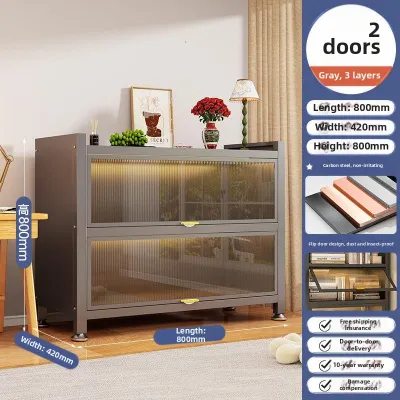
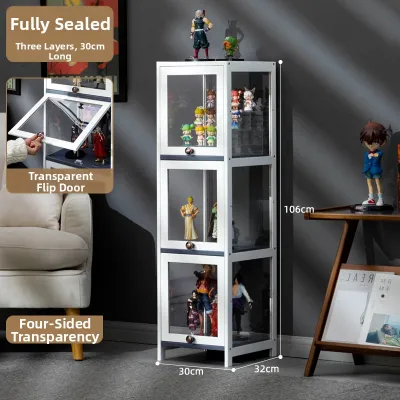
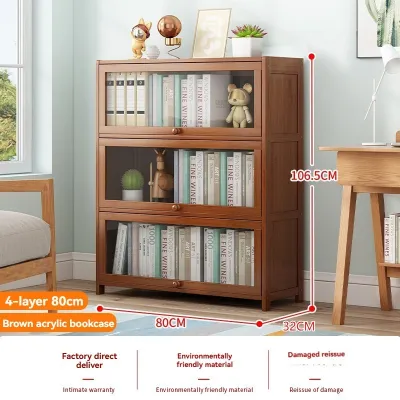
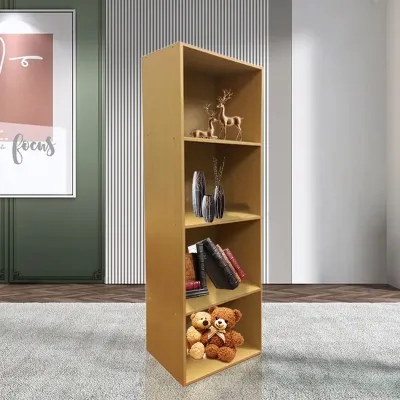
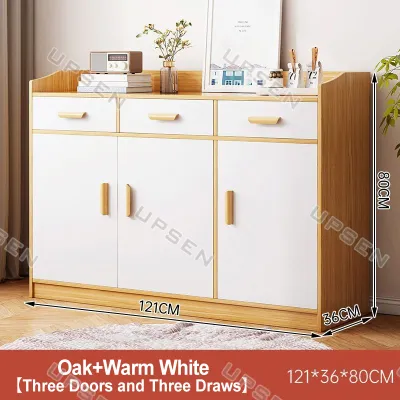
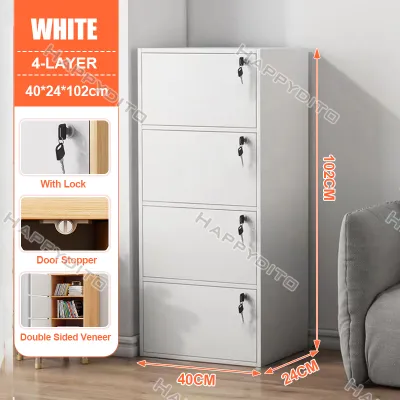
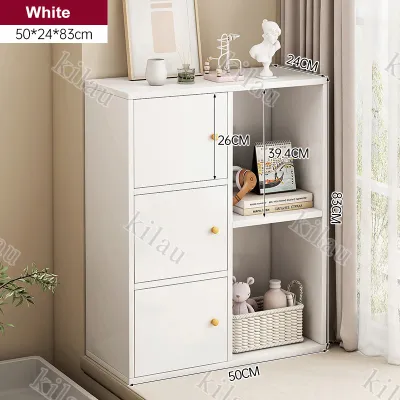
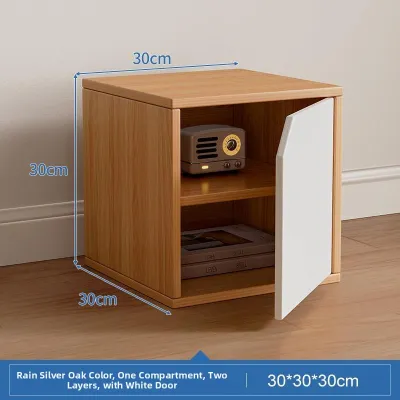
Prices are valid at publication and may change. Please refer to the product page for the latest price.
You should prioritize a bookshelves rack organizer with door if you match any of the following scenarios:
- High-dust environments: Your home is situated near a busy main road, construction site, or active transit corridor where fine dust settles on surfaces within a single day.
- Sensitive collections: You store rare books, archival documents, expensive camera gear, or delicate collectibles that are highly susceptible to moisture, dust, and direct sunlight.
- Clutter reduction: You prefer a clean, minimalist room aesthetic and want to conceal mismatched binders, office supplies, or loose paperwork instantly.
- Safety concerns: You have curious toddlers or active pets in the house, making it necessary to restrict access to heavy books or fragile decorative objects.
Open shelving is likely sufficient for your space if you meet these conditions:
- Compact rooms: Your study or home office is small, and solid doors would make the space feel cramped, dark, or visually heavy.
- High-frequency access: You are a student, researcher, or professional who constantly reaches for reference books, textbooks, or tools throughout the day.
- Curated display goals: Your primary objective is to showcase indoor plants, framed photographs, awards, or art pieces that lose their visual impact behind glass or solid panels.
- Strict cleaning discipline: You do not mind integrating shelf-dusting into your weekly cleaning routine to keep exposed items looking pristine.
Signs You Need a Bookshelf With Doors
Deciding on enclosed storage is often driven by practical necessities rather than purely aesthetic preferences. In many households, environmental factors and safety concerns make doors a functional requirement rather than an optional luxury.

Dust and Tropical Climate Control
Living in a tropical environment like the Philippines introduces specific challenges for open-air storage. During the dry season, fine dust particles easily find their way indoors, settling into the crevices of book pages and decorative items. When the monsoon season arrives, relative humidity levels spike dramatically. This combination of fine dust and high humidity creates a sticky grime that adheres to surfaces, making cleaning exceptionally difficult and accelerating the yellowing and deterioration of paper.
Enclosed cabinets act as a primary line of defense against these elements. However, do not assume that a material name alone guarantees protection against moisture. While solid wood or high-grade engineered wood are popular choices, you must check the product specifications for actual moisture-resistant finishes, sealed back panels, and protective edge banding. Untreated materials can warp or absorb ambient moisture, which eventually transfers to your books and documents.
Managing Visual Clutter and Privacy
A home office or study often serves multiple purposes, sometimes doubling as a guest room or a corner of the living room. Open shelves demand meticulous organization; a single row of mismatched binders, loose cables, or tax folders can make the entire room look disorganized. This visual noise can be distracting during focus hours or video conferences.
Opting for a cabinet with doors allows you to maintain a polished, professional environment. You can organize your reference materials, office supplies, and archives in a way that prioritizes utility over appearance, knowing that closing the doors instantly restores visual order. Glass doors offer a middle ground by keeping dust out while showcasing your collection, whereas solid wooden or laminate doors provide complete visual privacy.
Child Safety, Pet Protection, and Stability
For households with young children or pets, open shelves present distinct safety hazards. Toddlers are naturally inclined to climb horizontal shelves, which can lead to severe tipping accidents if the furniture is not properly secured. Cats and dogs may also knock down heavy volumes or chew on accessible book corners.
Choosing a unit with doors—especially those equipped with child-safe latches—prevents unsupervised access to heavy items stored on upper shelves. Regardless of whether you select an open or closed model, always verify the manufacturer’s anchoring instructions. Heavy furniture must be securely fastened to the wall using L-brackets or anti-tip straps. In homes with concrete or masonry walls, ensure you use the correct wall plugs and screws to achieve a stable, permanent anchor.
When Open Shelving Is Enough for Your Space
Open shelving remains a highly popular choice for modern interiors, offering distinct functional and spatial advantages that closed cabinets cannot match. When environmental and safety concerns are minimal, open structures provide an elegant, budget-friendly solution.
Enhancing Spatial Perception and Light Flow
Solid, dark cabinets with doors can dominate a room visually, making small spaces feel boxed in and restricted. Open bookshelves, by contrast, feature a lighter visual profile. Because they lack solid front doors and sometimes even back panels, they allow light to pass through, creating an illusion of spaciousness.
This makes open shelving highly effective in tight corners, narrow hallways, or small study rooms. By choosing a frame that matches your wall color, the shelving unit can almost blend into the background, keeping the focus on your books and decor while maintaining an airy, breathable atmosphere.
Immediate Accessibility and Curated Displays
For active workspaces, speed of access is crucial. If you are constantly retrieving reference manuals, sketchbooks, or project folders, opening and closing doors throughout the day can become a tedious extra step. Open shelves keep your most-used items within arm’s reach, streamlining your workflow and keeping your mind focused on the task at hand.
Additionally, open shelves serve as an excellent canvas for personal expression. They allow you to mix books with indoor plants, sculptures, travel souvenirs, and family photos. Without the glare of glass doors or the barrier of solid wood panels, your curated items can be appreciated fully from any angle in the room.
The Reality of Maintenance and Cleaning
While open shelves offer excellent accessibility, they demand a realistic commitment to regular maintenance. Without doors to block airborne particles, dust will accumulate on every horizontal surface and book spine. In tropical regions, this requires a consistent dusting schedule—typically once or twice a week—using a microfiber cloth or a static duster.
If you prefer low-maintenance furniture and do not want to spend your weekends wiping down individual book tops, open shelving might eventually feel like a chore. However, if you enjoy organizing, rearranging, and maintaining your displays, the open format provides a highly rewarding and dynamic design element.
Key Dimensions and Specifications to Verify Before Buying
Before finalizing your purchase, you must verify several physical, structural, and spatial dimensions. A bookshelf that looks perfect online can quickly become a logistical headache if it does not fit your room’s layout or cannot support your collection.
Door Clearance and Room Traffic Flow
If you choose a bookshelf with swinging doors, you must calculate the clearance required for the doors to open fully. A standard cabinet door typically requires a swing radius of 30 to 45 centimeters. Measure the distance between the front of the bookshelf and adjacent furniture, such as your desk, office chair, or bed.
Ensure that opening the doors does not block primary walkways or collide with other furniture pieces. If space is tight but you still require enclosed storage, consider units with sliding glass doors or tambour doors, which provide dust protection without requiring any forward clearance.
Weight Capacity and Structural Integrity
Books are deceptively heavy. A single shelf filled entirely with dense textbooks, encyclopedias, or legal binders can easily weigh between 15 to 25 kilograms. Placing this much weight on a shelf that is too thin or poorly supported will cause it to sag over time, permanently damaging the unit’s structure.
Before buying, check the manufacturer’s specified load capacity per shelf. Look for these structural indicators:
- Shelf thickness: Aim for a shelf thickness of at least 15 to 18 millimeters for engineered wood, or thicker for solid wood.
- Span limit: Shelves longer than 80 centimeters without center support are highly prone to sagging under heavy loads.
- Support pins: Metal shelf support pins are significantly more durable and secure than plastic alternatives.
Delivery, Access, and Assembly Conditions
It is easy to overlook the logistics of getting the furniture into your home. Large, pre-assembled bookcases can be incredibly difficult to maneuver through narrow hallways, tight stairwells, or low-ceilinged elevators, which are common in urban condominiums.
Always measure your doorways, entry passages, and lift dimensions before ordering. If you are purchasing a flat-pack unit that requires self-assembly, ensure you have a clear, flat floor area in the target room to assemble the pieces safely. Check if the manufacturer provides clear assembly instructions, necessary hardware, and wall-anchoring kits in the package.
Hybrid Solutions and Space-Saving Alternatives
If you find yourself torn between the protection of closed doors and the accessibility of open shelves, you do not have to choose just one. Several hybrid furniture designs and organizing strategies offer the best of both worlds.
Two-Tone and Split-Level Designs
Many modern bookcases feature a split design, combining a closed lower cabinet with open upper shelves. This layout is highly practical for home offices and living rooms alike.
You can store heavy binders, tax records, printer paper, and unsightly office supplies in the lower closed section, keeping them completely out of sight. Meanwhile, the upper open shelves can hold your favorite novels, reference books, and decorative pieces, preserving an open, inviting feel at eye level.
Utilizing Modular Baskets and Storage Boxes
If you already own an open bookshelf or prefer its lower price point, you can easily simulate the benefits of a closed cabinet using modular storage accessories. Placing woven baskets, fabric bins, or plastic organizing boxes on your open shelves creates dedicated “drawers” for smaller items.
These containers protect your belongings from dust and light exposure while hiding visual clutter. They are easy to pull out when you need to retrieve items, and they allow you to customize the ratio of open display to closed storage as your needs change over time.
Frequently Asked Questions (FAQ)
Can I add doors to an existing open bookshelf?
Yes, it is possible to add doors to an open bookshelf, but the feasibility depends on the unit’s material and structural strength. For lightweight engineered wood or particleboard shelves, adding heavy wooden doors is not recommended, as the thin side panels may crack or fail under the weight of the hinges. Instead, consider lightweight alternatives such as custom-cut acrylic panels with magnetic closures, or install a simple tension rod with a fabric curtain to block dust and conceal clutter without putting stress on the frame.
How do I prevent mold on books in a closed cabinet?
To prevent mold growth in a closed cabinet within highly humid climates, you must manage moisture levels and airflow. Place disposable calcium chloride moisture-absorbing boxes or reusable silica gel packs in the corners of the shelves, replacing or regenerating them regularly. Avoid placing the bookshelf directly flush against damp exterior walls; leave a gap of at least 3 to 5 centimeters to allow air to circulate behind the unit. Finally, avoid packing your books too tightly on the shelves, as small air gaps between volumes help prevent stagnant, humid air pockets from forming.
Community discussion
Share your experience or ask a question. Comments are reviewed before publication.