
When choosing a double decker bed frame for your children’s bedroom, safety must be your absolute priority. In many homes across the Philippines, especially in dense urban areas like Metro Manila, Cebu, or Davao, space is at a premium. Bunk beds offer an excellent space-saving solution for growing families, allowing siblings to share a room comfortably while leaving plenty of floor area for study desks and play. However, because these elevated sleeping arrangements inherently involve heights, they introduce specific physical risks that parents must carefully evaluate before making a purchase.
Ensuring your children’s safety requires looking far beyond aesthetic appeal, color, or price. A secure double decker bed frame must feature robust guardrails that prevent accidental falls, a stable and slip-resistant ladder, a high weight capacity supported by solid structural engineering, and non-toxic, child-safe finishes. By understanding what technical specifications, structural joints, and safety standards to look for, you can select a bed frame that provides a secure, comfortable, and worry-free sleeping environment for your kids.
Quick Safety Checklist: What to Verify Before Purchase
Before you finalize your purchase of a double decker bed frame, having a systematic verification process can prevent costly mistakes. Rather than relying solely on polished product photos or showroom displays, you should request the manufacturer’s official specification sheets and safety compliance certificates. Online listings and staged retail setups can easily mask structural weaknesses or improper dimensions that only become apparent during daily use.
Products mentioned in this guide

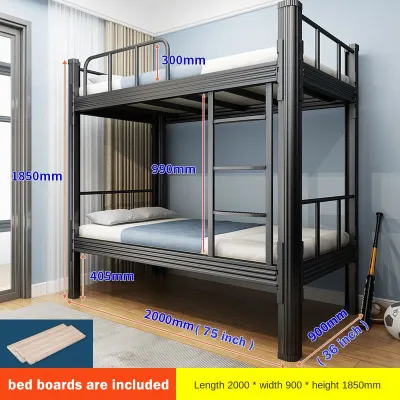
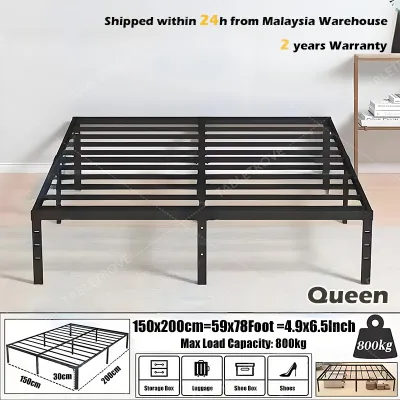
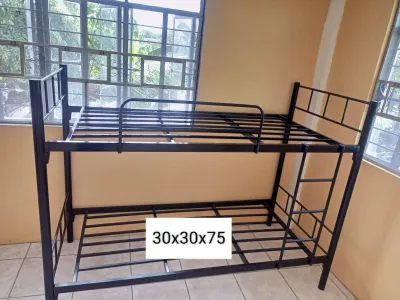



Prices are valid at publication and may change. Please refer to the product page for the latest price.
When evaluating any model, keep this rapid safety checklist in mind:
- Guardrail Clearance: Ensure the top of the guardrails sits at least 127 millimeters (5 inches) above the mattress surface.
- Ladder Attachment: Verify that the ladder bolts directly into the frame rather than hanging loosely with hooks.
- Slat Spacing: Check that the gap between mattress support slats is no wider than 75 millimeters (3 inches).
- Weight Capacity: Confirm that the frame's rated weight limit comfortably accommodates the combined weight of the mattress, bedding, and occupant.
- Hardware Finish: Ensure all bolts, screws, and brackets are recessed or covered with smooth caps.
Keep in mind that overall safety is a combination of built-in design features, mattress thickness, and correct assembly. Skipping steps during installation or using an incompatible mattress can compromise structural integrity.
Guardrail Height and Fall Prevention Standards
The most critical safety feature on any double decker bed frame is the guardrail system on the upper bunk. Falls from the top bunk represent the majority of bunk bed-related injuries, making robust barrier protection non-negotiable. Guardrails must be present on all four sides of the top bunk. If a bed is pushed directly against a wall without a guardrail, the frame can shift slightly over time, creating a dangerous gap where a child can slip through and become trapped.

When examining the guardrails, measure their height relative to the top of the mattress, not the bare bed frame. A thick, plush mattress can easily reduce the effective height of the guardrail to a dangerous level. To maintain proper fall protection, the guardrail must extend at least 127 millimeters (5 inches) above the compressed mattress surface. Always check the manufacturer’s maximum recommended mattress thickness—usually between 100 to 150 millimeters (4 to 6 inches) for top bunks—and stick strictly to those limits when buying your bedding.
Equally important is the spacing of the guardrail slats. If the gaps between the slats are too wide, they pose a severe head or limb entrapment risk. Verify that any openings within the guardrail structure, as well as the gap between the bottom rail and the bed frame, are less than 90 millimeters (3.5 inches). This sizing ensures that a child’s torso cannot slide through, eliminating the risk of dangerous neck or head entrapment.
Finally, if the bed frame features detachable or adjustable guardrails, inspect the locking mechanisms carefully. These barriers must require a deliberate, multi-step action or specific tools to remove. If a child can easily slide, lift, or unlock the guardrail from the inside, the barrier cannot be considered safe.
Ladder Stability and Safe Access Design
A child’s path to the top bunk must be secure, stable, and easy to navigate, even in the middle of the night. When shopping for a double decker bed frame, you will generally choose between angled ladders and straight vertical ladders. Angled ladders are significantly easier for younger children to climb because they allow for a more natural distribution of body weight and better balance. However, they do extend outward, requiring more open floor space. Vertical ladders save floor space but demand greater upper-body strength and coordination, making them better suited for older children.
The method used to attach the ladder to the bed frame is a vital safety checkpoint. Avoid models where the ladder simply hooks over the top rail without secondary fastening. These hook-on ladders can easily lift, slide, or detach if a child climbs quickly. Instead, prioritize ladders that bolt directly into the main wooden or metal frame of the bed. If you are inspecting a physical floor model in a local store, grip the ladder firmly and shake it; there should be absolutely no wobble, shifting, or creaking at the connection points.
The design of the ladder rungs themselves also plays a major role in preventing slips and falls. Narrow, round metal bars can be painful to step on with bare feet and offer very little traction, especially during hot, humid nights in the Philippines when feet are prone to sweating. Look for flat, wide steps that measure at least 75 millimeters (3 inches) in depth. These treads should feature slip-resistant grooves, textured surfaces, or rubberized grip pads to ensure secure footing.
Lastly, consider the immediate environment surrounding the ladder’s base. When planning your kids’ room layout, ensure there is a designated, completely clear landing zone at the bottom of the steps. Keep this area free from loose rugs that could slide on smooth tiled or wooden floors, as well as toys, slippers, or storage boxes that could cause a child to trip and fall.
Structural Integrity and Weight Capacity Limits
A double decker bed frame must be built to withstand years of active use, movement, and growth. Before purchasing, look for the manufacturer’s official weight capacity rating for both the upper and lower bunks. It is a common mistake to assume that a weight limit of, say, 80 kilograms only needs to cover the weight of a 30-kilogram child. In reality, that limit must support the combined weight of the child, the mattress, pillows, heavy blankets, and any dynamic force exerted when the child climbs, rolls, or sits up.
The foundation of structural safety lies directly beneath the mattress. A reliable bed frame must feature a robust support system, such as a solid wooden platform or a series of closely spaced slats. If you choose a slatted system, ensure the slats are made of dense, high-quality wood or sturdy metal, and that they are spaced no more than 75 millimeters (3 inches) apart. Widely spaced slats allow the mattress to sag, which can lead to structural failure or cause the mattress to slip through the frame. Look for frames that include center support rails and slat retainers or screws that lock each individual slat securely into the side rails.
Do not judge a bed frame’s strength solely by its bulkiness or visual thickness. Instead, inspect the materials and the hardware joints. For wooden frames, look for dense hardwoods rather than soft, easily stripped composite woods. For metal frames, ensure the tubing is thick and heavy. Examine the joints where the horizontal guardrails and mattress supports meet the vertical corner posts. High-quality double decker bed frames utilize heavy-duty steel bolts, metal-on-metal barrel nut connectors, or reinforced brackets. Avoid frames held together primarily by simple wood screws, which can loosen, strip, and weaken the wood over time.
To maintain structural integrity, establish clear household rules regarding bed usage. No matter how sturdy the bed frame feels, it is not designed to handle the impact of jumping, bouncing, or roughhousing. Make sure your children understand that the top bunk is strictly for sleeping and quiet activities, and never allow multiple children to occupy the top bunk at the same time.
Surface Finishes and Entrapment Hazard Checks
The physical surfaces of a double decker bed frame can present hidden hazards if they are not finished or designed with care. Wooden frames must be thoroughly sanded and sealed to prevent splinters. In the tropical, high-humidity climate of the Philippines, raw or poorly sealed wood can absorb moisture, leading to warping, cracking, and rough fibers that can easily scratch sensitive skin. If you are choosing a metal frame, inspect the welds and edges to ensure there are no sharp burrs, rough weld spots, or peeling paint that could cause cuts or rust.
When evaluating the finish, always check the manufacturer’s product safety labels for non-toxic paint or sealant compliance. Children, especially younger ones, may chew on bed frame surfaces or touch them constantly. Ensure that all paints, varnishes, and laminates used on the frame are certified lead-free and low-VOC (volatile organic compounds). This is particularly important in air-conditioned bedrooms where air circulation might be limited during the night.
Another critical safety check involves looking for potential entrapment hazards within the bed’s design. Many children’s beds feature decorative cutouts, such as stars, hearts, or geometric patterns, in the headboards, footboards, or guardrails. While these designs look appealing, they can easily trap a child’s head, neck, or limbs. As a rule of thumb, avoid any decorative openings that fall between 90 millimeters (3.5 inches) and 230 millimeters (9 inches) in size. Gaps within this range are large enough for a child’s body to slip through but too small for their head to pass, creating a severe strangulation hazard.
Additionally, pay close attention to the assembly hardware. All screws, bolts, nuts, and brackets must be recessed into the frame or covered with smooth, low-profile plastic caps. Protruding bolt heads or exposed threads can catch on loose clothing, pajama strings, or necklaces, posing a serious snagging or choking hazard during sleep or play.
Room Placement and Installation Safety Rules
Even the safest double decker bed frame can become hazardous if it is installed incorrectly or placed in an unsuitable part of the bedroom. Before purchasing, measure your room’s ceiling height and compare it to the overall height of the bed frame. There must be at least 750 to 900 millimeters (30 to 36 inches) of clear space between the top of the upper mattress and the ceiling. This clearance allows your child to sit up comfortably without bumping their head.
When planning the placement of the bed, keep these environmental safety rules in mind:
- Ceiling Fans and Lighting: Position the bed far away from ceiling fans, hanging light fixtures, and chandeliers. In many Philippine homes, wall-mounted or ceiling-mounted oscillating fans are common; ensure these are completely out of reach of a child standing on the top bunk.
- Windows and Blinds: Never place a double decker bed directly next to a window, especially on upper floors of a house or condominium. Keep the bed away from window blinds or curtains with looped pull cords, which present a severe strangulation hazard.
- Wall Anchoring: If you live in an area prone to seismic activity or have highly active children, check if the manufacturer recommends or provides a wall-anchoring kit. Securing the vertical corner posts of the bed frame directly to a concrete or stud wall using heavy-duty brackets prevents the unit from tipping over during unexpected movement.
When it comes to assembly, there is no room for shortcuts. Always follow the manufacturer’s assembly manual step-by-step, using only the provided hardware. Never substitute missing bolts with random screws from a hardware store, and do not skip installing stabilizing crossbars or corner brackets. If any instructions are unclear, or if you find that the parts do not align properly, stop assembly immediately and consult the manufacturer or a professional installer.
Once the bed is fully assembled, safety maintenance becomes an ongoing responsibility. The natural expansion and contraction of materials due to tropical humidity can cause joints to loosen over time. Make it a habit to inspect the bed frame every three to six months. Check for any squeaking, swaying, or loose slats, and use the appropriate tools to gently tighten all bolts and hardware connections to ensure the structure remains as solid as the day it was built.
Frequently Asked Questions (FAQ)
What is the recommended minimum age for a child to sleep on the top bunk?
The generally accepted safety standard is that children under the age of six should never sleep on or play on the top bunk. At this developmental stage, younger children often lack the physical coordination, balance, and spatial awareness required to safely navigate the ladder and avoid rolling off the bed during deep sleep.
Beyond age, you must also evaluate your child’s behavioral readiness. If your child is prone to sleepwalking, experiences frequent night terrors, or regularly gets up in the middle of the night to use the bathroom, the top bunk may not be suitable even if they are older than six. Ensure your child is mature enough to understand and consistently follow basic safety rules, such as climbing the ladder properly and refraining from playing or jumping on the upper deck.
Can I use a thicker mattress on the top bunk for more comfort?
No, you should avoid using a mattress on the top bunk that exceeds the manufacturer’s specified maximum thickness. Doing so directly compromises the effectiveness of the guardrails. If you install a mattress that is too thick, the height of the guardrail relative to the mattress surface will drop below the safe limit of 127 millimeters (5 inches), significantly increasing the risk of your child rolling over the barrier and falling.
Before purchasing a mattress for the top bunk, check the bed frame’s safety label or instruction manual for the maximum allowable height, which is typically between 100 to 150 millimeters (4 to 6 inches). Always measure the mattress thickness yourself before placing it on the bed to ensure it leaves adequate, protective guardrail clearance.
Community discussion
Share your experience or ask a question. Comments are reviewed before publication.