
In compact bedrooms, floor space is a premium commodity that requires strategic planning. A standard closet often falls short of meeting diverse storage needs, leaving rooms cluttered with separate chest drawers, dressing mirrors, and storage boxes. Replacing these scattered pieces with a single, highly efficient multifunctional wardrobe cabinet can transform a cramped room into an organized, restful sanctuary. By consolidating multiple furniture functions into one footprint, you maximize floor area while keeping your daily essentials easily accessible.
Selecting the right multifunctional wardrobe cabinet involves looking beyond basic aesthetics. To find a unit that truly optimizes a limited layout, you must evaluate specific features designed to save physical space, enhance visual openness, and adapt to your changing storage requirements. Key elements like integrated mirror panels, space-saving sliding doors, built-in drawers, adjustable shelving, and tiered hanging rods all play a vital role. Furthermore, in tropical environments where humidity can affect furniture longevity, understanding material specifications and hardware durability is essential for making a lasting investment.
Exterior Upgrades That Save Floor Space and Reflect Light
The exterior design of your wardrobe dictates how much physical space it occupies and how it influences the room’s visual atmosphere. In small bedrooms, choosing the right door styles and surface treatments can prevent the space from feeling dark or overcrowded.
Products mentioned in this guide
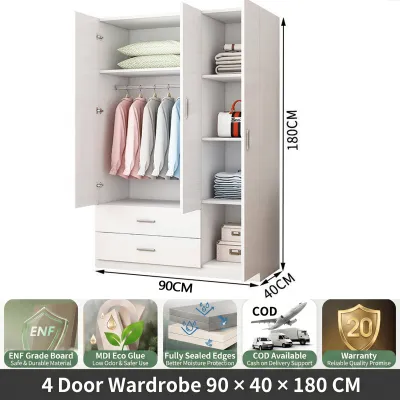
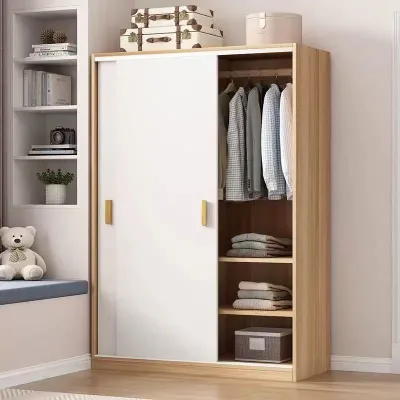
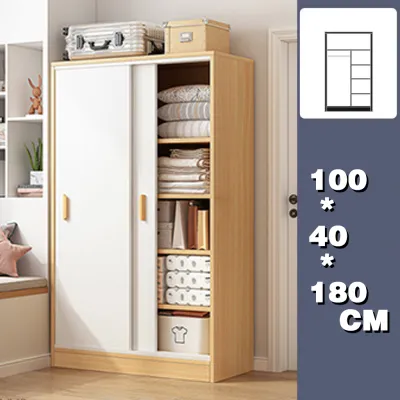
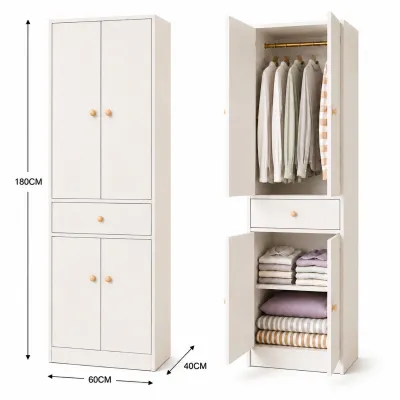
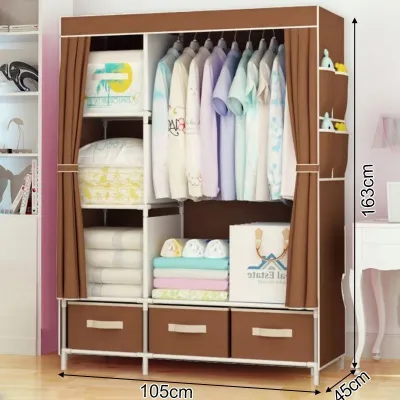
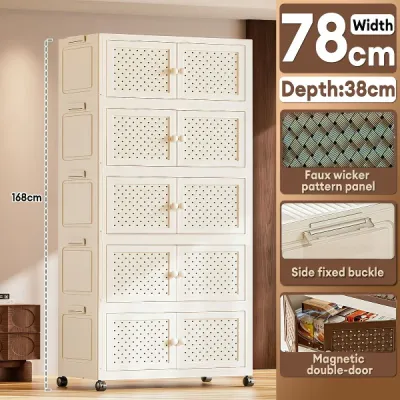
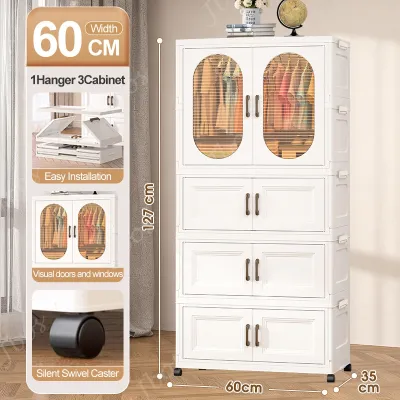
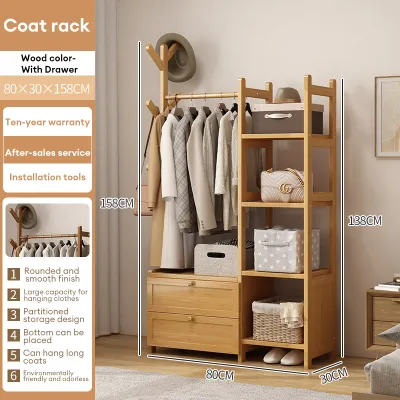
Prices are valid at publication and may change. Please refer to the product page for the latest price.
Integrated Mirror Panels
Adding a standalone full-length dressing mirror to a small bedroom often forces a difficult choice between walking clearance and daily convenience. A wardrobe cabinet featuring integrated mirror panels solves this dilemma by utilizing the vertical surface of the doors. This dual-purpose design completely eliminates the need for extra floor or wall space dedicated to a separate mirror.
Beyond their practical use for dressing, mirror panels serve as an effective design tool for altering the perception of space. They reflect both natural light from windows and artificial light from ceiling fixtures, instantly brightening dark corners and making a compact room feel twice its actual size.
When shopping for a mirrored wardrobe, it is important to verify how the mirror is constructed and mounted. Look for manufacturers that specify the use of copper-free glass, which is highly resistant to silvering and black-edge corrosion—a common issue in humid environments. Ensure the mirror features a Category II safety backing film. This invisible adhesive backing holds the glass fragments together in the event of accidental impact, preventing dangerous shattering. Additionally, check whether the mirror is flush-mounted or recessed into the door frame; flush-mounted designs offer a sleeker look, while recessed designs provide extra protection along the glass edges.
Space-Saving Door Mechanisms
The way your wardrobe doors open directly impacts how you can arrange the rest of your bedroom furniture. Traditional hinged doors require a clear swing radius, which often restricts where you can place your bed, nightstands, or desk.
Sliding doors are the ideal choice for tight clearance areas because they operate entirely within the wardrobe’s own footprint. You can position a bed or a chair just centimeters away from a sliding door wardrobe without blocking access to your clothes. When evaluating sliding doors, pay close attention to the track and roller hardware. High-quality systems utilize smooth-gliding aluminum or stainless steel tracks paired with ball-bearing rollers. Look for models equipped with anti-jump mechanisms, which prevent the doors from slipping off their tracks during rapid movement, and soft-close dampers that prevent loud slamming.
It is important to note the spatial trade-off associated with sliding doors. The track system itself typically requires an extra 5 to 10 centimeters of depth compared to hinged doors. This means a sliding door wardrobe will have a slightly deeper external footprint to maintain the same internal hanging space. If your room is exceptionally narrow, verify whether the external depth—including the track—will block walkways or entryways.
Interior Storage Systems to Maximize Every Inch
The true value of a multifunctional wardrobe cabinet lies behind its doors. A smart internal layout uses a mix of specialized storage zones to accommodate different types of clothing and accessories, ensuring no vertical or horizontal space goes to waste.

Built-In Drawers for Small Essentials
Without dedicated drawers, smaller items like undergarments, socks, accessories, and personal documents easily become disorganized. Integrating built-in drawers directly into your wardrobe cabinet eliminates the need for a separate chest of drawers, freeing up valuable floor space elsewhere in the bedroom.
When assessing built-in drawers, the quality of the drawer runners is paramount. Basic plastic or wooden runners tend to stick, squeak, or sag over time. Instead, look for full-extension, ball-bearing drawer slides made of galvanized steel. Full-extension slides allow the drawer to pull out completely, giving you clear visibility and access to items stored at the very back. Soft-close mechanisms are also highly beneficial, as they ensure the drawers glide shut quietly and prevent wear on the cabinet joints.
Pay attention to the vertical placement of these drawers within the cabinet. Drawers positioned too close to the floor can be difficult to access and are highly susceptible to collecting floor dust and moisture. Opt for mid-level or waist-high drawer configurations. This placement keeps your daily essentials within easy reach and allows the bottom section of the wardrobe to be utilized for larger, less frequently used items like storage boxes or luggage.
Adjustable Shelves for Flexible Layouts
Your storage needs are rarely static; they change with the seasons, lifestyle shifts, and wardrobe updates. Fixed shelves limit your options, often leaving large gaps of empty, wasted air above shorter stacks of clothing. Adjustable shelves provide the modularity needed to customize your storage layout over time.
Look for wardrobe cabinets featuring pre-drilled peg holes spaced at regular intervals (typically 32mm apart) along the interior side panels. This allows you to raise, lower, or remove shelves entirely to accommodate bulky winter wear, travel bags, or specialized storage organizers.
To ensure safety and longevity, verify the thickness and material of the shelves. For engineered wood cabinets, shelves should be at least 15mm to 18mm thick to prevent bowing or sagging under the weight of heavy items like folded denim or bed linens. Support brackets should be made of metal rather than thin plastic, and they should lock securely into the peg holes to prevent the shelf from tipping forward when you pull an item from the stack. For added functionality, some premium systems offer slide-out valet trays or shallow accessory drawers that fit neatly between adjustable shelf levels.
Tiered Hanging Sections for Garment Care
Hanging space is essential for keeping shirts, dresses, and trousers wrinkle-free, but a single, high hanging rod often leaves a massive amount of unused space at the bottom of the cabinet. A tiered hanging system solves this by dividing the vertical space into specialized zones.
Double-tiered hanging sections utilize two rods stacked vertically, effectively doubling the hanging capacity for shorter garments like shirts, blouses, skirts, and folded trousers. For a balanced wardrobe, look for a configuration that combines a double-hanging section with a single, full-height hanging section. The full-height section is necessary for long garments like dresses, jumpsuits, or long coats, ensuring they hang freely without dragging on the bottom panel and gathering dust.
When evaluating hanging rods, check both the material and the mounting brackets. Hollow plastic or thin-walled wooden rods are prone to bending or snapping under the weight of a fully loaded closet. Opt for thick-walled, heavy-duty metal rods—such as stainless steel or chrome-plated steel—with a diameter of at least 25mm. The rod supports should be securely screwed into the solid side panels of the wardrobe rather than the thin backboard. Always check the manufacturer’s specified weight capacity for each rod to ensure it can safely support your clothing collection.
Critical Sizing and Clearance Checks Before You Buy
An otherwise perfect wardrobe cabinet can quickly become a major headache if it does not fit your room or cannot be delivered into your home. Before committing to a purchase, you must perform several precise measurements and structural checks.
- Room and Clearance Measurement: Begin by measuring the available wall width, floor-to-ceiling height, and room depth. Do not rely on a single measurement; walls and floors are rarely perfectly straight. Take measurements at three different points (bottom, middle, and top) and use the smallest figure as your guide. Next, calculate the necessary clearance for daily use. If you choose hinged doors, you will need at least 50 to 60 centimeters of open space in front of the wardrobe to stand and open the doors comfortably. For drawers, ensure they can extend fully without colliding with your bed frame, nightstands, or bedroom door.
- Delivery Access Route: Many buyers overlook the journey the wardrobe must take from the delivery truck to the bedroom. If you are purchasing a fully assembled wardrobe or large, heavy flat-pack boxes, measure the height and width of all entryways, hallway corners, stairwell turns, and elevator doors. This is especially critical for high-rise condominium residents in busy urban areas, where tight service elevators and narrow corridors can make transporting large furniture panels extremely difficult.
- Stability and Anchoring: Tall, narrow wardrobe cabinets have a relatively high center of gravity, making them susceptible to tipping forward—especially when multiple heavy drawers are pulled out at once. To ensure safety, always check if the manufacturer includes a wall-anchoring kit (such as L-brackets, safety straps, and heavy-duty wall plugs). Anchoring the wardrobe securely to your bedroom wall is a critical safety step, particularly if you have young children, pets, or live in an area prone to seismic activity. If your bedroom walls are made of concrete, ensure you have access to a masonry drill and the correct wall anchors for installation.
- Baseboard and Skirting Accommodation: If your bedroom has baseboards or skirting boards installed along the floor, a standard flat-backed wardrobe will not be able to sit flush against the wall. This leaves an unsightly gap where dust can accumulate, and it prevents you from anchoring the cabinet securely. Look for wardrobe designs that feature a pre-cut plinth or a recessed base at the bottom rear of the side panels. This cutout allows the wardrobe to slide over the baseboard, sitting perfectly flush against the wall without requiring you to modify or remove your room's existing woodwork.
Verifying Materials and Finishes for Humid Climates
In tropical regions like the Philippines, furniture is subjected to high relative humidity, seasonal temperature shifts, and intense heat. Without the right materials and protective finishes, wood-based furniture can easily warp, swell, or develop mold. Knowing what to look for on product specifications will help you choose a cabinet built to withstand these conditions.
- Edge Banding and Sealing: If you are purchasing a wardrobe made from engineered wood (such as medium-density fiberboard or particle board), the edges are the most vulnerable points for moisture penetration. Unsealed edges act like a sponge, absorbing ambient humidity and causing the wood fibers to swell and crumble. Physically inspect the cabinet panels or request close-up photos of the edge banding. Ensure all exposed edges—including the back of the wardrobe and the undersides of shelves—are fully sealed with high-quality PVC or ABS edge banding. Hot-melt polyurethane (PUR) adhesive or laser-applied edge banding provides the most durable, moisture-resistant seal.
- Surface Treatments: Avoid basic paper foil laminates, which peel off easily when exposed to moisture or friction. Instead, look for manufacturer-specified surface treatments like High-Pressure Laminates (HPL) or melamine veneers. These synthetic surfaces are thermally fused to the wood core, creating a highly durable barrier that resists scratches, stains, and moisture ingress. They are also much easier to wipe clean and sanitize without damaging the underlying wood.
- Hardware Corrosion Resistance: High humidity accelerates the rusting of metal components, leading to squeaky hinges, stuck drawer slides, and stained clothing. Verify that all functional hardware—such as hinges, drawer runners, handles, and hanging rods—features a corrosion-resistant finish. Look for powder-coated steel, stainless steel, or electroplated brass hardware. Soft-close hinges should feature sealed hydraulic dampers to prevent moisture from degrading the internal mechanism.
- Care and Maintenance Instructions: Review the manufacturer's care guidelines before purchasing. For humid climates, it is highly recommended to leave a small gap of 2 to 5 centimeters between the back of the wardrobe and the wall to promote continuous air circulation. This simple installation adjustment prevents stagnant air pockets from forming, significantly reducing the risk of mold growth on both your wall and the back of your wardrobe. Additionally, look for recommendations on safe cleaning agents, and avoid using harsh chemicals that can strip away protective surface coatings.
Frequently Asked Questions (FAQ)
Can I add adjustable shelves to an existing wardrobe?
Yes, you can add adjustable shelves to an existing wardrobe cabinet, provided the interior side panels are structurally sound and thick enough to support drilling. You will need to measure the interior width and depth precisely to have new shelves cut to size. Use a shelf-drilling template to ensure your peg holes are perfectly level and aligned. Insert metal shelf support pins into the newly drilled holes to hold the shelf in place. Be careful not to drill completely through the outer side panels or into thin backboards. Always check your wardrobe’s original warranty before making modifications, as drilling custom holes may void the manufacturer’s coverage.
How much clearance is needed for sliding wardrobe doors?
While sliding doors require zero forward clearance to open, the track system itself requires dedicated space inside the cabinet. The top and bottom tracks typically occupy between 5 to 10 centimeters (2 to 4 inches) of the wardrobe’s overall depth. When planning your storage, ensure that the internal hanging depth—excluding the track area—is at least 50 to 55 centimeters. This ensures that standard clothes hangers can hang straight without rubbing against or blocking the sliding doors. Additionally, always keep the bottom track clear of dust, lint, and debris to maintain smooth, quiet door operation.
Community discussion
Share your experience or ask a question. Comments are reviewed before publication.