
Choosing a double decker bed frame for your children’s bedroom is an excellent way to maximize floor space, especially in cozy urban condos or shared family rooms across the Philippines. However, elevating a sleeping area introduces specific safety responsibilities that every parent must address before making a purchase. To ensure a secure sleeping environment, you must evaluate critical safety features such as robust guardrails, stable ladder designs, certified weight capacities, and secure structural joints. By focusing on these physical specifications and establishing clear household rules, you can prevent common accidents and create a comfortable, worry-free space for your children.
Guardrails and Fall Prevention Checks
The guardrails on the top bunk serve as the primary defense against accidental falls during sleep or play. When inspecting a double decker bed frame, verify that the guardrails extend continuously around all four sides of the upper bunk, leaving only a small opening for the ladder access point. This continuous barrier is essential because children frequently toss and turn throughout the night, especially in warmer tropical climates where sleep can be restless.
The height of these guardrails must be checked in relation to the mattress you plan to use. A safe guardrail should rise significantly above the top surface of the mattress to prevent a child from rolling over the edge. Always measure this distance from the very top of the mattress, not the bed base, as an overly thick mattress can dangerously reduce the effective height of the protective barrier.
Products mentioned in this guide
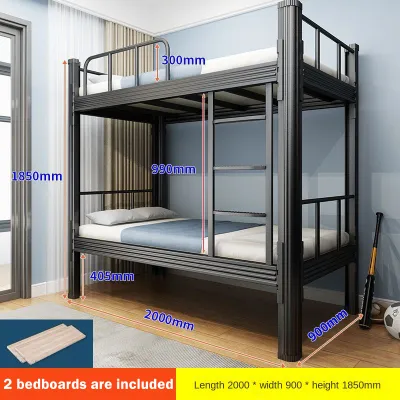
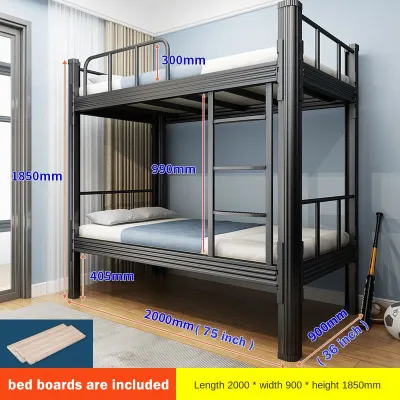
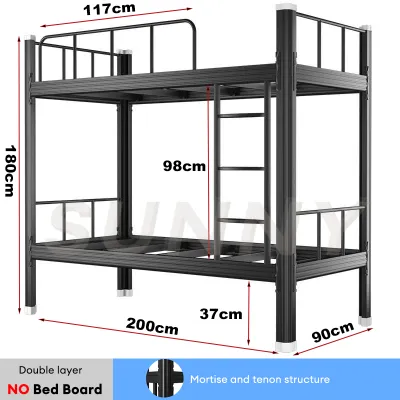
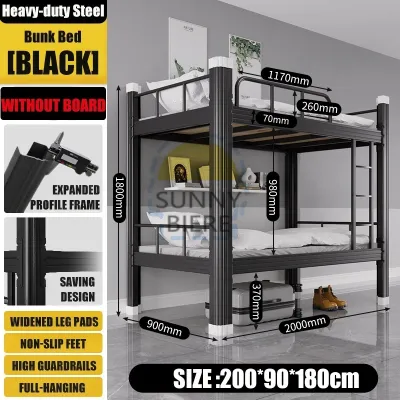
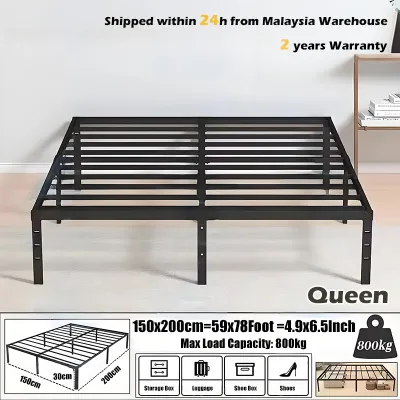
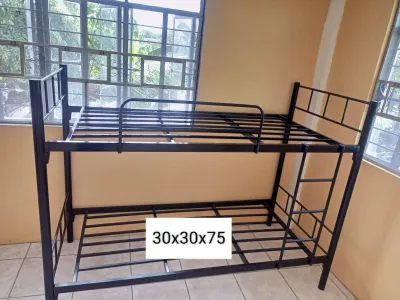
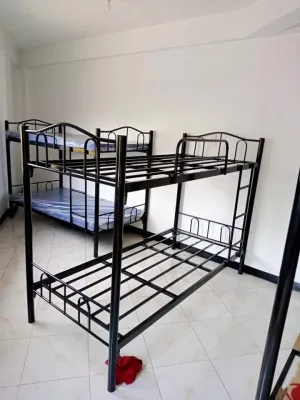
Prices are valid at publication and may change. Please refer to the product page for the latest price.
Additionally, pay close attention to the spacing of the guardrail slats and the gap between the bottom rail and the bed frame. These gaps must be narrow enough to prevent a child’s body or head from slipping through, which poses a severe entrapment hazard. Check the manufacturer’s specifications to ensure these openings comply with standard safety guidelines.
Finally, examine the design of the guardrails themselves. Avoid frames with horizontal slats or decorative cutouts that can act as makeshift ladder rungs. Curious children may use these horizontal elements as footholds to climb over the guardrail, defeating its protective purpose and increasing the risk of a fall.
Ladder Design and Access Stability
The ladder is the only safe pathway to the top bunk, making its design and stability a critical factor in your purchasing decision. You will generally encounter three main ladder configurations: straight vertical ladders, angled ladders, and integrated stairways. Straight ladders save the most floor space but require more physical coordination, while angled ladders offer a gentler incline that is easier for younger children to navigate. Integrated stairways, often featuring built-in storage drawers, provide the most stable footing but require a much larger room footprint.

Regardless of the style you choose, the ladder must attach securely to the bed frame. Inspect the mounting hardware to ensure it hooks or bolts firmly onto the structure without any wobbling or sliding. A loose ladder can easily detach under a child’s weight, leading to sudden falls.
The physical dimensions of the ladder steps also demand close inspection. Look for wide, flat steps rather than narrow, round rungs, as flat steps distribute weight more evenly and provide a more secure grip for bare feet. In the humid climate of the Philippines, smooth wooden or metal steps can become slippery; consider choosing ladders with textured surfaces or adding non-slip grip tape to enhance traction.
The spacing between the ladder steps should be uniform and comfortable for a child’s stride. If the steps are too far apart, children may struggle to climb safely, while irregular spacing can cause missteps during late-night descents.
Structural Integrity, Weight Limits, and Entrapment Gaps
A double decker bed frame must withstand not only the static weight of sleeping children but also the dynamic forces of daily movement. Begin your structural assessment by checking the manufacturer’s official weight capacity for both the top and bottom bunks. Keep in mind that this weight limit must accommodate the combined weight of the child, the mattress, and any heavy bedding. Never exceed these ratings, and avoid assuming that a sturdy-looking frame can support unlimited weight.
The materials and joint construction play a vital role in maintaining this structural integrity over time. If you prefer a wooden frame, look for solid hardwoods and verify that the joints are secured with heavy-duty metal bolts rather than simple wood screws or glue. In the Philippines, high relative humidity can cause wood to expand, contract, or warp, which can gradually loosen joints and compromise stability. For metal frames, inspect the welds for smooth, complete coverage and check that the tubing is thick enough to resist bending.
Support slats beneath the mattresses must be robust and closely spaced to prevent sagging. Ensure the slats are securely fastened to the side rails of the bed frame, as shifting slats can cause the mattress to fall through.
Lastly, measure all potential entrapment zones around the bed. This includes the spaces between the mattress and the headboard or footboard, as well as the gaps between the bed posts. These areas must be tight enough that a child’s limbs or head cannot become wedged, eliminating the risk of serious injury or suffocation.
Room Placement and Assembly Requirements
Even the safest double decker bed frame can become hazardous if placed in an unsuitable location or assembled incorrectly. When planning your children’s bedroom layout, identify a placement zone that keeps the top bunk far away from ceiling fans and light fixtures. In many Philippine homes, ceiling fans are essential for air circulation, but they pose a severe impact hazard if positioned within arm’s reach of a child sitting or standing on the top bunk.
Keep the bed frame away from windows, glass panes, and hanging cords from window blinds or curtains. A child playing on the top bunk could easily lean against a window screen or become entangled in dangling cords, presenting a significant safety risk.
During assembly, follow the manufacturer’s instruction manual step-by-step without skipping any parts or rushing the process. Use only the hardware provided by the manufacturer; never substitute missing bolts with random screws from your toolbox, as they may not have the required shear strength. If the instructions call for anchoring the bed frame to the wall to prevent tip-overs, ensure you use the correct wall anchors for your specific wall type, whether concrete, hollow block, or drywall.
Establish a regular maintenance routine to preserve the bed’s stability. The natural movement of children climbing up and down will inevitably loosen hardware over time. Set a reminder to inspect the frame, tighten all bolts, and check the stability of the ladder and guardrails every few months.
Age Guidelines and Safe Usage Rules
Establishing clear safety guidelines and behavioral rules is just as important as choosing the right physical bed frame. As a general safety standard, the top bunk is not suitable for children under six years of age. Younger children often lack the coordination, balance, and spatial awareness required to safely climb the ladder and navigate the elevated sleeping platform, especially when waking up disoriented in the middle of the night.
Introduce and enforce strict household rules for using the double decker bed. Make it clear that only one child is allowed on the top bunk at any given time to prevent accidental crowding or falls. Prohibit rough play, jumping, and horseplay on both the top and bottom bunks, as these activities place immense dynamic stress on the frame’s joints and slats, which can lead to structural failure.
To make nighttime navigation safer, place a small nightlight near the ladder or ensure the bedroom has accessible, low-glare lighting. If a child needs to use the restroom during the night, adequate visibility will help them safely climb down the ladder without misstepping in the dark.
Frequently Asked Questions (FAQ)
At what age is it safe for a child to sleep on the top bunk?
Industry safety standards recommend that children be at least six years old before sleeping on the top bunk. At this age, children have typically developed the physical coordination needed to climb the ladder safely and the maturity to follow safety rules, such as not jumping on the bed. Always assess your individual child’s developmental milestones and nighttime habits before allowing them to use the upper bed.
How often should I check the bed frame for loose screws or damage?
You should perform a thorough safety inspection of the bed frame at least once every three to six months. Check all joint connections, tighten any loose bolts or screws, and inspect the ladder attachments to ensure they remain secure. Additionally, conduct an immediate check if you move the bed to a new spot in the room or if you notice any unusual squeaking, swaying, or wobbling during use.
Can I use any standard mattress on a double decker bed frame?
No, you must choose a mattress that matches the specific dimensions and thickness requirements outlined by the bed frame manufacturer. Using a mattress that is too thick will reduce the effective height of the guardrails, making it easier for a child to roll over the edge. Always check the manufacturer’s recommended maximum mattress thickness to ensure the guardrails still provide adequate protection.
Community discussion
Share your experience or ask a question. Comments are reviewed before publication.