
Finding a reliable, budget-friendly workspace in the Philippines is entirely possible if you know what to look for. While a budget of ₱3,000 might not secure a hand-carved hardwood masterpiece, it can easily buy a sturdy, functional, and attractive wooden desk that supports your daily work-from-home routine. The key lies in understanding material trade-offs, verifying structural designs, and knowing how to navigate online marketplaces to avoid flimsy alternatives.
To get the most value out of your budget, you must prioritize structural integrity over decorative extras. A simple, well-braced desk made of engineered wood or basic pine will serve you far better than a complex desk with drawers that uses thin, unstable panels. By focusing on essential dimensions and frame stability, you can establish a comfortable and productive home office without overspending.
Setting Realistic Expectations for a ₱3,000 Desk Budget
Managing your material expectations is the first step toward a successful purchase. At under ₱3,000, true solid hardwood options like mahogany or narra are virtually non-existent in the brand-new market. Instead, solid wood options at this level are typically limited to basic, fast-growing softwoods like pine or light rubberwood, which are often sold in flat-pack kits or by local workshops. These woods are lightweight and functional but are softer and more prone to dents and scratches than premium hardwoods.
Products mentioned in this guide
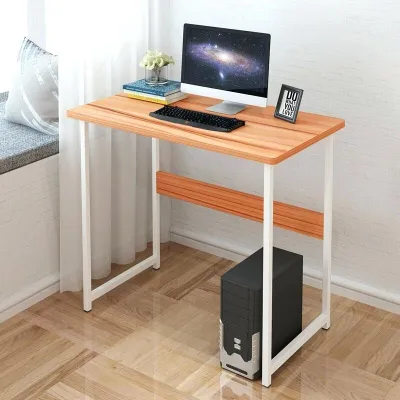
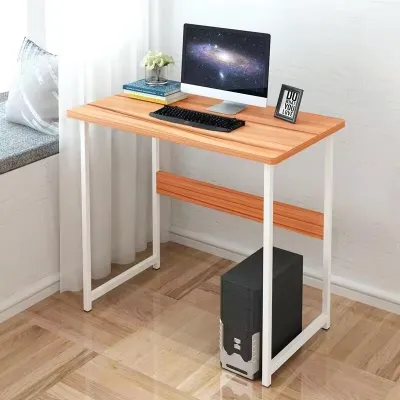
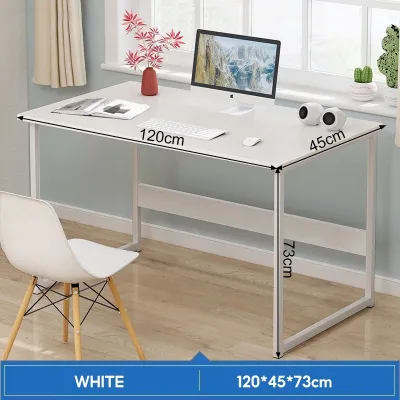
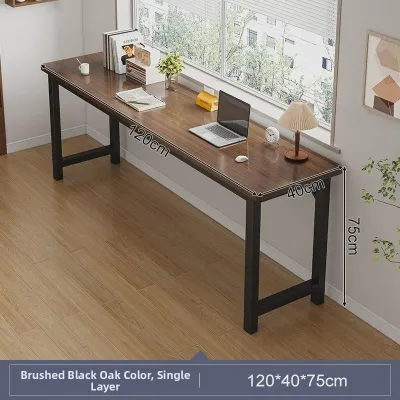
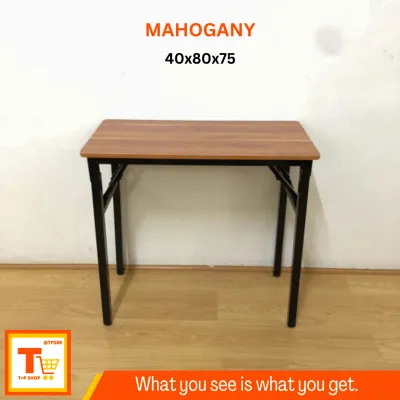
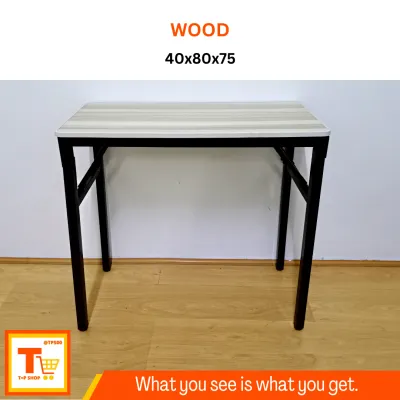
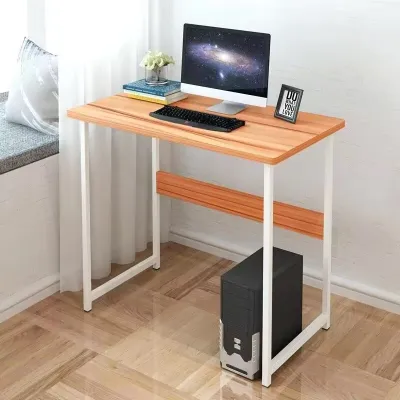
Prices are valid at publication and may change. Please refer to the product page for the latest price.
The vast majority of wooden desks in this price bracket are constructed from engineered wood, such as Medium-Density Fibreboard (MDF) or particleboard. These materials are made from compressed wood fibers or chips bonded with resin and covered with a decorative laminate or veneer sheet. While engineered wood gets a bad reputation for being cheap, high-quality MDF can actually be incredibly flat, stable, and resistant to warping under normal indoor conditions. The trade-off is that engineered wood is highly vulnerable to moisture and cannot support excessive weight without sagging over time.
Understanding these material limits helps you define what your desk can realistically handle. A budget desk under ₱3,000 is perfectly suited for a standard laptop setup, a single external monitor, a keyboard, and a mouse. However, if you plan to stack multiple heavy monitors, large books, or heavy desktop computer towers, you will need to pay close attention to the thickness of the tabletop and the reinforcement of the frame. Expecting a basic budget desk to perform like an executive solid oak workstation will only lead to disappointment and premature structural failure.
Must-Have Features vs. Compromises for Budget Desks
To stay under the ₱3,000 threshold, you must learn to separate non-negotiable structural features from luxury add-ons. The absolute priority for any work-from-home desk is stability. A desk that wobbles every time you type will quickly become a source of daily frustration and physical fatigue. Look for designs that feature cross-bracing, thick legs, or wide support panels. A simple rectangular desk with a solid frame is always preferable to a desk of the same price that tries to include built-in drawers, keyboard trays, and multiple shelves, as those extra features often come at the expense of overall material quality.

When evaluating leg designs, desks that pair a wooden or engineered wood top with a metal frame generally offer the best stability and weight distribution in this price range. Metal legs, usually made of powder-coated steel tubing, provide excellent rigidity and are less likely to wobble compared to cheap, thin wooden legs. If you prefer an all-wood look, ensure the desk uses wide panel legs with a thick back modesty panel, which acts as a structural brace to prevent side-to-side swaying.
Accepting certain compromises is necessary to keep costs low. At this price point, you should expect manual assembly, which requires you to carefully follow instructions and use basic hand tools. Edge finishes will likely be simple, straight-cut PVC or melamine banding rather than rounded, seamless bevels. Additionally, you will have to settle for a standard fixed height, typically around 73 to 75 centimeters. Instead of looking for built-in ergonomic adjustments, rely on adjusting your office chair or using a separate laptop stand to achieve the correct ergonomic posture.
Spotting Quality Traps and Hidden Costs
Evaluating online listings requires a critical eye to avoid low-quality products that look appealing in photos but fail in reality. One of the biggest red flags in budget desk listings is the complete absence of weight capacity specifications or tabletop thickness measurements. If a listing only shows stylized lifestyle images and fails to state whether the tabletop is 1.2 centimeters or 1.5 centimeters thick, it is highly likely the material is too thin to support a standard monitor setup without bowing. Vague material descriptions like “high-quality wood” without specifying if it is MDF, particleboard, or solid pine should also prompt caution.
You must also factor in hidden costs that can easily push your total expenditure past the ₱3,000 limit. Shipping fees for heavy furniture items in the Philippines can be substantial, especially if you live outside major metropolitan areas. Additionally, budget flat-pack desks rarely come with high-quality assembly tools; you may need to purchase a decent screwdriver or a rubber mallet to assemble the desk securely without damaging the pre-drilled holes. If the desk surface has a thin, delicate veneer, you might also need to invest in a large desk mat to protect it from scratches and daily wear.
In the humid tropical climate of the Philippines, moisture damage is a constant threat to cheap engineered wood. If water spills or high humidity penetrates the unsealed edges of particleboard, the wood fibers will swell, bubble, and eventually crumble. To avoid this, closely inspect product photos for clean, thick edge banding. Edge banding is the protective strip sealed over the raw edges of the engineered wood panel. If the banding looks uneven, thin, or shows visible glue lines in the listing photos, the desk is highly susceptible to peeling and moisture damage.
A Practical Checklist for Evaluating Online Listings
Before clicking the checkout button on an online marketplace, run through a systematic verification process to ensure the desk fits both your physical space and your functional needs.
- Verify Physical Dimensions: Measure your available floor space, but do not stop there. Check the clearance height for your office chair's armrests to ensure they can slide under the desk when not in use. Also, verify that the tabletop thickness (ideally 1.5 centimeters or more) can accommodate any clamp-on monitor mounts you plan to use.
- Analyze Customer Reviews: Ignore the generic five-star ratings and filter specifically for reviews that mention long-term use. Look for keywords like "wobble," "shaky," "peeling," "missing screws," or "damaged during delivery." Pay close attention to user-uploaded photos, as these reveal the actual color, finish quality, and structural thickness far better than polished seller graphics.
- Confirm Seller Policies: Because budget furniture is prone to transit damage, check the seller's return and refund policies before purchasing. A reputable seller should offer a clear window for reporting missing hardware or cracked panels and provide replacement parts without requiring you to ship the entire heavy package back at your own expense.
Space-Saving and Alternative Setups Under ₱3,000
If a standard freestanding desk does not fit your room layout, several practical alternatives can maximize your space and money. Foldable wooden tables are an excellent option for multi-purpose rooms or shared apartments. These tables can be set up in seconds for a work session and folded flat against a wall or slid under a bed when the workday ends. Look for models with solid pine tops and locking metal legs to ensure a stable typing surface.
Another highly customizable approach is to build a semi-DIY desk by purchasing components separately. You can often find standalone solid wood tabletops—such as finger-jointed rubberwood or pine panels—sold individually on local online shops. By pairing a separate tabletop with a set of budget-friendly metal hairpin legs or a simple metal desk frame, you can assemble a highly durable, solid-wood desk that fits your exact space requirements, often staying well under the ₱3,000 limit.
Finally, do not overlook multi-purpose household furniture. A sturdy wooden console table or a compact dining table can serve as an excellent permanent workspace. Console tables are typically narrower, making them ideal for tight hallways or bedroom corners, while small dining tables offer a deeper workspace that easily accommodates larger monitors and documents. Because these pieces are designed for general home use, they often feature cleaner aesthetics and more robust joint construction than dedicated “budget office desks” sold at the same price point.
Frequently Asked Questions (FAQ)
Can a wooden desk under ₱3,000 support dual monitors?
Yes, but it requires careful planning and structural verification. Most budget desks under ₱3,000 use engineered wood tabletops that are relatively thin (around 1.2 to 1.5 centimeters). Clamping a heavy dual-monitor mount directly to a thin MDF or particleboard edge can cause the wood to crack or sag under the concentrated stress. To safely support dual monitors, choose a desk with a metal frame that runs directly underneath the wooden top to distribute the weight. Alternatively, use individual freestanding monitor stands placed directly over the desk’s leg supports, or place a small wooden block between the monitor clamp and the tabletop to spread the clamping pressure.
How do I protect an engineered wood desk from water damage?
Protecting an engineered wood desk in a humid climate like the Philippines requires proactive care. Always use coasters for cold drinks to prevent condensation from pooling on the surface, and wipe up any liquid spills immediately. Avoid placing humidifiers or indoor plants directly on the desk surface without a waterproof tray underneath. For long-term protection, cover the primary work area with a large, water-resistant polyurethane (PU) leather desk mat. If you notice any exposed or unsealed engineered wood along the seams or bottom edges, you can apply a thin layer of clear silicone sealant or wood glue to block moisture from entering the core fibers.
Is it better to buy assembled or flat-pack desks on a tight budget?
For a strict ₱3,000 budget, flat-pack desks are almost always the better choice. Flat-pack furniture is significantly cheaper to ship because it occupies less volume in delivery trucks, which directly lowers your total purchase cost. However, flat-pack desks require an investment of your time and physical effort to assemble correctly. If you choose flat-pack, ensure you have a flat workspace, a proper screwdriver, and patience to avoid stripping the pre-drilled holes. Pre-assembled desks are convenient but carry much higher shipping fees and a greater risk of structural damage or joint loosening during transit across long delivery routes.
Community discussion
Share your experience or ask a question. Comments are reviewed before publication.