
Finding a comfortable, supportive cushioned chair for your home office or study in the Philippines does not have to be an expensive guessing game. While the market is flooded with options, selecting the right model between ₱3,000 and ₱15,000 requires balancing foam durability, essential adjustments, and breathable materials. A proper cushioned chair should support your posture during long working hours while preventing the heat buildup common in tropical climates. By understanding what features to prioritize at each price point, you can make an informed investment that protects your physical well-being.
Setting Your Budget Priorities for a Cushioned Ergonomic Chair
Establishing a clear budget is the first step toward finding a cushioned chair that meets your ergonomic needs without overspending. In the ₱3,000 to ₱15,000 price range, your budget directly dictates the level of adjustability and the longevity of the materials you will receive. While entry-level models focus on providing basic seat padding, moving up the price scale allows you to secure high-density molded foam that retains its shape over years of daily use.
When evaluating options, it is helpful to separate your must-have ergonomic features from nice-to-have upgrades. Must-haves include adjustable seat height, robust lumbar support, and a stable five-star base with smooth-rolling casters. These elements form the foundation of proper sitting posture, helping to prevent lower back strain. Nice-to-have features, such as multi-dimensional (4D) armrests, seat depth adjustment, and dedicated headrests, offer personalized comfort but can be compromised on if you are working with a tighter budget.
Products mentioned in this guide
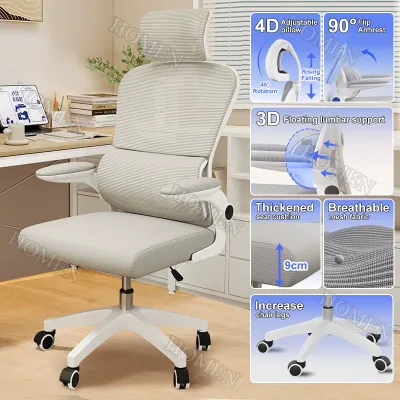
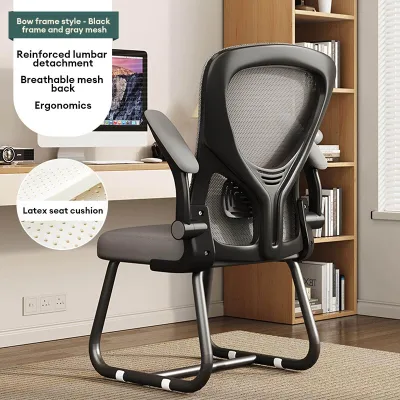
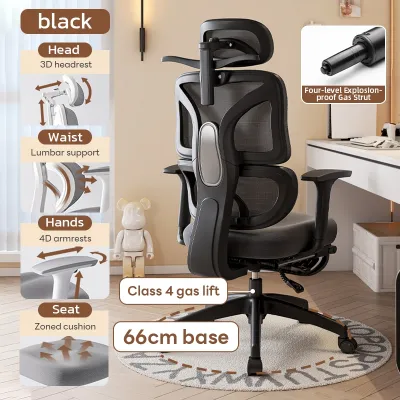
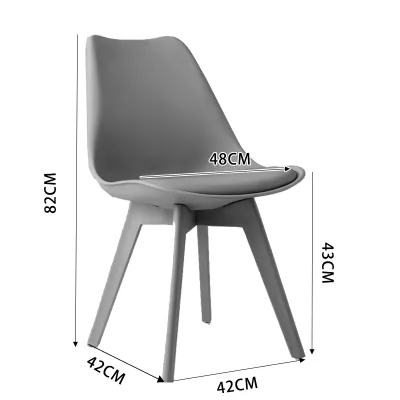
Prices are valid at publication and may change. Please refer to the product page for the latest price.
Because you are shopping specifically for a cushioned chair, you must pay close attention to how the seat pan is constructed. Unlike full mesh chairs, a cushioned seat relies on foam to distribute your weight. In a hot and humid climate, a thick cushion can trap body heat if it is wrapped in the wrong material. To balance plush comfort with temperature regulation, prioritize chairs that pair a supportive foam seat with a breathable mesh backrest or high-airflow fabric upholstery.
Key Ergonomic and Cushion Features to Verify Before Buying
To ensure your new cushioned chair delivers lasting comfort, you must look beyond marketing buzzwords and verify the physical specifications of the product. The materials used in construction determine not only how the chair feels on day one, but also how well it supports your body after months of continuous use.

First, evaluate the cushion material and density. Low-quality chairs often use cheap cut foam that quickly bottoms out, leaving you sitting on a hard wooden or plastic base. Look for manufacturers that specify high-resilience (HR) or molded foam, which is engineered to distribute pressure evenly and bounce back after use. If you are shopping in a physical showroom, perform a rebound press test by pressing your fist firmly into the center of the cushion; it should recover its shape instantly. When buying online, read verified customer reviews specifically searching for mentions of cushion sagging or flattening. Note that simple material names alone do not guarantee longevity.
Next, inspect the built-in ergonomic mechanisms. A supportive chair must adapt to your physical dimensions. Verify whether the lumbar support is fixed or adjustable; height-adjustable lumbar support is crucial because it allows you to align the curve of the chair with the natural curve of your lower spine. Additionally, check the tilt mechanism. A reliable chair should feature tension control, typically adjusted via a knob under the seat, which allows you to regulate how easily the chair reclines based on your body weight.
The base and casters are critical for safety and mobility. Always check the manufacturer’s stated weight capacity on the product label or spec sheet to ensure the chair can safely support your frame. Furthermore, match the caster type to your flooring. If your home office has hard floors like tile, polished concrete, or hardwood—which are highly common in Filipino households—look for rubberized or soft polyurethane (PU) casters to prevent scratching and reduce rolling noise. Standard nylon casters are acceptable if you plan to place the chair on a carpet or a protective desk mat.
Finally, consider the upholstery and overall breathability. While PU leather looks sleek and professional, it tends to trap sweat and peel prematurely in humid tropical environments. Opting for breathable woven fabric covers over the cushioned seat ensures better airflow. Many modern ergonomic designs utilize a hybrid approach, combining a breathable mesh backrest to keep your torso cool with a thickly padded fabric seat to cushion your sit bones.
What to Expect in Each Budget Tier (₱3,000 to ₱15,000)
Understanding what each price bracket offers helps you set realistic expectations and identify where your money is best spent. The Filipino market offers diverse options across three distinct budget tiers.
Entry-Level (₱3,000 – ₱5,000): Essential Comfort and Basic Adjustability
At the entry-level tier, chairs focus on providing the bare essentials of seating comfort. You can expect standard padded seats made of cut foam covered in basic fabric or mesh. The armrests in this price range are typically fixed to the frame or offer simple 1D (height-only) adjustment. The tilt mechanism is usually basic, allowing you to rock back slightly with a single locking position that keeps the chair upright during work hours.
The primary compromises in this tier involve the durability of the cushion and the adjustability of the support structures. Lumbar support is often a fixed plastic strip that cannot be adjusted to fit your height. Over time, the softer foam used in these cushions is prone to flattening, which may reduce comfort during long sessions. When shopping in this range, prioritize finding a model with a sturdy Class 3 or Class 4 gas lift and a reliable return policy. Always check if the package includes clear assembly instructions and the necessary tools, as self-assembly is standard at this price point.
Mid-Range (₱6,000 – ₱10,000): Enhanced Support and Better Materials
The mid-range tier represents the sweet spot for value, where you begin to see significant upgrades in both ergonomic function and material quality. Chairs in this bracket frequently feature adjustable lumbar support that can be shifted up or down, and sometimes forward or backward, to target your lower back precisely. The seats are typically constructed from thicker, high-density molded foam that offers a firmer, more supportive feel and resists sagging over time.
You will also find more sophisticated mechanical components, such as synchronized tilt mechanisms that tilt the backrest and seat pan at a comfortable ratio, keeping your feet flat on the floor as you recline. Armrests upgrade to 2D or 3D configurations, allowing you to adjust their height, angle, or depth to support your forearms properly. Upholstery materials are more durable and breathable, often featuring reinforced mesh backrests paired with high-quality fabric cushioned seats. Before purchasing, verify that the seat depth matches your leg length, ensuring your thighs are fully supported without the front edge of the seat pressing against the back of your knees.
Premium (₱11,000 – ₱15,000): Advanced Ergonomics and Durability
At the top of this budget range, you enter the premium tier, where chairs are engineered for heavy daily use and long-term durability. These models feature highly customizable components, including 4D armrests that adjust in height, width, depth, and angle to match any typing or resting position. Seat depth adjustment is standard, allowing you to slide the cushioned seat forward or backward to accommodate different heights.
The cushions in this category utilize premium high-resilience molded foam that provides optimal pressure distribution for extended sitting. The structural bases are often upgraded from nylon to heavy-duty reinforced aluminum, providing superior stability. You can also expect advanced tilt tension controls with multiple locking angles, integrated adjustable headrests, and extended warranty periods. To protect your investment at this price level, ensure you purchase from an official brand store or an authorized retailer in the Philippines to guarantee reliable after-sales support, warranty claims, and access to genuine replacement parts.
Hidden Costs, Assembly, and Warranty Checks
When purchasing bulky furniture online, the initial price tag is not the only cost you need to consider. Navigating the logistics of delivery and understanding the fine print of your purchase will prevent unexpected expenses and frustration.
Shipping and delivery fees for heavy, oversized items like ergonomic chairs can vary significantly. On local e-commerce platforms, shipping costs are calculated based on weight and volumetric dimensions, which can add a substantial amount to your total bill at checkout. It is also important to note that standard delivery services in the Philippines often drop off bulky parcels at the ground floor, gate, or building lobby. If you live on an upper floor of a condominium or apartment without an elevator, you may need to arrange extra assistance to transport the heavy box to your unit.
Consider the assembly requirements before your chair arrives. Most ergonomic chairs are shipped flat-packed in a box to minimize shipping costs. While some manufacturers provide partially assembled components that can be put together in fifteen minutes, others require complete assembly from scratch. Always check the product description to confirm if the necessary tools, such as an Allen wrench, are included in the package. If you are not comfortable with DIY assembly, look for local sellers that offer professional assembly services for an additional fee.
Warranty terms require careful scrutiny because they vary widely between brands. A typical warranty in this price range covers mechanical failures, such as a sinking gas lift cylinder or a broken tilt mechanism, but almost always excludes normal wear and tear. This means that cushion sagging, fabric pilling, or cosmetic scratches from daily use are rarely covered. Make sure to read the specific warranty card included in the box and keep your proof of purchase in a safe place.
Finally, familiarize yourself with the return policies of the seller or online marketplace. Returning a large, heavy chair because you find it uncomfortable can be incredibly difficult and expensive. Many platforms require the item to be completely disassembled, packed back into its original box, and kept in pristine, unmarked condition to qualify for a return. Checking these policies beforehand ensures you are protected if the chair does not meet your physical comfort expectations.
Frequently Asked Questions (FAQ)
Is a cushioned seat better than a full mesh chair for long hours?
A cushioned seat is generally better for individuals who prefer even weight distribution and a softer, more traditional feel. Mesh seats, while highly breathable, feature firm plastic frames that can press uncomfortably against the thighs of some users, especially during long sitting sessions. However, because cushions can trap heat, it is essential to choose a chair with a breathable fabric cover rather than PU leather if you work in a room without consistent air conditioning.
How do I measure my space and desk height for a new chair?
Start by measuring the height of your desk from the floor to the underside of the work surface. To maintain an ergonomic typing posture, your chair’s maximum seat height must allow your elbows to rest at a 90-degree angle relative to the desk surface. Next, measure your floor space. A standard ergonomic chair base has a diameter of approximately 60 to 70 centimeters; ensure you have enough clearance behind your desk to roll backward and swivel comfortably without hitting walls, shelves, or other furniture.
Community discussion
Share your experience or ask a question. Comments are reviewed before publication.