
Finding a sofa bed that seamlessly blends storage utility with the refined elegance of Japandi design requires a careful eye for detail. The Japandi aesthetic—a harmonious fusion of Japanese minimalism and Scandinavian warmth—prioritizes clean lines, natural materials, and highly functional, clutter-free living. When you introduce a multi-functional piece like a sofa bed with integrated drawers into this design scheme, the challenge is to maintain that sense of airy simplicity without sacrificing structural durability or storage capacity. In tropical climates where humidity can affect both wood frames and fabric upholstery, making an informed choice involves looking beyond surface-level looks to evaluate construction, mechanism design, and material resilience.
Identifying True Japandi Design Traits in Sofa Beds
To successfully integrate a sofa bed with drawers into a Japandi-style living room, you must first understand how to spot authentic design markers. Traditional sleeper sofas are often notoriously bulky, featuring thick, heavily padded armrests, deep skirts that hide the metal mechanisms, and visually heavy silhouettes that dominate a room. In contrast, a true Japandi sofa bed maintains a low-profile, lightweight appearance. The design should emphasize horizontal lines, keeping the overall height of the sofa relatively low to the ground to foster a sense of spaciousness and calm.
Color selection plays a pivotal role in establishing this aesthetic. The Japandi palette is deeply rooted in nature, relying on warm, earthy neutrals rather than stark, cold tones. Look for upholstery in shades of warm white, soft cream, oatmeal, sand, and muted gray. These colors reflect natural light beautifully, helping small spaces feel larger and more inviting. Avoid high-gloss finishes or shiny lacquered surfaces; instead, opt for matte, natural finishes on any exposed wooden elements to preserve the organic texture of the material.
Products mentioned in this guide
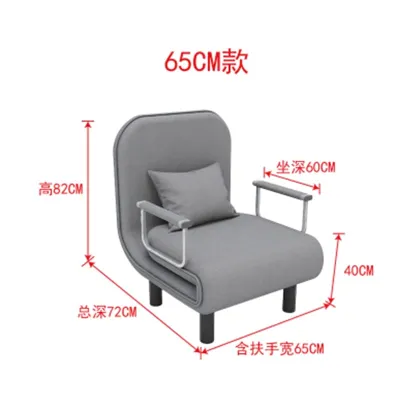
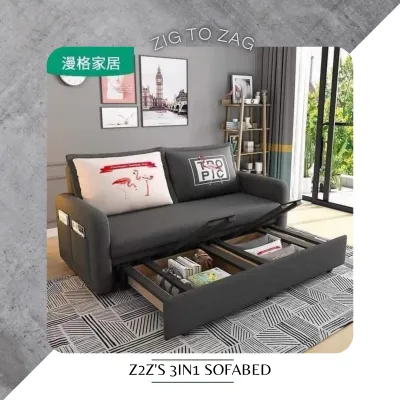
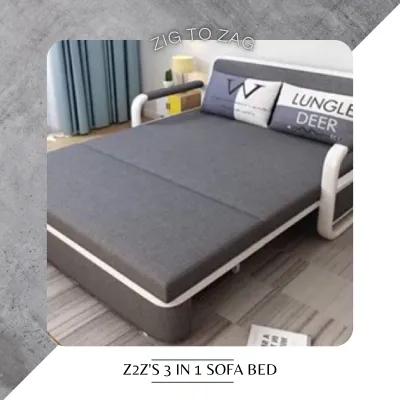
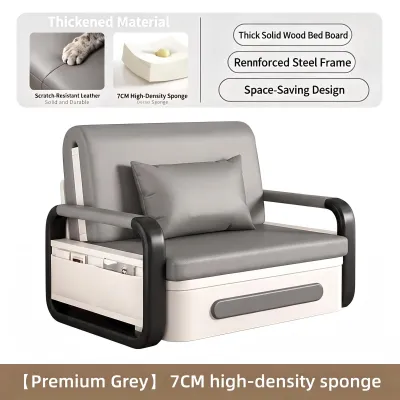
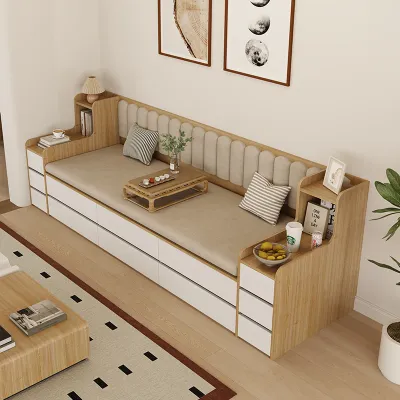
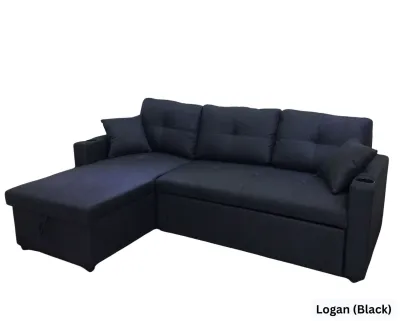
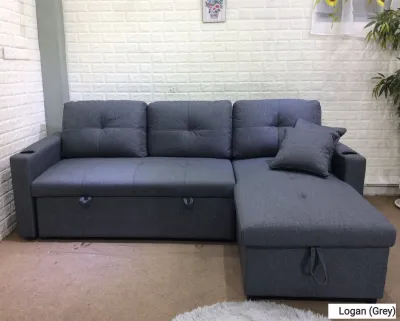
Prices are valid at publication and may change. Please refer to the product page for the latest price.
Exposed wooden accents are another hallmark of this style. A well-designed Japandi sofa bed often features a visible wooden base frame or tapered wooden legs that lift the piece slightly off the floor, creating an illusion of lightness. The wood tones should lean toward light to medium shades, such as natural oak, ash, or warm walnut. These natural elements bring warmth to the minimalist structure, balancing the clean, simple lines of the upholstery.
When evaluating potential options, actively steer away from details that clash with minimalist principles. This includes deep button tufting, ornate rolled arms, shiny chrome legs, or prominent metal drawer handles. Instead, look for clean, flat cushions and integrated or recessed drawer pulls that sit flush with the wooden frame. By prioritizing these subtle, understated details, you ensure that the sofa bed serves as a peaceful anchor for your living space rather than a visual distraction.
Assessing Drawer Storage and Bed Mechanisms
The addition of integrated drawers introduces a layer of practical utility, but it also demands a closer inspection of the furniture’s mechanical design. Under-bed drawers are incredibly useful for storing extra pillows, blankets, or seasonal items, but their usability depends entirely on the quality of their hardware. When reviewing product specifications, check for ball-bearing drawer glides or smooth-rolling wheels. Drawers that slide directly on the floor without tracks can be difficult to align and may scratch delicate flooring over time, whereas track-mounted drawers offer more consistent, stable movement.

Floor clearance is a critical factor that is easily overlooked during the selection process. You must calculate the exact clearance between the bottom of the drawers and your flooring. If you plan to place a thick area rug in front of the sofa, ensure the drawers have enough vertical clearance to slide open smoothly without catching on the fabric fibers. Additionally, consider the type of flooring in your home; heavy drawers rolling on soft wood or vinyl can leave indentations if they are not equipped with wide, floor-friendly casters.
The choice of bed mechanism also directly impacts both seating comfort and sleeping quality. A pull-out trundle mechanism, where the bed base rolls out from beneath the seat cushion, is highly common in storage-focused designs. This setup often allows for a thicker, more supportive mattress because the sleeping surface does not have to fold in half. Alternatively, a fold-down click-clack mechanism is simpler and has fewer moving parts, but it often results in a firmer sleeping surface with a noticeable seam down the middle. Weigh these trade-offs based on how frequently the bed will be used by guests.
Finally, pay close attention to the structural joints where the drawer system integrates with the main sofa frame. Because a sofa bed undergoes regular movement and weight shifts, these connection points bear a significant amount of stress. Look for frames that feature reinforced joints, such as corner blocks, dowels, or heavy-duty metal brackets. Avoid designs where the drawer tracks are screwed directly into thin, low-density particleboard, as these screws can easily strip or pull loose under the weight of fully loaded drawers.
Planning Space and Verifying Dimensions
A multi-functional sofa bed operates in several different physical states, making precise spatial planning essential. To avoid a cramped living room, you must measure and map out the sofa’s footprint in three distinct configurations: fully closed as a sofa, fully extended as a bed, and with the storage drawers pulled out to their maximum depth. Use painter’s tape on your living room floor to physically outline these dimensions, ensuring that you can comfortably open the drawers and walk around the bed without bumping into walls, coffee tables, or television consoles.
Delivery access is another common bottleneck that can disrupt your purchase. Because sofa beds with integrated drawers contain heavy internal mechanisms and solid base frames, they are often shipped in large, heavy boxes. Measure the width and height of every doorway, hallway, stairwell, and elevator cabin that the delivery team must navigate. If you live in a multi-story condominium or apartment building, verifying lift dimensions is a crucial step to ensure the package can actually reach your front door without requiring complex manual hoisting.
In compact living spaces, maintaining a natural traffic flow is vital for daily comfort. As a general rule of thumb, aim to preserve at least 60 to 90 centimeters of walking space around the perimeter of the bed when it is fully extended. This ensures that overnight guests can easily get in and out of bed without climbing over other furniture, and it keeps the room feeling open and airy even when the bed is in use.
Lastly, consider the weight of the unit and how it is distributed across your floor. Sofa beds with drawers are significantly heavier than standard three-seater sofas due to the extra timber, metal tracks, and mattress components. If you are placing the sofa on elevated or suspended flooring, check the manufacturer’s product weight specifications. A design with a wide, continuous base frame distributes this weight more evenly across the floorboards than a model that concentrates all the weight onto four narrow, tapered wooden legs, reducing the risk of localized floor strain.
Verifying Materials and Upholstery Care
The materials you choose will dictate both the longevity of your sofa bed and how well it maintains its clean, minimalist appearance. To align with the Japandi aesthetic, prioritize natural or natural-blend fabrics such as linen, cotton, or high-quality canvas. These textiles offer a beautiful, textured weave that feels soft and inviting. In warm, tropical climates, natural fibers are highly beneficial because they breathe well and do not trap body heat, making the sofa much more comfortable to sit or sleep on during hot afternoons.
However, natural fabrics require careful maintenance to prevent staining and wear. Before finalizing your choice, review the manufacturer’s official care instructions and fabric tags. Look for fabrics that have been treated with a mild, non-toxic stain-resistant finish, or opt for models that feature fully removable and washable cushion covers. Removable covers are an invaluable feature for busy households, allowing you to easily wash away dust, sweat, or accidental spills, thereby extending the life of the upholstery.
The internal frame material is the backbone of your sofa bed’s durability. Whenever possible, choose solid wood frames made from sturdy hardwoods like rubberwood, beech, or oak. Solid wood handles the repeated stress of opening and closing the bed mechanism far better than engineered alternatives. If the product specifications list engineered wood, such as MDF or plywood, ensure it is specified as high-grade and moisture-resistant. In high-humidity environments, low-quality engineered wood can absorb moisture from the air, leading to swelling, warping, and weakened joints over time.
Do not forget to check the density of the cushion foam, which is typically rated in kilograms per cubic meter. For a sofa bed that will see regular use, look for high-density foam ratings of 30 kg/m³ or higher. High-density foam provides firm, resilient support that prevents the cushions from sagging or bottoming out against the hard wooden frame beneath. If the manufacturer offers removable cushion covers, it also allows you to inspect the foam core directly and replace or upgrade it in the future if needed.
Building Your Shortlist for Online Furniture Stores
Finding the perfect Japandi sofa bed with drawers online requires a strategic approach to searching and filtering. Because “Japandi” is a stylistic term rather than a standard product category, searching for that word alone may limit your results or lead you to overpriced specialty boutiques. Instead, use targeted keyword combinations on online furniture stores and ecommerce platforms. Try terms like “minimalist wooden sleeper sofa,” “daybed with storage drawers,” “scandinavian sofa bed wood frame,” or “low profile storage sofa.”
Once you have generated a broad list of candidates, use the website’s search filters to narrow down your options systematically. Filter by primary materials, selecting wood and natural fabrics, and restrict the color palette to beige, cream, gray, and natural wood tones. Most importantly, input your maximum width and depth constraints to immediately eliminate models that are too large for your living room layout. This disciplined filtering process saves hours of scrolling through incompatible designs.
Before adding a sofa bed to your cart, carefully compare the retailer’s customer service policies. Look closely at the warranty terms, paying specific attention to what is covered—frame construction and mechanical parts should ideally be covered for at least one to two years. Review the return policy, especially regarding heavy furniture, as return shipping fees for a bulky sofa bed can be substantial if the piece does not fit or meet your expectations. Additionally, check if the store offers professional in-home assembly, which can save you the frustration of assembling complex drawer glides and folding mechanisms yourself.
If you are uncertain about the fabric color or texture, take advantage of fabric swatch services. Many reputable online furniture retailers will ship small fabric samples directly to your home for a nominal fee or even for free. This allows you to see how the color looks under your room’s natural lighting and verify the texture against your existing decor. If the retailer operates a physical showroom, make the effort to visit and test the sofa bed in person. Sit on the cushions, test the smoothness of the drawer glides, and convert the bed yourself to ensure the mechanism is easy and comfortable to operate.
Frequently Asked Questions (FAQ)
Can I add a mattress topper to a sofa bed with drawers?
Adding a mattress topper is an excellent way to enhance the comfort of a sofa bed, especially if the built-in mattress feels too firm. However, you must plan for its storage and compatibility with the folding mechanism. Most sofa beds cannot fold back into sofa mode with a thick mattress topper still attached, as the extra bulk will strain or damage the folding hinges. You will need to roll up the topper and store it separately when the bed is not in use. Fortunately, the integrated storage drawers beneath the sofa are often the perfect place to tuck away a rolled topper, keeping it clean and out of sight.
How do I protect natural wood accents from fading in direct sunlight?
Prolonged exposure to direct sunlight and ultraviolet (UV) rays can dry out natural wood, causing the finish to fade, discolor, or even crack over time. To protect the exposed wooden base or legs of your Japandi sofa bed, try to position the piece away from direct window exposure. If the layout of your room requires placing the sofa near a window, use sheer curtains or UV-blocking window films to filter the harsh sunlight without losing natural light. Additionally, establish a regular maintenance routine by dusting the wood with a soft, dry cloth and occasionally applying a manufacturer-approved matte wood conditioner or natural oil to keep the timber hydrated and resilient.
Community discussion
Share your experience or ask a question. Comments are reviewed before publication.