
A 20 square meter (sqm) condo living room in the Philippines typically accommodates a couch with a storage box that measures between 150 to 180 centimeters in length and 80 to 90 centimeters in depth. This size provides comfortable seating for two to three people while preserving the essential walkways and open floor space needed to keep a tropical, humid home feeling breezy and uncluttered. Rather than relying on a single fixed dimension, finding the perfect fit requires evaluating your specific floor plan, traffic flow, and the operational space needed to access the storage compartments. By balancing the couch’s physical footprint with the clearance required for its drawers or lift-up mechanisms, you can maximize your condo’s utility without sacrificing comfort.
Assessing Your 20 Sqm Living Room Layout
To find the right couch with storage box, you must first map your actual floor plan. In a typical Philippine condo, a 20 sqm living area is rarely a perfect, empty square. It often shares space with a dining nook or entryway, and is frequently interrupted by structural pillars, sliding balcony doors, and low-hanging wall-mounted air conditioning units. Grab a tape measure and sketch the room, noting the exact locations of these fixed obstacles. Pay close attention to how far your balcony door swings inward or how much space is required to access the kitchen counter.
Next, calculate the maximum footprint your new couch can occupy. A good rule of thumb is to maintain a minimum walkway clearance of 60 to 75 centimeters around all high-traffic paths. If the couch sits between the main entrance and the balcony, you will need at least 90 centimeters of clear passage to prevent a cramped, bottlenecked feel. Subtract these mandatory clearances from your total wall-to-wall measurements to establish the absolute limit of your couch’s length and depth.
Products mentioned in this guide
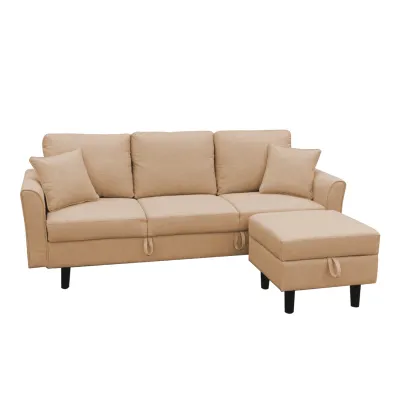
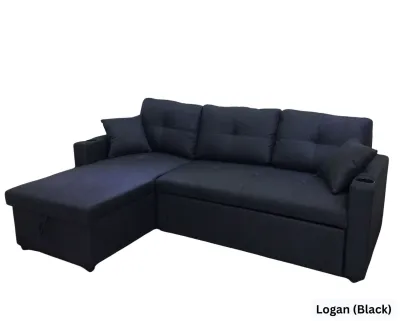
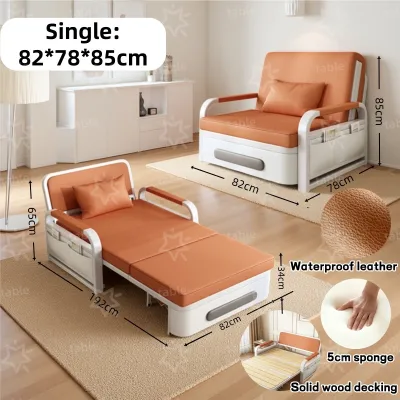
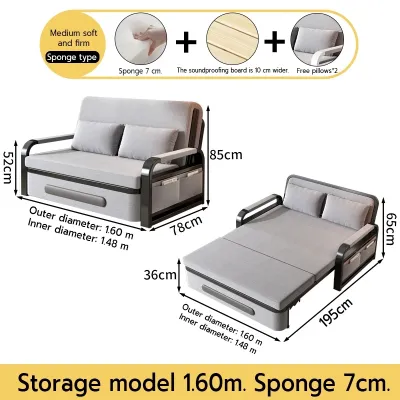
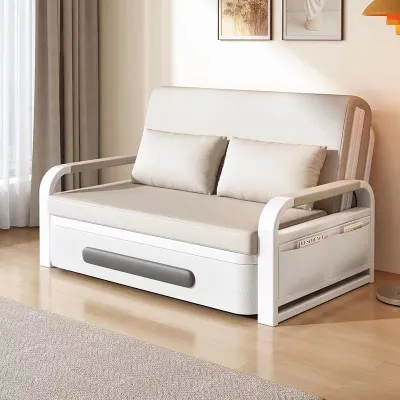
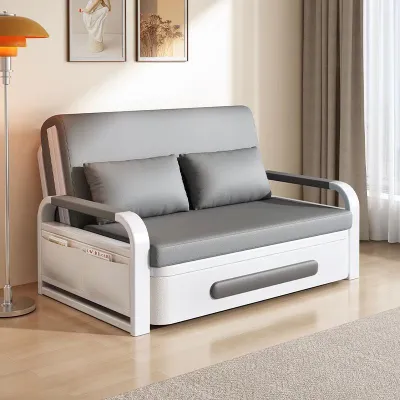
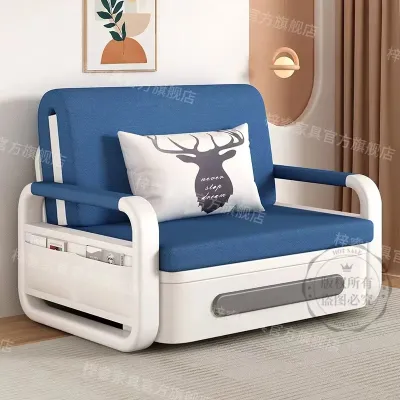
Prices are valid at publication and may change. Please refer to the product page for the latest price.
Finally, do not overlook the logistics of getting the furniture into your unit. Many condo dwellers purchase a beautiful storage couch only to find it cannot clear the building’s elevator ceiling, the tight turns of the emergency stairwell, or the standard 80-centimeter width of their front door. Always verify the packaged dimensions of the couch. If your building has tight access points, look for modular storage designs or flat-packed options that can be assembled directly inside your living room.
Ideal Dimensions and Proportions for a Storage Couch
Achieving a balanced look in a 20 sqm room is all about visual proportion. Instead of choosing a couch size at random, use your main seating wall as a guide. The length of your couch should ideally occupy about two-thirds of the wall it sits against. For example, if your primary living room wall is 2.7 meters long, a couch length of 1.8 meters is highly appropriate. This proportion leaves enough breathing room on either side for a small side table, a floor lamp, or simply empty space that prevents the wall from looking completely swallowed by furniture.

Depth is another critical dimension that dictates how spacious your room feels. Standard couches range from 80 to 100 centimeters in depth, but for a compact condo, keeping the depth closer to 80 or 85 centimeters is ideal. A deeper couch might offer slightly more lounging area, but it will encroach heavily on your central floor space, leaving very little room for a coffee table or media console. Keeping the depth shallow ensures that your primary traffic paths remain wide and easy to navigate.
The height of the couch also plays a major role in spatial perception. High-backed couches can act as visual barriers, cutting off sightlines and making a 20 sqm room feel like a series of small, boxed-in compartments. Opting for a low-profile backrest—typically around 75 to 85 centimeters from the floor—allows the eye to travel freely across the room. This open line of sight is particularly important in open-plan condos where the living room, dining area, and kitchen flow into one another.
Evaluating Storage Box Mechanisms and Clearance
A couch with storage box is incredibly practical, but its utility depends entirely on how easily you can access the hidden compartment. There are two primary storage designs available: lift-up hydraulic tops and pull-out drawers. Lift-up mechanisms utilize gas struts to lift the entire seating platform, exposing a large, undivided storage cavity underneath. This style is excellent for storing bulky, seasonal items like extra bedding, holiday decorations, or travel luggage, as it does not require any extra floor space in front of the couch to open.
In contrast, pull-out drawers or trundle-style storage compartments slide out from the front or sides of the couch base. While drawers make it much easier to grab everyday items like extra throw pillows, board games, or kids’ toys, they require significant front clearance. You must ensure there is enough open floor space in front of the couch—typically at least 60 to 80 centimeters—to pull the drawers out fully without hitting your coffee table, TV console, or rug.
Before choosing a drawer-style storage couch, inspect your flooring and decor. Thick, high-pile rugs can easily block drawer tracks, causing friction damage to both the rug fibers and the drawer mechanism over time. In the humid Philippine climate, heavy fabrics and carpets can also trap moisture, making smooth drawer operation even more critical to prevent mold or musty odors inside the wooden storage box. If you use a rug, ensure it is thin enough to sit beneath the drawer clearance, or opt for a lift-up hydraulic model instead. Additionally, verify the manufacturer’s structural weight limits to ensure the frame can support your stored items without sagging or warping.
Design Choices to Prevent a Cramped Feel
Because storage couches must accommodate a hollow box beneath the seats, they naturally have a heavier, more solid appearance than standard sofas. To counteract this inherent bulkiness, look for specific design details that create an illusion of lightness. One effective strategy is to choose a model with slightly raised legs rather than a solid base that sits flush against the floor. Even a small gap of 5 to 10 centimeters allows light and air to pass underneath, exposing more of the floor tile or wood planks and making the entire room feel more open.
Another smart design choice is selecting low-profile or narrow track armrests. Wide, rolled armrests can easily add 20 to 30 centimeters to the overall length of a couch without adding a single centimeter of actual seating space. By opting for slim, straight arms, you maximize the usable seating area while keeping the physical footprint of the couch as compact as possible. Some modern condo-friendly designs even feature armless configurations, which offer a sleek, minimalist look that blends seamlessly into small spaces.
Finally, pay close attention to fabric colors and textures. Dark, heavy fabrics like navy blue, charcoal, or thick velvet can make a storage couch look like a massive, dark block in the center of your room. Instead, select light, neutral tones such as beige, light gray, or soft cream that closely match or complement your wall color. This color harmony reduces the visual weight of the couch, allowing it to blend into the background. In tropical environments, choosing breathable, moisture-wicking fabrics like linen blends or treated polyesters will also help keep the seating comfortable during hot, humid afternoons.
Common Sizing and Placement Mistakes to Avoid
One of the most frequent mistakes condo owners make is pushing their storage couch completely flush against the wall. While this seems like a logical way to save space, it can actually damage your walls and restrict the couch’s functionality. Many lift-up hydraulic mechanisms require a small gap of 5 to 10 centimeters behind the backrest to tilt backward as they open. Pushing the couch tight against the wall can scrape your paint or prevent the storage compartment from opening fully.
Another common error is ignoring the swing radius of nearby doors, windows, and adjacent furniture. Always measure how far your balcony door, bedroom door, or even kitchen cabinet doors swing into the living space. A couch placed too close to these zones can block entryways or lead to constant, frustrating collisions. Make sure to test these clearances on your floor plan before finalizing the placement of your couch.
Lastly, avoid the temptation to buy an oversized couch simply because you need more storage. Overestimating your storage requirements can lead to a deep, bulky sectional that completely dominates your 20 sqm room, leaving no space for comfortable movement. It is far better to choose a moderately sized, highly efficient couch with storage box and supplement your storage needs with vertical shelving, wall-mounted cabinets, or multi-functional nesting tables. This approach keeps your living room functional, balanced, and comfortably spacious.
Community discussion
Share your experience or ask a question. Comments are reviewed before publication.