
Finding a reliable heavy-duty metal shoe rack organizer in the Philippines requires looking beyond basic aesthetics to focus on structural integrity, material thickness, and environmental resilience. In a tropical climate characterized by high humidity and seasonal wet weather, standard plastic or flimsy wire organizers often sag, warp, or rust under the weight of damp footwear. A true heavy-duty metal organizer provides the structural rigidity needed to support multiple pairs of heavy leather shoes, boots, and daily footwear without bending or tipping. By evaluating specific construction details, joint designs, and protective coatings, you can secure a storage solution that keeps your entryway organized and stands up to years of constant use.
Defining "Heavy Duty" for Your Shoe Storage Needs
To choose the right organizer, you must first calculate your household’s actual load requirements. This starts with a realistic inventory of your footwear collection. Not all shoes exert the same force on a rack; while a pair of lightweight rubber slippers or canvas sneakers might weigh less than 300 grams, heavy leather brogues, work boots, or thick-soled platform shoes can easily exceed 1 to 1.5 kilograms per pair. Multiply these weights by the number of slots on the rack to establish a baseline weight capacity requirement.
It is equally important to distinguish between static load and dynamic load. Static load refers to the weight of shoes sitting undisturbed on the shelves over long periods. Dynamic load is the temporary, localized force applied when you quickly drop a heavy pair of shoes onto a tier, lean on the frame for balance, or pull a tightly wedged pair from a lower shelf. A rack that is rated only for static weight may wobble or bend under these sudden, daily dynamic forces, making a higher structural safety margin essential.
Products mentioned in this guide
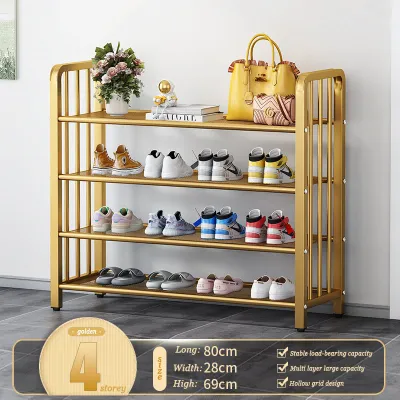
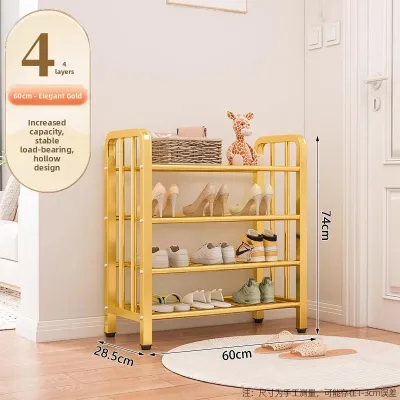
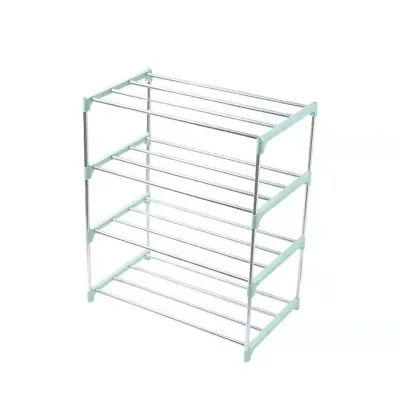
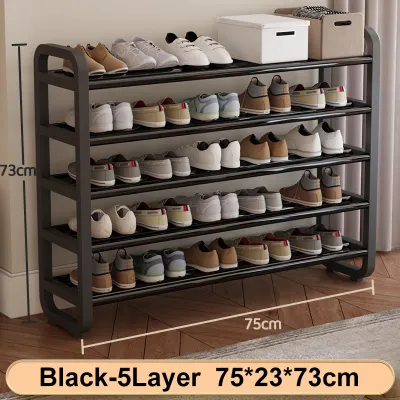
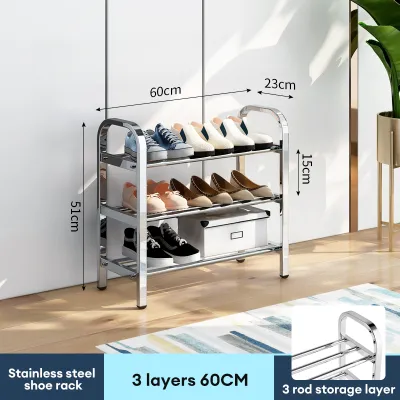
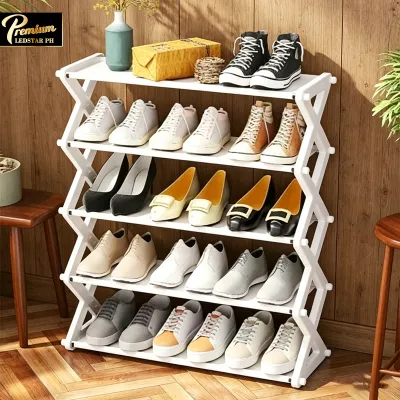
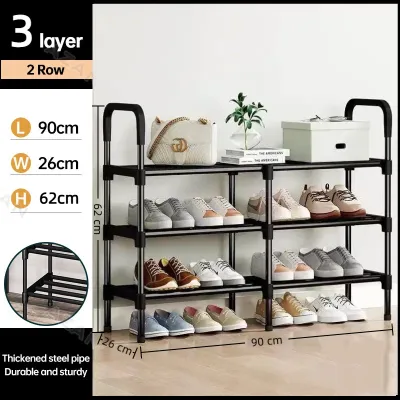
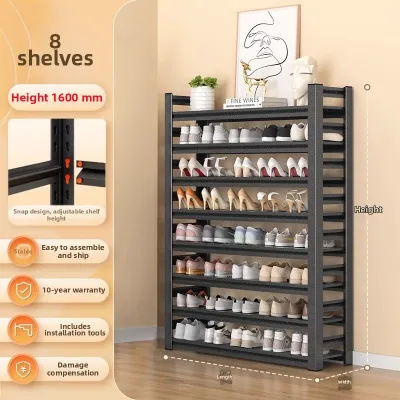
Prices are valid at publication and may change. Please refer to the product page for the latest price.
Household dynamics also dictate your capacity needs. Entryways in busy homes often experience high traffic, requiring a rack that can handle frequent guest turnover and the rapid piling of shoes near the door. Furthermore, many households use the bottom or top shelves of a shoe rack to store non-shoe items, such as heavy plastic storage boxes, wet-weather gear, umbrellas, or cleaning supplies. Factoring in these additional items ensures you do not accidentally overload the structure.
Key Evaluation Criteria for Metal Shoe Racks
When shopping on online marketplaces, the term “heavy duty” is frequently used as a generic marketing label rather than a certified standard. To verify actual durability, you must look closely at the material specifications, starting with tube diameter and wall thickness. High-quality metal racks typically utilize carbon steel, iron, or stainless steel tubing with a wall thickness of at least 0.8mm to 1.2mm. Thicker tubes resist bending under concentrated loads, whereas thin-walled tubes are prone to denting and buckling during assembly or under heavy weight.

In the Philippines, high relative humidity and exposure to wet shoes make surface treatment a critical factor for longevity. Raw or poorly finished metal will rust rapidly, leading to structural failure and stained footwear. Look for organizers finished with an electrostatic powder coating or a multi-layer rust-resistant plating. Inspect the product images and descriptions for any signs of exposed metal, and upon delivery, check the joints and corners for chips or thin spots in the coating where moisture could penetrate.
The structural integrity of a shoe rack depends heavily on its joints and connection points. Welded joints offer the highest level of stability because they fuse the metal components into a single, rigid frame, though they are less portable and more expensive to ship. Screw-assembled connectors are more common for flat-packed items; for these, look for heavy-duty steel bolts and threaded inserts rather than self-tapping screws that can strip the metal over time. Racks that incorporate cross-bracing or support bars on the back and sides provide significantly better lateral stability, preventing the unit from swaying side to side.
Finally, consider how the rack’s design protects your footwear. Rough metal edges, exposed screw heads, or sharp wire ends can easily scratch leather, snag delicate fabrics, or tear shoe linings. Opt for racks with smooth, rounded edges, plastic end caps on all exposed tube ends, and non-slip tier surfaces. The spacing between tiers should also be sufficient—typically at least 15 to 20 centimeters—to allow you to slide shoes in and out easily without scraping the tops against the shelf above.
Comparing Common Metal Shoe Rack Designs
Selecting the right structural design involves balancing your available floor space with your daily usage habits. Online marketplaces offer several distinct configurations of metal shoe organizers, each designed to address specific spatial constraints and storage preferences. Understanding the trade-offs of each design type allows you to choose a model that integrates seamlessly into your home layout.
Freestanding and Stackable Tiered Racks
Freestanding tiered racks are the traditional choice for vertical storage, offering straightforward floor-level accessibility and the potential for modular expansion. Many of these systems allow you to stack multiple units vertically as your shoe collection grows, saving valuable floor space in narrow hallways or closets. However, as you stack these units higher, the base footprint remains the same, which can compromise stability. It is crucial to check the manufacturer’s maximum recommended stacking height and ensure that tall configurations are secured with anti-tip hardware to prevent accidental tipping.
Weight distribution is another critical factor for stackable designs. Because the weight of the upper tiers relies on the structural integrity of the lower frames, you must carefully manage how you distribute your footwear. Placing heavy boots and leather shoes on the bottom tiers while reserving the upper shelves for lightweight sandals and slippers helps maintain a low center of gravity, ensuring the entire assembly remains stable and secure.
Expandable and Adjustable Width Racks
Expandable metal shoe racks feature telescoping horizontal bars that allow you to adjust the width of the organizer to fit your specific space or accommodate a fluctuating number of shoes. This flexibility is highly beneficial for renters or those who frequently rearrange their living spaces. When evaluating these models, pay close attention to the locking mechanism at the extension joints. A weak lock can allow the bars to slide or sag under weight, compromising the rack’s overall stability.
Additionally, you must assess the structural rigidity of the rack when it is fully extended. As the telescoping tubes are pulled to their maximum width, the overlapping section in the middle becomes shorter, which naturally reduces the load capacity at the center of the shelves. To prevent sagging, look for models that feature reinforced center support legs or thicker inner tubes that maintain their stiffness even at full extension.
Rolling and Utility Cart Styles
For multi-purpose spaces, entryways, or walk-in closets that require frequent cleaning and repositioning, rolling utility-style shoe carts offer excellent mobility. These units are built on caster wheels, allowing you to roll the entire rack out of the way to sweep the floor or access hidden storage areas. When choosing a rolling rack, verify that at least two of the casters feature robust wheel locking mechanisms to keep the rack firmly in place during daily use.
You must also consider the load capacity limits of the rack while it is in motion. Moving a fully loaded shoe rack exerts dynamic lateral forces on the frame and wheels, which can cause weaker joints to buckle. Ensure the casters are securely threaded into metal sockets rather than plastic inserts, and check that the wheels are made of non-marring materials like polyurethane or soft rubber to prevent scratching delicate tile, laminate, or hardwood floors.
Pre-Purchase Checks for Space and Assembly
Before finalizing your purchase, conducting thorough physical space and logistical checks is essential to avoid delivery disappointments or assembly failures. Start by measuring the exact dimensions of the target installation area, including the width, depth, and height clearance. Do not rely on visual estimates; use a physical measuring tape to map out the footprint of the shoe rack on your floor. Ensure that the rack will not obstruct doorways, hallway traffic, or closet doors when they are fully opened.
In addition to measuring the final installation spot, verify that the packaged dimensions of the product can safely pass through your home’s entry pathways. This is particularly important for pre-assembled or welded metal units that cannot be broken down into smaller pieces. Measure the clearance of your front door, narrow corridors, stairwells, and elevator doors to guarantee that the delivery team can transport the item to your living space without damaging your walls or the product itself.
The evenness of your floor surface is another critical factor that affects the stability of a heavy-duty metal rack. Many homes, especially older buildings or those with tiled entryways, have slightly uneven floors. A rigid metal frame placed on an uneven surface will wobble, which can cause shoes to slide off and increase the risk of the rack tipping. To mitigate this, look for organizers that include adjustable leveling feet. These threaded glides allow you to fine-tune the height of each corner individually, ensuring a perfectly level and stable setup on any surface.
Finally, review the assembly requirements of the shoe rack before ordering. While some heavy-duty units arrive fully welded and ready to use, most online purchases require self-assembly. Check the product description to see if the necessary tools, such as hex keys or wrenches, are included in the package, or if you will need to provide your own screwdriver or mallet. Assess the complexity of the assembly instructions and determine if you will need a second person to help hold the heavy metal frames in place during construction, or if professional installation services are recommended for complex configurations.
Building Your Conditional Shortlist
Navigating online marketplaces to find a genuine heavy-duty metal shoe rack requires a systematic filtering process. Start by using specific search filters to narrow down your options. Instead of searching for broad terms, filter by material specifications like “carbon steel” or “stainless steel” and look for listings that explicitly state the load capacity per tier. Avoid products that only list a total weight capacity without breaking down how that weight must be distributed across individual shelves.
Because product descriptions on ecommerce platforms can sometimes be exaggerated, it is vital to cross-reference the seller’s claims with user-uploaded photos and reviews. Look closely at customer photos to verify the actual thickness of the metal tubes and the quality of the joints. Pay attention to reviews that mention how the rack behaves under a full load—if multiple buyers report that the shelves sag or the frame sways when loaded with heavy shoes, it is a clear sign that the product does not meet heavy-duty standards.
When evaluating the price-to-value ratio, remember that a lower initial price in ₱ may result in higher long-term costs if the rack needs to be replaced after a few months of use. Investing slightly more in a high-quality, rust-resistant metal rack with robust joints often provides better value over time. Additionally, check the seller’s return policies and warranty terms. A reputable manufacturer or distributor should offer a clear warranty covering structural failures, weld breaks, or missing hardware, giving you peace of mind that your investment is protected.
Frequently Asked Questions (FAQ)
How can I prevent a tall metal shoe rack from tipping over?
To prevent a tall metal shoe rack from tipping, always secure it to the wall using an anti-tip anchoring kit, especially if the height-to-base ratio is high. Many heavy-duty racks include wall brackets or straps; if not, you can purchase compatible hardware separately. Additionally, practice proper weight distribution by placing your heaviest footwear, such as boots and leather shoes, on the bottom tiers to lower the overall center of gravity, leaving the lighter sandals and slippers for the top shelves.
What is the best way to clean and maintain powder-coated metal tiers?
To clean powder-coated metal tiers, wipe them down regularly with a soft microfiber cloth dampened with water and a mild, non-abrasive dish soap. This removes dirt, mud, and moisture brought in from outdoors without damaging the protective finish. Avoid using harsh chemical cleaners, bleach, or abrasive scrubbing pads, as these can scratch or degrade the powder coating, exposing the underlying metal to moisture and accelerating rust formation. Ensure the rack is completely dry after cleaning.
Community discussion
Share your experience or ask a question. Comments are reviewed before publication.