
Selecting the right office chair for extended work sessions is one of the most critical decisions you can make for your long-term physical health and daily productivity. When spending eight or more hours at a desk, a poorly designed seat can lead to chronic back pain, neck strain, and poor circulation. Mandaue Foam offers a diverse range of office seating options designed to accommodate different body types, work habits, and workspace configurations in the Philippines. Finding the ideal model requires looking beyond aesthetics to evaluate structural adjustability, material durability, and ergonomic alignment.
To make an informed choice, you must understand how a chair’s individual components support your body throughout the day. Rather than relying on a one-size-fits-all solution, the best approach is to match your specific physical requirements and office environment with the appropriate category of seating. By focusing on key ergonomic features, material characteristics, and practical testing methods, you can identify a chair that maintains its comfort and support over years of continuous use.
Key Ergonomic Features for 8+ Hour Workdays
An ergonomic chair must adapt to your body’s natural alignment rather than forcing your posture to conform to a rigid frame. The most critical component of this adaptability is lumbar support. The human spine has a natural inward curve at the lower back, which tends to flatten when sitting for long periods. Look for chairs that offer adjustable lumbar support, allowing you to change both the height and the depth of the support pad to align precisely with your lower back. This targeted pressure relieves strain on the lumbar discs and prevents slouching as fatigue sets in over the course of the day.
Products mentioned in this guide
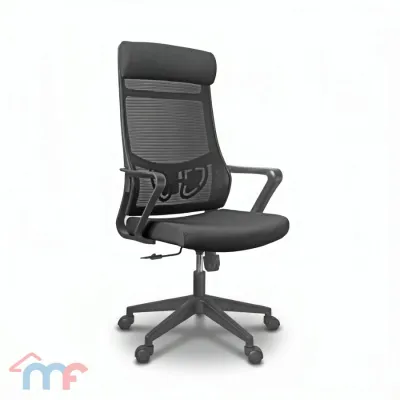
15 Lazada user ratings
Item received with complete parts. Assembly was easy. Back of the chair is adjustable. Comfortable to sit on and use. High back rest.
Delivered late as to what was promised. Box came dilapidated and the contents are in disarray.
Lumbar support adjustment, Modern style design,
Breathable mesh back: damaged/defected
Prices are valid at publication and may change. Please refer to the product page for the latest price.
Seat cushion design is equally vital for maintaining comfort during long shifts. High-density molded foam is generally superior to standard cut foam because it retains its shape and supportive properties under continuous weight. The shape of the seat pan should feature a waterfall edge, which is a downward-sloping front curve. This design reduces pressure on the back of your thighs and knees, ensuring unhindered blood circulation to your lower legs and preventing numbness during long, uninterrupted tasks.
Armrests play a significant role in reducing tension in your upper body. When armrests are fixed, they can force your shoulders to shrug or cause your elbows to flare outward, leading to shoulder and neck stiffness. Adjustable armrests—ideally featuring height, width, and angle adjustments—allow your elbows to rest comfortably at a 90-degree angle close to your torso. This positioning unloads the weight of your arms from your shoulder muscles and helps keep your wrists in a neutral position while typing.
Dynamic sitting is another essential factor in preventing fatigue, which is where recline tension and tilt mechanisms come into play. A high-quality chair should feature a synchro-tilt mechanism, where the backrest and seat pan recline at a coordinated ratio, typically 2:1. This movement allows you to stretch and shift your weight without lifting your feet off the floor or losing lower back support. Adjustable recline tension ensures that the chair responds smoothly to your body weight, providing balanced resistance whether you are leaning forward to focus or tilting back to rest.
Mandaue Foam Office Chair Types for Extended Use
Mandaue Foam provides several distinct categories of office chairs, each utilizing different structural designs and materials to address specific user preferences. Understanding these categories allows you to narrow down your choices based on your daily routine, your local climate, and the layout of your workspace. Each design type offers unique advantages and trade-offs regarding thermal comfort, cushioning depth, and overall adjustability.

Choosing the right category is a matter of balancing your personal comfort preferences with the physical demands of your work. While some users prioritize the plush, enveloping feel of traditional padding, others require the firm, contouring support of modern mesh. Evaluating these types side by side helps clarify which design philosophy aligns with your daily habits.
High-Back Executive Chairs
High-back executive chairs are designed for users who prefer a substantial, heavily cushioned seating experience. These models typically feature thick padding throughout the seat and backrest, often upholstered in genuine leather, polyurethane (PU) leather, or dense synthetic fabrics. The primary appeal of these chairs lies in their generous proportions and integrated headrests, which provide full-length support for your spine, neck, and head during long phone calls or reading sessions.
However, material selection is a crucial consideration for executive chairs, particularly in the tropical climate of the Philippines. While genuine leather offers excellent durability and a premium feel, it requires regular conditioning to prevent cracking. PU leather is easier to wipe clean and resist stains, but it can degrade or peel over time when exposed to high humidity and friction. Both materials tend to retain body heat, making these chairs best suited for air-conditioned office spaces where temperature control is consistently maintained.
Ergonomic Mesh-Back Chairs
Ergonomic mesh-back chairs prioritize airflow and firm, structural alignment. The backrest of these chairs consists of a durable mesh fabric stretched tightly over a nylon or fiberglass-reinforced frame. This design conforms naturally to the contours of your spine, providing consistent, even support without the bulk of traditional foam padding. The tension of the mesh is engineered to distribute your body weight evenly, reducing pressure points along your back.
The standout benefit of mesh chairs is their exceptional breathability. In non-air-conditioned home offices or hybrid workspaces, a mesh backrest allows heat and moisture to dissipate quickly, keeping you cool and dry throughout the day. When evaluating these models, it is important to check the quality of the mesh; high-quality elastomeric mesh will retain its tension and springiness over years of use, whereas lower-grade mesh may sag, reducing the chair’s supportive capabilities.
Adjustable Task and Drafting Chairs
Adjustable task and drafting chairs are built for versatility, mobility, and dynamic workspaces. These chairs often feature a more compact profile, making them excellent space-saving options for smaller home offices or collaborative environments. Drafting chairs, in particular, offer extended seat height ranges and integrated, adjustable foot rings, allowing you to work comfortably at high counters, drafting tables, or standing desk converters.
The trade-off with compact task chairs often lies in the thickness of the padding and the height of the backrest. While they offer excellent mobility and quick adjustability, they may lack the integrated head support or deep cushioning found in executive models. These chairs are ideal for active professionals who frequently transition between sitting, standing, and moving around their workspace, rather than remaining seated in a single position for hours on end.
How to Test and Verify Comfort Before Purchasing
To ensure an office chair will support you comfortably for years, you should perform a series of physical checks and structural evaluations, ideally by visiting a showroom to test the floor models in person. The first physical check to perform is the “two-finger” seat depth test. Sit all the way back in the chair so your lower back is firmly against the lumbar support. Measure the distance between the front edge of the seat cushion and the back of your knees; there should be a gap of approximately two to three fingers. If the seat is too deep, it will press against the back of your knees and restrict circulation; if it is too shallow, your thighs will not be adequately supported.
Next, examine the structural specifications and weight capacity labels of the chair. A reliable office chair designed for long hours should have a clearly stated load capacity, typically ranging from 100 to 120 kilograms or more for standard models. Check the stability of the base; a five-star base made of heavy-duty nylon, aluminum, or steel is essential for preventing tipping when you recline. Inspect the joints and adjustment levers to ensure they operate smoothly without excessive play or rattling, which can indicate premature wear.
Warranty terms offer a clear indication of a manufacturer’s confidence in their product’s durability. When browsing, verify the specific warranty coverage for critical moving parts, such as the pneumatic gas lift, the tilt mechanism, and the casters. These components bear the brunt of daily movement and weight shifts. A robust warranty ensures that if a gas cylinder begins to sink or a tilt lock fails, you can obtain replacement parts rather than having to purchase an entirely new chair.
Finally, evaluate the casters and how they interact with your office flooring. Standard hard nylon casters are designed to roll smoothly on carpeted surfaces but can scratch hardwood, laminate, or delicate tile floors. If your workspace has hard flooring, look for chairs equipped with soft polyurethane (PU) or rubber-coated casters, which provide quiet movement and protect the floor surface from scuffs. Additionally, consider the practical logistics of getting the chair into your workspace; measure your doorways, hallways, and elevator access to ensure the fully assembled chair or its packaging box can pass through easily.
Frequently Asked Questions (FAQ)
Does Mandaue Foam offer warranties on office chair mechanisms?
Yes, warranty coverage is typically available for critical moving parts like gas lifts, tilt mechanisms, and casters, but the specific terms, duration, and scope vary depending on the model and collection. When purchasing, always verify the exact warranty details printed on the product tag, receipt, or official store documentation. Keeping your original purchase receipt and warranty card is essential for facilitating any future parts replacement or service claims.
How often should I replace an office chair used for 8+ hours a day?
An office chair subjected to heavy daily use generally needs replacement or major part substitution every five to seven years, though this depends heavily on build quality and usage habits. Clear indicators that your chair has reached the end of its functional lifespan include a flattened or deformed seat cushion that no longer cushions your sit bones, a sinking gas lift that fails to maintain its height, loose or unstable armrests, and unusual squeaking or grinding noises from the tilt mechanism. Replacing a worn-out chair promptly is crucial for preventing posture degradation and physical discomfort.

Community discussion
Share your experience or ask a question. Comments are reviewed before publication.