
Fitting a single sofa bed into a 20-square-meter condo living room requires a careful balance of spatial geometry, smart placement, and visual editing. In compact urban dwellings across Manila and other metropolitan hubs, every square meter counts. A single-size sofa bed serves as an excellent dual-purpose solution, providing comfortable daytime seating and a practical sleeping surface for guests or daily use without consuming the footprint of a traditional double bed.
To achieve an open, airy feel, you must look beyond the basic floor dimensions of the furniture. The key lies in understanding how the sofa bed interacts with the room’s flow, architectural boundaries, and light sources. By selecting the right proportions and applying targeted layout strategies, you can maintain a highly functional living space that feels welcoming rather than congested.
Sizing the Space: Single Sofa Bed Dimensions vs. 20 Sqm Layouts
Understanding the exact physical footprint of a sofa bed single size is the first step in layout planning. Standard single-size sofa beds typically feature a sleeping surface width of approximately 90 to 100 centimeters, with a total folded sofa width ranging from 100 to 120 centimeters depending on the armrest design. When folded into a seating configuration, the depth of the unit generally sits between 85 and 100 centimeters. Once fully extended into a bed, the total length from the backrest to the foot of the bed can reach 190 to 210 centimeters. Because mechanical designs vary significantly between pull-out frames, click-clack models, and fold-out foam blocks, you must verify the exact manufacturer specifications on the product label before committing to a purchase.
Products mentioned in this guide


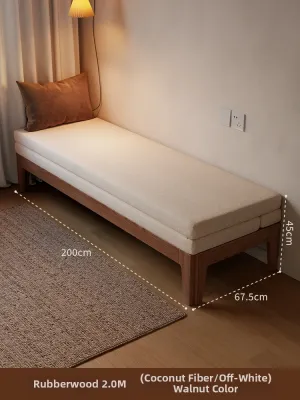
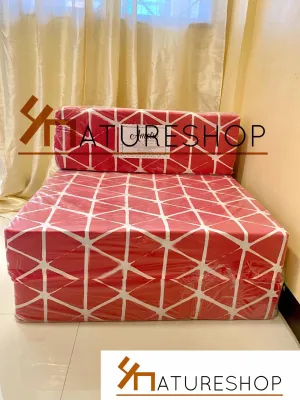

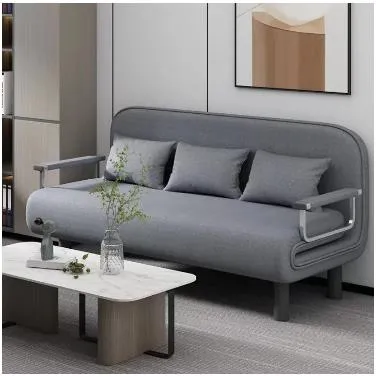

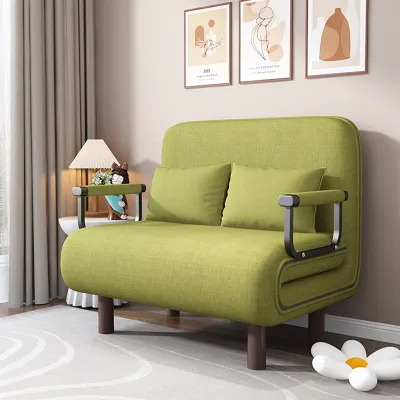
Prices are valid at publication and may change. Please refer to the product page for the latest price.
A 20-square-meter condo living room often presents a rectangular or square layout, but the actual usable floor area is invariably smaller than the total blueprint. Structural columns, built-in kitchen counters, wardrobe units, and the swing path of balcony sliding doors all cut into your available space. In a typical layout, you might only have a clear wall span of 2.5 to 3 meters for your primary seating area.
To prevent the room from feeling cramped, you must distinguish between physical footprint and “visual weight.” Physical footprint is the actual floor space the furniture covers, while visual weight refers to how heavy, bulky, or solid the piece appears to the eye. A single sofa bed with a solid, boxy base that sits flush against the floor will feel significantly heavier and make the room appear smaller than a model of the exact same dimensions that features elevated legs and clean, minimalist lines.
Essential Pre-Purchase Measurements and Clearance Checks
Before purchasing a single sofa bed, you must map out the entire delivery path to avoid the frustration of a unit that cannot fit into your home. Measure the clear width and height of your condo unit’s main entrance, the narrowest points of the hallways, and the interior dimensions of the building’s elevator. Many modern high-rise developments in the Philippines feature tight elevator cabins and sharp hallway turns that can block the passage of fully assembled furniture. If the sofa bed does not feature a fully modular or knock-down frame, ensure the packaged box dimensions are compatible with these tight transit corridors.

Once the sofa bed is inside the room, you must enforce the “unfolded clearance” rule. This rule dictates that when the bed mechanism is fully extended, you must retain a minimum of 60 to 80 centimeters of clear walkway space on at least one side and at the foot of the bed. This clearance is essential for safe nighttime navigation, preventing stubbed toes, and allowing you to move around the room comfortably without climbing over the sleeping surface.
Additionally, you must evaluate how the extended bed integrates with your existing furniture pieces. A coffee table, TV console, or side table can easily block the path of a pull-out mechanism. To resolve this, plan to use lightweight, easily movable accent furniture. For instance, a lightweight nesting table can be quickly shifted to the side of the room when transitioning the sofa bed from day to night mode, ensuring that the pull-out track does not collide with heavy, immovable objects.
Optimal Placement Strategies to Maximize Usable Space
Wall-Aligned and Corner Configurations
Placing your single sofa bed against the longest uninterrupted wall is one of the most effective ways to preserve central floor space in a 20-square-meter layout. This alignment keeps the main traffic path through the condo completely clear, allowing for a natural flow from the entryway to the balcony or kitchen area. When the sofa bed is pushed against a primary wall, it creates a stable anchor point for the room’s seating zone, making the rest of the floor area feel more open and versatile.
Corner placements offer another excellent space-saving alternative, especially when you leverage the adjacent wall space. By positioning the sofa bed near a corner, you can install floating shelves or a slim, wall-mounted side table on the perpendicular wall. This setup provides a convenient spot for a reading lamp, phone charger, or water glass without taking up precious floor space with a traditional, bulky nightstand.
However, you must be careful to avoid placing the sofa bed directly adjacent to the main entry door. Walking straight into the side or back of a large upholstered piece of furniture creates an immediate visual block that makes the entire condo feel cramped from the moment you step inside. Keep the entry zone clear and position the seating further into the room to establish a more inviting transition.
Zoning and Multi-Functional Dividers
In an open-plan 20-square-meter condo, a single sofa bed can serve as a subtle, functional room divider to define distinct living zones. Instead of pushing the sofa flat against a wall, try positioning it with its back facing the kitchen or a small dining nook. This physical placement implicitly signals the boundary of the living room zone without the need for solid walls or tall partitions that block sightlines.
To maximize this layout, you can pair the sofa bed with a low-profile console table placed directly behind its backrest. This console table can serve multiple purposes: it acts as a slim desk for remote work, provides a surface for decorative plants or keys, and offers hidden storage underneath. By keeping the height of the console table level with or slightly below the sofa backrest, you maintain an open line of sight across the entire unit, ensuring that natural light from the windows can penetrate deep into the space.
Visual and Design Choices to Keep the Room Feeling Airy
The aesthetic details of your sofa bed single size play a massive role in how spacious your living room feels. Selecting a model with exposed, slender legs—such as tapered wooden pegs or thin metal frames—is highly recommended. When furniture is elevated off the ground, it allows light and shadow to pass underneath, creating the optical illusion of a larger, continuous floor surface.
Furthermore, pay close attention to the design of the armrests. Thick, rolled, or heavily padded armrests add unnecessary horizontal bulk to a sofa bed, often eating up 15 to 20 centimeters of usable space without adding any seating area. Opting for low-profile, track arms or an armless design significantly reduces the physical and visual footprint of the piece, giving the room a sleeker, more streamlined appearance.
Color and upholstery choices are equally critical in small-space design. Selecting a fabric color that closely matches or complements your wall paint helps the sofa bed blend into the background rather than stand out as a massive focal point. Light, neutral tones—such as beige, light gray, soft cream, or muted pastel linen—are ideal because they reflect the natural light coming from your windows, brightening up the entire 20-square-meter space.
In the humid Philippine climate, fabric selection also impacts long-term maintenance and comfort. Verify that metal frames have rust-resistant coatings and wooden joints are reinforced, while checking the manufacturer’s care instructions for mold and moisture resistance. In the local market, single sofa beds range widely from budget-friendly foam fold-outs under ₱8,000 to premium wooden or metal-framed click-clack models exceeding ₱20,000, so matching your visual preferences with your budget is highly achievable.
Finally, practice restraint when accessorizing your seating area. Heavy, oversized throw pillows and thick, dark shag rugs can quickly make a small room feel cluttered and visually congested. Instead, choose a few slim, textured cushions in coordinating shades and pair them with a low-pile, light-colored area rug that defines the seating zone without overwhelming the floor space.
Common Sizing and Layout Mistakes to Avoid
One of the most frequent mistakes condo owners make is overlooking the “swing radius” and mechanical depth of the sofa bed. Some folding mechanisms require you to pull the entire sofa frame away from the wall before you can unfold it, while others have thick back cushions that remain upright and push the sleeping surface further into the room. Always check the manufacturer’s instructions to see if the model requires “zero-wall clearance” or if you need to budget extra space behind the frame for daily operation.
In tropical climates like the Philippines, indoor airflow and temperature control are paramount for comfort. A common layout error is placing a bulky sofa bed directly beneath a split-type air conditioner or blocking a standing fan’s path, which can disrupt natural ventilation and cooling. Ensure that the placement of the sofa bed does not obstruct air conditioning louvers or block the path of fresh air coming from balcony doors and windows.
Another critical pitfall is pairing a newly acquired single sofa bed with an oversized, heavy wooden coffee table. While a large coffee table might look appealing in a showroom, it will choke the walking paths of a 20-square-meter room. Instead, opt for highly versatile, space-saving alternatives such as nested side tables, lightweight stools that can double as tables, or foldable tray tables that can be easily tucked away when the sofa bed is in use.
Frequently Asked Questions (FAQ)
Can a single sofa bed work in a studio condo smaller than 20 sqm?
Yes, a single sofa bed can work in micro-units smaller than 20 square meters, but you must be exceptionally disciplined with your layout. In extremely tight spaces, traditional pull-out frames may be too deep to extend fully without blocking doorways. For these micro-units, consider a click-clack mechanism or a simple fold-out foam mattress design, which typically has a shallower depth and a simpler unfolding motion that preserves precious floor space.
How do I balance mattress comfort with folding mechanisms?
Balancing comfort and functionality requires understanding the trade-off between mattress thickness and the sofa’s folded bulk. Thicker, high-density foam or spring mattresses offer superior support for daily sleeping, but they also result in a heavier frame and a deeper folded footprint. If you plan to use the bed daily, prioritize a high-quality mattress and verify that the folding mechanism is smooth and manageable; for occasional guest use, a slimmer, lightweight mattress will save valuable space and ease daily transitions.
Community discussion
Share your experience or ask a question. Comments are reviewed before publication.