
For a growing family in the Philippines, the dining table is the undisputed heart of the home. It is where daily meals are shared, homework is supervised, and extended relatives gather for milestone celebrations. When choosing a new table, the central dilemma often comes down to whether to buy a traditional fixed dining set 6 seater or invest in an extendable table that can expand to accommodate 8 to 10 people.
A fixed dining set 6 seater is the superior choice for households with compact dining rooms, strict budgets, and families who rarely host large groups. This option provides immediate structural stability, requires minimal maintenance, and fits neatly into standard residential layouts.
Conversely, an extendable dining table is highly recommended for families who frequently host large gatherings, such as Sunday family lunches, birthday parties, or holiday feasts like Noche Buena. If you have the necessary floor space to accommodate the expanded footprint when needed, an extendable table offers unmatched seating flexibility without permanently crowding your home.
Products mentioned in this guide
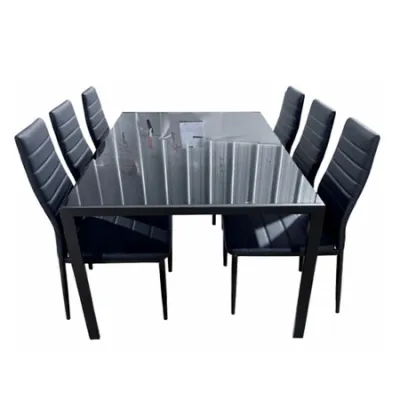
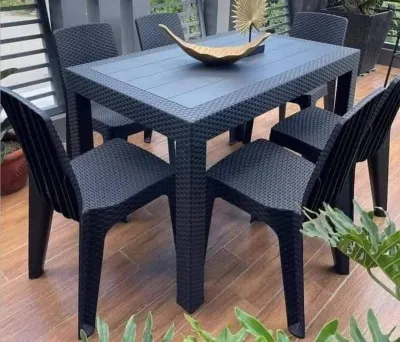
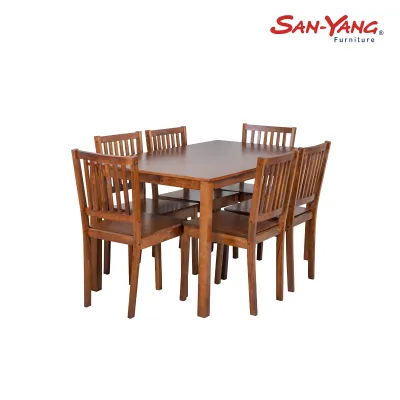
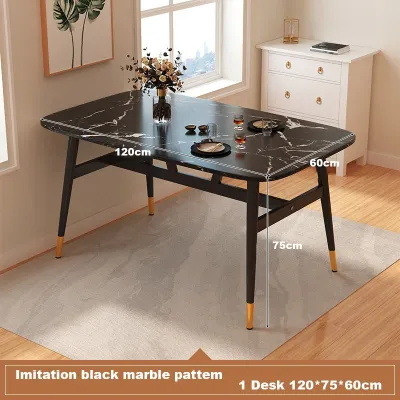
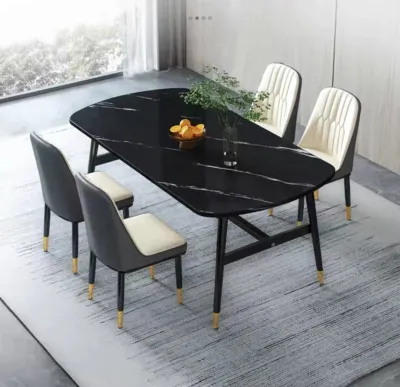
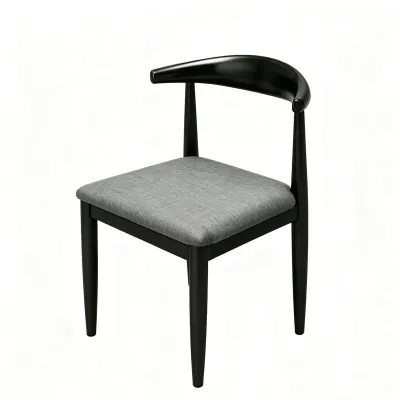
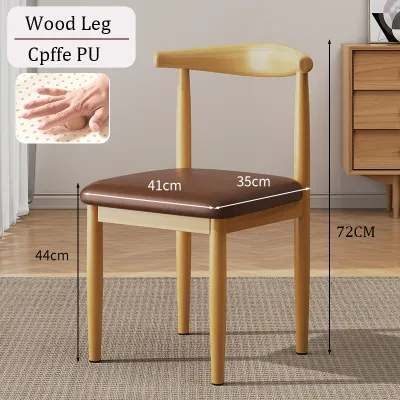
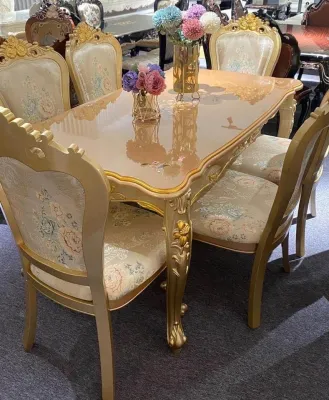
Prices are valid at publication and may change. Please refer to the product page for the latest price.
Space and Layout: Measuring for a Dining Set 6 Seater or Extendable Alternative
Before purchasing any furniture, you must accurately measure your dining area to ensure a comfortable fit for both daily use and special occasions. The most common mistake homeowners make is choosing a table based solely on how it looks in a spacious showroom, only to find it blocks traffic pathways once installed at home.
To maintain comfortable movement, standard interior design guidelines recommend leaving a minimum of 90 centimeters of clearance between the edge of the table and the nearest wall or piece of furniture. This clearance allows diners to pull out their chairs and sit down without striking the wall. If you want guests or family members to walk comfortably behind seated individuals, increase this clearance to 110 to 120 centimeters.
A typical fixed dining set 6 seater requires a consistent rectangular footprint of approximately 150 to 180 centimeters in length and 90 centimeters in width. Because this footprint never changes, planning your room layout around it is straightforward and predictable. You can permanently position area rugs, pendant lighting, and surrounding storage cabinets without worrying about future spatial conflicts.
In contrast, an extendable table demands a dual-spatial assessment. You must measure the room to ensure it comfortably accommodates the table in its collapsed, daily state (often seating 4 to 6 people at around 140 to 160 centimeters in length) as well as its fully expanded state (which can stretch to 200 to 240 centimeters to seat 8 to 10 people). When the table is fully extended, it must not block vital household pathways, doorways, or access to the kitchen.
Delivery and assembly logistics are equally critical factors, especially in Philippine residential settings like high-rise condominiums in Metro Manila or multi-story townhouses. Narrow hallways, tight stairwell landings, and small service lifts can prevent large, single-piece table tops from reaching your dining room. Always measure these entry points and verify with the retailer whether the table is delivered flat-packed for on-site assembly or as a fully constructed unit.
The shape of your dining room should also dictate your choice. Rectangular rooms pair naturally with rectangular extension tables that utilize slide-out or butterfly leaves. If your dining space is square or integrated into an open-concept living area, a round extendable table with a central extension insert or a drop-leaf table can be highly effective, allowing you to save space by keeping the table collapsed or pushed against a wall when not in use.
Daily Meals vs Holiday Gatherings: Evaluating Your Hosting Habits
To make a practical decision, you must realistically evaluate your family’s daily routine versus your occasional entertaining habits. A growing family often consists of 4 to 6 daily members. For these routine breakfast, lunch, and dinner sessions, a fixed dining set 6 seater is incredibly convenient because it is permanently set up, structurally rigid, and always ready for use.

A fixed table eliminates the need for physical preparation before meals. There are no leaves to retrieve from storage, no alignment pins to secure, and no heavy frames to slide apart. For busy parents managing school schedules and work-from-home routines, this simplicity reduces daily friction and ensures the dining space remains highly functional at all times.
However, Filipino cultural traditions place a high value on hospitality and communal dining, or “salo-salo.” Birthday celebrations, graduation feasts, and major holidays like Noche Buena and Media Noche often bring extended family, godparents, and neighbors to the home. If hosting these large groups of 8 to 10 people is a regular occurrence—such as monthly or bi-monthly gatherings—an extendable table ensures everyone can sit together at a single table, fostering a warmer, more inclusive atmosphere.
If you opt for a fixed 6-seater table but still host large groups occasionally, you must plan alternative seating arrangements. This might involve setting up temporary plastic folding tables on an outdoor patio, serving food buffet-style so guests can eat in the living room, or utilizing a kitchen island with bar stools. While these workarounds are perfectly functional, they do divide your guests into separate groups.
If keeping your entire gathering unified in one space is important to you, the physical effort required to expand a table is a reasonable trade-off. However, you must consider who will perform this setup. Expanding a table typically requires pulling the frame from both ends, which often necessitates two people to avoid scratching your flooring or straining the internal glide mechanisms. If you live alone or have physical limitations, look for modern, single-handed gear systems that allow one person to expand the table easily.
Durability and Upkeep: Comparing Mechanisms and Surface Care
The structural integrity and maintenance requirements of your dining table are critical to its long-term value. Fixed dining tables generally offer superior durability and stability over time. Because they lack moving parts, hinges, or seams, there are fewer components that can wear out, loosen, or break under heavy daily use.
Extendable tables rely on mechanical systems to function. These systems vary from simple drop-leaf hinges and wooden slide runners to complex, spring-loaded butterfly leaves and aluminum gear tracks. When shopping for an extendable table, it is vital to test these mechanisms in-person. Check for smooth operation, ensure the glides do not catch or squeak, and verify that the table remains perfectly level and wobble-free when fully extended.
Surface care is another area where these two options diverge significantly. Extendable tables feature seams where the leaves meet the main tabletop. These seams are natural collection points for dust, food crumbs, and spilled liquids. Cleaning these crevices requires regular, careful attention to prevent bacteria buildup and moisture damage.
It is a common misconception that choosing a table made of “solid wood,” “oak,” or “rubberwood” guarantees resistance to scratches, heat, and moisture. In reality, raw wood is highly susceptible to the elements, especially in the humid tropical climate of the Philippines. High humidity can cause solid wood to expand and contract, which may lead to warping, misalignment of the extension leaves, or sticking mechanisms.
To protect your investment, you must verify the specific surface treatment used by the manufacturer, such as a polyurethane, lacquer, or melamine finish. Always consult the manufacturer’s care instructions and check the product labels for specific weight limits. To prevent damage, use heat-resistant trivets under hot serving dishes and waterproof placemats under cold drinks, particularly along the seams of an extendable table where moisture can seep into the underlying core material and cause swelling.
Cost and Value: Budgeting for the Table and Extra Seating
When budgeting for your dining area, you must look beyond the initial price tag of the table itself. Fixed dining sets are generally more straightforward in their pricing and offer excellent cost efficiency. In the local market, a durable, mid-range fixed dining set 6 seater typically ranges from ₱15,000 to ₱40,000, depending on the materials and brand.
Extendable tables carry a noticeable price premium due to the complex hardware, precise engineering, and additional materials required to manufacture the extension leaves. A high-quality extendable table alone, without chairs, can easily range from ₱25,000 to over ₱70,000. This initial cost can be a significant barrier for growing families who need to allocate funds to other household expenses.
Furthermore, you must factor in the hidden cost of extra seating. If you purchase an extendable table that expands to seat 10 people, you will eventually need 10 chairs to utilize that space. Buying four additional matching dining chairs can add thousands of pesos to your total expenditure, and keeping 10 bulky chairs in your dining room daily can make a standard-sized room feel incredibly cramped.
To manage your budget and preserve floor space, consider alternative seating strategies. You can purchase a standard 6-chair set for daily use and supplement it with budget-friendly, space-saving options for gatherings. Lightweight folding chairs, stackable wooden stools, or a dining bench that slides completely underneath the table when not in use are excellent, cost-effective solutions that can be stored in a utility closet or service area until guests arrive.
Ultimately, evaluate the value of your purchase based on build quality, structural warranties for moving parts, and expected lifespan. A cheap extendable table with poor-quality plastic tracks may break within a year of use, whereas a well-constructed fixed table or a premium extendable model with a solid steel glide system will serve your family reliably for decades.
The Final Verdict: How to Decide Based on Your Household
Choosing between a fixed 6-seater dining set and an extendable table requires balancing your daily living space against your hosting aspirations. There is no single correct answer, but following a clear decision framework can help you make the right choice for your household’s specific circumstances.
Choose a fixed dining set 6 seater if your dining area is structurally limited, your budget is strict, and large family gatherings are relatively rare or easily accommodated in other areas of your home. This choice guarantees a stable, low-maintenance, and highly cost-effective centerpiece that will comfortably support your family’s daily routines without cluttering your living space.
Choose an extendable dining table if you have an open-plan home with flexible floor space, you host large groups of 8 to 10 people multiple times a year, and you highly value the communal experience of keeping everyone seated at a single table. This option gives you the best of both worlds: a compact footprint for daily family life and a grand banquet setup for memorable celebrations.
Before finalizing your purchase, run through this essential pre-purchase checklist:
- Measure your dining room's maximum length and width to ensure a 90 cm clearance remains even when the table is fully extended.
- Check all entryways, hallways, elevator doors, and stairwells to confirm the delivery pathway is completely clear.
- Test the extension mechanism in-store to verify smooth operation, tight seam alignment, and overall stability.
- Review the manufacturer’s care instructions, weight capacity limits, and warranty coverage for all moving parts.
Frequently Asked Questions (FAQ)
Can I add extension leaves to a standard fixed dining table later?
No, standard fixed dining tables are not engineered to support aftermarket extension leaves. They lack the internal slide tracks, locking latches, and structural reinforcement necessary to support the extra weight and length. Attempting to modify a fixed table can compromise its structural integrity, void any manufacturer warranties, and cause the table to sag, warp, or tip over. If you anticipate needing more seating in the future, it is best to purchase a purpose-built extendable model from the start.
How many extra chairs should I buy for an extendable table?
You should generally buy enough extra chairs to match the maximum capacity of your extended table, which typically means purchasing 2 to 4 additional chairs for an 8-to-10-seater configuration. To prevent your dining room from looking cluttered on a daily basis, avoid buying a full set of bulky, matching dining chairs. Instead, invest in lightweight, stackable, or foldable chairs that can be easily stored in a closet, utility room, or service area, and bring them out only when the table is fully expanded.
Are extendable dining tables less stable than fixed ones?
High-quality extendable dining tables are engineered to be exceptionally stable, but cheaper models with low-grade hardware or poorly designed support legs can develop wobbles over time. To ensure long-term stability, look for tables with robust steel glide systems, secure locking latches, and legs that remain positioned near the outer corners when extended. Always check the manufacturer’s weight capacity specifications and avoid placing excessive weight on the extended ends of the table.
Community discussion
Share your experience or ask a question. Comments are reviewed before publication.