
Hosting large gatherings of eight or more guests requires a thoughtful approach to your dining room configuration. Choosing between a fixed and an extendable dining table set with chair arrangements depends on your daily floor area, how often you entertain, and the physical constraints of your home. A fixed table offers unmatched structural stability and serves as a permanent, grand focal point, but it demands a dedicated, spacious room. An extendable table provides daily space-saving flexibility, transforming a compact four-to-six-seater into a spacious banquet setup when guests arrive, though it introduces moving parts that require careful maintenance.
To make the right investment, you must balance the physical dimensions of your room with the comfort of your guests. A cramped dining area ruins the hosting experience, while an excessively large table in a small room disrupts the flow of your home. By evaluating your space, seating needs, and budget, you can select a dining set that serves your household perfectly for both quiet family dinners and lively celebrations.
Assessing Your Dining Space and Layout
Before browsing designs, you must measure your dining area to determine if it can physically accommodate a large table. For a fixed eight-seater table, you need a room that can permanently host its full footprint without blocking pathways. For an extendable table, you must measure the room in both its collapsed daily state and its fully expanded hosting state. Use painter’s tape on the floor to map out the outlines of both configurations to visualize how much physical space remains for movement.
Products mentioned in this guide
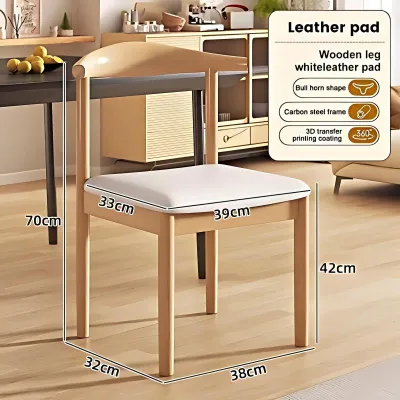
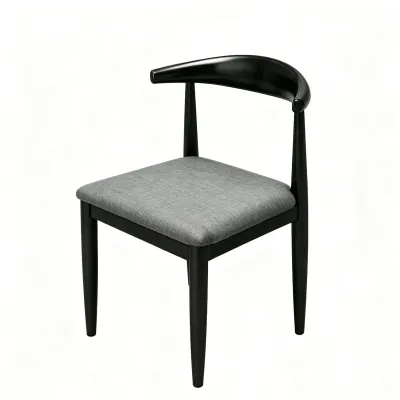
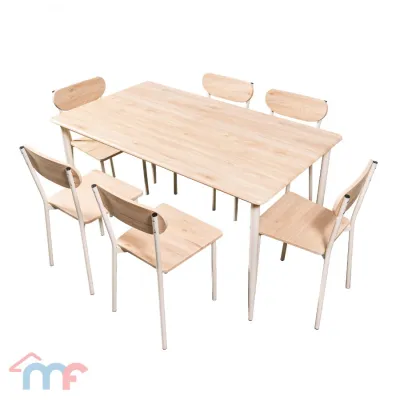
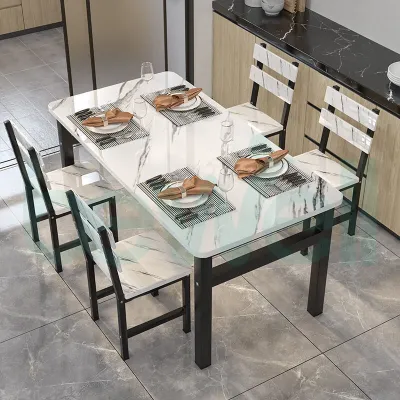
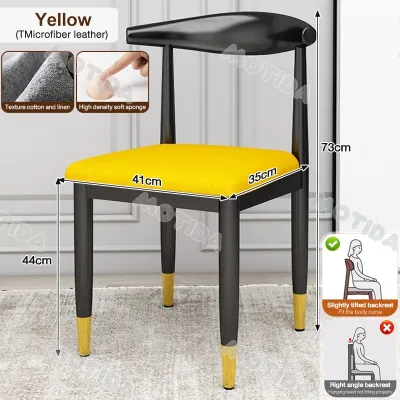
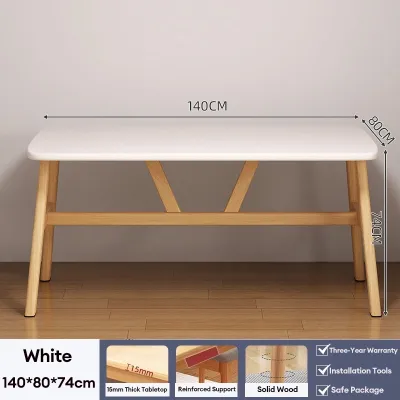
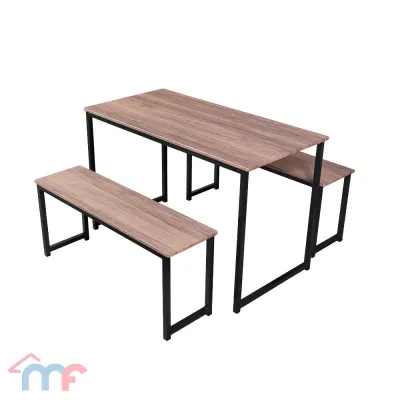
Prices are valid at publication and may change. Please refer to the product page for the latest price.
Clearance around the table is critical for guest comfort and safety. You should maintain a minimum of 90 centimeters—ideally 120 centimeters—of open space between the edge of the table and the nearest wall or piece of furniture. This clearance allows guests to pull out their chairs and sit down comfortably without hitting obstacles. In open-plan living and dining areas, ensuring this boundary prevents the dining set from encroaching on your living room pathways or blocking natural ventilation, which is essential for keeping tropical homes cool and airy.
Delivery access is another vital factor that homeowners often overlook. A massive, fixed eight-to-ten-seater table cannot be easily maneuvered through tight spaces. Before purchasing, measure the width and height of your entry doors, hallways, stairwells, and condominium elevators. If you live in a high-rise building, check the elevator’s weight and length limits. An extendable table is often much easier to transport and deliver because it can be moved in its collapsed state and assembled directly in your dining room.
Finally, consider the visual weight of the furniture within your space. A large, dark, fixed wooden table can dominate a modest room, making the entire area feel cramped and dark. Conversely, a compact extendable table keeps the room feeling light and spacious during the week. When guests arrive, the expanded table temporarily fills the room, which is a highly acceptable trade-off for a short-term gathering.
Evaluating Seating Capacity and Flexibility
When hosting eight or more adults, seating capacity is about more than just squeezing enough chairs around the tabletop. You must ensure that each guest has enough elbow room to dine comfortably without bumping into their neighbors. As a rule of thumb, each seating place requires at least 60 to 70 centimeters of table width. A fixed table must be at least 210 to 240 centimeters long to seat eight people comfortably, whereas an extendable table should reach a similar length when fully deployed.

The design of the table base plays a massive role in how many chairs you can fit. Tables with traditional four-corner legs limit where guests can sit, as the legs block knee room at the corners. If you plan to squeeze in extra guests, look for a pedestal or trestle base design. These centralized support structures free up the corners and sides of the table, allowing you to slide in extra chairs without forcing anyone to straddle a wooden leg.
Extension mechanisms vary in ease of use and storage requirements. Butterfly leaf systems are highly convenient because the extension panels fold and store directly inside the table frame. Removable or drop-in leaves, however, require you to find a safe, dry storage closet or under-bed space to keep them when they are not in use. Consider whether you have the physical strength and storage space to handle these loose panels, as well as the time required to set them up before your guests arrive.
Your choice of chairs also affects flexibility. When purchasing a dining table set with chair packages, check if the chairs can slide completely under the table when not in use. If your dining space is tight, opt for armless chairs, which have a narrower profile and can be placed closer together. For the extra seats needed during large gatherings, you can supplement the main set with matching stackable or high-quality folding chairs that store away easily.
Checking Stability, Structure, and Daily Maintenance
An extendable table relies on moving parts, which makes its structural integrity a primary concern. Over time, cheap sliding tracks, hinges, and locking pins can wear down, leading to a sagging center or a noticeable wobble when the table is fully extended. When shopping, inspect the underside of the table to check the quality of the hardware. Look for heavy-duty metal runners and secure locking clips that hold the leaves tightly together to prevent accidental separation during a meal.
Fixed tables are inherently more stable because they lack moving joints and seams. They are ideal for households with young children or heavy daily use, as there are no mechanisms that can trap fingers or collect food crumbs. If you choose an extendable model, look for designs with robust support legs that drop down automatically when the table is extended, providing extra stability under the weight of heavy serving platters.
Daily maintenance and environmental factors are crucial, especially in humid tropical climates. High humidity can cause solid wood to expand and contract, which may cause extendable joints to stick or warp over time. Rather than relying solely on material names, check the manufacturer’s care instructions and surface treatments. Look for water-resistant finishes that protect the tabletop from condensation rings left by cold drinks and hot serving dishes.
Assembly conditions also dictate long-term durability. Whether you choose a fixed or extendable set, ensure that all joints are tightly bolted and reinforced with corner blocks. Regularly check and tighten the screws and bolts on both the table and the chairs, as the physical movement of hosting large groups can gradually loosen the fasteners over time.
Comparing Costs and Long-Term Value
When budgeting in ₱ for your dining room upgrade, you will find that extendable tables generally carry a price premium over fixed tables of comparable material quality. This extra cost covers the engineering, metal tracks, and manufacturing complexity of the extension mechanism. You must decide if the convenience of saving space on non-hosting days justifies this initial financial premium.
Another cost factor is the price of the chairs. Buying a complete dining table set with chair packages is usually more cost-effective than purchasing the table and chairs separately. However, if you buy an extendable set, you may not want eight chairs permanently cluttering your dining room. Consider buying a six-chair set and purchasing two or four matching or complementary folding chairs separately to keep your daily layout clean and budget-friendly.
Always review the manufacturer’s warranty terms before finalizing your purchase. Pay close attention to what the warranty covers. For fixed tables, structural warranties usually cover the frame and joints. For extendable tables, ensure the warranty explicitly covers the moving parts, extension tracks, and alignment of the leaves, as these are the components most likely to require repair or adjustment over years of heavy use.
Final Decision Framework for 8+ Guests
To make your final decision, evaluate your home against these clear, condition-based rules:
- Choose a fixed dining table set if: You have a dedicated, spacious dining room that can permanently accommodate an eight-to-ten-seater table without blocking walkways. You prioritize maximum structural rigidity, prefer a seamless tabletop without cracks or joints, and want a low-maintenance piece of furniture that will last for decades without mechanical wear.
- Choose an extendable dining table set if: Your dining area is part of a multi-purpose space, a compact apartment, or an open-plan living room where a permanent large table would block traffic and airflow. You only host large groups of eight or more guests occasionally and prefer to keep your dining area compact and easy to navigate during your daily routine.
Before committing to any purchase, visit a local showroom if possible to test the table in person. Pull the chairs out, sit at the ends and corners, and operate the extension mechanism yourself. Verify that the table locks securely in both its collapsed and expanded states, and ensure the chair seat height aligns comfortably with the underside of the table apron so your guests can dine in comfort.
Frequently Asked Questions (FAQ)
Can I mix and match chairs with an extendable dining table?
Yes, mixing and matching chairs is an excellent way to accommodate extra guests without cluttering your daily dining space. When selecting temporary backup chairs, ensure their seat height matches the height of your primary dining chairs, which is typically around 45 to 48 centimeters from the floor. This consistency ensures that all guests sit at the same level relative to the tabletop. For visual cohesion, choose backup chairs that share a design element with your main set, such as similar wood tones, metal accents, or upholstery colors. Always check the manufacturer’s specified weight capacity and stability of any folding or stackable chairs to ensure guest safety.
How much clearance is needed behind dining chairs for 8+ guests?
To allow comfortable movement, you should maintain a minimum clearance of 90 centimeters from the edge of the dining table to the nearest wall, sideboard, or doorway. If the space behind the chairs serves as a primary walkway or traffic route through your home, increase this clearance to 120 centimeters. This extra space allows guests to walk behind seated individuals without forcing them to tuck their chairs in. In tight spaces or dead-end corners of the room, you can reduce the clearance to 75 centimeters, but keep in mind that standing up and moving around the table will require more coordination among your guests.
Community discussion
Share your experience or ask a question. Comments are reviewed before publication.