
Setting up a dedicated study corner for your child in a compact home often requires flexible furniture solutions. When space is limited, a foldable chair kids use for schoolwork and activities is a highly practical choice that can be tucked away when not in use. However, because these chairs feature moving parts, joints, and folding hinges, prioritizing safety is essential before making any purchase. To ensure your child’s study area remains secure, you must carefully evaluate three critical safety features: a robust automatic locking mechanism, a wide and stable base with non-slip foot caps, and comprehensive pinch-point protection around all moving hinges.
Understanding the Unique Risks of Foldable Chairs for Kids
Standard study chairs feature rigid, fixed frames that distribute weight evenly without any risk of structural shifting. In contrast, a foldable chair relies on rotating joints and folding mechanisms to collapse into a flat profile. While this design offers unmatched space-saving convenience for compact Philippine households, it introduces dynamic hazards that are not present in static furniture. Children are naturally active, often shifting their weight, leaning forward to write, or reaching sideways for school supplies, which can place uneven stress on a folding frame.
The primary hazards associated with foldable chairs in a child’s study area include accidental collapse, finger pinching, and tipping. Because children have smaller limbs and developing physical coordination, they are far more vulnerable to injuries from moving parts. A joint that slips or a frame that buckles under sudden movement can cause painful pinches, deep cuts, or severe falls. Furthermore, children do not always sit still; they wiggle, climb, and lean, meaning the chair must be structurally prepared to withstand unpredictable physical forces without folding or sliding on smooth tiled or wooden floors.
Products mentioned in this guide
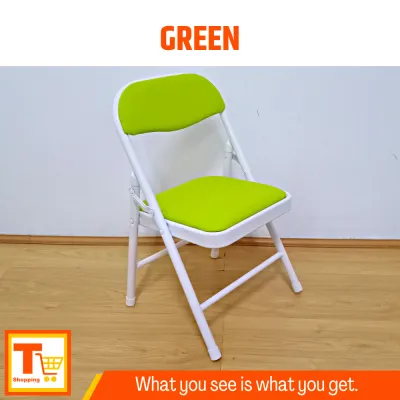
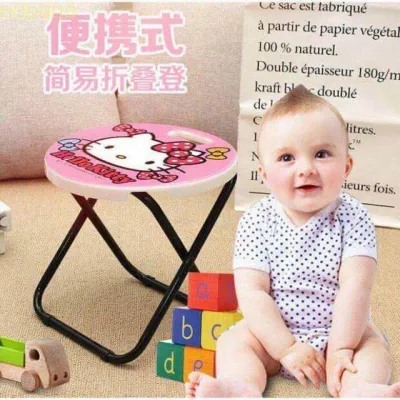
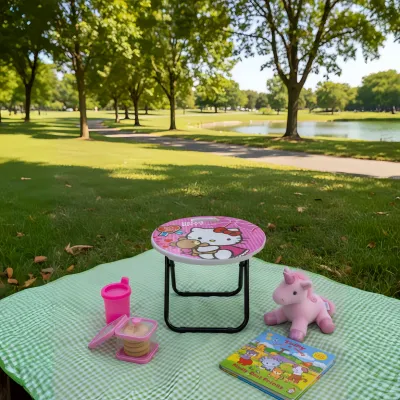

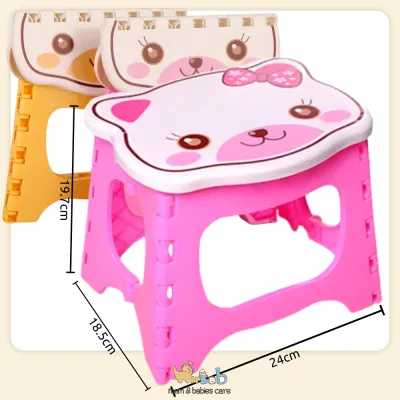
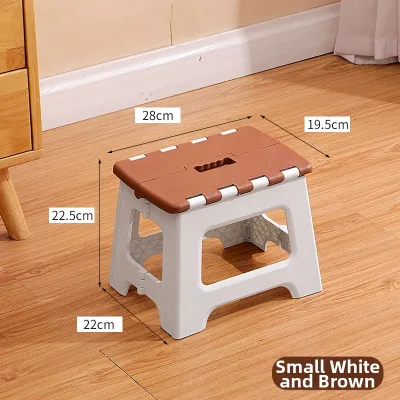

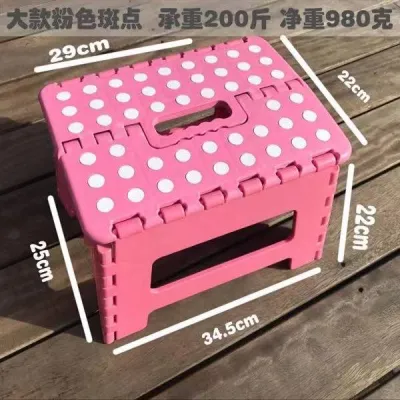
Prices are valid at publication and may change. Please refer to the product page for the latest price.
Critical Safety Features to Inspect Before Buying
When shopping for a foldable chair kids can safely use daily, parents must look beyond attractive colors, cartoon characters, and low price tags. A thorough physical inspection is the most reliable way to verify that a chair is structurally sound and safe for unsupervised study sessions. Evaluating the physical build of the chair allows you to identify potential design flaws before the furniture enters your home.

To conduct a proper safety inspection, you must focus on three primary areas of the chair’s design. First, examine how the chair locks into its open position to prevent sudden collapses. Second, assess the overall stability of the base and its contact points with the floor to prevent tip-over accidents. Finally, scrutinize the joints and edges to ensure there are no exposed gaps or sharp surfaces that could harm small hands.
Locking Mechanisms and Hinge Safety
The locking mechanism is the single most important safety feature on any foldable chair. A high-quality children’s chair should feature an automatic locking system that clicks securely into place the moment the chair is fully opened. This ensures that even if the chair is set up quickly, it cannot accidentally fold back up when weight is applied to the seat. Avoid chairs that rely solely on gravity or the child’s body weight to stay open, as a sudden upward shift can cause the frame to fold unexpectedly.
When inspecting a chair in a retail store, locate the release lever, button, or pull-ring and test its resistance. The release mechanism must require intentional, adult-level physical force or a dual-action motion (such as pressing a safety tab while simultaneously pulling a lever) to disengage. This design prevents a child from accidentally triggering the release while playing under the desk or adjusting their seating position. If the locking mechanism can be easily released with a light touch, it poses a significant safety risk and should be avoided.
Additionally, examine the hinge housing where the folding action occurs. The best designs feature enclosed hinges or protective plastic shrouds that completely cover the moving joints. If the metal hinges are fully exposed, check whether the gap between the moving parts changes size during opening and closing. A safe hinge design minimizes these gaps to ensure that small fingers cannot slide into the internal machinery when the chair is in use or being relocated.
Base Stability and Tip-Over Prevention
A stable foundation is essential for preventing falls, especially when children lean over their desks to draw, write, or reach for books. To evaluate stability, look for a chair with a wide base footprint, meaning the distance between the front and back legs is generous relative to the seat height. A low center of gravity is also crucial; chairs that sit slightly lower to the ground are inherently more stable and less likely to tip over when a child shifts their weight dynamically.
Inspect the bottom of the chair legs for high-quality, non-slip foot caps. In the Philippines, home study areas often feature smooth ceramic tiles, polished concrete, or glossy wooden flooring, which can be highly slippery. The foot caps should be made of durable rubber or textured thermoplastic rubber (TPR) that grips the floor firmly, preventing the chair from sliding backward when the child sits down or stands up. Avoid cheap, hard plastic caps, as they tend to slide easily and can crack over time, exposing sharp metal or wooden leg ends that damage floors and compromise balance.
If you are inspecting the chair in person, perform a gentle physical tilt test. Place the chair on a flat surface, open it fully until the lock engages, and apply downward pressure to the front, back, and sides of the seat. The chair should remain firmly planted without lifting its legs or wobbling excessively. If you are purchasing online, carefully review the product’s base dimensions, frame material, and total weight. A slightly heavier metal or solid wood frame often provides better stability than an ultra-lightweight plastic model, which can easily tip if a child leans too far over the armrest.
Pinch-Point Protection and Edge Design
Pinch points are areas where two or more moving parts come together, creating a shearing or crushing hazard for small fingers. On a foldable chair, these points are typically found around the folding hinges, the underside of the seat, and the sliding tracks of the backrest. To protect your child, run your hands along these areas to ensure that all gaps are either completely sealed or wide enough that a finger cannot become trapped. Many manufacturers design child-safe folding chairs with flexible rubber guards or solid plastic covers over these high-risk zones.
Beyond the moving joints, the overall edge design of the chair must be smooth and rounded. Check the perimeter of the seat, the backrest, and the structural frame for any sharp corners, rough plastic molding seams, or exposed metal burrs. Children frequently grab the edges of their chairs to pull themselves closer to the desk, and any sharp surface can cause painful cuts or scratches. Rounded corners and smooth, rolled edges on metal frames significantly reduce the risk of impact injuries if a child bumps into the chair while moving around the study room.
For plastic and wooden models, inspect the quality of the finish. Wooden chairs should be sanded completely smooth and sealed with a non-toxic, lead-free finish to prevent splinters. Plastic chairs should have uniform thickness without thin, brittle edges that could crack under pressure. Ensuring that every surface is smooth to the touch provides an extra layer of safety during daily use.
How to Verify Safety Claims and Product Labels
Marketing terms like “child-safe,” “heavy-duty,” or “ergonomic” are often used loosely by sellers on online marketplaces. To protect your child, you must look past these generic descriptions and verify the actual specifications of the chair. Always request or locate the product manual, specification sheet, or physical product label to check for explicit safety details, including the manufacturer’s recommended age range and maximum weight capacity.
Before purchasing, verify if the product complies with recognized international or local safety standards. Look for official compliance marks on the packaging or the underside of the seat, such as the CE mark, ASTM International standards, or local quality certifications. These marks indicate that the chair has undergone rigorous mechanical testing for stability, load capacity, and structural integrity. If a seller cannot provide proof of safety testing or if the product packaging lacks any official manufacturing details, it is best to choose a different model.
Additionally, you must cross-reference the physical dimensions of the foldable chair with your child’s actual study space. Measure the height of the study desk and ensure there is ample clearance for your child’s legs when they are seated. A chair that is too tall will force the child to hunch over, while a chair that is too short can lead to poor posture and discomfort. Ensure there is at least 20 to 30 centimeters of clearance between the top of the seat cushion and the underside of the desk drawer or tabletop to prevent leg pinching and allow safe, comfortable movement.
Safe Usage Boundaries and Daily Maintenance
Buying a safe chair is only the first step; maintaining its safety requires establishing clear usage rules with your child and performing regular maintenance checks. Children must understand that a foldable chair is a functional study tool, not a toy. Teach your child that standing on the seat, rocking back on two legs, or leaning excessively over the backrest can cause the chair to tip or collapse, regardless of how sturdy the locking mechanism is.
Keep the chair’s folding process as an adult-only task. Instruct your child to leave the chair open in their study corner and to ask for assistance if they need to move or fold it. This simple rule keeps their hands completely away from the hinges during the folding action, which is when the risk of pinching is highest.
Because the tropical climate in the Philippines brings high humidity, especially during the rainy season, a simple monthly maintenance routine is essential to preserve the chair’s structural integrity.
Monthly Safety Checklist:
- Inspect the Joints: Visually check all folding joints, hinges, and rivets for signs of wear, loose connections, or structural bending.
- Verify the Lock: Open the chair fully to ensure the automatic locking mechanism still clicks securely and tightly into place without slipping.
- Check the Fasteners: Use a screwdriver or wrench to tighten any loose screws, bolts, or nuts, taking care not to overtighten and strip the threads.
- Assess the Foot Caps: Inspect the rubber foot caps for wear or cracks, and replace them immediately if they begin to slip or expose the metal frame.
- Clean and Dry: Wipe down metal frames and hinges with a dry cloth to remove dust and sweat. If you notice early signs of rust or corrosion from humidity, clean the area gently and apply a small amount of non-toxic, food-safe silicone lubricant to the hinge, wiping away any excess to prevent it from attracting dirt or becoming slippery.
Warning Signs: When to Stop Using the Chair
Over time, daily wear and tear can compromise even the most durable foldable chairs. Parents must remain vigilant and recognize the warning signs that indicate a chair is no longer safe for a child to use. If you observe any structural compromises, you must remove the chair from the study area immediately to prevent accidents.
Do not ignore minor defects, as they can quickly escalate into a sudden structural failure. Stop using the chair immediately if you notice any of the following red flags:
- The automatic locking mechanism fails to engage fully, slips out of place, or requires manual adjustment to stay locked.
- You spot visible cracks, stress marks, or deep bends in the metal, plastic, or wooden frame.
- One or more non-slip rubber foot caps are missing, cracked, or worn flat, causing the chair to wobble or slide.
- The folding hinges feel loose, grind when moved, or have missing rivets and screws.
- The seat or backrest panel feels loose, sags excessively, or shows signs of separating from the main frame.
If any of these warning signs appear, do not attempt temporary DIY repairs, such as using tape, glue, or mismatched screws to secure a broken hinge. These quick fixes cannot withstand the dynamic weight of an active child and can fail without warning. Instead, consult the product’s manufacturer instructions for official replacement parts or warranty claims. If the chair cannot be repaired using official parts, it must be decommissioned and replaced with a new, certified model.
Frequently Asked Questions (FAQ)
Are foldable chairs safe for toddlers and preschoolers?
Generally, foldable chairs are not recommended for toddlers and preschoolers under the age of five. Very young children lack the physical coordination, balance, and hazard awareness required to use folding furniture safely. They are highly likely to climb on the chair, play with the folding joints, or tip the chair over by leaning over the sides. For toddlers and preschoolers, it is much safer to use low-profile, solid, non-folding wooden or heavy-duty plastic chairs with wide, stable bases that sit flat on the floor.
What should I do if the locking mechanism gets stuck?
If the locking mechanism on your child’s foldable chair becomes stuck or difficult to operate, never attempt to force it open or closed, as this can bend the frame or break the lock entirely. First, check the manufacturer instructions for troubleshooting guidelines. Avoid using heavy household oils or WD-40, as these lubricants can attract dust and grime, which will clog the mechanism further, and they can degrade plastic parts or make the seat slippery. Keep the chair completely out of your child’s reach until you can contact the manufacturer or a qualified furniture professional for repair or replacement advice.
Community discussion
Share your experience or ask a question. Comments are reviewed before publication.