
Finding the right office table for a compact Philippine condo or a tight bedroom layout requires balancing floor space with daily productivity needs. There is no single best desk for every small space; instead, the ideal choice depends on how you use your room outside of working hours. If your workspace must completely disappear at night, a foldable or wall-mounted desk is the most practical solution. For those who need to maximize an unused corner or require a dual-monitor setup, an L-shaped desk utilizes dead space efficiently. Meanwhile, if you prioritize physical movement and ergonomic adjustments, a compact standing desk offers health benefits without expanding your physical floor footprint.
Quick Guide to Matching Desk Types with Room Layouts
To make an informed decision, you must first analyze how your room functions throughout the day. In many studio apartments and shared bedrooms, furniture must serve multiple purposes or fold away to keep pathways clear. Matching your specific spatial limitations to the correct desk category prevents your workspace from crowding your living area.
Foldable and Wall-Mounted Desks These designs are best suited for multi-use rooms where floor space is at an absolute premium. If your bedroom also serves as your living room or exercise space, a collapsible office table allows you to reclaim valuable square meters once your shift ends. This setup is ideal for laptop users who do not require permanent desktop accessories or complex cable management.
Products mentioned in this guide
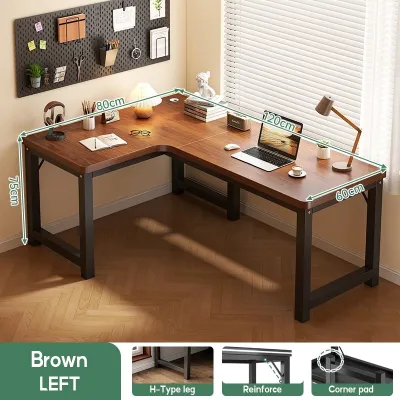
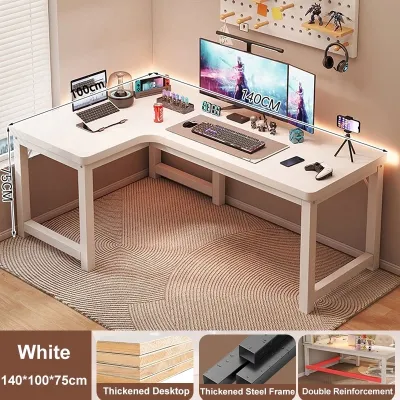
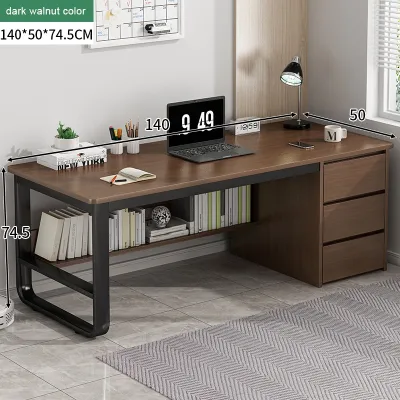

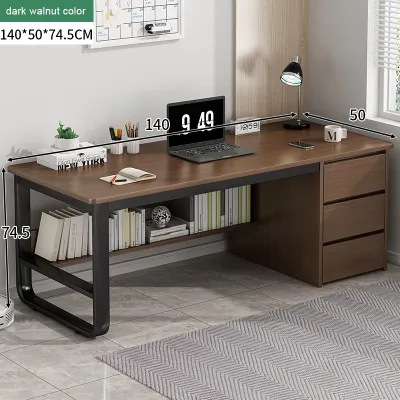
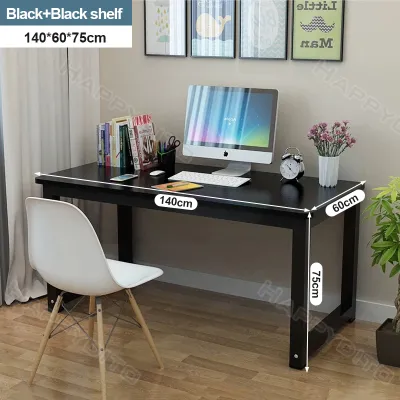
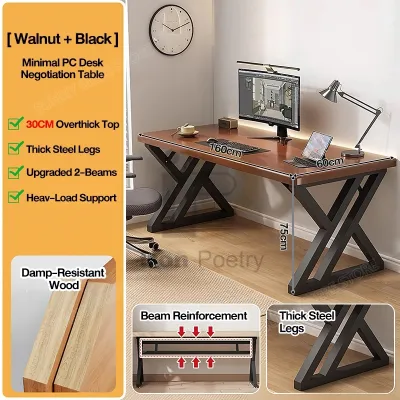
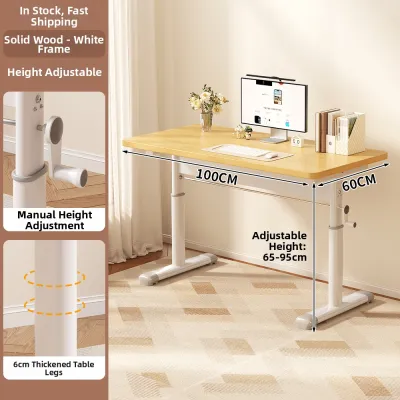
Prices are valid at publication and may change. Please refer to the product page for the latest price.
L-Shaped and Corner Desks Consider an L-shaped configuration if you have an empty corner that is otherwise unusable due to nearby furniture placement. These desks are highly effective for professionals who use dual monitors, large documents, or multiple devices simultaneously. By hugging the walls, they keep the center of the room open while providing a generous amount of working surface.
Standing and Adjustable Desks Evaluate height-adjustable models if you spend long hours at your desk and want to alternate between sitting and standing. Because these desks adjust vertically, they do not require any more floor space than a standard rectangular table. They are excellent for dedicated work corners where you want to maintain ergonomic comfort without extending the desk’s physical borders.
How to Measure Your Condo or Bedroom for an Office Table
Before browsing online marketplaces or visiting local furniture showrooms, you must take precise measurements of your room. A common mistake is focusing solely on whether the desk’s tabletop fits against a wall, without considering the space required to actually use it.

Start by differentiating between the physical footprint of the office table and the operational clearance zone. The footprint is the exact width and depth of the desk frame. The clearance zone includes the space needed for your office chair, your body, and your movement. As a general rule, you should leave a clear space behind the desk to allow your chair to roll back smoothly without hitting a bed, wardrobe, or wall.
Next, map out the traffic pathways in your room. Ensure that the desk does not block door swings, wardrobe doors, or access to your balcony. In tropical climates, keeping windows clear is essential for natural ventilation, so verify that the desk height does not obstruct window openings or block air conditioning units. Use masking tape on the floor to outline the proposed desk and chair dimensions to visualize how much walking space remains.
Finally, plan the delivery route from the building entrance to your room. Many modern high-rise condos have restrictive elevator dimensions, narrow corridors, and tight stairwell turns. Measure the height and width of your unit’s main doorway, as well as any interior doors leading to the workspace. If you purchase a pre-assembled office table, these entry points will dictate the maximum size you can safely bring inside.
Evaluating Space-Saving Desk Types for Limited Layouts
Each desk type interacts differently with your existing furniture and room traffic. Selecting the right one requires looking beyond aesthetics to evaluate structural requirements, daily usability, and how the piece fits into your daily routine.
Foldable and Wall-Mounted Options
Foldable and wall-mounted desks offer the ultimate spatial flexibility, but they require a commitment to daily setup and teardown. You must decide if you are willing to pack away your laptop, mouse, and power cables at the end of every workday to fold the table flat against the wall or slide it under a bed.
For wall-mounted drop-leaf tables, structural safety is the primary concern. You must verify your wall construction before drilling. Concrete and solid masonry walls, common in Philippine condo developments, provide excellent support for heavy-duty anchors. However, if your walls are made of gypsum board or light drywall, you must locate the internal studs to secure the mounting brackets safely. Mounting a desk solely into drywall without proper support risks structural failure and damage to your equipment.
When inspecting foldable options, pay close attention to the hinge mechanisms, locking pins, and overall frame stability. A high-quality folding office table should have robust locking joints that prevent the surface from wobbling while you type. Check the manufacturer’s specified weight capacity to ensure the hinges can support your computer, monitor, and the natural downward pressure of your arms.
L-Shaped and Corner Configurations
L-shaped desks are excellent for turning awkward, underutilized corners into highly productive workspaces. However, you must distinguish between true corner-fit designs and standard rectangular tables placed adjacent to one another. True corner desks often feature a curved inner edge that allows you to sit comfortably facing the corner, maximizing your reach.
Legroom and chair clearance can become restricted in tight corner setups. Ensure that the desk’s support legs or integrated storage drawers do not block your knees or prevent your chair from tucking in fully. If the inner corner contains support pillars or diagonal bracing, your usable legroom will be significantly reduced, forcing you to sit at an awkward angle.
Cable management is another critical factor for corner desks. Because these tables sit flush against two walls, routing power cords to the nearest wall outlet can be challenging. Look for designs with built-in cable grommets or wire management trays underneath the surface. This keeps your power strips and device chargers off the floor, preventing a cluttered look and reducing tripping hazards in a small room.
Standing and Height-Adjustable Desks
Standing desks bring modern ergonomics into small spaces, but they introduce unique physical and electrical requirements. When evaluating these models, look closely at the base footprint. Some height-adjustable frames feature wide, heavy feet for stability, which can limit where you place your office chair or under-desk storage bins.
Vertical clearance is a vital safety consideration for adjustable desks in compact rooms. Before operating a motorized desk, check for overhead obstructions such as wall-mounted air conditioners, floating shelves, low-hanging ceiling fans, or decorative lighting. Ensure that your monitor and desktop items will not collide with these fixtures when the desk reaches its maximum height.
Additionally, check the manufacturer’s weight limits for both the lifting frame and the tabletop material. Motorized desks rely on small electric motors that can wear out prematurely if overloaded. In humid environments, verify that the tabletop material is resistant to moisture and warping, as high humidity can affect the structural integrity of unsealed engineered wood over time, potentially causing the lifting mechanism to bind or strain.
Pre-Purchase Verification and Assembly Constraints
Once you have selected the ideal office table type, you must perform a final pre-purchase check to ensure a smooth delivery and assembly process. Do not rely solely on product photos; always cross-reference the exact product dimensions and packaging sizes with your measured room clearances.
Many space-saving desks are delivered flat-packed, requiring self-assembly. Building furniture in a cramped condo or bedroom can be incredibly challenging. You will need enough open floor space to lay out the parts, rotate the desk during assembly, and safely lift it into position. Check if the assembly instructions require specific tools that you do not own, or if the process requires two people for safe lifting and alignment.
Finally, carefully review the retailer’s return policies and restocking fees before finalizing your purchase. If you discover that the desk does not fit your space, or if the delivery team cannot navigate your building’s narrow stairwell, returning large furniture can be costly and difficult. Understanding the return conditions beforehand protects you from being stuck with an unusable piece of furniture.
Frequently Asked Questions (FAQ)
Can I use a dining table as a permanent office table in a small condo?
While using a dining table is a common temporary solution, it presents significant ergonomic and practical challenges over the long term. Standard dining tables are often slightly higher than dedicated office desks, which can lead to wrist and shoulder strain if your chair cannot be adjusted to match. Additionally, using a shared surface means you must constantly set up and pack away your computer, keyboard, and cables before and after meals, which disrupts your workflow and increases wear on your equipment.
Are glass-top desks a good choice for making a small room look bigger?
Glass-top desks are highly effective at creating visual openness because they allow light to pass through, making a small room feel less cluttered. However, they require frequent maintenance to keep free of fingerprints, dust, and smudges, which are highly visible on glass. You must also check the weight limits carefully, ensure the edges are tempered for safety, and verify that your optical computer mouse can function on a reflective surface without requiring a large, opaque desk mat that defeats the visual purpose of the glass.
Community discussion
Share your experience or ask a question. Comments are reviewed before publication.