
Deciding how to store your clothes in a compact condominium often comes down to a choice between immediate flexibility and permanent structure. For many condo dwellers, the decision between a foldable portable cabinet and a traditional wooden wardrobe hinges on lease terms, mobility, and the specific layout of the unit. While a portable cabinet offers unmatched convenience for those who move frequently, a traditional wooden wardrobe provides a sense of permanence and structural stability that can elevate the look of a home.
In the tropical climate of the Philippines, condo living presents unique challenges, including high humidity, limited floor areas, and strict condominium association guidelines. Selecting the right wardrobe system requires a careful look at how each option utilizes space, handles moisture, and fits into your daily routine. By evaluating these factors, you can choose a storage solution that keeps your clothes organized without overcrowding your living space.
Space Efficiency and Layout Flexibility
In a compact condo layout, every square centimeter of floor space matters. Traditional wooden wardrobes typically come with a fixed, deep footprint, often requiring a depth of 50 to 60 centimeters to accommodate standard clothes hangers. Because these units are rigid and heavy, they must stand flat against a primary wall, which can limit your furniture arrangement options and block natural light from balcony doors or windows.
Products mentioned in this guide
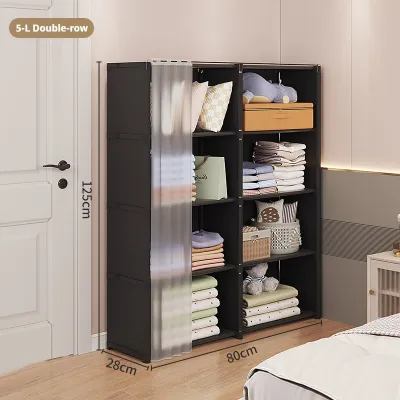
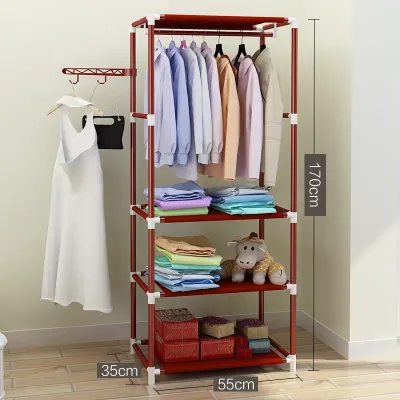
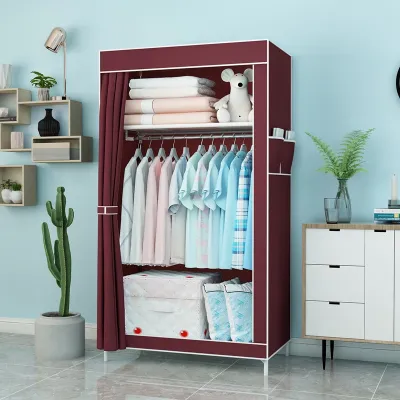
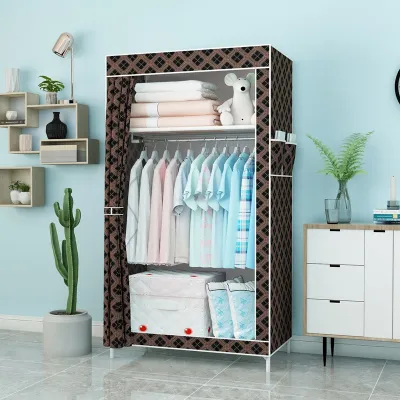
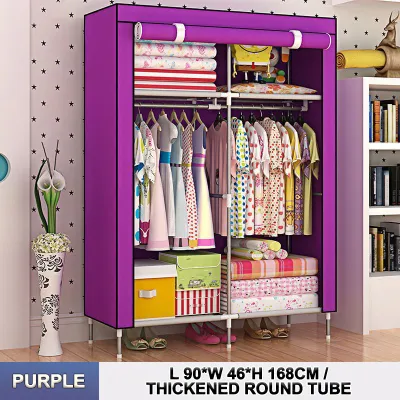
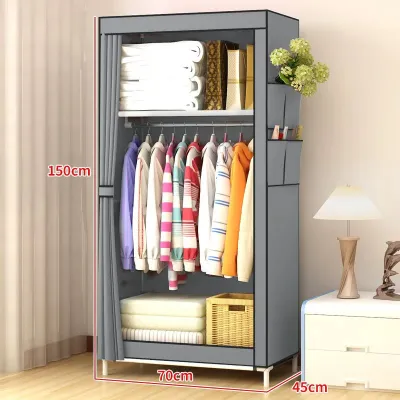
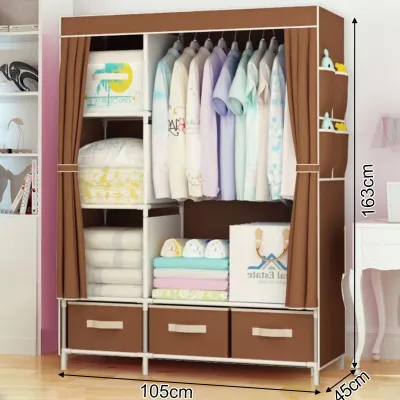
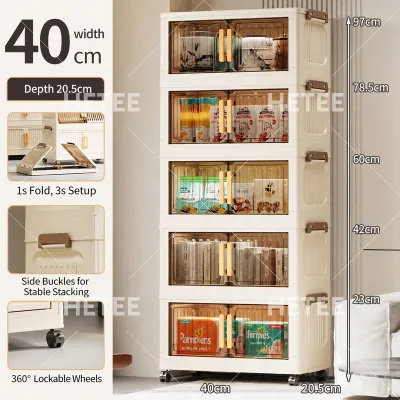
Prices are valid at publication and may change. Please refer to the product page for the latest price.
Portable cabinets offer a more adaptable footprint. Many designs utilize lightweight metal or resin frames that can fit into awkward alcoves, narrow corners, or even inside existing walk-in closets. Because they are easy to slide and reposition, you can experiment with different room layouts as your needs change, which is a major advantage in studio units where a single room serves multiple purposes.
Visual weight also plays a significant role in how spacious your condo feels. A tall, dark wooden wardrobe can dominate a small room, making the ceiling feel lower and the walls closer. In contrast, a portable cabinet with a light-colored fabric cover or translucent plastic panels has a lighter visual presence. However, if a portable unit is left unzipped or has sagging shelves, it can quickly make a small space look cluttered and disorganized.
Clearance requirements are another critical factor for narrow walkways. Traditional wardrobes with swinging doors require at least 45 to 60 centimeters of open space in front of them to open fully, which can block the path between your bed and the wall. While sliding-door wooden wardrobes solve this issue, they add overall depth to the unit. Portable cabinets often feature roll-up fabric doors, zippered flaps, or sliding plastic panels that require zero front clearance, making them highly efficient for tight spaces.
Durability, Stability, and Load Capacity
To understand the true lifespan of your storage furniture, you must look closely at how the components connect. Do not assume that a wooden wardrobe is automatically durable or that a portable cabinet is inherently flimsy. Many budget-friendly wooden wardrobes are constructed from particleboard or medium-density fiberboard (MDF); if these materials are exposed to high humidity without proper edge banding, they can swell, warp, and lose their structural integrity over time.

For a portable cabinet, durability depends almost entirely on the quality of the joints and the frame thickness. Units that rely on thin plastic connectors can become brittle and crack under heavy loads or when exposed to direct sunlight near windows. Look for portable models that feature reinforced steel poles, screw-in metal joints, or heavy-duty ABS resin connectors, as these materials resist bending and maintain a square frame under daily use.
Weight distribution is vital for preventing structural failure. Traditional wooden wardrobes excel in load capacity, easily supporting heavy winter coats, thick bedding, and stacked storage boxes without bowing. Portable cabinets have much lower weight limits, often restricted to 3 to 5 kilograms per shelf. Overloading a portable unit can cause the fabric shelves to sag, putting uneven stress on the joints and eventually causing the entire frame to lean.
Tipping hazards are a serious safety concern in high-traffic condo spaces. A tall, narrow wooden wardrobe is heavy and stable, but it can still tip forward if multiple drawers are pulled out at once. Portable cabinets are incredibly light when empty, meaning a top-heavy load or a sudden bump can easily knock them over. Before purchasing either option, verify if the unit includes anti-tip hardware or if the design allows you to secure it safely to the floor or adjacent furniture.
Practicality: Assembly, Relocation, and Daily Use
Before purchasing any large furniture item, you must plan the logistics of getting it into your condo. Many traditional wooden wardrobes are delivered fully assembled or in massive, heavy flat packs. You must measure your building’s elevator doors, narrow hallway corners, and your unit’s entryway to ensure the package can physically enter your space. Many condo residents have faced the frustration of buying a beautiful wardrobe only to find it cannot clear the turn in the stairwell.
Portable cabinets completely bypass these delivery headaches. They are packaged in highly compact, lightweight boxes that can easily fit into the back of a small car or a standard passenger elevator. This makes them incredibly practical for high-rise living, where coordinating large furniture deliveries often requires booking service elevators days in advance.
Assembly and disassembly requirements vary wildly between the two types. Traditional wardrobes often require multiple tools, wood glue, and several hours of complex assembly. Once assembled, engineered wood wardrobes do not tolerate disassembly well; unscrewing the joints can strip the pre-drilled holes, making the unit unstable if you try to rebuild it in a new home. Portable cabinets typically feature tool-free, push-fit assembly, allowing you to dismantle them into a bundle of poles and connectors in minutes whenever you move.
For daily organization, traditional wardrobes offer a more polished experience with smooth-gliding drawers, integrated mirrors, and sturdy hanging rods that do not sway. Portable cabinets require a bit more care during daily use. Because fabric shelves lack rigid support, you may need to add plastic storage bins or drawer inserts to keep folded clothes neat and prevent them from sliding into a single pile in the middle of the shelf.
Cost Evaluation and Long-Term Value
When evaluating the financial aspect, consider both the immediate upfront cost and how long the furniture will serve you. Portable cabinets are highly budget-friendly, with prices typically ranging from ₱500 to ₱3,000 depending on the size and frame materials. This low entry price makes them an attractive option for students, young professionals, or anyone looking to furnish a temporary rental unit without a major financial commitment.
Traditional wooden wardrobes represent a more significant investment, with prices starting around ₱5,000 for basic engineered wood models and climbing to ₱20,000 or more for solid wood or high-end modular systems. While the upfront cost is higher, a well-maintained wooden wardrobe can last for decades, providing excellent long-term value if you own your condo and do not plan on moving anytime soon.
Maintenance and care routines differ significantly due to the materials used. In humid tropical environments, mold can develop on both fabric covers and unsealed wooden backboards. Fabric covers on portable cabinets can often be removed and hand-washed or replaced entirely if they become stained or torn. Wooden wardrobes require regular dusting, occasional polishing, and the use of hanging dehumidifier bags or silica gel packets inside the cabinet to protect both the wood and your clothing from mildew.
Finally, consider the resale and repurposing potential of your purchase. If you decide to upgrade your furniture or move to a larger home, a portable cabinet is easy to clean, pack, and sell on local online marketplaces. A heavy wooden wardrobe can be difficult to sell because the buyer must arrange for professional disassembly and transport, which often costs more than the secondhand value of the wardrobe itself.
Decision Framework: Which Storage Fits Your Condo?
To help you visualize the key differences between these two storage options, review this quick-scan comparison of their primary characteristics:
| Feature | Portable Cabinet | Traditional Wooden Wardrobe |
|---|---|---|
| Average Footprint | Compact, highly adaptable | Fixed, deeper footprint |
| Assembly Effort | Low, often tool-free | High, requires tools and time |
| Load Capacity | Light to moderate (3–5 kg per shelf) | Heavy-duty (15+ kg per shelf) |
| Relocation Ease | Excellent, fully collapsible | Difficult, risk of joint damage |
| Moisture Care | Washable covers, rust-prone poles | Swelling risk if unsealed |
| Upfront Cost | Budget-friendly (₱500–₱3,000) | Moderate to high (₱5,000–₱20,000+) |
Choose a foldable portable cabinet if:
- You are currently renting your condo and expect to move to a new location within the next few years.
- You need a temporary, low-cost storage solution while saving up for custom built-in cabinetry.
- Your condo has narrow hallways, small elevators, or tight entryways that make delivering large furniture impossible.
- You prefer a lightweight layout that you can easily rearrange by yourself without heavy lifting.
Choose a traditional wooden wardrobe if:
- You own your condo unit and want to invest in furniture that enhances the property's long-term aesthetic and resale value.
- You have a large wardrobe, heavy winter coats, or bulky bedding that requires maximum weight capacity and rigid shelving.
- You prefer a clean, built-in look with solid doors that completely conceal your belongings from view.
- You want a durable piece of furniture that will remain stable and functional through years of daily, heavy use.
Verify first if:
Before making your final purchase, check your condo’s lease agreement or building association rules. Some properties have strict regulations regarding delivery hours, elevator reservations, or the types of furniture allowed inside the units. Additionally, if you plan to anchor a heavy wardrobe or a tall portable cabinet to the wall for safety, you must verify if drilling into the walls is permitted by your landlord or building administration.
Frequently Asked Questions (FAQ)
Can I anchor a foldable portable cabinet to the wall?
Yes, you can anchor a portable cabinet, but you must check the frame design first. Some portable models feature metal frames with designated eyelets, fabric loops, or plastic brackets designed specifically for wall straps. If your unit does not include these, do not attempt to drill directly through the thin metal poles or plastic connectors, as this will compromise the structural integrity of the frame. Always consult your condo’s building management or review your lease agreement before drilling into concrete or drywall, as unauthorized wall modifications can lead to fines or the loss of your security deposit.
How do I prevent a tall portable cabinet from tipping in a small space?
Preventing a portable cabinet from tipping starts with smart weight distribution. Always place your heaviest items, such as storage boxes, shoes, or folded denim, on the bottom shelves to lower the unit’s center of gravity. Avoid hanging heavy bags, wet towels, or multiple thick jackets on the outer corners or top bars of the frame. If your portable cabinet stands on a tiled or slightly uneven condo floor, use non-slip furniture pads under the feet to ensure the base remains perfectly level and stable during daily use.
Community discussion
Share your experience or ask a question. Comments are reviewed before publication.