
Quick Answer: Which Cabinet Type Should You Choose?
Deciding between a foldable storage cabinet with wheels and a traditional fixed cabinet comes down to your kitchen’s size, your long-term living arrangements, and what you intend to store. If you are renting a condo, dealing with a compact kitchen footprint, or need a versatile prep surface that can be rolled away during busy cooking sessions, a foldable storage cabinet with wheels provides the adaptability you need. Conversely, if you own your home, require heavy-duty storage for large kitchen appliances, and want a permanent centerpiece to display fine dinnerware, a traditional fixed buffet or display cabinet is the superior choice. Each option presents distinct trade-offs in load capacity, mobility, and structural longevity that you must weigh against your daily household routine.
Assessing Your Kitchen Layout and Daily Habits
Before purchasing any kitchen furniture, you must evaluate the physical boundaries of your room and how your household moves through the space. Start by measuring your available floor area with a tape measure, noting not just the footprint of the cabinet itself but also the clearance required for adjacent features. You must account for the swing radius of refrigerator doors, oven doors, and existing cabinet drawers to prevent costly spatial conflicts. Furthermore, map out the primary walking paths—often called the kitchen work triangle between the sink, stove, and refrigerator—to ensure your new storage unit does not block daily traffic flow.

Delivery access is another critical, often overlooked factor, particularly for those living in high-rise developments or multi-story homes. You should verify the dimensions of your building’s service elevator, narrow hallways, and entry doorways before ordering a large, pre-assembled fixed cabinet. A unit that cannot clear a tight stairwell corner will leave you with a massive logistical headache. If your access routes are highly restricted, a flat-packed foldable unit becomes infinitely more practical.
Products mentioned in this guide
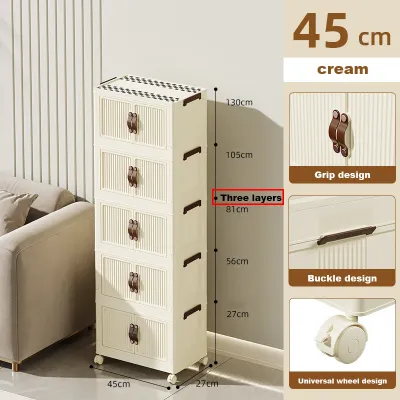
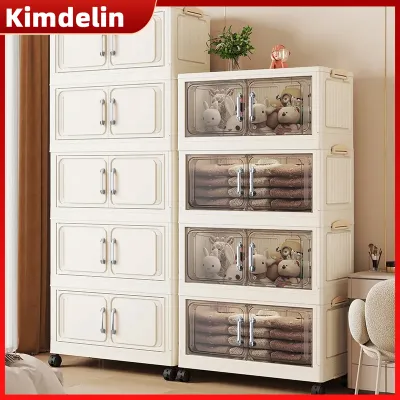
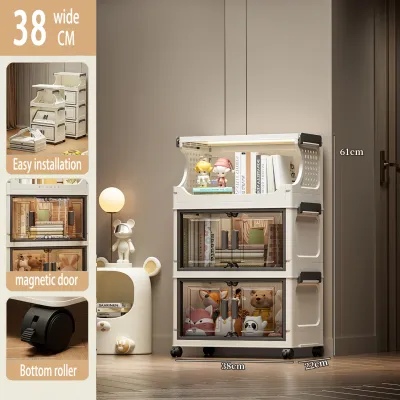
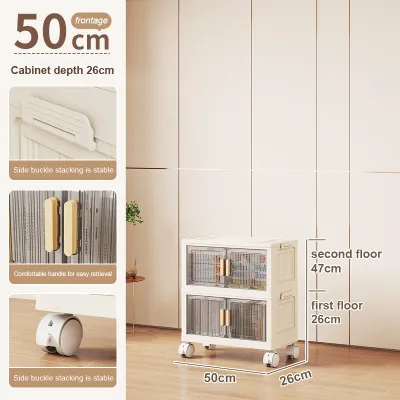
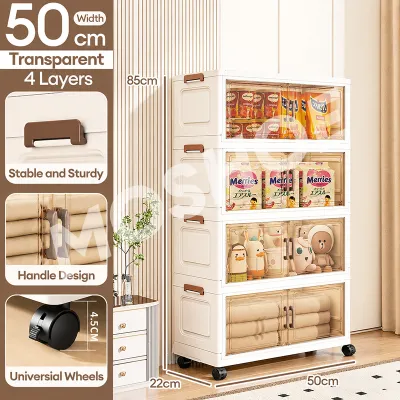
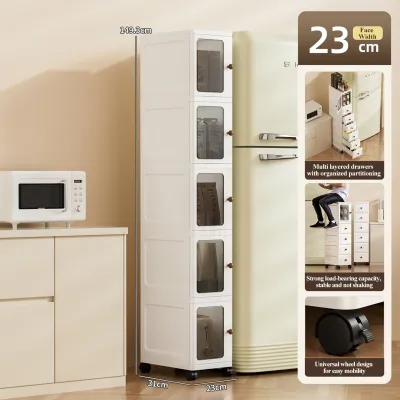
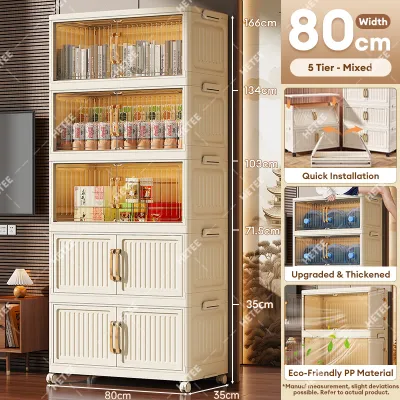
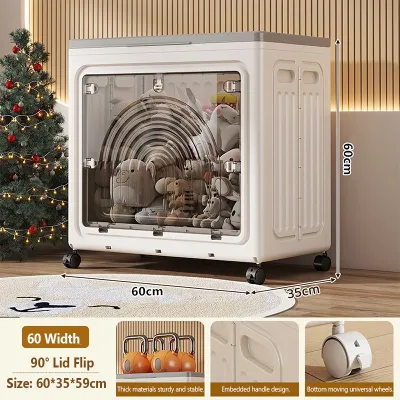
Prices are valid at publication and may change. Please refer to the product page for the latest price.
Your daily cooking habits and lifestyle also dictate your storage needs. If your kitchen doubles as a dining area or a casual workspace, your storage furniture must adapt to different activities throughout the day. Consider whether you need quick access to daily pantry items or if you are looking to store heavy appliances like stand mixers and air fryers. Heavy, high-vibration appliances demand a stable, stationary foundation, whereas lighter pantry goods, condiments, and extra dish towels can easily reside in a mobile unit.
Foldable Storage Cabinets with Wheels: Flexibility and Limits
A foldable storage cabinet with wheels is designed for modern, dynamic living where adaptability is paramount. These units offer an innovative solution to the spatial challenges faced by many urban households, combining mobile utility with collapsible storage.
Advantages for Small and Multi-Use Spaces
A foldable storage cabinet with wheels excels in dynamic, space-constrained environments where every square meter counts. In many urban homes, a kitchen must serve multiple roles, sometimes transitioning from a meal preparation zone to a dining area or even a home office. The integrated casters on a mobile cabinet allow you to roll the unit exactly where it is needed most, whether that is right next to the stove to act as an auxiliary prep station or tucked away in a corner when the cooking is done. This mobility also simplifies deep cleaning, as you can easily roll the cabinet away to sweep and mop the floor underneath, preventing the buildup of dust and kitchen grime.
The folding mechanism itself offers unmatched spatial efficiency. When your kitchen is quiet, or when you need to maximize floor space for guests, many of these units can collapse to a fraction of their fully expanded width. This collapsible nature is highly beneficial for renters who move frequently, as a folding cabinet is significantly easier to transport in a standard passenger vehicle and requires minimal storage space during transitions. Additionally, the top surface of an unfolded mobile cabinet can serve as a temporary serving station during parties or holiday feasts, extending your countertop real estate on demand.
Structural and Capacity Limitations
While the flexibility of a foldable storage cabinet with wheels is highly convenient, it comes with inherent structural trade-offs. The hinges, joints, and folding brackets that enable the collapsible design represent mechanical points of vulnerability. Over time, frequent folding and unfolding can cause these joints to loosen or wear down, particularly if the hardware is subjected to rough handling. To ensure long-term stability, you must commit to periodic checks of the hinges and tighten any loose screws as part of your regular home maintenance routine.
Weight distribution is another critical safety factor for mobile cabinets. Because these units rely on rotating casters rather than a solid, continuous base, their overall weight capacity is lower than that of fixed cabinets. You must strictly adhere to the manufacturer’s specified load limits for each shelf to prevent the frame from bowing or tipping. When the cabinet is stationary, you must engage the wheel locks on all locking casters. Failing to lock the wheels can cause the cabinet to shift unexpectedly when you are placing items on it or working on its surface, which poses a safety risk, especially if hot liquids or fragile glassware are present.
Fixed Buffet and Display Cabinets: Stability and Capacity
Traditional stationary cabinets represent a long-term investment in your home’s infrastructure, prioritizing structural integrity, storage volume, and aesthetic permanence.
Maximizing Storage and Display Potential
Traditional fixed buffet and display cabinets are built for permanence, offering structural stability and high load capacities that mobile units cannot match. These stationary pieces feature solid, continuous bases that distribute weight evenly across your floor, making them ideal for storing heavy kitchen essentials. If you need a dedicated home for heavy appliances such as a microwave, a multi-cooker, or heavy cast-iron cookware, a fixed cabinet provides the rigid support necessary to prevent structural sagging or tipping.
Beyond raw utility, fixed cabinets often serve as key design elements in your home, bridging the visual gap between your kitchen and dining areas. Many models incorporate elegant display features, such as glass-front doors, integrated lighting, and deep wooden drawers. These design elements allow you to organize and showcase your favorite dinnerware, heirloom ceramics, or glassware safely away from kitchen grease while keeping them easily accessible. The permanent nature of these cabinets allows for more substantial, premium materials and detailed craftsmanship, enhancing the overall aesthetic value of your living space.
Space Commitment and Installation Requirements
The primary trade-off of a fixed cabinet is its permanent spatial footprint. Once assembled and positioned, these units are heavy and difficult to move, meaning they will permanently occupy a specific portion of your kitchen or dining room. This lack of mobility makes cleaning behind and underneath the cabinet a challenging task that often requires two people to safely shift the unit. You must be entirely certain of your layout choices before committing to a fixed piece of furniture.
Installation of a fixed cabinet also requires careful attention to your home’s structural conditions. You must verify that your floor is perfectly level; an uneven floor can cause the cabinet frame to twist slightly, which leads to misaligned doors, sticking drawers, and compromised stability. Furthermore, in humid environments, you must maintain proper clearance between the back of the cabinet and the wall. Pressing a wooden cabinet flush against a concrete wall can trap moisture, leading to mold growth and wood rot. Always check the manufacturer’s care guidelines and ensure there is adequate ventilation around the unit. For taller fixed cabinets, you must also consider the anchoring method. Securing the unit to the wall using L-brackets or anti-tip straps is highly recommended to prevent accidental tipping, especially if the cabinet is top-heavy or if you have children in the home.
Head-to-Head Comparison: Space, Load, and Maintenance
To help you visualize how these two cabinet types compare in daily practice, let us examine their performance across several critical operational dimensions. While a foldable cabinet offers unmatched agility, a fixed cabinet provides a level of structural security that is hard to replicate.
| Dimension | Foldable Cabinet with Wheels | Fixed Buffet / Display Cabinet |
|---|---|---|
| Space Efficiency | High adaptability; can collapse and roll away when not in use. | Permanent footprint; requires dedicated, unblocked floor space. |
| Weight Capacity | Low to medium; limited by casters and folding joints. | High; solid base supports heavy kitchen appliances and bulk goods. |
| Mobility & Cleaning | Excellent; easily rolled away for floor sweeping and mopping. | Static; difficult to clean behind or underneath without moving heavy furniture. |
| Material & Humidity | Often features powder-coated metal frames or moisture-resistant plastic. | Frequently made of engineered wood or solid wood; requires strict moisture checks. |
| Assembly & Relocation | Minimal to no tools required; easy to pack and move to a new home. | Complex assembly; heavy and difficult to relocate once built. |
Material and Humidity Resistance: In tropical climates like the Philippines, high humidity levels can severely impact furniture longevity. When selecting a fixed cabinet made of engineered wood (such as MDF or particle board), you must check for high-quality edge banding and protective laminates. Unprotected engineered wood can absorb ambient moisture, causing the panels to swell, warp, and weaken over time. Foldable cabinets often utilize powder-coated steel or heavy-duty plastic components, which are naturally more resistant to moisture but still require inspection for rust-prone joints. Always review the manufacturer’s care instructions regarding wet-wiping and room ventilation.
Assembly and Relocation: The effort required to set up and move your furniture is a major differentiator. Foldable cabinets are frequently shipped nearly fully assembled, requiring you to simply unfold the frame and screw on the wheels—a process that typically takes less than fifteen minutes and requires no special tools. In contrast, fixed buffet cabinets often arrive as a complex flat pack with dozens of panels, screws, and dowels. Assembling a fixed cabinet can take several hours and may require two people to ensure safety and proper alignment during the build process.
Final Decision Framework: When to Choose Which
To finalize your decision, assess your current living situation and storage priorities against the following practical criteria.
Choose a foldable cabinet with wheels if:
- You are currently renting your home and want furniture that is easy to pack, transport, and fit into various future apartment layouts.
- Your kitchen is highly compact, and you need the flexibility to roll the cabinet out of the way to maintain a clear walking path.
- You require temporary countertop space for meal preparation or serving food during occasional family gatherings.
- Your budget is modest, as simple mobile utility carts typically range from ₱1,500 to ₱5,000, making them a highly accessible entry-level option.
Choose a fixed cabinet if:
- You own your home or plan to stay in your current residence for many years, allowing you to invest in permanent, high-quality furniture.
- You need to store heavy kitchen appliances, bulk pantry items, or large stacks of ceramic plates that exceed the weight limits of mobile units.
- You want an elegant display piece that integrates seamlessly with your dining room decor and elevates the visual appeal of your home.
- You have a dedicated, measured space that will not be obstructed by a permanent furniture footprint.
Verify first if:
- Your kitchen floor is uneven. Slanted or warped flooring can prevent wheel locks from holding securely on a mobile cabinet, and it can cause door misalignment or tipping hazards on a fixed cabinet. Use a spirit level to check your floor before making a purchase.
- Your kitchen experiences high moisture or direct water exposure (such as in a semi-outdoor wet kitchen). In these environments, prioritize rust-resistant metals or solid wood treated with marine-grade sealants over standard paper-laminated engineered wood.
Frequently Asked Questions (FAQ)
Can I add aftermarket wheels to a regular fixed cabinet?
No, you should not add aftermarket wheels to a regular fixed cabinet unless the manufacturer explicitly states it is safe to do so. Fixed cabinets are structurally engineered to distribute their weight across a broad, flat base. Concentrating that entire weight onto four small caster attachment points can crack the bottom panel, compromise joint integrity, and cause the unit to collapse. Furthermore, raising a heavy, wide cabinet on wheels significantly alters its center of gravity, creating a severe tipping hazard that could lead to property damage or personal injury. If you require mobility, always purchase a cabinet specifically designed and certified with integrated wheels.
Are foldable cabinets safe for heavy kitchen appliances?
Generally, foldable cabinets are not recommended for heavy, high-vibration kitchen appliances like stand mixers, food processors, or large microwave ovens. The mechanical joints, hinges, and locking casters on foldable units are susceptible to wear from the continuous micro-vibrations generated by running appliances, which can loosen hardware over time. Additionally, the top shelf of a foldable cabinet often has a lower weight capacity than a solid wood countertop. If you plan to use an appliance on a mobile unit, you must verify the manufacturer’s exact weight rating for both the overall unit and the specific shelf, and ensure the wheel locks are fully engaged on a flat, level surface before operation.
Community discussion
Share your experience or ask a question. Comments are reviewed before publication.