
Core Selection Criteria for Large Folding Tables
Hosting large groups in the Philippines requires a delicate balance of hospitality and spatial efficiency. Whether you are preparing for a festive Sunday salu-salo, hosting a holiday Noche Buena, or organizing a milestone family reunion, gathering 6 to 10 guests around a single table is a cherished tradition. However, in many modern Philippine homes, especially urban condominiums in Metro Manila or compact townhouses in suburban provinces, keeping a permanent 10-seater dining table is simply impractical. The ideal solution is a high-quality folding table that can expand to accommodate a large group and then fold away to reclaim valuable living space.
To host 6 to 10 people comfortably, a folding table must provide an expanded length of at least 180 to 240 centimeters, while maintaining exceptional structural integrity. When selecting a table of this scale, you must prioritize stability over mere portability. While lightweight plastic bi-fold tables are convenient for outdoor catering, a formal or semi-formal indoor dining experience demands a robust frame that will not wobble under the weight of heavy ceramic platters, hot clay pots (palayok), or guests leaning on the edges.
Your decision-making framework should begin with an honest assessment of three key factors: your available floor space when the table is fully extended, your dedicated storage zones when it is collapsed, and your frequency of use. If you host large gatherings weekly, a semi-permanent extendable wooden table with a folding base is highly suitable. For occasional holiday gatherings, a fully collapsible heavy-duty utility folding table that can be tucked away in a utility room or behind a wardrobe is a more practical investment.
Products mentioned in this guide
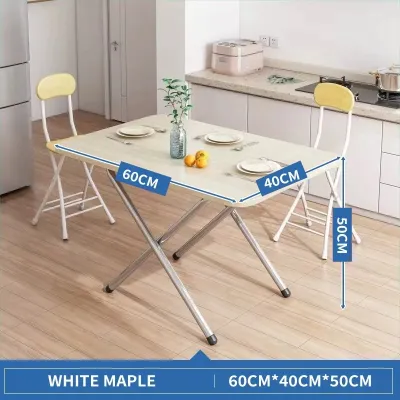
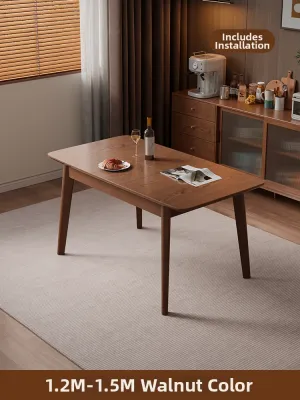
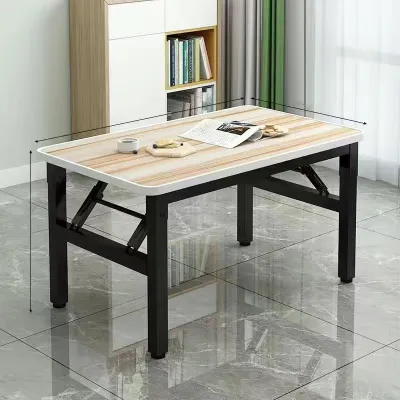
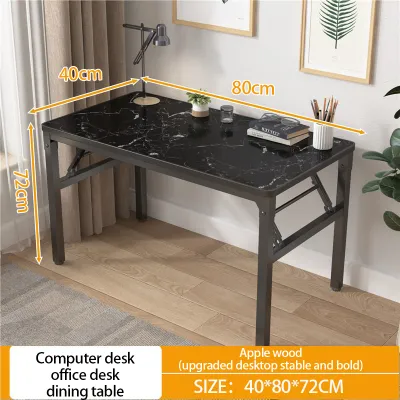
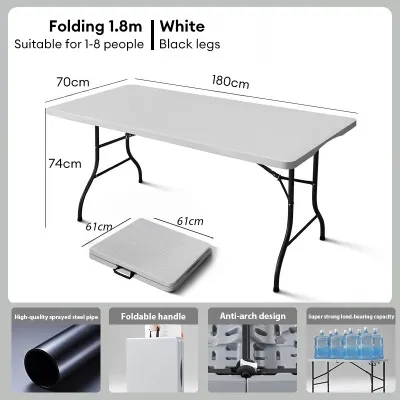
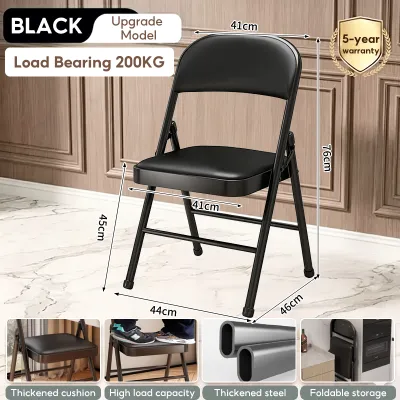
Prices are valid at publication and may change. Please refer to the product page for the latest price.
Folding Mechanisms That Accommodate 6-10 Guests
Not all folding mechanisms are engineered to handle the physical span required for 10 diners. Standard card tables or small wall-mounted drop-leaf units typically cap out at four to six seats and lack the structural support needed for longer spans. To safely support 6 to 10 guests, you must look to specific heavy-duty mechanisms designed to distribute weight evenly across an extended surface.

The following comparison table evaluates the primary folding mechanisms suitable for large-scale dining, analyzing their footprints, setup times, and stability profiles:
| Mechanism Type | Expanded Footprint | Folded Footprint | Setup Time | Structural Stability |
|---|---|---|---|---|
| Gateleg / Drop-Leaf | Large (180–220 cm) | Very Compact (30–40 cm width) | 1–2 minutes | Moderate (dependent on hinge quality) |
| Extendable with Removable Leaves | Very Large (200–260 cm) | Medium (120–150 cm width) | 5–10 minutes | Very High (solid central frame) |
| Bi-Fold / Center-Fold (Utility) | Large (180–240 cm) | Compact (90–120 cm folded half) | 2–3 minutes | Moderate to High (requires leg locks) |
Note: Always verify the exact manufacturer specifications on the product label to ensure the physical dimensions match your specific room layout.
Drop-Leaf and Gateleg Designs
Drop-leaf and gateleg tables are classic space-saving solutions. These tables feature a narrow central console with large hinged panels (leaves) on either side. To expand the table, you lift the leaves and swing out support legs (the “gatelegs”) from underneath the main frame. This design allows you to use the table in three configurations: fully collapsed as a slim console table, half-opened for daily meals with 2 to 4 people, or fully opened to accommodate up to 8 or 10 guests.
When planning for a gateleg table, you must account for the spatial swing radius of the legs. The area beneath the table must remain clear of storage boxes or low-profile decor to allow the support legs to swing open smoothly. Furthermore, because the gatelegs swing outward to support the outer edges of the table, they can sometimes obstruct the knee room of guests seated near the corners. Before purchasing, check the product label for the clearance dimensions between the legs when fully extended, and ensure the hinge hardware is rated for heavy load-bearing capacities.
Extendable Tables with Removable Leaves
For a more traditional dining aesthetic, extendable tables with removable leaves offer superior stability and a polished look. These tables feature a split tabletop mounted on a sliding track system. When you need to host a large group, you unlock the table undercarriage, slide the two halves apart, and insert one or more wooden panels (leaves) into the center gap. The frame then slides back together, locking the leaves securely in place.
While highly stable, this mechanism introduces a storage challenge: the removable leaves must be stored separately when the table is collapsed. In humid tropical environments like the Philippines, storing these heavy wooden panels incorrectly can lead to warping or mold growth. You must identify a dry, climate-controlled storage space—such as under a bed or inside a deep closet—where the leaves can lie flat or stand vertically without being exposed to moisture. Additionally, always inspect the alignment pins and locking clamps beneath the table surface; these components are critical for keeping the extended tabletop level and preventing seams from separating under pressure.
Space Planning and Dimension Verification
A common mistake when buying a large folding table is focusing solely on whether the table can physically fit inside the dining room. To ensure a comfortable dining experience, you must conduct a thorough space planning exercise that accounts for human movement, seating clearance, and storage logistics.
Seating Clearance
To prevent guests from feeling cramped, each adult diner requires a minimum of 60 centimeters of tabletop width. For a more relaxed dining experience, aiming for 70 centimeters per person is highly recommended. This means a table hosting 8 people should be at least 180 to 200 centimeters long, while a table hosting 10 people requires a length of 240 centimeters.
Beyond width, you must calculate the depth required for chairs. A standard dining chair requires approximately 45 to 50 centimeters of depth when pushed in. However, to allow guests to sit down and pull their chairs out comfortably, you must maintain a clearance zone of at least 90 centimeters from the edge of the table to the nearest wall or piece of furniture.
Traffic Flow
A successful gathering requires smooth traffic flow, especially when serving hot dishes or pouring drinks. You must maintain a clear walking path of at least 90 to 120 centimeters around the entire perimeter of the expanded table. If your dining area is adjacent to a high-traffic zone, such as a hallway or kitchen entrance, ensure that the fully extended table does not block these pathways. In compact Philippine condominiums, you may need to temporarily reposition living room furniture, such as sofas or side tables, to accommodate this expanded footprint during a party.
Folded Footprint
Before finalizing your purchase, measure your intended storage zone and compare it against the manufacturer’s stated folded dimensions. If you plan to store a bi-fold table in a utility closet, verify that the closet door is wide enough to accommodate the thickness of the folded frame, which often ranges from 8 to 15 centimeters. If you plan to slide a collapsed gateleg table behind a sofa, ensure there is sufficient clearance so that the table does not press against the back of your seating, which could cause structural damage over time.
Ceiling and Vertical Space
If you select a table that folds upright for storage, or if you plan to store removable leaves vertically on a wall-mounted rack, you must verify your home’s vertical clearance. In some modern residential developments, low ceilings or dropped soffits for air conditioning ducts can restrict vertical storage. Always measure the height of your storage space from floor to ceiling, factoring in any baseboards, light fixtures, or wall moldings that might obstruct the table when it is stood on end.
Stability, Materials, and Hardware Checks
A large folding table is a significant investment, and its longevity depends heavily on the quality of its materials and hardware. Because these tables are designed to be moved, opened, and closed repeatedly, they are subject to far more wear and tear than standard static furniture.
Hardware and Hinges
The hinges, locking brackets, and sliding tracks are the true workhorses of any folding table. When evaluating a table, look for heavy-duty metal hardware rather than plastic components. In the Philippines, the high relative humidity can accelerate the rusting of low-grade metals. Prioritize hardware made from stainless steel or powder-coated steel, which offers superior resistance to corrosion.
Check the product description or packaging for specific hardware details. Look for safety features such as automatic locking pins, gravity locks on folding legs, and reinforced leg braces. These mechanisms prevent the legs from accidentally collapsing if the table is bumped or shifted during a lively dinner.
Surface Materials
The tabletop material must be chosen based on your lifestyle and maintenance preferences. Solid wood tables offer unmatched beauty and can be refinished if scratched, but they are highly sensitive to humidity fluctuations. In tropical climates, solid wood can expand and contract, potentially causing minor warping or hairline cracks over time if the wood was not properly kiln-dried.
Engineered wood, such as Medium-Density Fiberboard (MDF) or particleboard finished with a wood veneer or laminate, is more dimensionally stable in humid conditions. However, you must inspect the edge banding carefully. If the protective laminate edges are poorly sealed, moisture can seep into the core, causing the engineered wood to swell and crumble.
For maximum durability and easy cleanup, high-density polyethylene (HDPE) plastic tabletops are highly popular for casual hosting. They are completely waterproof, resistant to stains, and easy to sanitize. Regardless of the material you choose, always check the manufacturer’s care instructions regarding heat resistance. Never place hot serving pots, such as fresh-off-the-stove soup bowls or baking dishes, directly onto the tabletop without using protective trivets or heat-resistant pads.
Leg Structure and Floor Protection
The geometry of the table legs plays a critical role in preventing tip-overs. Wide-set legs that extend close to the outer perimeter of the tabletop provide the best stability, especially when guests lean their forearms on the table edges. Avoid tables with narrow, centralized pedestals that expand outward, as they can become top-heavy when fully loaded with food.
Additionally, protect your home’s flooring. Folding tables are frequently dragged or shifted during setup. Ensure the table legs are equipped with durable, non-marking rubber caps or heavy-duty felt pads. This is particularly important for protecting delicate hardwood, laminate, or high-gloss ceramic tile floors commonly found in Philippine residences.
Weight Capacity
Always locate the manufacturer’s explicit maximum weight capacity on the product label. A table hosting 10 people must support not only the weight of the dinnerware, glassware, and cutlery but also heavy serving platters, beverage dispensers, and the physical weight of guests leaning on the surface. A safe minimum weight rating for a large dining table is 100 to 150 kilograms of evenly distributed weight. Avoid tables that do not state a clear weight capacity, as they may not be structurally rated for heavy residential dining use.
Delivery, Assembly, and Storage Checklist
Purchasing a large folding table involves logistics that extend far beyond the showroom or online checkout page. To ensure a seamless experience, follow this practical checklist before, during, and after delivery.
Access and Delivery
Before placing your order, trace the exact path the delivery team will take to bring the table into your home.
- Elevator Cabin Dimensions: If you live in a high-rise condominium, measure the height, width, and diagonal depth of the building's service elevator. Many large 10-seater tables, even when flat-packed, exceed the height of standard residential elevators.
- Stairwell Clearance: If your home has multiple levels or if the elevator is unavailable, check the turning clearance in stairwells. Tight landing corners can easily trap long furniture boxes.
- Doorway Widths: Measure the clear opening width of your main entrance door and any hallway doors. Remember to account for doorknobs and safety latches that might reduce the usable clearance.
Assembly Requirements
Many high-quality extendable or folding tables require partial assembly upon delivery. Because of the weight and size of these tables, assembly is almost always a two-person job. Attempting to lift or flip a heavy wooden extendable table alone can result in personal injury or damage to the table’s sliding tracks.
Before beginning assembly, review the manufacturer’s instruction manual to identify the required tools. While basic Allen keys are often included, having a high-quality screwdriver or a power drill with adjustable torque settings can significantly speed up the process. However, use power tools with caution; excessive torque can easily strip screw holes in engineered wood or damage delicate metal threads.
Maintenance and Care
To keep your folding table operating smoothly for years to come, establish a simple routine maintenance schedule:
- Tighten Hardware: Every six months, inspect the underside of the table and tighten any loose screws, bolts, or hinge fasteners. The vibrations from opening and closing the table can cause hardware to back out over time.
- Lubricate Tracks: If your table features a metal sliding track for removable leaves, apply a small amount of silicone-based lubricant to the tracks once a year. This prevents friction, ensures smooth operation, and protects the metal from humidity-induced rust. Avoid oil-based lubricants like WD-40, which can attract dust and debris, leading to a sticky buildup that jams the mechanism.
- Clean Spills Immediately: Regardless of the tabletop material, wipe up liquid spills immediately. Standing water can damage wood finishes, compromise laminate seams, or cause rust on exposed metal hardware underneath.
Frequently Asked Questions (FAQ)
Can a wall-mounted folding table seat 10 people?
No, wall-mounted folding tables are structurally unsuitable for seating 10 people. To accommodate 10 diners, a table must be at least 240 centimeters long. A wall-mounted table of this size would exert immense leverage and pulling force on your wall studs, creating a severe safety hazard. Furthermore, wall-mounted tables are anchored at one end, which severely limits chair placement and restricts guest movement. For large groups of 6 to 10 people, freestanding or floor-supported extendable tables are the only safe, practical, and structurally sound choice.
How do I prevent a large folding table from wobbling?
To stabilize a large folding table, first ensure it is placed on a completely flat, rigid surface. Placing a large table on a thick, compressible area rug can cause uneven settling and wobbling. Next, check that all leg locking pins, gravity rings, and undercarriage clamps are fully engaged and locked into position. If your floor is slightly uneven—which is common with tiled floors—look for tables equipped with adjustable leveling glides on the feet. These glides can be screwed in or out individually to compensate for floor irregularities and eliminate wobble.
What is the best way to store folding leaves when not in use?
The best way to store removable folding leaves is to lay them completely flat in a dry, climate-controlled area. Storing them flat prevents the wood or engineered substrate from warping over time under its own weight. If you must store them vertically due to space constraints, ensure they are placed on a non-slip surface and supported evenly so they do not bow. Always wrap the leaves in a soft fabric bag or protective blanket to prevent scratches to the finished surfaces, and keep them away from damp exterior walls, direct sunlight, or air conditioning vents, which can cause uneven moisture loss and warping.
Community discussion
Share your experience or ask a question. Comments are reviewed before publication.