
Finding the right folding low table for a compact condo living room requires balancing daily functionality with physical space. The ideal table should be small enough to allow smooth foot traffic, yet large enough to hold drinks, books, or a laptop comfortably. Generally, a suitable table measures approximately one-half to two-thirds of your sofa’s length and sits level with or slightly below your seat cushions. By focusing on precise measurements and proportional scale, you can select a versatile piece that keeps your living area open, organized, and highly functional.
Core Principles for Sizing a Low Table in Compact Spaces
Selecting furniture for a compact condominium requires a shift in how you view floor space. Every square meter must justify its presence, making the footprint of your folding low table a critical factor. A table that is too large dominates the room visually and physically, while one that is too small becomes impractical for daily use.
Visual weight is just as important as actual physical dimensions. Tables with slender, open legs or light-colored finishes preserve the illusion of open space by letting light pass through. In contrast, solid, boxy designs block sightlines and make a small living room feel instantly crowded.
Products mentioned in this guide
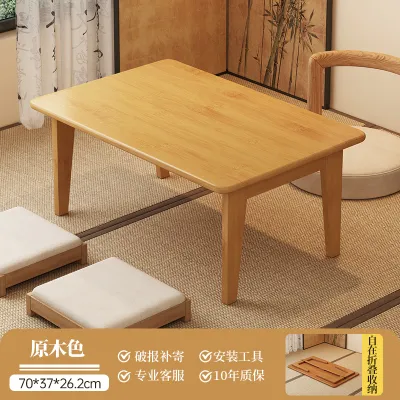
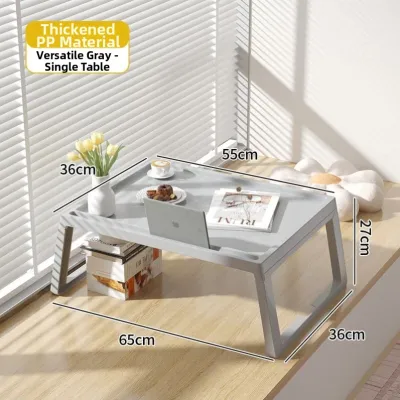
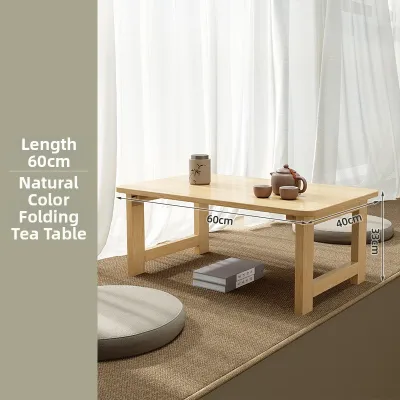
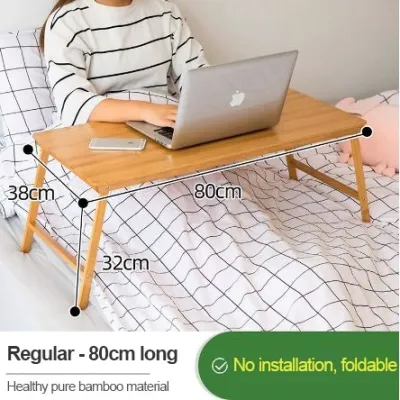
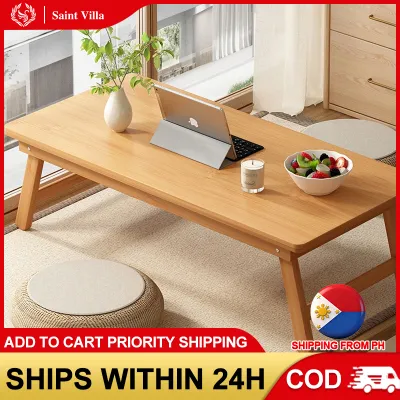
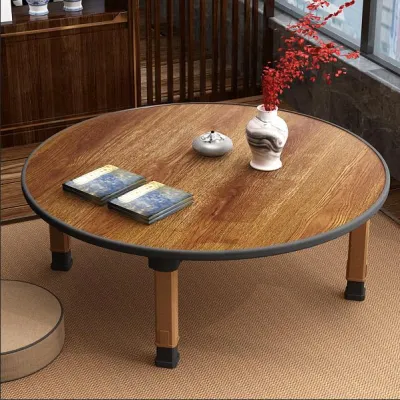
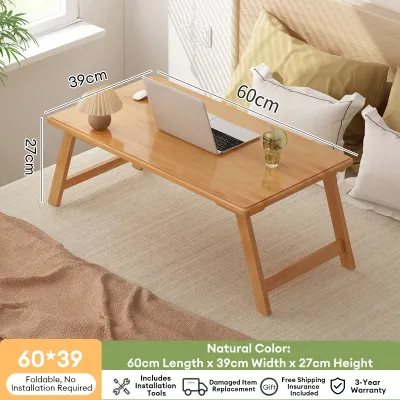
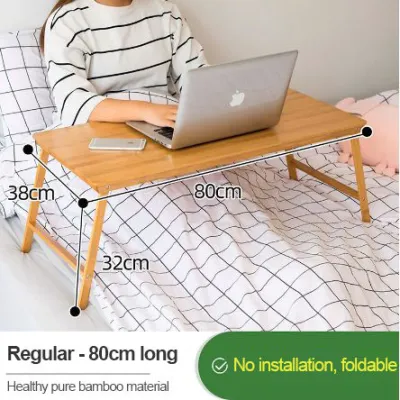
Prices are valid at publication and may change. Please refer to the product page for the latest price.
The primary appeal of folding furniture lies in its adaptability. A successful layout prioritizes a table that can be easily deployed when guests arrive or when you need a workspace, and then tucked away when you need open floor space for exercise or cleaning. This dual-purpose nature means you must evaluate the table in both its active and stored states.
How to Measure Your Condo Floor Space for a Low Table
Before browsing online marketplaces or local furniture showrooms, you must map out the physical limits of your living room. Start by identifying the primary placement zone, which is the floor area directly in front of your main sofa or seating arrangement. This zone dictates the maximum boundaries of your future table.

Walkway clearance is the most critical measurement for maintaining a comfortable flow. You should aim to leave a clear path of at least 30 to 45 centimeters between the edge of the table and the front of your sofa. This distance provides enough legroom to sit comfortably without your knees hitting the table, while still keeping items within easy reach.
Additionally, measure the distance between the table and other surrounding elements, such as a TV console, a floor lamp, or an area rug. If your living room opens up to a balcony, ensure the table does not obstruct the sliding door’s path or block the main walkway to the kitchen. Marking the proposed table dimensions on your floor using masking tape or newspaper templates is an excellent way to visualize the physical footprint before making a purchase.
Matching Table Height to Your Sofa for Comfort
Achieving ergonomic comfort depends heavily on matching the height of your folding low table to your existing seating. To start, measure your sofa’s seat height from the floor to the top of the seat cushion. For the most accurate reading, compress the cushion slightly with your hand to mimic the height when someone is actually sitting down.
For standard coffee table setups, the ideal table surface should sit level with or up to 5 centimeters lower than your compressed sofa cushion. This height relationship allows you to set down a glass or reach for a remote control naturally without straining your back or shoulders.
If your condo utilizes low-profile modular sofas or floor cushions—which are popular choices for maximizing vertical space in compact layouts—your table height must adjust accordingly. In floor-seating scenarios, look for ultra-low folding tables that stand between 25 and 30 centimeters high. This lower profile prevents you from having to reach upward uncomfortably while seated on the floor.
Choosing the Right Length and Width Proportions
Proportion is key to keeping a small living room looking balanced rather than cluttered. As a general rule, the length of your folding low table should be approximately one-half to two-thirds of the total seating length of your sofa. A table that matches or exceeds the length of the sofa will look disproportionately large and make entering or exiting the seating area difficult.
Width is equally vital for preserving precious legroom. In tight condo layouts, a narrow table width of 40 to 50 centimeters is often ideal. This slim profile provides sufficient surface area for daily essentials while leaving enough open space on either side to prevent the room from feeling like a narrow obstacle course.
The shape of the table also influences how spacious the room feels. Rectangular tables offer the most usable surface area, but their sharp corners can be hazardous in tight quarters. Choosing oval, round, or soft-cornered rectangular designs allows you to navigate around the table smoothly, reducing the risk of painful bumps in high-traffic pathways.
Factoring in Folded Storage and Movement Clearance
A folding table is only as practical as its storage capability. Before finalizing your choice, measure the exact dimensions of the spaces where you plan to store the table when it is not in use. Common storage spots in condos include the narrow gap beside a refrigerator, the space under a sofa, or inside a utility closet.
You must also verify the clearance required to actually fold and unfold the table. Some designs feature legs that swing outward, while others use drop-leaf mechanisms or central folding hinges. Ensure you have enough physical space in your living room to operate these mechanisms comfortably without scraping your walls or knocking into other furniture.
Weight is another crucial factor that is easily overlooked. Since you will likely move, fold, and unfold this table frequently, look for lightweight materials like engineered wood, bamboo, or aluminum frames. A table that is too heavy or awkward for a single person to carry will quickly become a permanent fixture, defeating the purpose of its folding design.
Common Sizing Mistakes to Avoid in Small Living Rooms
One of the most common errors in small-space decorating is ignoring the visual clutter caused by solid-base tables. Heavy, blocky designs trap visual energy and make a small room feel cramped, even if the physical dimensions technically fit. Opting for open frames or slender legs helps maintain an airy, spacious atmosphere.
Another frequent oversight is failing to measure the delivery path. Even if a table fits perfectly in your living room, it must first pass through condo elevators, narrow stairwells, and your unit’s front doorway. Always check the packaged dimensions against these entry points to avoid a frustrating delivery day.
Finally, do not choose a table that is too low if you plan to use it for multiple activities. If you frequently work on a laptop or eat meals while sitting on the sofa, an ultra-low table will force you into an uncomfortable slouch. In these cases, look for folding tables with slightly taller profiles or adjustable height mechanisms to protect your posture.
Frequently Asked Questions (FAQ)
Can a folding low table double as a dining surface in a studio condo?
Yes, a folding low table can serve as a casual dining surface, but ergonomics should guide your choice. Standard low tables require you to lean forward significantly, which can strain your back during meals. If you plan to eat at the table regularly, consider using floor cushions for better posture, or look for a folding table with adjustable height settings that can transition from coffee table height to dining height.
How do I prevent a folding table from scratching condo flooring?
Frequent movement can easily scuff vinyl planks, laminate, or tile flooring common in modern condos. To protect your floors, inspect the factory leg caps of your folding table for rough edges or exposed metal. Applying heavy-duty adhesive felt pads to the bottom of the legs is a simple, effective solution. Alternatively, placing a low-pile area rug under the table zone provides a protective barrier and helps define your living room space.
Community discussion
Share your experience or ask a question. Comments are reviewed before publication.