
Selecting the right furniture for your entertainment space requires a balance of aesthetics, safety, and utility. When integrating a display cabinet with glass into your television area, the decision involves more than simply matching wood finishes or choosing a modern silhouette. To find a piece that safely supports your electronics while showcasing your prized collections, you must prioritize tempered safety glass, verified load capacities, integrated cable routing channels, and adequate ventilation.
Focusing on these core structural and functional features ensures your media setup remains organized, safe, and visually appealing. By evaluating how a glass cabinet interacts with your room’s dimensions, your television’s physical footprint, and the tropical climate, you can make a smart, long-term investment for your home.
Measuring Your Space and TV Compatibility
Before browsing styles or glass finishes, you must establish the physical boundaries of your living room. Begin by measuring the available floor space where the cabinet will stand, paying close attention to surrounding traffic paths. In many residential layouts, hallways and walkways can easily become congested if furniture protrudes too far. You must also account for the clearance required to swing open hinged cabinet doors or pull out deep drawers. If your layout is tight, sliding glass doors or open shelving configurations are practical alternatives that do not compromise your room’s flow.
Products mentioned in this guide
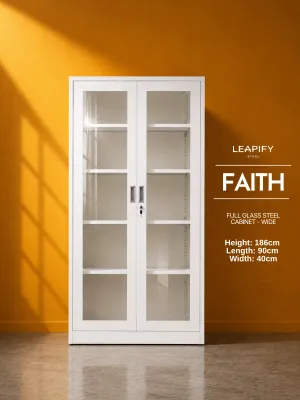
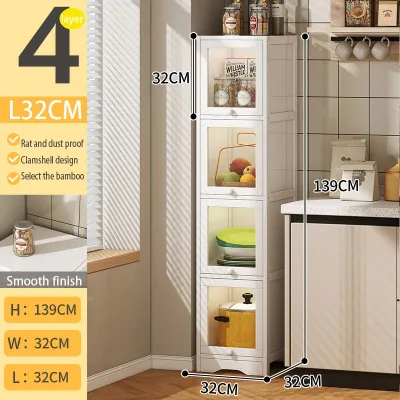
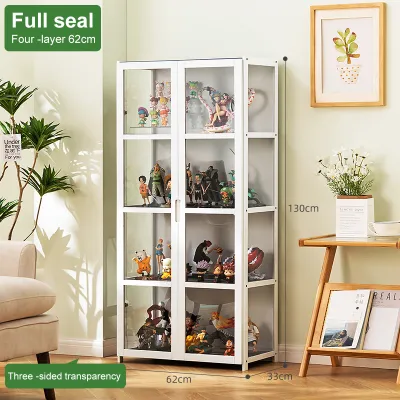
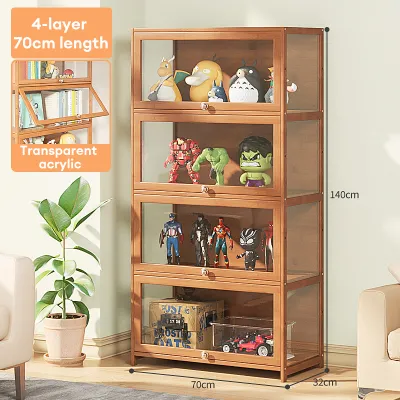
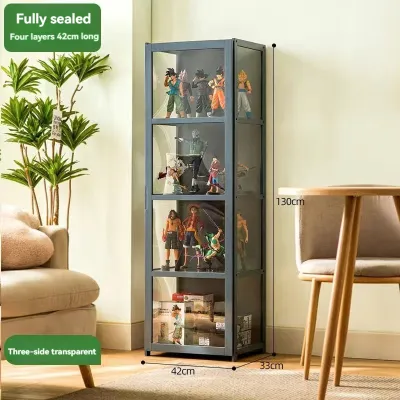
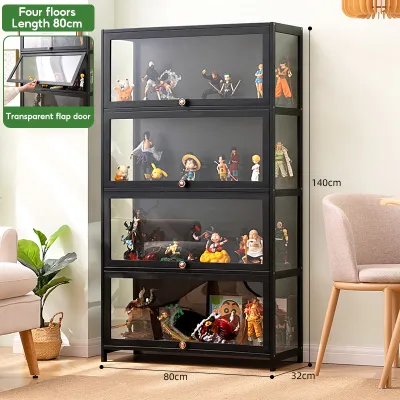
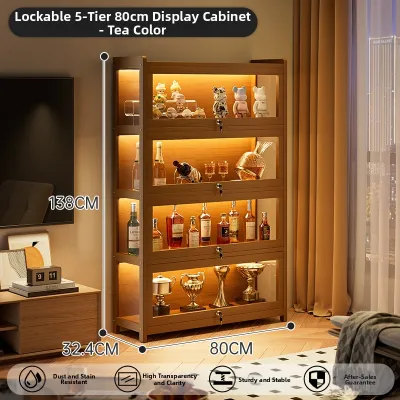
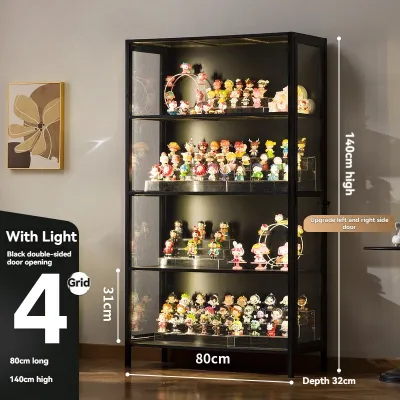
Prices are valid at publication and may change. Please refer to the product page for the latest price.
When assessing compatibility with your television, do not rely on the screen’s diagonal size measurement. A 55-inch or 65-inch television refers to the screen’s diagonal dimension, which does not represent the actual width or depth of the base stand. Always measure the physical footprint of the TV’s stand—both its total width and its front-to-back depth. The top surface of your glass cabinet must be wide and deep enough to accommodate this base comfortably, leaving a safety margin of at least several centimeters on all sides to prevent accidental bumps or overhangs.
Electronic components such as AV receivers, gaming consoles, and soundbars require deeper shelves than standard decorative items. Measure the deepest piece of equipment you plan to house, and add at least five to ten centimeters to that measurement. This extra space accommodates the power cables, HDMI cords, and audio jacks that plug into the back of your devices, preventing them from bending sharply against the rear panel of the cabinet. Failing to account for cable depth can force your cabinet away from the wall or leave expensive equipment awkwardly protruding from the front.
Ergonomics and viewing comfort are equally dependent on the height of your cabinet. The ideal viewing height places the center of your television screen at eye level when you are seated on your sofa. If your sofa features low-slung, modern cushions, a tall cabinet will force you to tilt your head upward, leading to neck strain over time. Conversely, a low-profile console is ideal for modern seating but may be obscured if you have a high coffee table or footrests in the direct line of sight. Calculate your ideal screen height before committing to a cabinet’s finished dimensions.
Finally, verify the delivery and assembly logistics for your chosen piece. Large, pre-assembled glass cabinets can be exceptionally heavy and difficult to maneuver through tight spaces. Measure your home’s doorway widths, hallway corners, and elevator dimensions to ensure the delivery team can safely transport the unit into your living room. If you live in a high-rise condominium, checking these access limits beforehand prevents the frustration of receiving a beautiful piece of furniture that cannot physically make it up to your unit.
Evaluating Glass Safety, Quality, and Weight Limits
Safety is the most critical factor when introducing glass furniture into a high-activity area like a TV room. You must ensure that all glass panels, shelves, and doors are made of tempered safety glass rather than standard annealed glass. Tempered glass undergoes a specialized thermal heating and rapid cooling process that increases its strength against impacts. In the rare event that tempered glass does break, it fractures into small, rounded, relatively harmless granules rather than the sharp, jagged shards characteristic of standard glass, significantly reducing the risk of injury.

To ensure structural integrity, you must locate and verify the manufacturer’s official weight capacity ratings. Never estimate or guess how much weight a glass shelf or top surface can support. A high-quality display cabinet with glass will explicitly state its maximum load limits in the product documentation or on a specification sheet. Compare these limits directly against the actual weight of your television, audio amplifiers, and heavy decorative objects. If you plan to place a heavy television directly on a glass top, that surface must be rated to support a weight well exceeding that of your TV.
Do not assume that a frame made of solid wood or heavy metal automatically translates to high weight capacities for the glass components. The load-bearing capability of glass depends on its thickness, how it is supported by the frame, and the quality of the joints. Look for cabinets where glass shelves are supported by sturdy, rubber-padded metal shelf pins rather than simple plastic pegs. The joints of the cabinet frame should be reinforced with heavy-duty cam locks, dowels, or metal brackets to prevent swaying or structural failure under a heavy load.
When examining the quality of the glass, pay attention to the thickness and edge finishing. High-quality glass shelves are typically at least six to eight millimeters thick to prevent bowing under the weight of books, media players, or collectibles. The edges of the glass should be polished, beveled, or rounded. Unfinished or poorly cut glass edges are highly susceptible to micro-fractures, which can weaken the glass over time and lead to spontaneous shattering under temperature changes or minor impacts. Smooth, finished edges also protect your hands during cleaning and rearranging.
In addition to the glass itself, inspect the overall stability of the cabinet frame. Tall, narrow display cabinets have a higher center of gravity and pose a tip-over risk, especially when loaded with heavy items on upper shelves. Look for units that include dedicated wall-anchoring hardware. Anchoring your cabinet to the wall studs is a vital safety measure that prevents accidental tipping if the unit is bumped or if heavy doors are opened simultaneously. If a cabinet does not come with anchoring instructions or hardware, you should purchase compatible, high-quality furniture straps separately.
Optimizing Storage, Shelving, and Cable Management
An effective media setup requires a thoughtful interior layout that balances storage capacity with cable organization. Adjustable glass shelves offer far superior versatility compared to fixed shelves. As your collection of media devices, gaming consoles, or decorative items changes over time, adjustable shelves allow you to reconfigure the interior height to fit taller items like vertical speakers or gaming towers. This adaptability prevents wasted vertical space and keeps your display looking balanced and intentional.
Cable management is a vital feature that separates dedicated media cabinets from standard display cases. Look for cabinets designed with built-in cable routing holes, open-back panels, or integrated channel clips along the frame. These features allow you to route power cords and connection cables directly out the back of the cabinet to your wall outlets without cluttering the visible glass shelves. Keeping wires hidden not only preserves the clean, elegant look of your glass display but also prevents cables from becoming tangled and difficult to manage.
Proper ventilation is essential for any enclosed cabinet housing electronic equipment. Devices like AV receivers, game consoles, and streaming boxes generate significant heat during operation. If these devices are sealed inside a glass cabinet without adequate airflow, the ambient temperature will rise rapidly, potentially causing your electronics to overheat, malfunction, or suffer a shortened lifespan. Look for cabinets with open-back designs, slatted wooden panels, or wire mesh sections that facilitate natural air circulation, drawing cool air in from the bottom and allowing hot air to escape from the back.
+-------------------------------------------------------------+
|                  CABINET VENTILATION PATTERNS               |
+-------------------------------------------------------------+
|   [Enclosed Glass Front] ---> Traps heat, risks damage      |
|                                                             |
|   [Open-Back / Slatted]  ---> Allows natural heat escape    |
|                                                             |
|   [Active Fan System]    ---> Best for high-heat AV gear    |
+-------------------------------------------------------------+
When evaluating door mechanisms, consider the trade-offs between sliding and hinged options. Sliding glass doors are excellent for saving space because they do not require clearance in front of the cabinet to open. However, they typically only allow you to access one side of the cabinet at a time. Hinged doors provide complete, unobstructed access to the entire interior simultaneously, but they require ample swing space in front of the cabinet. Ensure your living room layout can easily accommodate whichever mechanism you choose.
Finally, consider how the glass doors will affect your remote control signals. Standard infrared (IR) remotes require a direct line of sight to communicate with your media players and cable boxes. While clear glass typically allows IR signals to pass through without issue, heavily tinted, frosted, or patterned glass can block or weaken these signals, forcing you to open the cabinet doors every time you want to change the volume or channel. If you prefer the sleek look of dark, tinted glass, you may need to invest in an inexpensive IR repeater system or transition to Bluetooth- and Wi-Fi-enabled smart remotes.
Balancing Lighting, Style, and Screen Glare
Aesthetics play a major role in how your entertainment area feels, but your furniture choices should not interfere with your viewing experience. Integrated LED lighting inside a glass cabinet is an excellent way to highlight decorative items, glassware, or collectibles. However, you must position these lights carefully to avoid creating distracting reflections on your television screen. Opt for downward-pointing puck lights or recessed LED strip lights mounted at the very front of the cabinet shelves, which illuminate your items without casting a harsh glare toward your seating area.
To ensure a cohesive look, match the cabinet’s frame material and glass tint with your existing living room decor. For a modern, industrial, or minimalist aesthetic, a cabinet featuring a matte black metal frame with clear or slightly smoked glass works beautifully. If your home leans toward a classic, rustic, or warm Scandinavian style, choose a frame made of high-quality engineered wood or solid timber veneers. Frosted glass doors offer a softer, more subtle look that partially obscures the contents, making it easier to hide minor clutter while still allowing light to filter through.
+-------------------------------------------------------------+
|                 VISUAL WEIGHT COMPARISON                    |
+-------------------------------------------------------------+
|   Solid Wood Console:   [████████████████████] (Heavy/Dark) |
|                                                             |
|   Glass-Door Cabinet:   [░░░░░░░░░░░░░░░░░░░░] (Light/Airy) |
+-------------------------------------------------------------+
The concept of visual weight is highly relevant when designing a TV area. A large, dark television screen can easily dominate a room, making the space feel heavy and unbalanced. Integrating a display cabinet with glass introduces transparency and light, breaking up the solid mass of the entertainment setup. The glass surfaces reflect ambient light and allow the eye to travel through the furniture, making small or narrow living rooms feel significantly larger, brighter, and more open than they would with solid, opaque cabinetry.
In tropical environments characterized by high humidity, you must pay close attention to how non-glass materials are treated. Excess moisture in the air can cause untreated wood frames to warp, swell, or develop mold, while low-grade metal frames may begin to rust or corrode. When shopping, check the manufacturer’s care and material specifications to ensure wood elements are sealed with water-resistant varnishes or laminates, and metal parts are powder-coated or rust-treated. Keeping your cabinet positioned a few centimeters away from the wall also promotes air circulation, helping to prevent moisture buildup behind the unit.
Recommended Glass Cabinet Configurations for Your Setup
To help you identify the best setup for your home, consider these three common configurations tailored to different entertainment needs, space constraints, and lifestyle preferences.
The Minimalist Floating Setup
This configuration is designed for compact spaces, modern apartments, or homeowners who prefer a clean, uncluttered aesthetic. It typically features a low-profile, wall-mounted console with a tempered glass top shelf or sleek glass sliding doors underneath a wall-mounted television.
- Ideal User: Condo dwellers, minimalists, and those who primarily stream media and have minimal physical equipment.
- Key Buying Criteria: Verify the strength of your wall studs and ensure you use heavy-duty mounting brackets rated for the cabinet's weight. Look for slim depths (30 to 40 centimeters) and built-in cable paths that run behind the drywall or through a tidy wall cover.
- Potential Limitations: Extremely limited storage capacity for larger audio gear, and requires professional or highly precise wall installation to ensure safety and stability.
The Collector's Entertainment Center
For those who want their living room to showcase personal style alongside their television, this setup features a central low TV stand flanked by tall, matching glass display cabinets. These tower cabinets often include integrated LED lighting and multiple adjustable glass shelves.
- Ideal User: Collectors of action figures, porcelain, books, or physical media (such as vinyl records and Blu-rays) who want to protect their items from dust while keeping them on display.
- Key Buying Criteria: Look for dust-proof door seals, adjustable glass shelves with a thickness of at least six millimeters, and pre-installed LED lighting. Wall-anchoring hardware is absolutely mandatory for these tall units to prevent tipping.
- Potential Limitations: Requires a very large wall footprint, making it unsuitable for small rooms. The extensive glass surfaces also require frequent dusting and cleaning to maintain a pristine appearance.
The Heavy-Duty Media Hub
This robust setup is built to handle extensive home theater systems. It consists of a sturdy, reinforced TV stand with a thick tempered glass top surface, accompanied by deep, enclosed lower cabinets featuring glass-front doors to protect high-end AV equipment.
- Ideal User: Audiophiles, dedicated gamers, and home theater enthusiasts who own multiple consoles, heavy AV receivers, subwoofers, and center-channel speakers.
- Key Buying Criteria: Prioritize exceptionally high weight capacities (check the manufacturer's load limits for both the top surface and the interior shelves). Look for active ventilation features, deep interior compartments (at least 45 to 50 centimeters), and extensive cable management channels.
- Potential Limitations: These units are physically heavy, bulky, and difficult to move once assembled. They also carry a higher visual weight, which can overwhelm smaller living spaces.
Frequently Asked Questions (FAQ)
Can I place a heavy TV directly on a glass cabinet?
You can safely place a television directly on a glass cabinet only if the manufacturer explicitly states a top-surface weight capacity that exceeds the total weight of your TV. Always verify this weight limit in the product specification sheet before assembly. Additionally, you must ensure that your television’s base stand fits entirely within the flat, supported glass area; any overhang can create uneven stress concentration, increasing the risk of sudden glass fracture or tipping.
Will glass shelves or doors block my remote control signals?
Standard clear glass does not block infrared (IR) remote control signals, allowing you to operate your media devices easily while the doors remain closed. However, if your cabinet features heavily tinted, frosted, or patterned glass, these surfaces can scatter or block the light signals, resulting in poor remote responsiveness. To resolve this issue, you can keep IR-dependent devices on open shelves, install an inexpensive IR repeater system, or switch to modern Bluetooth or radio-frequency (RF) remotes that do not require a direct line of sight.
How do I clean glass display cabinets without leaving streaks?
To clean your glass cabinet without leaving unsightly streaks, use a clean, lint-free microfiber cloth paired with a dedicated glass cleaner or a simple mixture of equal parts distilled water and white vinegar. Avoid spraying any liquid cleaner directly onto the glass surfaces, as excess moisture can seep into the wooden joints, metal hinges, or nearby electronic equipment. Instead, spray a small amount of the cleaner directly onto your microfiber cloth, wipe the glass in a consistent Z-shaped motion, and buff dry with a second, dry microfiber cloth.
Community discussion
Share your experience or ask a question. Comments are reviewed before publication.