
Quick Rules for Headboard Width, Height, and Thickness: Choosing a Head Board for Bed Frames
Selecting the right head board for bed setups requires looking beyond standard mattress labels. While you might assume a standard “Queen” or “King” headboard will automatically fit your bed, nominal sizes can vary significantly between manufacturers, especially when comparing local custom-built frames with imported flat-pack furniture. Measuring your actual bed frame and mattress is the mandatory first step before making any purchase.
To find the ideal proportions, you must evaluate three primary dimensions: width, height, and thickness. Width is dictated by your bed frame size and the visual weight you want the bed to carry in the room. Height is determined by your functional needs, such as whether you sit up to read, as well as your room’s ceiling height. Thickness, or depth, affects how far your bed frame is pushed away from the wall, which directly impacts the remaining floor space.
In the Philippines, where bedroom layouts can range from spacious suburban master bedrooms to compact high-rise condominiums in metropolitan areas, these dimensions must be balanced carefully. A headboard that is too thick can restrict movement around the foot of the bed, while one that is too short can disappear entirely behind a plush mattress and decorative pillows. Understanding how these measurements interact ensures your bed remains both comfortable and visually balanced.
Products mentioned in this guide




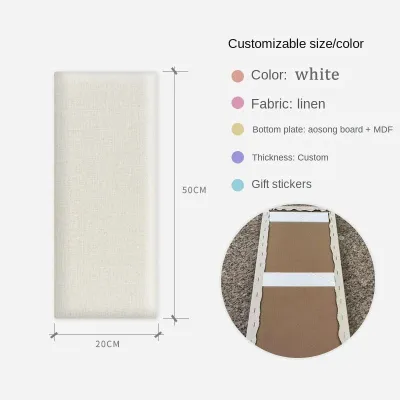

![[COD] AqToCna Ship within 24 hours DIY 3D Wall Mounted Headboard Soundproof Wall Panels Upholstered Anti Collision Bedside Tatami Soft](https://img.lazcdn.com/g/p/c5b0bbe9927e8ff48a62e6493fd30851.jpg_400x400q80.jpg_.webp)
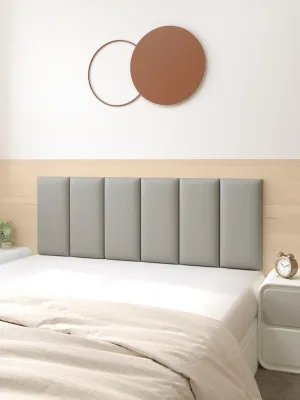
Prices are valid at publication and may change. Please refer to the product page for the latest price.
Choosing the Right Headboard Width for Your Bed Frame
The width of your headboard sets the tone for the entire bedroom layout. There are three main width styles to choose from: flush, extended, and oversized. A flush headboard aligns precisely with the outer edges of your mattress or bed frame, offering a clean, streamlined look. An extended headboard is slightly wider than the bed, adding a sense of luxury, while an oversized headboard spans a significant portion of the wall, often integrating the bedside tables into a single cohesive design.

Choosing among these styles depends heavily on the scale of your room and the size of your bed frame. A massive, oversized headboard can overwhelm a small room, while a flush headboard might look swallowed up on a large accent wall. By matching the width style to your specific bed category, you can create a proportional, intentional design.
Single and Double Bed Frames
Single (typically 36 inches wide) and Double (typically 54 inches wide) bed frames are highly popular in compact living spaces, guest rooms, and children’s bedrooms. In these smaller environments, maintaining clear walkways and maximizing floor space are top priorities. For these bed sizes, flush or slightly extended headboards generally work best because they keep the bed’s footprint compact and prevent the room from feeling overcrowded.
Before choosing an extended headboard for a smaller bed, it is crucial to measure the distance between the bed frame and the adjacent walls or wardrobe doors. An extra-wide headboard can easily block narrow pathways or prevent closet doors from opening fully. Walkways should ideally have at least 60 to 70 centimeters of clearance to allow for comfortable movement.
Nightstand placement is another critical factor for smaller beds. If you select an extended headboard, check whether the extra width will overlap awkwardly with your bedside tables. In tight spaces, a headboard that extends too far can force your nightstands forward, leaving an unsightly gap between the table and the wall, or block access to wall-mounted light switches.
Queen and King Bed Frames
Queen (typically 60 inches wide) and King (typically 72 to 76 inches wide) beds are the centerpieces of larger bedrooms. Because these beds occupy a massive amount of physical space, they require a headboard with enough visual weight to anchor the mattress to the room. Extended or oversized headboards are highly preferred for these sizes to prevent the bed from looking disproportionately wide or unfinished.
When planning an oversized headboard, you must balance its width with the overall span of the wall. Ensure there is adequate negative space on either side of the headboard so the wall does not look completely smothered. Leaving at least 30 to 50 centimeters of bare wall on the outer edges of your bedside setup helps maintain a sense of openness and architectural balance.
To execute an extended or integrated design successfully, measure the total span of your bed frame combined with both nightstands. An ideal extended headboard should either end precisely where the nightstands begin or extend far enough to sit centered behind them. This unified approach creates a high-end, hotel-like aesthetic that makes the sleeping area feel cohesive and luxurious.
How to Choose the Perfect Headboard Height
Finding the right headboard height is a balance between visual proportion and daily function. The height of your headboard must be calculated in relation to your mattress thickness and your typical pillow stack. A common design mistake is purchasing a standard-height headboard only to find that extra-thick pillow-top mattresses and plush decorative pillows completely obscure the headboard once the bed is made.
Your daily habits should dictate the minimum height of the headboard. If you regularly sit up in bed to read, watch television, or work on a laptop, the headboard must be tall enough to support your back, shoulders, and head comfortably. For optimal comfort, the visible portion of the headboard above the mattress should be at least 60 to 75 centimeters tall, allowing you to lean back without hitting the hard wall behind it.
Always account for the base height of your bed frame when calculating the final height of your headboard. A low-profile platform bed frame sits closer to the floor, which naturally makes a standard headboard appear taller and more dramatic. Conversely, a high storage bed or a traditional box spring setup raises the mattress significantly, which reduces the visible height of the headboard and may require you to opt for an extra-tall model.
Finally, use your room’s ceiling height as an upper limit constraint. In modern condominiums with lower ceilings (around 2.4 meters), an exceptionally tall headboard can make the entire room feel cramped and vertically compressed. Aim to leave at least 90 to 120 centimeters of clearance between the top of the headboard and the ceiling or crown molding to preserve a light, airy atmosphere.
Measuring Your Space and Checking Wall Clearances
Before purchasing or installing any headboard, conducting physical checks of your bedroom is essential to avoid costly return fees or installation failures. Start by measuring the exact width and height of the available wall space where the bed will sit. Do not rely on visual estimates; use a metal measuring tape to get precise numbers, especially if your bed is positioned between two windows or structural columns.
One easily overlooked obstacle is the skirting board (baseboard) running along the bottom of your wall. If you are planning to purchase a wall-mounted headboard, skirting boards can prevent the headboard from sitting perfectly flat against the wall. To achieve a flush mount, you may need to account for the thickness of the skirting board when choosing your mounting brackets or select a floor-standing headboard designed with a baseboard cutout.
Electrical outlets and light switches must also be mapped out before installation. A wide or low-hanging headboard can easily block access to wall outlets, making it incredibly frustrating to plug in bedside lamps, phone chargers, or adjustable bed controls. Ensure your headboard’s footprint leaves these fixtures fully accessible, or plan to use slim-profile adapters and extension cords before anchoring the furniture.
Additionally, check the clearance of nearby architectural features and fixtures. In tropical climates like the Philippines, wall-mounted split-type air conditioning units are common bedroom fixtures; make sure the top of your headboard does not block the downward airflow or filter access of your AC unit. You must also verify that the headboard’s width and height will not obstruct window sills, block natural light, or interfere with the swing of bedroom or closet doors.
For residents in high-rise buildings, do not forget to measure your building’s service elevator, tight stairwells, and doorway clearances. A massive, one-piece king-size headboard might fit perfectly on your bedroom wall, but if it cannot fit inside the elevator or make the turn in your hallway, you will not be able to get it into your home. If access is tight, consider a modular or multi-panel headboard design that can be assembled directly in the room.
Common Headboard Sizing and Fit Mistakes to Avoid
One of the most frequent errors homeowners make is buying a headboard that is too short. When you combine a thick mattress, a mattress topper, and standard sleeping pillows, a short headboard can easily disappear, leaving no visual impact and offering zero back support. To prevent this, always measure your mattress thickness (including any toppers) and compare it against the headboard’s bottom clearance height.
Ignoring the depth or thickness of the headboard is another common mistake that disrupts bedroom layouts. Heavy upholstered headboards can be 10 to 15 centimeters thick; when attached to a bed frame, this pushes the entire bed forward into the room. In narrow bedrooms, this unexpected shift can restrict the space at the foot of the bed, making it difficult to walk past or causing drawers in opposite dressers to hit the bed frame.
Compatibility errors frequently occur with frame-attached headboards. Do not assume any headboard can bolt onto any bed frame. You must verify that your bed frame features the correct pre-drilled brackets, slots, or mounting plates that align with the headboard’s struts. If the mounting configurations do not match, you may need to purchase separate adapter plates or opt for a wall-mounted alternative.
For wall-mounted headboards, verifying the structural integrity of your wall and using the correct mounting hardware is a critical safety step. Heavy wood or thickly cushioned upholstered headboards require secure anchoring. While drywall is common in some modern builds, many homes in the Philippines feature concrete block walls; mounting a heavy headboard on concrete requires masonry drill bits and expansion anchors rather than standard drywall screws. Always check the manufacturer’s installation instructions and weight limits before mounting, and consult a professional installer if you are unsure of your wall’s load-bearing capacity.
Frequently Asked Questions (FAQ)
Can I use a larger headboard on a smaller bed frame?
Yes, using a larger headboard on a smaller bed frame is a popular design technique that can create a highly luxurious, dramatic look. For example, pairing a Queen-sized headboard with a Double bed frame adds visual grandeur and makes the sleeping area feel more expansive. However, this setup is generally not compatible with frame-attached mounting because the bracket slots will not align. Instead, you must use a wall-mounted headboard. Additionally, you must ensure the extra width does not block walkways, cover light switches, or overlap awkwardly with your bedside tables.
How do I measure for a wall-mounted headboard?
To measure for a wall-mounted headboard, begin by marking the exact width of your bed frame on the wall using painter’s tape. Next, measure the thickness of your mattress and mark its top edge on the wall; your headboard should mount high enough that its bottom edge sits slightly below this line to prevent a gap. Use a spirit level to ensure your tape lines are perfectly straight. Finally, use a stud finder if mounting on drywall, or locate solid anchoring points if mounting on concrete, ensuring your planned drill holes align with secure structural supports.
Does the headboard need to be wider than the nightstands?
While a headboard does not strictly need to be wider than your nightstands, having a headboard that extends to encompass or slightly exceed the outer edges of the nightstands creates a highly cohesive and visually anchored look. If you prefer this integrated style, measure the total width of your bed frame plus the width of both nightstands, leaving a few centimeters of breathing room on either side. If your bedroom is smaller, a flush headboard paired with floating nightstands is an excellent alternative to keep the layout clean and organized.
Community discussion
Share your experience or ask a question. Comments are reviewed before publication.