
Finding a reliable double deck bed heavy duty enough to withstand the energy of growing children requires looking past flashy marketing labels. In the Philippines, where active kids, shared bedrooms, and high tropical humidity are common, a bunk bed must offer exceptional structural stability and long-term durability. A truly heavy-duty double deck bed is defined by its load-bearing capacity, robust material composition, secure fastening systems, and strict adherence to safety dimensions. By focusing on verifiable structural specifications and physical checks rather than generic product descriptions, you can secure a safe, wobble-free sleeping environment that accommodates your children from early childhood through their teenage years.
Defining "Heavy-Duty" for Kids' Double Deck Beds
When browsing furniture showrooms or online marketplaces in the Philippines, the term “heavy-duty” is frequently used as a generic marketing buzzword. To make an informed investment, you must distinguish between promotional claims and verifiable structural specifications. A genuine heavy-duty rating is backed by engineering standards, structural testing, and clear weight limits specified in the manufacturer’s documentation.
One critical distinction to understand is the difference between static and dynamic load limits. A static load limit refers to the maximum weight the bed can support when the occupant is completely still. In contrast, a dynamic load limit accounts for the force exerted by movement, such as a child climbing the ladder, tossing and turning, or sitting down heavily. Because growing kids are naturally active, a heavy-duty bed must feature a dynamic load capacity that far exceeds the simple combined weight of the mattress and the sleeping child.
Products mentioned in this guide
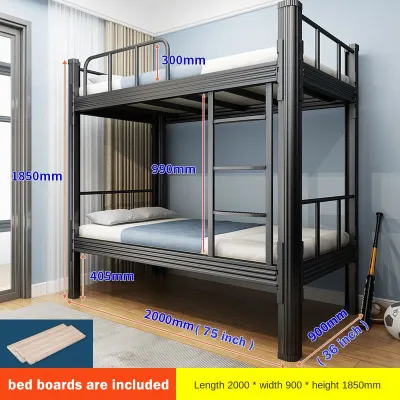
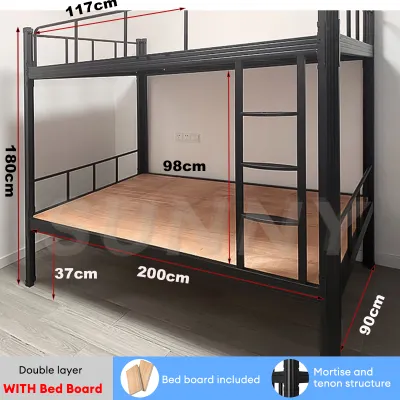
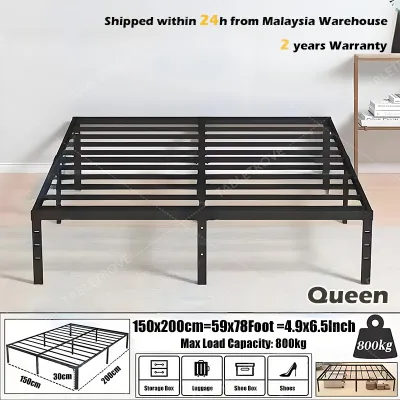
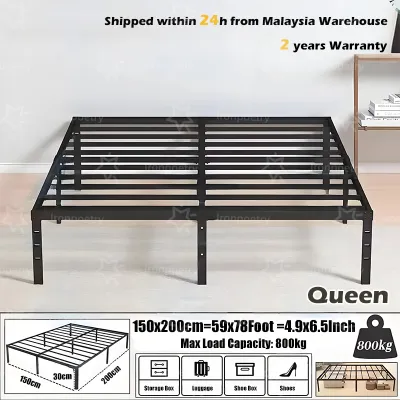
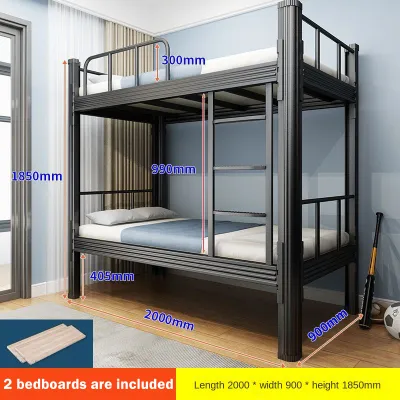
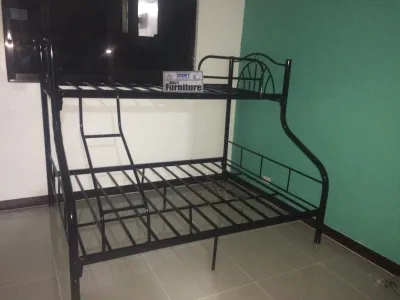
Prices are valid at publication and may change. Please refer to the product page for the latest price.
As a baseline, a heavy-duty upper bunk should ideally support a static weight that accommodates not just a growing child, but also the occasional weight of a parent. It is common for parents to sit on the edge of the lower or upper bed during bedtime reading or when comforting a sick child. For the lower bunk, a higher weight capacity is often necessary to handle multiple children sitting together during playtime or study sessions.
Rather than relying on broad material promises like “solid wood” or “thick steel,” always demand to see the manufacturer’s official product manual or safety label. These documents should explicitly state the maximum weight capacity for each deck. If a seller cannot provide these specific weight ratings, it is safer to assume the bed is designed only for light, temporary use rather than the daily rigors of growing, active children.
Structural and Safety Checks Before You Buy
Before committing to a purchase, conducting a thorough physical or technical inspection of the bed’s structure is essential to prevent accidents. Bunk beds present unique safety challenges, particularly regarding falls and entrapment, which can be mitigated by verifying specific physical dimensions and construction details.

Guardrail Dimensions and Safety Gaps The guardrails on the upper bunk are your child’s primary defense against nighttime falls. A heavy-duty guardrail must extend at least 127 millimeters (5 inches) above the top surface of the mattress to prevent a rolling child from tumbling over the edge. Additionally, inspect the gaps between the guardrail slats and the bed frame. These gaps must be narrow enough—typically under 90 millimeters (3.5 inches)—to prevent a child’s head or limbs from becoming trapped. Ensure the guardrail is securely fastened to the main posts on all sides, leaving only a designated opening for the ladder.
Ladder Stability and Attachment The ladder is a high-stress component that must withstand daily climbing. Examine how the ladder attaches to the bed frame; integrated ladders that are built directly into the footboard or headboard offer superior stability because they cannot slip or tip over. If the ladder is detachable, it must feature heavy-duty metal hooks or brackets that bolt directly into the frame, rather than simply hanging loosely over the side rail. The rungs should be wide enough to provide comfortable, slip-resistant footing, and the spacing between rungs must be uniform to prevent missteps.
Slat Support System The foundation supporting the mattress determines both comfort and structural safety. A heavy-duty double deck bed requires a robust slat system rather than a few sparse wooden planks. Look for a system with a high count of thick, wide slats spaced closely together—ideally no more than 75 millimeters (3 inches) apart—to distribute weight evenly. For the upper bunk, a metal or wooden center support rail running longitudinally is highly recommended to prevent the slats from sagging or bowing under pressure over time.
Fastening Hardware and Connections The method used to join the bed’s components determines whether it will remain silent and stable or begin to wobble after a few months. Avoid beds that rely primarily on wood screws, plastic brackets, or simple wooden dowels at major load-bearing joints. Instead, look for heavy-duty metal-to-metal connections, such as barrel nuts and bolts that thread directly into metal inserts. These fasteners distribute tension evenly and can be tightened repeatedly over the years without stripping the wood or compromising the joint’s integrity.
Evaluating Materials and Joints Beyond the Label
The materials used to construct a double deck bed dictate its longevity, especially in the tropical climate of the Philippines, where high humidity and temperature fluctuations can affect structural integrity. Understanding how different materials behave and how joints are reinforced will help you evaluate a bed’s true durability.
Solid Wood versus Engineered Wood Solid hardwood, such as sustainably sourced rubberwood, mahogany, or acacia, is highly prized for its natural density and resistance to bending. When evaluating solid wood beds, inspect the thickness of the corner posts; heavy-duty models typically feature posts that are at least 50 by 50 millimeters (2 by 2 inches) thick. Engineered wood, such as medium-density fiberboard (MDF) or particleboard, is often used in budget-friendly options. While high-quality MDF can be suitable for decorative panels, it should not be used for primary load-bearing components like the corner posts, guardrails, or ladder rungs, as it is more prone to sagging and stripping at connection points under heavy loads.
Metal Frame Considerations Metal double deck beds are popular for their sleek profiles and resistance to pests like termites. However, not all metal beds are heavy-duty. Inspect the thickness of the metal tubing; thin-walled tubes will bend and creak under pressure. Look for heavy-gauge steel frames with a powder-coated finish, which provides a durable barrier against rust and corrosion caused by high humidity. Examine the welds at the joints; they should be smooth, continuous, and free of pinholes or cracks, indicating a strong, professional weld that won’t fail under dynamic stress.
Joint Reinforcement Even the strongest materials will fail if the joints are weak. High-quality heavy-duty beds incorporate additional reinforcement at critical stress points, such as where the side rails meet the corner posts. Look for heavy steel corner brackets, interlocking metal plates, or diagonal braces that resist lateral forces. These reinforcements prevent the bed from swaying or shearing when children climb up or shift their weight.
Actionable Inspection Steps When visiting a furniture showroom in the Philippines, do not hesitate to test the bed physically. Apply firm lateral pressure to the top bunk corner posts to check for swaying or wobbling. Listen closely for squeaks, creaks, or pops, which indicate loose joints or poor tolerances. If you are inspecting a delivered product at home, verify that all pre-drilled holes align perfectly and that the wood is free of splits, knots in load-bearing areas, or rough, unfinished edges that could cause splinters.
Measuring Space, Clearance, and Assembly Needs
A heavy-duty double deck bed is a substantial piece of furniture that requires careful spatial planning to ensure safety and usability within your home. Measuring your room accurately and preparing for the logistics of assembly will prevent costly mistakes and installation headaches.
Ceiling Clearance One of the most critical safety measurements is the distance between the top of the upper mattress and your ceiling. To allow a child to sit up comfortably in bed without bumping their head, you need a minimum clearance of 760 to 910 millimeters (30 to 36 inches) from the top of the mattress to the ceiling. Remember to factor in the height of the bed frame itself and the thickness of the mattress when making this calculation. If your home has low ceilings or features overhead ceiling fans, a low-profile bunk bed may be a safer alternative.
Footprint and Pathway Planning Beyond the basic length and width of the bed frame, you must account for the space required to access and use the bed safely. Ensure there is ample clearance for the ladder, especially if it protrudes from the side of the bed. There should be a clear pathway around the bed to allow for easy sheet changing, cleaning, and safe movement. Avoid placing the bed directly beneath light fixtures, air conditioning units, or close to windows where a child could reach the glass or window cords.
Doorway and Staircase Checks Heavy-duty bunk beds often feature long, solid side rails and pre-assembled headboards or footboards that cannot be broken down into smaller pieces. Before ordering, measure the width and height of all doorways, hallways, stairwells, and elevator cabins through which the packages must pass. This is particularly important in Philippine condominiums or multi-story townhouses with narrow staircases and tight turns, where maneuvering bulky furniture can be extremely challenging.
Assembly Conditions Assembling a heavy-duty double deck bed is not a single-person job. Due to the weight and size of the components, it requires at least two capable adults to lift, align, and secure the parts safely. Ensure you have the correct tools on hand, such as a rubber mallet, a level, and a high-quality socket wrench or hex key set, rather than relying solely on the basic tools included in the packaging. After the initial assembly, allow the bed to settle for two weeks, then perform a critical check to re-tighten all bolts and fasteners, as the materials will have compressed slightly under their own weight.
Matching Bunk Bed Configurations to Your Room
Heavy-duty double deck beds come in various configurations designed to suit different room layouts, family sizes, and age groups. Selecting the right configuration ensures that you maximize your available floor space while maintaining structural safety.
Standard Twin-over-Twin The standard twin-over-twin configuration is the most classic and space-efficient option. It features two identical single mattresses stacked vertically, making it ideal for symmetrical, compact bedrooms shared by two children of similar ages. Because of its balanced footprint, it leaves plenty of room for other furniture like study desks or wardrobes. When choosing this style, ensure the frame features robust corner posts to handle the vertical load without swaying.
Twin-over-Full or Full-over-Full For families with children of different ages, or for older, heavier teenagers, a twin-over-full or full-over-full configuration offers excellent versatility. The wider lower bunk provides a spacious sleeping area for an older child or even a parent, while the top bunk remains a cozy single space. Because the lower bunk has a wider footprint, these beds naturally offer a more stable, bottom-heavy foundation. However, they require a larger bedroom floor area and must feature reinforced center support rails under the wider lower mattress to prevent sagging.
L-Shaped Bunk Beds L-shaped bunk beds position the top and bottom bunks perpendicular to each other, creating an L-shape when viewed from above. This configuration is highly functional for rooms with ample floor space or corner placements. The open space created beneath the upper bunk can be utilized for a built-in study desk, a chest of drawers, or a play area. While highly versatile, L-shaped beds have a much larger overall footprint and require careful measurement to ensure they do not block doorways or closet access.
Low-Profile Bunk Beds If you have younger children transitioning from toddler beds or live in a home with lower ceilings, a low-profile bunk bed is an excellent choice. These beds sit much closer to the floor, with the bottom bunk often resting directly on or just above the floor surface. This design significantly reduces the height of the top bunk, minimizing the risk and severity of accidental falls while still providing a heavy-duty, space-saving sleeping solution. It also makes making the top bed and changing the sheets much easier for parents.
Frequently Asked Questions (FAQ)
How often should I check and tighten the bolts on a bunk bed?
You should perform an initial hardware check approximately two weeks after the first assembly. During this initial period, the wood or metal components settle under the weight of the mattresses and active use, which can cause fasteners to loosen slightly. After this first check, establish a routine inspection schedule every three to six months. Additionally, always inspect and tighten the bolts whenever you move the bed to a new position in the room, or if you notice any new squeaks, creaks, or slight swaying during daily use.
Can I use a standard mattress on a heavy-duty bunk bed?
Yes, you can use standard mattresses, but you must pay close attention to the mattress thickness, particularly for the upper bunk. To maintain the safety effectiveness of the guardrails, the top of the mattress must sit at least 127 millimeters (5 inches) below the upper edge of the guardrail. Using an overly thick pocket-spring or pillow-top mattress on the top bunk can dangerously reduce this safety margin, increasing the risk of falls. Always check the manufacturer’s specifications for the maximum recommended mattress height before purchasing your bedding.
Community discussion
Share your experience or ask a question. Comments are reviewed before publication.