
Integrating a heavy-duty shoe cabinet into an existing closet wardrobe system requires a strategic approach that balances structural integrity, spatial harmony, and environmental resilience. A poorly chosen cabinet can disrupt the flow of your closet, sag under the weight of your footwear, or succumb to the challenging tropical humidity of the Philippines. To achieve a seamless integration, you must look beyond superficial aesthetics and evaluate the physical construction, ventilation, and exact dimensions of the storage unit in relation to your wardrobe layout.
By selecting units with reinforced joints, heavy-gauge steel, or moisture-treated wood, you can create a cohesive wardrobe system that stands up to daily wear and tear. This guide details the essential criteria for choosing a closet-ready, heavy-duty shoe cabinet, evaluates the most effective structural configurations, and provides step-by-step advice on spatial planning and safety.
What Makes a Shoe Cabinet "Heavy-Duty" and Closet-Ready?
When evaluating shoe cabinets, the term “heavy-duty” should not be treated as a mere marketing label. Instead, it refers to specific engineering standards and construction techniques that allow a unit to support substantial static loads over many years. A single pair of heavy leather boots or thick-soled work shoes can easily weigh between 1.5 to 2.5 kilograms. If you plan to store 30 or 40 pairs of shoes, your cabinet must comfortably support a cumulative weight of 45 to 100 kilograms without structural deformation.
Products mentioned in this guide
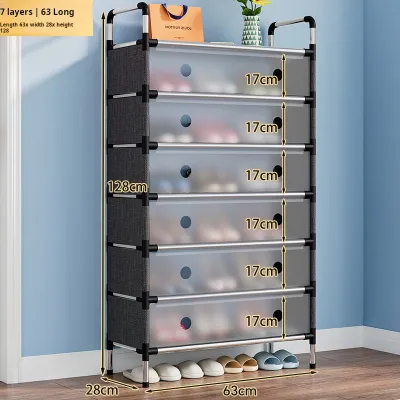

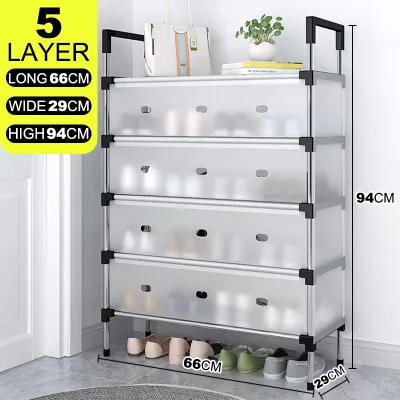
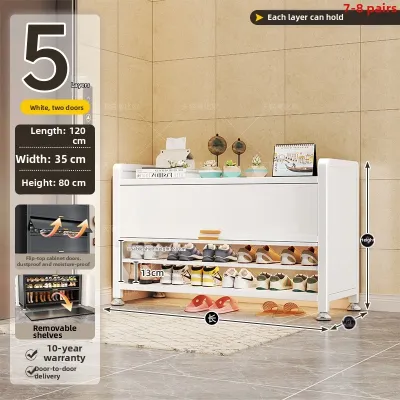
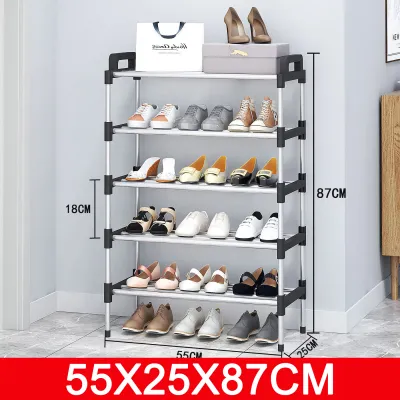
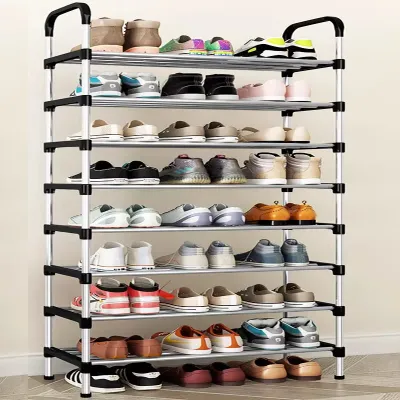
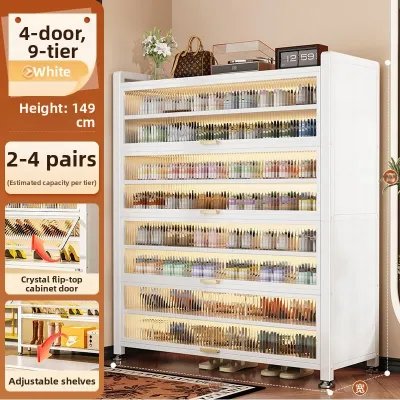
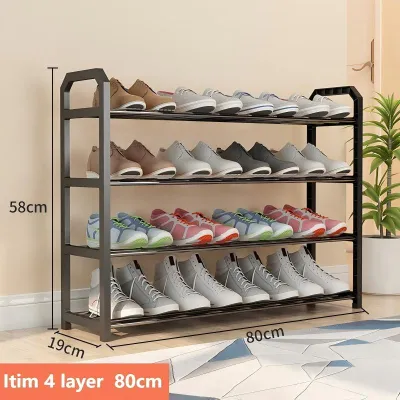
Prices are valid at publication and may change. Please refer to the product page for the latest price.
To identify a truly robust cabinet, look for specific structural indicators:
- Reinforced Corner Brackets: Heavy-duty units utilize metal L-brackets or internal corner blocks to reinforce joints, preventing the frame from twisting or "racking" under lateral pressure.
- Thick-Gauge Metal Frames: If opting for metal, look for frames constructed from 16-gauge or 18-gauge cold-rolled steel, which offer superior resistance to bending compared to thinner, utility-grade metals.
- High-Density Board with Robust Joinery: For wooden or engineered wood cabinets, prioritize high-density fiberboard (HDF) or marine-grade plywood over standard, low-density particleboard. HDF features a dense fiber structure (typically exceeding 800 kilograms per cubic meter) that holds screws securely and resists sagging. The joinery should rely on dowels, cam locks, or mortise-and-tenon joints rather than simple staples or nails.
Spatial harmony is equally critical for successful closet integration. A standard wardrobe system is designed around hanging rods, which typically require a depth of 55 to 60 centimeters to prevent clothing from brushing against the closet doors. A shoe cabinet integrated into this system must align with these dimensions. If the shoe cabinet is too deep, it will protrude into the hanging zone, obstructing clothes and preventing sliding doors from operating smoothly. Conversely, if it is too shallow, it may fail to accommodate larger shoe sizes flat on the shelves.
Furthermore, the local climate in the Philippines introduces unique environmental challenges that directly affect furniture durability. High relative humidity, which often exceeds 80% during the rainy season, can cause untreated engineered wood to swell, warp, and lose structural integrity. It also accelerates the rusting of low-grade metals and encourages the growth of mold and mildew on leather footwear. Therefore, a closet-ready heavy-duty cabinet must feature moisture-resistant surface treatments—such as polyurethane sealants, marine-grade varnishes, or electrostatic powder coatings—and provide adequate ventilation to maintain a dry, stable environment for your shoes.
Recommended Heavy-Duty Shoe Storage Types for Closets
The ideal heavy-duty shoe storage configuration for your closet depends on your organizational priorities. Whether you prefer to keep your footwear completely concealed behind solid doors to maintain a minimalist aesthetic, maximize airflow to combat tropical humidity, or utilize a modular system that can expand as your collection grows, there is a structural type designed to meet your needs. Regardless of the style you choose, the unit must be selected with depth alignment in mind to ensure it blends seamlessly with your standard closet hanging rods and shelving.

Modular Metal Cubby Cabinets
Modular metal cubby cabinets are highly effective for high-capacity, structured shoe storage within a larger wardrobe system. These units feature individual compartments constructed from powder-coated steel panels or heavy-duty wire grids, providing a dedicated space for each pair of shoes. This individual compartment design prevents shoes from rubbing against one another, protecting delicate materials like suede or polished leather from scuffs and scratches.
The inherent strength of a steel frame ensures that these cubbies can handle the heaviest footwear, including thick leather boots, safety shoes, and heavy athletic sneakers, without any risk of the shelves sagging or buckling. Additionally, the modular nature of these cabinets offers exceptional layout flexibility. You can stack them vertically to fill a narrow, unused gap in your closet, or arrange them horizontally underneath short-hanging garments like shirts, jackets, or folded trousers.
However, metal cubby cabinets have a few practical limitations that you should consider before purchasing. Placing hard-soled shoes directly onto metal shelves can generate a metallic clatter, which can be noisy in a quiet bedroom. To minimize this, you can line the bottom of each cubby with thin, non-slip rubber or silicone liners. Furthermore, in the humid Philippine climate, you must verify that the metal has been treated with a high-quality, rust-proof finish. Electrostatic powder coating is highly recommended, as it creates a thick, durable, and non-porous barrier that protects the underlying steel from moisture-induced corrosion.
Solid Wood or High-Density Engineered Wood Drawer Cabinets
For homeowners who prioritize a clean, cohesive, and luxurious wardrobe aesthetic, solid wood or high-density engineered wood drawer cabinets are an excellent choice. These cabinets conceal your footwear entirely, creating a streamlined look that matches traditional built-in wardrobes. By keeping shoes behind closed drawers, you protect them from airborne dust, household pests, and direct sunlight, which can dry out leather and fade vibrant colors over time.
To ensure a wooden drawer cabinet is truly heavy-duty, you must look closely at the drawer mechanics and joinery. Standard drawers often fail when loaded with multiple pairs of heavy shoes because the slides warp or the drawer bottoms pull away from the sides. Look for cabinets equipped with heavy-duty, full-extension ball-bearing drawer slides rated for at least 30 to 45 kilograms. The drawer boxes themselves should be constructed using sturdy dovetail joints or reinforced metal corner brackets, and the drawer bottoms should be thick plywood rather than thin hardboard.
While these cabinets offer a premium look, they require careful environmental management in tropical regions. Wood is a hygroscopic material, meaning it absorbs and releases moisture from the surrounding air. In high-humidity environments, untreated wood can swell, causing the drawers to bind, stick, or scrape against the cabinet frame. Always check the manufacturer’s care and installation instructions regarding humidity exposure. It is crucial to choose wood cabinets that have been thoroughly sealed with water-resistant lacquers or polyurethane coatings. Additionally, verify that the cabinet’s total depth, including any protruding drawer handles or pulls, does not interfere with the clearance required for your main closet doors.
Heavy-Duty Adjustable Wire or Steel Frame Racks
If your primary concerns are maximum ventilation and ease of access, heavy-duty adjustable wire or steel frame racks are an outstanding solution. These open-air systems consist of sturdy steel uprights and adjustable wire shelves, allowing air to circulate freely around every pair of shoes. This constant airflow is incredibly beneficial in the Philippines, where trapped moisture and sweat can quickly lead to unpleasant odors, bacteria growth, and mold outbreaks on leather and canvas shoes.
The main advantage of these racks is their exceptional adjustability. The shelves can typically be moved up or down in small increments along the vertical frame. This allows you to customize the spacing to match your specific footwear collection: you can position shelves close together to maximize storage for flat sandals, slippers, and sneakers, or create wider gaps to accommodate taller items like boots or high heels.
However, because open wire racks lack solid side and back panels to resist lateral forces, structural stability is a critical factor. A fully loaded rack can become top-heavy and prone to swaying or wobbling if it is not properly engineered. When selecting a wire rack, ensure it features robust cross-bracing, such as a steel X-brace on the back panel, or is designed to anchor directly to the closet wall. Always check the manufacturer’s assembly instructions to confirm that all structural supports are correctly installed and tightened to maintain stability under heavy loads.
Measuring Your Closet for a Seamless Cabinet Fit
Achieving a polished, built-in appearance with a freestanding heavy-duty shoe cabinet requires precise measurement and spatial planning. Before purchasing any cabinet, you must conduct a thorough physical survey of your closet space. Begin by measuring the exact width, depth, and height of the designated installation area. When taking these measurements, do not simply measure from wall to wall. You must account for physical obstructions such as baseboards, door trim, sliding door tracks, light switches, electrical outlets, and the swing radius of any hinged doors. Even a minor obstacle like a protruding 1.5-centimeter baseboard can prevent a heavy cabinet from sitting flush against the wall, creating an unstable gap and ruining the seamless look.
Depth alignment is another critical dimension that requires careful consideration. A standard closet wardrobe system typically has a depth of 60 centimeters to allow hanging clothes to hang naturally without rubbing against the doors. If your heavy-duty shoe cabinet is deeper than 40 centimeters, it may protrude past the front edge of your wardrobe partitions. This protrusion can cause hanging clothes to brush against the cabinet, transferring dust or oils, and potentially preventing sliding closet doors from closing smoothly. Measure the depth of your existing shelving and hanging zones, and select a shoe cabinet that sits flush with or slightly recessed from those lines.
Before finalizing your purchase, perform a thorough logistical check of your home’s entry pathways. Heavy-duty shoe cabinets, particularly pre-assembled solid wood units or large flat-pack steel systems, can be incredibly heavy and awkward to maneuver. Measure the width and height of all doorways, hallways, stairwells, and elevator doors through which the cabinet must pass to reach your closet. If you live in a multi-story home or a high-rise condominium in Manila, ensuring the unit can clear low ceilings and tight stairwell turns is a crucial pre-purchase step that prevents costly delivery failures.
Finally, check the levelness of your closet floor using a spirit level. Many residential floors, especially in older buildings or those with hand-laid tiles, are not perfectly level. When a heavy-duty cabinet is loaded with dozens of kilograms of shoes on an uneven floor, the frame can experience “racking”—a slight twisting of the structural frame. Racking puts uneven stress on joints, causes drawers to bind or stick, and can prevent doors from aligning properly. If your floor is uneven, look for cabinets equipped with adjustable leveling feet, or prepare to use heavy-duty shims to level the base before loading the cabinet.
Ensuring Stability and Safety for Heavy Loads
A heavy-duty shoe cabinet loaded to capacity represents a significant amount of weight. It is a common mistake to assume that because a cabinet is labeled “heavy-duty,” it has an unlimited load capacity. Always strictly verify the manufacturer’s stated weight limits for both individual shelves and the entire unit. Exceeding these limits can lead to structural failure, bowed shelves, or a complete collapse of the unit.
Safety must be your top priority, particularly when installing tall or top-heavy cabinets. Any shoe cabinet taller than 100 centimeters should be securely anchored to the wall to prevent tip-over accidents. This is especially critical in households with young children or pets, who may attempt to climb the shelves, or when using drawer-style cabinets where pulling out multiple fully loaded drawers shifts the center of gravity forward. Always use high-quality anti-tip anchoring kits. In the Philippines, where residential walls are frequently constructed of concrete or hollow blocks rather than drywall, you will need to use appropriate masonry wall plugs (such as tox screws) and a hammer drill to secure the anchors directly into the structural wall. Standard drywall anchors will not provide sufficient holding power in concrete.
To further enhance stability, practice smart weight distribution. Always place your heaviest footwear—such as thick leather boots, heavy-duty work shoes, and platform heels—on the lowest shelves or drawers of the cabinet. Reserve the upper shelves for lighter items like sandals, slippers, and canvas sneakers. This distribution keeps the unit’s center of gravity as low as possible, significantly reducing the risk of tipping and minimizing lateral sway.
Lastly, evaluate the load-bearing capacity of your closet floor material. A fully loaded steel or solid wood cabinet concentrated on four small feet can exert immense pressure on the floor. If your closet features raised wooden platforms, laminate flooring, or soft vinyl tiles, this concentrated weight can cause the flooring to dent, crack, or sag over time. If you are unsure of your floor’s structural limits or if you notice any flexing in the floorboards, consult a qualified contractor or structural professional to verify the load capacity before proceeding with the installation.
Frequently Asked Questions (FAQ)
Can I place a heavy-duty shoe cabinet on a raised closet platform?
Placing a heavy-duty shoe cabinet on an elevated or raised closet platform requires careful structural assessment. Raised platforms, often constructed from wooden framing and plywood sheets, are not always engineered to support highly concentrated, heavy loads. Before installation, you must evaluate the platform’s specific load-bearing capacity. If you plan to load the cabinet with dozens of pairs of heavy shoes, the total weight could cause the platform to sag or even fail structurally. We highly recommend consulting the platform’s builder or a qualified structural professional to verify its integrity. If the platform is deemed safe but requires reinforcement, you can use load-spreading base plates or a thick, solid wood baseboard beneath the cabinet to distribute the weight across a larger surface area, minimizing localized stress on the platform.
How do I prevent heavy shoe cabinets from damaging closet floors?
To protect your closet flooring from the intense, concentrated pressure of a heavy-duty shoe cabinet, you should install protective barriers beneath the cabinet’s contact points. Applying heavy-duty felt pads, dense rubber coasters, or a solid, continuous baseboard under the cabinet feet will distribute the weight evenly, preventing deep indentations, scratches, or cracks on delicate surfaces like wood laminates, vinyl, or ceramic tiles. In the humid climate of the Philippines, moisture can sometimes become trapped beneath heavy furniture, softening certain flooring materials over time. It is wise to periodically inspect the floor beneath and around the cabinet for any signs of stress, discoloration, or shifting, ensuring that both your flooring and your storage system remain in optimal condition.
Community discussion
Share your experience or ask a question. Comments are reviewed before publication.