
Finding the right heavy-duty stainless steel kitchen cabinets in the Philippines requires looking past generic marketing terms to evaluate actual structural integrity, material grades, and spatial compatibility. Because product availability and specific models fluctuate across online marketplaces and local fabricators, relying on static brand recommendations often leads to outdated choices. Instead, the most reliable heavy-duty cabinets are those that feature verified 304-grade stainless steel for high-moisture areas, robust panel thicknesses of at least 0.8 mm to 1.2 mm, fully welded joints rather than flimsy screws, and internal structural reinforcements. By understanding how to evaluate these physical attributes, you can secure a durable, rust-resistant storage system or mobile work station that withstands the humid tropical climate and heavy daily use of a busy kitchen.
Investing in stainless steel cabinetry is a practical decision for both residential and commercial kitchens, but the term “heavy-duty” is frequently overused. A truly heavy-duty cabinet must support substantial weight from heavy cookware, appliances, and bulk ingredients without buckling or vibrating. It must also resist the corrosive effects of salt, humidity, and acidic food spills common in daily cooking. This guide provides a comprehensive evaluation framework, verification methods, and condition-based checklists to help you identify high-quality storage solutions that meet the specific demands of your kitchen environment.
Defining "Heavy-Duty" in Stainless Steel Cabinets
To make an informed purchase, you must first understand the structural and material standards that separate genuine heavy-duty stainless steel cabinets from light-duty alternatives. The most critical factor is the grade of the stainless steel. In the Philippines, the two most common grades found in kitchen furniture are 304 and 201. Grade 304 contains a higher percentage of chromium and nickel, which creates a self-healing chromium oxide layer that protects the steel from rust and corrosion, even when exposed to water, steam, and mild acids. Grade 201, while cheaper and structurally strong, replaces much of the nickel with manganese, making it significantly more susceptible to surface rust, tea staining, and pitting in humid or coastal environments.
Products mentioned in this guide
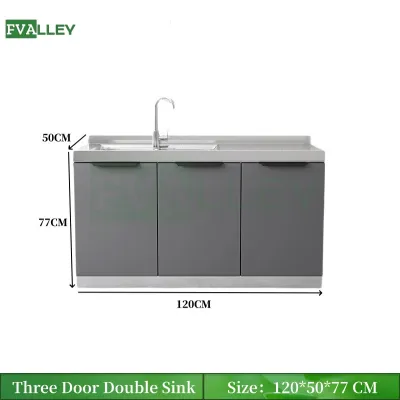
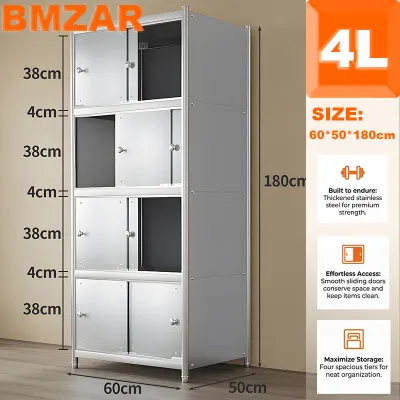
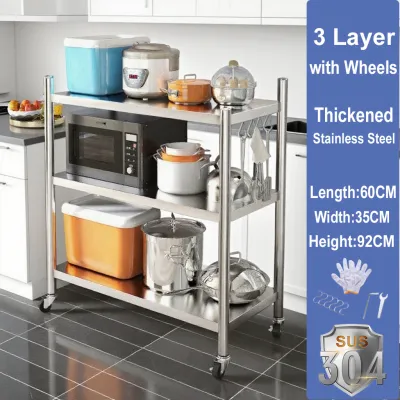
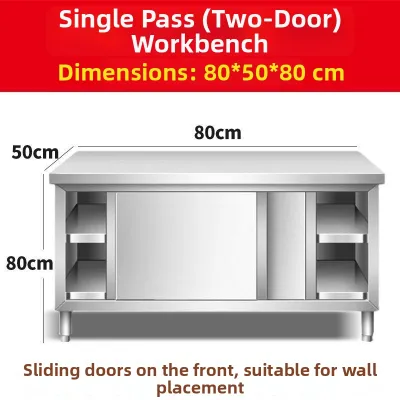
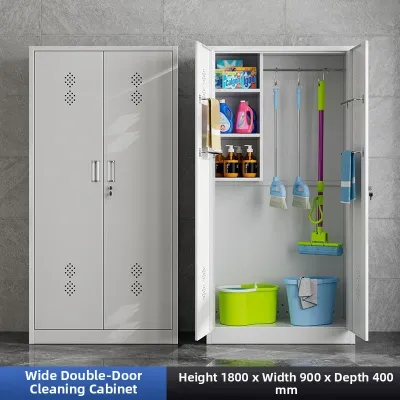
Prices are valid at publication and may change. Please refer to the product page for the latest price.
Beyond the steel grade, panel thickness is a primary indicator of structural strength. Steel thickness is typically measured in millimeters or gauge numbers, where a lower gauge number indicates a thicker sheet. For a cabinet to be considered heavy-duty, the main work surfaces and load-bearing shelves should have a thickness of at least 0.8 mm to 1.2 mm (roughly 18 to 20 gauge). Flimsy, budget-friendly cabinets often use sheets that are 0.6 mm (24 gauge) or thinner. These thin panels are highly prone to denting, oil-canning (the popping sound made when pressure is applied to a flat metal sheet), and bowing under the weight of heavy kitchen appliances like stand mixers or large rice cookers.
The assembly method also plays a vital role in the overall stability of the cabinet. High-quality heavy-duty cabinets feature fully welded joints or robust spot welding that fuses the metal panels into a single, rigid structure. Welded cabinets offer superior stability, eliminate wobble, and prevent moisture from seeping into joints where bacteria or mold could grow. In contrast, flat-pack cabinets that rely entirely on thin self-tapping screws or plastic corner connectors tend to loosen over time, especially when subjected to frequent movement or heavy loads. When evaluating a cabinet, inspect the seams and corners to ensure the welds are smooth, continuous, and free of sharp edges.
Key Evaluation Dimensions for Kitchen Storage
When assessing different stainless steel cabinets for your kitchen, you need to look closely at the internal components and surface treatments to ensure they can handle daily wear and tear. Start by examining the shelf load capacity and the mechanism used for adjustability. Heavy-duty shelves should feature welded support channels, often called hat channels, running underneath the panel to distribute weight evenly and prevent bowing. If the shelves are adjustable, the support clips or peg systems must be made of thick stainless steel rather than plastic, which can crack under pressure. Verify the maximum weight rating per shelf from the manufacturer’s specifications to ensure it matches your storage needs.

Drawers are another critical area where quality differences become apparent under heavy loads. Kitchen drawers often hold heavy items such as cast iron skillets, mortar and pestle sets, or stacks of ceramic plates. To handle this weight, heavy-duty cabinets should be equipped with industrial-grade, ball-bearing drawer slides. These slides should operate smoothly even when fully loaded and feature a high weight capacity. Damping or soft-close systems are highly desirable, as they prevent the drawers from slamming shut, which can cause the cabinet to shift, damage stored items, or wear out the drawer slides prematurely.
In the tropical climate of the Philippines, moisture control and pest prevention are major concerns for kitchen storage. Traditional wooden or medium-density fiberboard (MDF) cabinets are highly vulnerable to swelling, warping, and mold growth when exposed to high humidity or plumbing leaks. They can also attract termites and provide nesting grounds for cockroaches and rodents. Stainless steel cabinets solve these issues completely, provided they are designed with tight-fitting doors, magnetic gaskets, and fully sealed back panels. Look for cabinets with enclosed designs that leave no gaps for pests to enter, ensuring your food supplies and cooking utensils remain clean and hygienic.
Finally, consider the surface treatment of the stainless steel. While raw stainless steel is highly durable, it is notorious for showing fingerprints, water spots, and minor scratches. Many high-quality heavy-duty cabinets feature a brushed finish, such as a No. 4 finish, which helps diffuse light and mask minor surface imperfections. Some modern cabinets also come with specialized fingerprint-resistant coatings or nano-coatings that make daily cleaning much easier. These treatments do not affect the structural integrity of the steel, but they significantly reduce the time and effort required to keep your kitchen looking pristine.
Space Planning and Installation Requirements
Before purchasing any heavy-duty stainless steel cabinet, you must carefully plan your kitchen space and verify that the unit can be safely delivered and installed. Because many heavy-duty cabinets are shipped fully welded to ensure maximum structural integrity, they cannot be disassembled. This means you must measure not only the final installation space but also every doorway, hallway corner, elevator door, and stairway landing along the delivery route. A cabinet that is even a few millimeters too wide or tall can easily get stuck in a tight stairwell or fail to clear a standard door frame, leading to costly return shipping fees or damage to your home.
Once the cabinet is inside the kitchen, the levelness of the floor becomes a critical factor. Kitchen floors, particularly those with ceramic tiles or older concrete screeds, are rarely perfectly flat. A heavy-duty cabinet placed on an uneven floor will wobble, putting uneven stress on the joints and causing doors or drawers to misalign. To prevent this, look for cabinets equipped with adjustable bullet feet. These heavy-duty threaded feet allow you to level the cabinet precisely on uneven surfaces, ensuring stable weight distribution and smooth door operation. If the cabinet is mobile, ensure it uses high-grade caster wheels with secure locking mechanisms on at least two of the wheels.
You must also account for existing kitchen infrastructure, such as plumbing lines, grease traps, gas pipes, and electrical outlets. Freestanding stainless steel cabinets with solid back panels can block access to these essential utilities if not planned correctly. Measure the height and location of wall outlets and plumbing connections, and check if the cabinet design allows for custom cutouts or has sufficient rear clearance to sit flush against the wall. Blocking access to a grease trap or water shut-off valve can turn a minor plumbing issue into a major household emergency, so always ensure these areas remain easily accessible.
Safety is another paramount consideration, especially for tall or top-heavy cabinets. In the Philippines, where seismic activity is a reality, securing heavy furniture is essential to prevent tip-over accidents. Tall freestanding cabinets must be anchored securely to the wall. Before installation, verify the wall construction material. Solid concrete or concrete hollow block (CHB) walls require heavy-duty sleeve anchors or masonry plugs, while drywall installations require toggle bolts anchored directly into the metal or wooden wall studs. Never rely on simple adhesive strips or light-duty plastic wall plugs to secure a heavy steel cabinet, as they cannot support the weight of the unit during a tremor or if someone accidentally pulls on an open drawer.
Building Your Condition-Based Shortlist
To find the best heavy-duty stainless steel cabinet for your specific needs, you should compile a shortlist of candidate products based on objective technical specifications rather than marketing hype. Start by requesting detailed specification sheets or technical drawings from the manufacturer or seller. A reputable supplier should be able to provide exact measurements of the steel thickness, the specific grade of stainless steel used for each part of the cabinet, the maximum load capacity of the shelves and drawers, and the overall weight of the unit. If a seller is unable or unwilling to provide these basic technical details, it is usually a sign that the product is not built to true heavy-duty standards.
When comparing options on online marketplaces, you must learn to identify common specification traps. Many budget listings use misleading terms like “industrial-grade steel” or “rust-proof alloy” without specifying the actual grade or thickness. Some sellers may list a cabinet as “304 stainless steel” but only use that grade for the top work surface, while the shelves, side panels, and frame are made of cheaper 201 steel or even painted carbon steel. Always read the fine print and ask the seller directly to confirm the material grade of every component. Additionally, look closely at customer reviews and photos, paying attention to any reports of denting during transit, visible rust spots, or wobbly joints.
Warranty terms and after-sales support are also crucial indicators of product quality and manufacturer confidence. A genuine heavy-duty cabinet represents a significant financial investment, and it should be backed by a clear warranty that covers manufacturing defects, weld failures, or premature corrosion under normal use conditions. Review the warranty terms carefully to understand what is covered, the duration of the coverage, and the process for making a claim. It is also wise to clarify the return policy, especially regarding who bears the cost of return shipping for bulky, heavy items if the product arrives damaged or does not match the advertised specifications.
To help you organize your evaluation, use the following condition-based checklist when comparing different stainless steel cabinets:
- Material Verification: Does the seller explicitly guarantee Grade 304 stainless steel for all wet-area components? Can they provide a material certification or test report?
- Structural Thickness: Are the load-bearing panels and worktops at least 0.8 mm to 1.2 mm thick? Is the internal frame reinforced with support channels?
- Assembly Quality: Is the cabinet fully welded, or does it rely on screws and plastic connectors? Are the welds smooth and free of sharp edges?
- Hardware Durability: Are the drawer slides made of heavy-duty, ball-bearing metal? Are the door hinges adjustable and rust-resistant?
- Stability and Safety: Does the cabinet feature adjustable bullet feet or heavy-duty locking casters? Does it include wall-anchoring hardware for tall units?
- Clearance and Access: Will the cabinet fit through all doorways and stairwells during delivery? Does it allow easy access to existing plumbing, gas, and electrical lines?
Maintenance and Care for Longevity
Although heavy-duty stainless steel is incredibly durable and resistant to many forms of damage, it still requires proper maintenance to ensure a long lifespan and maintain its clean, professional appearance. For daily cleaning, use mild dish soap, warm water, and a soft microfiber cloth. Always wipe in the direction of the brushed metal grain to avoid creating fine scratches on the surface. After cleaning, rinse the surface thoroughly with clean water and dry it completely with a dry towel. Allowing water to pool or air-dry on the steel can lead to unsightly water spots and mineral deposits, especially in areas with hard water.
You must strictly avoid using harsh chemicals or abrasive cleaning tools on your stainless steel cabinets. Chlorine bleach, hydrochloric acid, and strong chemical oven cleaners can chemically attack the protective chromium oxide layer of the steel, leading to rapid pitting, discoloration, and rust. Similarly, never use steel wool, wire brushes, or abrasive scouring pads, as they will scratch the surface and leave behind tiny carbon steel particles that will quickly rust and stain the stainless steel. If you encounter stubborn grease or burnt-on food residues, use a specialized stainless steel cleaner or a non-abrasive paste made of baking soda and water, rubbing gently along the grain.
If you notice minor scratches, surface discoloration, or light tea staining, address them immediately to prevent them from worsening. Light scratches can often be buffed out using a specialized stainless steel restoration compound or a fine-grit abrasive pad designed specifically for stainless steel, always working in the direction of the original grain. For light rust spots or tea staining, which can occur in highly humid or coastal environments, apply a mild commercial rust remover or a mixture of lemon juice and baking soda, let it sit for a few minutes, then scrub gently and rinse thoroughly.
There are times, however, when DIY maintenance is insufficient, and you must consult a professional or the manufacturer. If you observe structural weld failures, severe sagging of the shelves, or deep structural dents that compromise the stability of the cabinet, do not attempt to repair them yourself with temporary fixes like duct tape, glue, or standard solder. Attempting to weld stainless steel without the proper equipment and expertise can warp the panels and destroy the protective properties of the metal. In such cases, contact the manufacturer to inquire about professional repair services or consult a qualified local metal fabricator who specializes in stainless steel welding.
Frequently Asked Questions (FAQ)
Is 304 stainless steel strictly necessary for indoor kitchen cabinets?
While Grade 304 stainless steel is highly recommended for kitchen environments, it is not always strictly necessary for every single component of an indoor cabinet, depending on your specific kitchen conditions and budget. Grade 304 offers superior resistance to rust and corrosion due to its high nickel and chromium content, making it essential for areas exposed to constant moisture, steam, salt, or food acids, such as countertops, sink surrounds, and shelves holding wet dishes. However, if your kitchen is well-ventilated, dry, and located far from coastal areas, Grade 201 stainless steel can be a viable, cost-effective alternative for dry storage cabinets or outer panels. If you choose Grade 201, you must be prepared to perform more frequent cleaning and maintenance to keep the surfaces dry and prevent the development of surface rust or tea staining over time.
How can I verify the actual thickness of the steel panels before buying?
Verifying the actual thickness of stainless steel panels can be challenging, especially when purchasing online, but there are several practical methods you can use to confirm the specifications. First, ask the seller directly for the exact gauge or millimeter thickness of both the tabletop and the side panels, and request a copy of the manufacturer’s technical specification sheet. If you are inspecting the cabinet in person, you can use a digital caliper to measure the thickness of the metal at an exposed edge or lip. When physical measurement is not possible, you can use the net weight of the cabinet as an indirect indicator of quality; a genuinely heavy-duty cabinet with thick steel panels and a reinforced internal frame will be significantly heavier than a cheap, thin-walled alternative of the same dimensions. Finally, look for detailed customer reviews that mention the structural rigidity of the panels, and avoid products where buyers report that the metal flexes or makes a popping sound when pressed.
Community discussion
Share your experience or ask a question. Comments are reviewed before publication.