
To determine the exact number of shoe box storage organizers you need for your closet, you must calculate your total shoe count, group them by their physical dimensions, and measure your closet’s usable shelf space. There is no one-size-fits-all answer because a pair of flat sandals occupies a fraction of the space required by high-top basketball sneakers or ankle boots. By mapping the external dimensions of your chosen organizers to your actual shelf width, depth, and height, you can maximize your storage capacity while keeping your footwear protected and accessible.
Buying organizers without a clear plan often leads to mismatched stacks, wasted shelf space, or boxes that cannot accommodate your larger shoes. Taking a systematic approach ensures that every peso spent on organization translates into a cleaner, more functional closet system.
Audit Your Shoe Collection to Determine Capacity Needs
To build an efficient closet storage system, you must first understand the exact inventory you are working with. Gather every pair of shoes you own from your entryway, bedroom floor, under-bed storage, and existing bins, and lay them out in a well-lit area. Counting your collection in its entirety prevents the common mistake of buying a generic multi-pack of boxes that ends up being too small or leaving you with unused containers.
Products mentioned in this guide
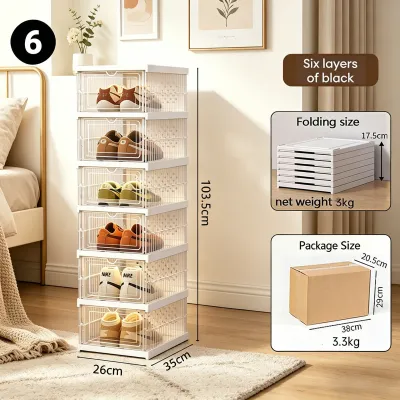
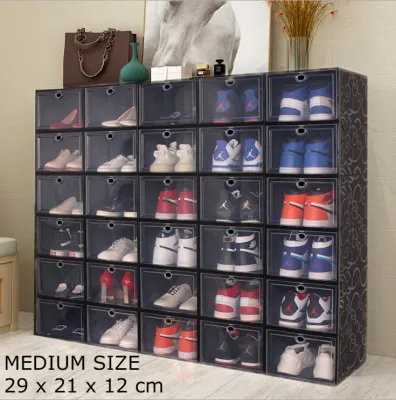
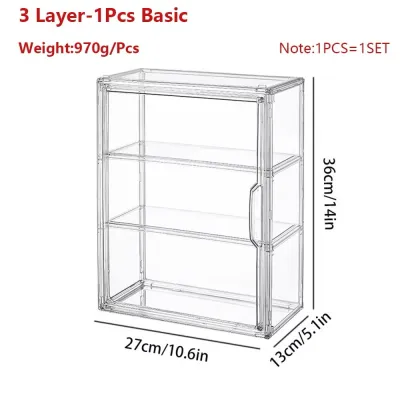
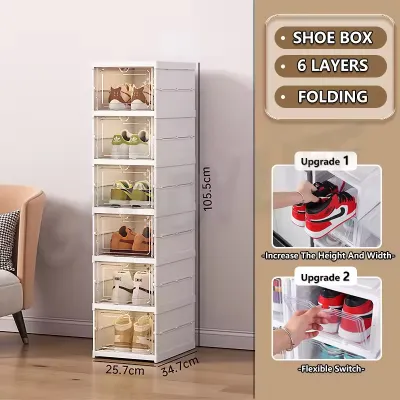
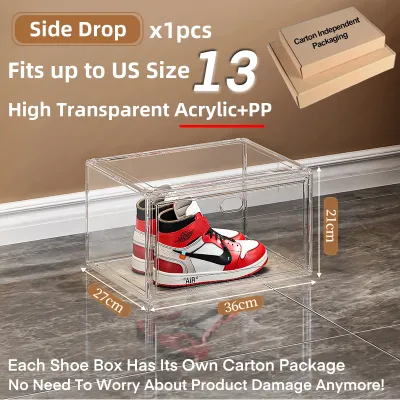
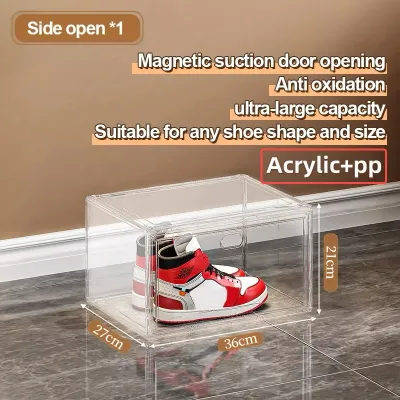
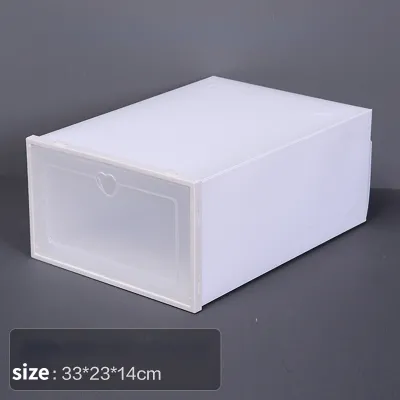
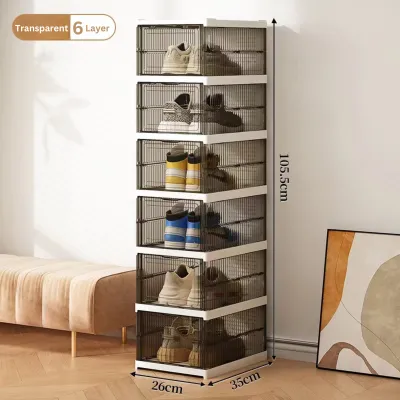
Prices are valid at publication and may change. Please refer to the product page for the latest price.
Once your shoes are gathered, sort them into distinct categories based on their physical height and overall volume rather than their style or color. Group your footwear into categories such as flat sandals and daily tsinelas, standard low-top sneakers and loafers, chunky platform shoes, high heels, and ankle- or knee-high boots. Each of these categories requires a different volumetric profile, which will dictate the internal height and length of the boxes you need to buy.
Your shoe profiles determine whether a standard box will suffice or if you need specialty sizing. For instance, flat sandals can often be nested together or stored in very slim boxes, whereas high heels and high-top sneakers require taller internal clearance to prevent the tops from bending or scraping. High-top sneakers and boots also require longer boxes to accommodate their extended heels and shafts, meaning a uniform set of small boxes will fail to store a diverse collection properly.
Always factor in a practical buffer for future purchases to ensure your system remains viable over time. If you are an active collector or casual shopper, adding a 10% to 15% buffer to your total box count is highly recommended. If you currently own 30 pairs of shoes, planning for 33 to 35 boxes allows your collection to grow naturally without immediately causing closet clutter or forcing you to search for matching boxes months down the road.
Measure Your Closet Shelves for Accurate Spatial Fit
Before purchasing any shoe box storage organizer, you must measure your physical closet space. Do not rely on nominal dimensions or builder blueprints, as actual usable space often differs due to construction variances. Use a sturdy metal tape measure rather than a flexible sewing tape to ensure your measurements are precise to the millimeter.

Measure the usable width of each shelf from the left inner wall to the right inner wall. Next, measure the usable depth from the back wall of the closet to the front edge of the shelf. Finally, measure the vertical height between each shelf. If your closet features adjustable shelving, note the current heights but keep in mind that you can reposition the shelves later to optimize vertical space for your stacks.
Take careful note of any physical obstructions within the closet that could reduce your usable space. Subtract the space occupied by door hinges, sliding door tracks, center support poles, built-in lighting fixtures, or protruding door frames. For example, if a heavy-duty hinge protrudes 2 centimeters into the shelf space near the door, your usable width is effectively reduced by that amount for any box placed adjacent to the door frame.
Incorporate a mandatory clearance gap, often called a “finger gap,” around your planned stacks. You should leave at least 1 to 2 centimeters of free space above and on the sides of your stacked shoe boxes. This small clearance allows you to easily slide your fingers around a box to pull it out or lift it without scraping your knuckles, damaging the closet walls, or scratching the shelf above.
Verify the door swing path of your closet if you have hinged doors. Stacked organizers placed too close to the front edge of a shelf can block the doors from closing fully or prevent the organizer doors from swinging open. Ensure that there is sufficient clearance between the front face of the shoe boxes and the inside of the closed closet door to allow for smooth operation.
Calculate the Right Number and Dimensions of Shoe Boxes
Matching Box Sizes to Shoe Types
Understanding the difference between internal capacity and external dimensions is critical when planning your layout. Manufacturers always list internal dimensions to show what shoe sizes will fit inside, but you must use the external dimensions—which include the thickness of the plastic walls, lids, frames, and interlocking tabs—to plan your closet space. A box that is 33 centimeters long internally might measure 35 centimeters externally, and this difference can easily ruin a tight shelf layout.
Standard shoe boxes typically measure approximately 33 centimeters in length, 20 centimeters in width, and 13 centimeters in height. These are ideal for flat shoes, sandals, and low-top sneakers up to men’s size 9 or 10. For larger shoe sizes, high-top sneakers, or high heels, you will need large or “tall” shoe boxes, which often measure 36 centimeters in length, 25 centimeters in width, and 18 to 20 centimeters in height.
Always verify the manufacturer’s specified external dimensions on the product label or online listing before finalizing your purchase. Even a minor discrepancy of 5 millimeters in external width can prevent a third or fourth box from fitting side-by-side on your shelf, leaving you with awkward, unusable gaps. Map your audited shoe categories directly to these verified dimensions to determine how many of each box size you need.
Calculating Shelf Capacity and Layout
To find how many boxes can fit side-by-side on a single shelf, divide the usable shelf width by the external width of your chosen shoe box. For example, if your shelf’s usable width is 90 centimeters and your selected box has an external width of 22 centimeters, dividing 90 by 22 yields 4.09. This calculation tells you that you can comfortably fit 4 boxes side-by-side, leaving a small 2-centimeter safety margin across the entire shelf.
To calculate your vertical stacking limits, divide the usable height of your shelf space by the external height of the shoe box. If you have 60 centimeters of vertical space and your boxes are 15 centimeters tall, dividing 60 by 15 gives exactly 4. However, to maintain the necessary finger gap for easy retrieval and to avoid scraping the top shelf, you should stack only 3 boxes high in that space, or adjust your shelving brackets to create more breathing room.
Consider the trade-offs of tall stacks versus wide, single-layer layouts. Stacking plastic boxes more than 5 or 6 layers high can compromise structural stability, making the stack prone to tipping over when you open a drawer or pull a box out. High stacks also put significant pressure on the bottom box, which can cause cheaper plastic models to warp or crack over time. A wider, lower layout is much safer, more stable, and easier to navigate on a daily basis.
Select the Best Shoe Box Storage Organizer Design for Your Space
The structural design of your shoe box storage organizer directly impacts how easily you can access your footwear. Front-opening, or drop-front, designs feature a hinged door on the front panel, allowing you to retrieve any pair of shoes without unstacking the boxes above it. These are essential for stacked configurations, as they save you from the tedious task of lifting heavy boxes every time you want to wear a pair stored near the bottom.
Top-opening boxes, which require you to lift a lid from the top, are only practical for single-layer layouts, floor-level storage, or the very top shelf of your closet where stacking is not required. If you stack top-opening boxes, you will quickly find the setup inconvenient, which often leads to shoes being left out on the floor instead of being put away properly.
Opt for clear or highly transparent materials, such as acrylic or high-grade polypropylene, for your organizers. Clear boxes provide instant visual identification, saving you from having to open multiple containers to find a specific pair of shoes. This transparency also makes it easier to keep track of your collection, helping you notice if a pair needs cleaning, airing out, or repair.
In the tropical climate of the Philippines, managing humidity is crucial for protecting footwear from mold, mildew, and material degradation like hydrolysis. Look for shoe boxes designed with built-in ventilation slots or rear air holes to promote continuous air circulation. If you use completely sealed boxes, place silica gel packets or reusable desiccants inside each box to manage moisture levels, and check them periodically during the rainy season.
Foldable or collapsible plastic shoe boxes offer a flexible, budget-friendly option for those who want to save space when the boxes are not in use. These organizers can be folded flat and stored away easily, making them highly convenient if you move houses or reorganize your closet layout seasonally. However, verify their structural rigidity before buying, as foldable designs typically have lower load capacities than solid, hard-plastic molded cases.
Common Sizing and Layout Mistakes to Avoid
Avoid the “internal dimension trap” by remembering that your shoes must fit inside the box, but the box must fit inside your closet. Many buyers measure their shoes and buy boxes that match those measurements exactly, forgetting to account for the thickness of the box walls, frames, and interlocking joints. Always add at least 1 to 2 centimeters of safety margin to your shoe measurements when comparing them to a box’s internal specs, and use only external specs for shelf planning.
Never ignore the weight limits of your closet shelves. While individual plastic shoe boxes are relatively light, a stack of five or six boxes filled with heavy leather boots, chunky sneakers, or formal heels can easily weigh 10 to 15 kilograms. Check your closet manufacturer’s load-bearing specifications, especially if you have wire shelving or thin particleboard shelves, which can bow, sag, or pull away from the wall under concentrated weight.
Do not place your most frequently worn shoes in the least accessible spots. A common mistake is organizing shoes strictly by color or style, placing daily-wear sneakers on the top shelf or at the very bottom of a stack. Keep your daily wear at eye or waist level for quick access, and relegate seasonal footwear or formal shoes to the highest shelves or bottom corners.
Avoid pushing your shoe boxes all the way to the back of deep closet shelves if it creates a hard-to-reach “dead zone.” If your shelves are 60 centimeters deep and your shoe boxes are only 33 centimeters long, you will have a large empty space behind or in front of them. Keep the boxes flush with the front edge of the shelf for clean visual alignment and easy access, and use the rear space only for long-term storage of rarely used items, ensuring you leave room to clean dust and prevent mold.
Frequently Asked Questions (FAQ)
Can I mix different sizes of shoe boxes on the same shelf?
Yes, you can mix different sizes of shoe boxes, but doing so requires careful planning to maintain stability and visual order. To prevent stacks from wobbling or tipping over, avoid stacking a wide or heavy box on top of a narrower, lighter one. Instead, group identical box sizes together in vertical columns. You can place a column of tall boxes next to a column of standard boxes on the same shelf, which maximizes your vertical space while keeping the layout structurally sound and visually clean.
How much weight can a standard closet shelf hold with stacked shoe boxes?
The weight capacity of a closet shelf depends heavily on its material, thickness, and support bracket spacing. A standard wire shelf or 15mm particleboard shelf supported only at the ends typically holds around 15 to 20 kilograms per linear meter before sagging. Solid wood or reinforced metal shelving can support 30 kilograms or more. Always consult your closet system’s manual or manufacturer guidelines for exact weight limits. To prevent structural damage, distribute your heaviest shoe boxes across multiple shelves and place them close to the wall brackets where support is strongest.
Community discussion
Share your experience or ask a question. Comments are reviewed before publication.