
To budget effectively for a quality expandable sofa bed in a Japandi living room, you must look beyond the clean lines and neutral upholstery of the showroom floor. A successful budget balances the mechanical demands of a daily-use convertible bed with the strict, minimalist aesthetic of Japanese-Scandinavian design. In the Philippines, where high humidity and tropical conditions place extra stress on both wooden frames and metal hardware, investing in structural integrity is far more critical than paying a premium for superficial styling. By understanding where your money goes—from the internal tracks to the fabric weave—you can make a calculated decision that helps ensure your investment lasts for years without warping, sagging, or jamming.
Core Cost Drivers for an Expandable Sofa Bed
The primary driver of cost in any expandable sofa bed is the mechanical hardware. The tracks, hinges, and locking mechanisms bear the brunt of the physical transition from a compact sofa to a full-sized bed. High-quality systems utilize heavy-gauge steel and reinforced pivot points to minimize bending under repeated use. When reviewing product specifications, look for manufacturers that explicitly state their hardware has undergone cycle testing or carries a dedicated mechanical warranty. Cheaper alternatives often use thin, unrated metal alloys that can warp over time, leading to misaligned tracks and a sofa bed that becomes increasingly difficult to open or close.
Frame construction represents the second major cost driver. A durable expandable sofa bed requires a robust skeleton to support both the seating weight and the cantilevered sleeping platform. Solid hardwood frames, such as kiln-dried beech, birch, or local sustainably sourced hardwoods, offer excellent resistance to warping and joint loosening. Engineered wood, like high-density fiberboard or furniture-grade plywood, can be used in non-load-bearing areas to manage costs, but pure particleboard frames should be avoided as they degrade rapidly under the mechanical stress of expansion. Metal frames offer excellent structural stability but must be checked for rust-resistant coatings, especially in humid coastal or tropical environments.
Products mentioned in this guide
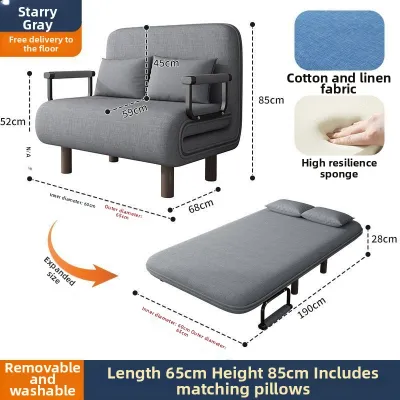
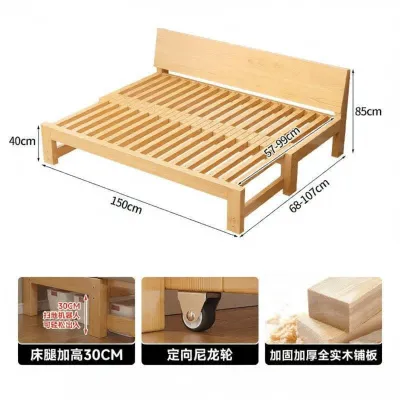

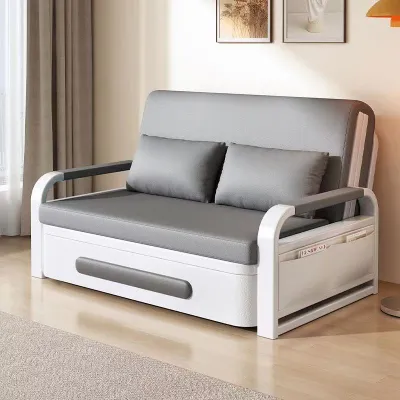
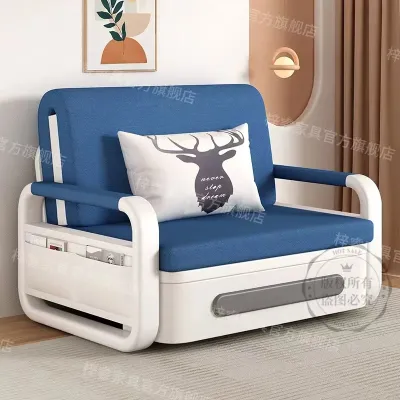
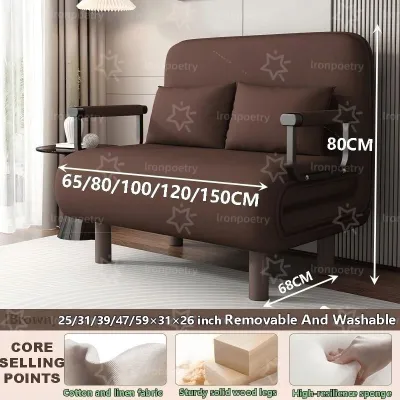
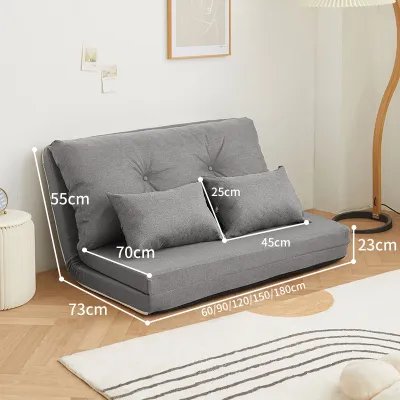
Prices are valid at publication and may change. Please refer to the product page for the latest price.
The third critical cost factor is the cushioning and mattress support system. Achieving dual-use comfort is a complex engineering challenge because sitting and sleeping require different weight distributions. Basic models often rely on single-layer polyurethane foam, which sags quickly and fails to provide adequate spinal alignment during sleep. Premium expandable sofa beds utilize high-resilience foam, pocket springs, or multi-layered hybrid cushioning that retains its shape under continuous pressure. Investing in a supportive mattress base, such as tension-adjustable wooden slats or a reinforced steel mesh, helps prevent the mattress from sinking and supports a comfortable night’s sleep for guests or daily users.
Budgeting for Authentic Japandi Design Elements
Japandi design merges Japanese minimalism with Scandinavian warmth, emphasizing natural textures, clean lines, and functional simplicity. When budgeting for upholstery, natural fibers like linen and cotton blends are highly sought after for their organic look and breathability. However, in a tropical climate, pure natural fibers can be susceptible to moisture retention and staining. To balance aesthetics with durability, look for high-quality synthetic blends—such as polyester-linen or performance cotton—that mimic the tactile warmth of natural fibers while offering superior stain resistance, mold resistance, and ease of cleaning.

Maintaining a low-profile, minimalist silhouette while housing a complex expandable mechanism requires precise engineering, which naturally increases the manufacturing cost. Standard sofa beds often look bulky because they must accommodate a folded mattress within the base. A well-designed Japandi expandable sofa bed achieves a sleek, elevated look by utilizing compact, high-density materials and innovative folding geometries. This seamless integration of form and function means you are paying for the design engineering required to hide the bed mechanism entirely when the unit is closed, preserving the airy, uncluttered feel of your living space.
The visible base and leg finishes are defining features of the Japandi aesthetic, which relies heavily on light wood tones like oak, ash, or maple. Solid wood legs and underframes provide the necessary stability and authentic organic texture, but they command a higher price. To manage your budget, evaluate the construction of these wooden accents carefully. While solid wood is the premium standard for longevity, high-quality wood veneers over stable engineered wood cores can offer a similar visual appeal at a lower cost. Avoid cheap paper laminates or painted plastic legs, as they scratch easily, peel in high humidity, and detract from the authentic, natural warmth that defines the style.
Establishing Budget Priorities and Acceptable Trade-offs
When your ideal Japandi sofa bed exceeds your target budget, establishing a clear hierarchy of priorities helps you avoid making compromises that compromise safety or longevity. Non-negotiable baselines should ideally include the mechanical hardware and structural frame. A smooth, effortless expansion mechanism, verified weight capacity labels, and a reliable structural warranty are essential for safety and long-term utility. Sacrificing frame strength or hardware quality to save money upfront frequently results in premature failure, forcing a costly replacement.
In contrast, several convenience features are open to compromise if you need to lower the purchase price. Built-in storage compartments under the seat are highly convenient for storing linens, but they add complexity and material cost; opting for a model without storage can save a significant portion of your budget. Similarly, fully removable and washable slipcovers are a premium feature that can be bypassed in favor of spot-cleanable performance fabrics. Multi-functional adjustable headrests or armrests can also be omitted, as a classic fixed-frame design aligns more closely with traditional, minimalist Japandi principles anyway.
Before finalizing your budget, carefully account for hidden costs that can impact the total price at checkout. Expandable sofa beds are exceptionally heavy and bulky, meaning delivery fees for oversized items can be substantial, especially if you live in a multi-story building or a provincial area. Professional assembly is highly recommended due to the complexity of the alignment tracks; factor this service charge into your initial calculations. Finally, verify the manufacturer’s return and warranty policies for custom or selected fabrics, as restocking fees or return shipping costs for large furniture pieces can be prohibitively expensive.
Pre-Purchase Quality Verification and Red Flags
Before committing your funds, carefully review the manufacturer’s specification sheets, whether shopping online or in a physical showroom. Verify the maximum weight capacity for both the seated and expanded sleeping configurations, ensuring it accommodates your household’s needs. Look for explicit details regarding the wood species used in the frame and the specific type of metal alloy in the mechanism. A reputable manufacturer will provide clear, transparent documentation of these specifications, along with details of any mechanical or structural warranties.
Be vigilant against common red flags in product descriptions that attempt to mask inferior materials with clever phrasing. Terms like “wood finish,” “warm oak color,” or “wood-grain look” almost always indicate cheap particleboard covered in a thin plastic laminate rather than genuine wood or high-quality veneer. Similarly, descriptions that gloss over the expansion mechanism with vague terms like “easy-to-use pull-out” without specifying the track material or hardware type should be treated with caution. If a seller cannot provide clear details about the internal mechanism or frame composition, it is best to look elsewhere.
Finally, assess the physical feasibility of delivering and installing the sofa bed in your home. Measure your doorways, hallways, stairwells, and elevator cabins carefully, comparing them against the packaged dimensions of the unit. Expandable sofa beds often ship in large, heavy boxes that require significant clearance to maneuver. In many Philippine condominiums and townhouses, tight corners and narrow staircases present major obstacles. Ensuring the unit can physically reach your living room helps avoid costly delivery failures, return shipping disputes, and accidental damage to your walls or the furniture itself during transit.
Frequently Asked Questions (FAQ)
Can an expandable sofa bed maintain a low Japandi profile without compromising mattress thickness?
Achieving a low-profile Japandi aesthetic while maintaining a comfortable mattress thickness is a common design challenge. Traditional pull-out sofa beds require a deep base to store a folded, thick spring mattress, which often results in a bulky, heavy appearance. To maintain a sleek, low-to-the-ground silhouette, modern expandable designs often utilize high-density polyurethane or latex foam mattresses that fold or slide flat without requiring a deep internal cavity. These specialized foam cores provide excellent orthopedic support and pressure relief at a fraction of the thickness of a traditional innerspring mattress. When shopping, look for models where the seating cushions themselves unfold to form the sleeping surface, as this dual-purpose design minimizes the need for a bulky hidden mattress compartment entirely.
What specific maintenance is required for natural wood accents in a tropical climate?
Natural wood accents require consistent care to withstand the high humidity and temperature fluctuations characteristic of a tropical climate. Regular dusting with a dry, soft microfiber cloth helps prevent abrasive particles from scratching the finish. To protect the wood from warping, cracking, or fading, position the sofa bed away from direct sunlight and air conditioning vents, which can cause rapid localized moisture changes. It is crucial to check the manufacturer’s specific care instructions before applying any commercial polishes, waxes, or oils, as inappropriate products can strip the protective sealant or attract dust. If the wood has an oil finish, a light application of a recommended furniture oil once or twice a year can help maintain its natural moisture barrier and rich texture.
Community discussion
Share your experience or ask a question. Comments are reviewed before publication.