
Finding the right study chair in the Philippines can be a challenge, especially when balancing comfort, durability, and a strict budget. If you are spending anywhere from ₱3,000 to ₱15,000, you are in a highly competitive market where options range from basic office seats to highly adjustable ergonomic models. To make a smart purchase, you must look past marketing buzzwords and focus on key structural specifications that directly impact your posture and long-term health.
In this price tier, the ideal study chair must provide reliable lumbar support, a certified gas lift, and breathable materials that can withstand the local tropical humidity. By understanding what features to prioritize at each price level, you can avoid common quality traps and secure a chair that keeps you comfortable during long hours of studying or working.
Setting Expectations: What Your Budget Actually Gets You
When shopping for a study chair with a budget of ₱3,000 to ₱15,000, you are navigating the entry-level to mid-range segments of the ergonomic furniture market. It is essential to understand that “ergonomic” is often used loosely by online sellers, so you must rely on verifiable specifications rather than promotional labels. Managing your expectations within this price bracket will help you identify which adjustments are realistic and which are reserved for high-end luxury models.
Products mentioned in this guide
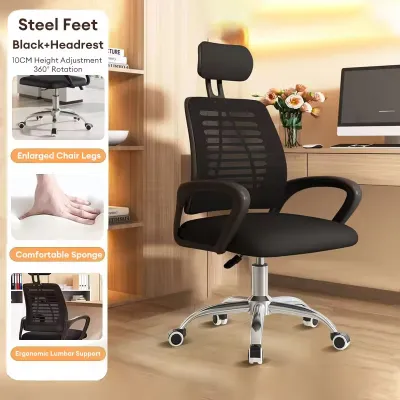
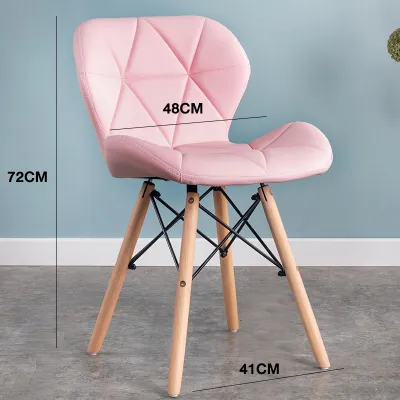
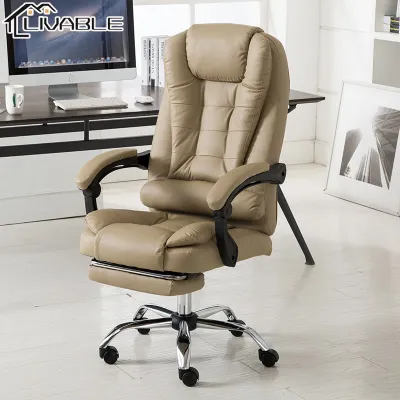
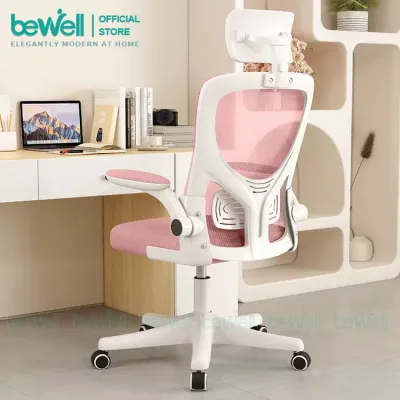
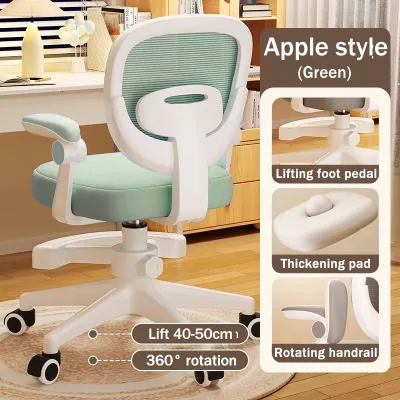
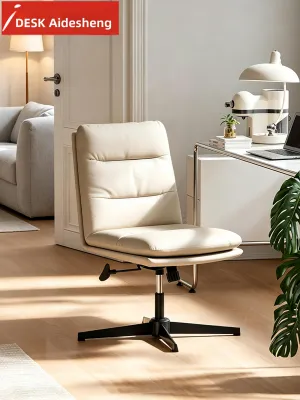
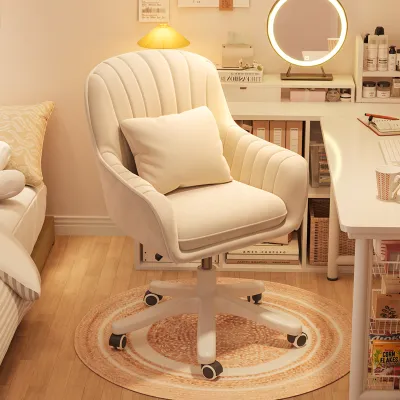
Prices are valid at publication and may change. Please refer to the product page for the latest price.
At the lower end of this budget, specifically between ₱3,000 and ₱7,500, a study chair typically offers basic mechanical adjustments. You can expect standard pneumatic seat height adjustment, a fixed or slightly flexible lumbar curve, and a basic tilt-and-lock mechanism. The materials in this lower bracket are generally standard nylon or plastic frames paired with basic mesh backrests and high-density foam or fabric seat cushions.
As you move into the mid-range bracket of ₱7,500 to ₱15,000, the level of customization increases significantly. At this level, chairs introduce independent lumbar support that can be adjusted for both height and depth, multi-directional armrests, and synchro-tilt mechanisms. The build quality also improves, featuring heavier base materials, higher-tension mesh that resists sagging, and more robust structural joints.
Regardless of where your budget falls within this ₱3,000 to ₱15,000 range, there are certain baseline standards you should never compromise on. Any chair you select must support standard desk heights—typically between 70 and 76 centimeters—and allow your feet to rest flat on the floor while keeping your knees at a comfortable 90-degree angle.
Must-Have Ergonomic Features vs. Acceptable Compromises
To get the best value for your money, you must distinguish between non-negotiable ergonomic features that protect your spine and premium add-ons that you can safely skip. When shopping on local e-commerce platforms, it is easy to get distracted by aesthetic features like colorful frames or racing-style designs. Prioritizing core structural elements ensures your money goes toward actual physical support.

Your first non-negotiable feature is a reliable pneumatic seat height adjustment, which allows you to align your seating position perfectly with your desk surface. This mechanism relies on a pressurized gas cylinder to raise or lower the seat smoothly, ensuring your forearms can rest comfortably on the desk without straining your shoulders.
The second essential feature is a stable five-point base equipped with smooth-rolling casters. In Philippine homes, floors are commonly finished with ceramic tiles, polished concrete, or hardwood, meaning your casters must be durable and non-marring. Look for polyurethane (PU) or nylon casters that glide quietly without scratching hard surfaces or slipping excessively.
If your budget is tight, there are several acceptable compromises you can make without sacrificing spinal health. For instance, fixed armrests are a reasonable trade-off compared to 3D or 4D adjustable armrests, provided they are positioned at a height that allows the chair to slide under your desk when not in use.
Another area where you can compromise is the seat cushion material. While high-density molded foam is the gold standard for durability, a well-padded, standard polyurethane foam seat is perfectly acceptable for entry-level budgets, provided you check user reviews regarding its thickness and resilience.
Additionally, you can opt for standard mesh backrests instead of premium, high-tension imported mesh. While basic mesh may stretch slightly more over years of use, it still offers the critical benefit of breathability, which is essential for staying cool in our tropical climate without relying constantly on air conditioning.
Maximizing Value in the ₱3,000 to ₱7,500 Study Chair Range
Shopping in the ₱3,000 to ₱7,500 price bracket requires a careful eye for structural integrity, as this is where manufacturers are most likely to cut corners. To maximize the value of your study chair, you should focus your evaluation on structural load capacity, base materials, and safety certifications.
Start by checking the manufacturer’s stated weight capacity, which should ideally be at least 100 to 120 kilograms to ensure long-term stability. Examine the base material closely; while heavy-duty steel bases are robust, high-strength reinforced nylon bases are also excellent at this price point because they resist rust in high-humidity environments. Avoid thin, lightweight plastic bases that can flex or crack under daily load.
When evaluating the backrest, prioritize a contoured design that mimics the natural S-curve of the human spine over a completely flat backrest. Even if the lumbar support is not independently adjustable, a well-shaped frame with a built-in lumbar curve provides far better passive support than a flat mesh panel.
Safety should be your top priority, particularly concerning the gas lift cylinder, which is the most critical mechanical component of any adjustable study chair. Always verify that the gas lift carries a recognized safety certification, such as an SGS or BIFMA Class 3 or Class 4 rating. These markings are typically stamped directly onto the metal cylinder and indicate that the component has undergone rigorous pressure and durability testing.
Because comfort is highly subjective and depends heavily on your unique body proportions, buying a chair without trying it can be risky. If possible, look for local furniture sellers with physical showrooms in major urban hubs like Metro Manila, Cebu, or Davao. Visiting a showroom allows you to test the seat depth, backrest angle, and overall stability before committing to a purchase.
Demanding Upgrades in the ₱7,500 to ₱15,000 Range
When your budget expands into the ₱7,500 to ₱15,000 range, you should transition from accepting basic comfort to demanding highly customized ergonomic adjustments. This mid-tier bracket allows you to invest in features that actively adapt to your body movements, reducing muscle fatigue during long study sessions.
At this price point, you should expect independent, adjustable lumbar support that can be moved vertically to align with your lower back, or horizontally to adjust the depth of support. This feature is crucial because a lumbar support that sits too high or too low can actually increase spinal strain rather than relieve it.
Another premium feature to demand is seat depth adjustment, often referred to as a seat slider. This mechanism allows you to slide the seat pan forward or backward independently of the backrest, ensuring that taller users get adequate thigh support while shorter users can sit fully back without the seat front pressing into the back of their knees.
You should also evaluate the tilt mechanism of the study chair. Look specifically for a synchro-tilt mechanism, which allows the backrest to recline at a 2:1 ratio relative to the seat angle. This keeps your feet flat on the floor and maintains proper pelvic alignment as you lean back, unlike basic tilt mechanisms that lift the front of the seat and cut off circulation to your lower legs.
Finally, inspect the materials for upgraded durability. In this price range, you should look for high-density molded foam cushions that retain their shape and elasticity over years of daily use. Additionally, look for high-tension elastomeric mesh that provides firm, springy support without sagging or fraying at the edges, ensuring the chair remains cool and supportive even after extended use.
Hidden Costs, Warranty Checks, and Quality Traps
Before you click the checkout button on any online marketplace, it is vital to perform a thorough pre-purchase check to protect yourself from unexpected expenses and poor after-sales service. The initial price tag of a study chair is only part of the total cost of ownership, and failing to read the fine print can lead to buyer’s remorse.
Shipping and assembly are two of the most common sources of hidden fees in the Philippines. Because ergonomic chairs are bulky and heavy, shipping costs can escalate quickly, especially if you reside outside Metro Manila or in provincial areas of Luzon, Visayas, and Mindanao. Always check whether the chair is delivered fully assembled or in a flat-pack box requiring self-assembly, and factor these shipping costs into your overall budget.
Warranty terms are another critical area where buyers are often misled. A seller might advertise a “3-year warranty,” but a closer look at the terms often reveals that this only covers the metal base or the gas lift cylinder, while excluding the mesh, fabric, and foam cushions from coverage. Make sure to read the specific warranty exclusions so you know exactly what parts are protected if a component fails prematurely.
Beware of quality traps where sellers use the word “ergonomic” as a marketing buzzword for chairs that offer no actual adjustment features. Avoid chairs that feature unbranded gas lifts, extremely lightweight frames, or joints that rattle when you shift your weight. A high-quality study chair should feel solid and silent when you sit, stand, or recline.
To ensure a smooth shopping experience, calculate the total landed cost of the chair—including any assembly tools or delivery surcharges—before finalizing your order. Additionally, verify the seller’s return policy, checking specifically if you are responsible for paying the return shipping fees if the chair arrives with defects or does not fit your body comfortably.
Frequently Asked Questions (FAQ)
Is a gaming chair a good alternative to an ergonomic study chair in this budget?
While budget gaming chairs are popular for their striking colors and high backrests, they are generally not the best alternative to a dedicated ergonomic study chair. Gaming chairs typically feature a bucket-seat design inspired by race cars, which restricts lateral leg movement and forces your shoulders forward. Additionally, they often rely on loose, removable pillows for neck and lumbar support, which do not provide the precise, adjustable structural support needed for long hours of academic work. A dedicated study chair focuses on breathability and natural spinal alignment, making it a far superior choice for productivity and comfort.
How do I test an ergonomic chair if I am buying online?
If you are purchasing a study chair online without the opportunity for a physical trial, you must rely on precise measurements and seller policies. Start by measuring your current desk height and your own body proportions, including your hip-to-knee length and shoulder height, then compare these with the detailed dimension diagrams provided on the product page. Check the seller’s return policy to see if they offer a trial period or a hassle-free return window for comfort issues. Finally, read customer reviews carefully, filtering for feedback from users of a similar height and weight, and pay close attention to mentions of mesh durability, cushion firmness, and gas lift performance over time.
Community discussion
Share your experience or ask a question. Comments are reviewed before publication.