
A 60cm floating shelf is an excellent space-saving addition to any study room, offering a clean, modern way to organize books, reference materials, and decorative items without consuming valuable floor space. However, selecting the right shelf involves more than just picking an appealing design. To ensure a successful installation that stands the test of time, you must carefully evaluate your wall’s structural capacity, choose materials that can withstand local environmental conditions, and select a bracket system capable of supporting your intended load. By taking a systematic approach to these factors, you can create a functional, safe, and visually appealing study environment.
Assessing Your Study Room Space and Wall Type
Before purchasing any floating shelf, you must determine the composition of the wall where you plan to mount it. In the Philippines, residential walls typically fall into three categories: solid concrete, concrete hollow blocks, and drywall partitions. Solid concrete walls offer the highest load-bearing capacity, making them ideal for supporting heavy books, but they require a hammer drill and specialized masonry anchors. Concrete hollow blocks, common in many local homes, have hollow cores that require careful anchor placement; standard plastic plugs may not expand properly inside the hollow sections, necessitating the use of heavy-duty sleeve anchors. Drywall partitions, consisting of gypsum board mounted on light metal or wooden studs, have the lowest load-bearing capacity and require specialized hollow-wall anchors or direct mounting into the studs to prevent the wall from sagging.
In addition to identifying the wall material, you must carefully measure the vertical and horizontal clearances in your study room. A 60cm shelf requires a clear horizontal span, but you must also consider how its depth and height will interact with other furniture. Ensure the shelf is positioned high enough to avoid interfering with your head when you sit or stand up from your desk chair. If you use an adjustable monitor arm, verify that the shelf’s placement allows the monitor to move freely through its full range of motion without striking the underside of the shelf. Walking paths must also remain unobstructed; a shelf protruding too far into a narrow hallway or doorway transition can become a safety hazard.
Products mentioned in this guide
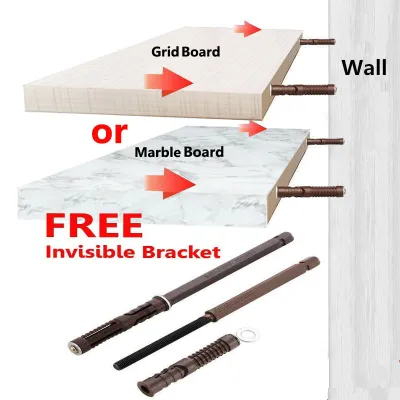
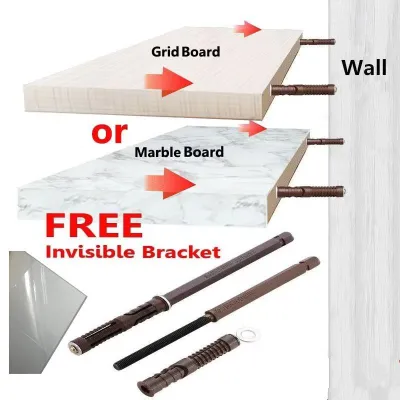
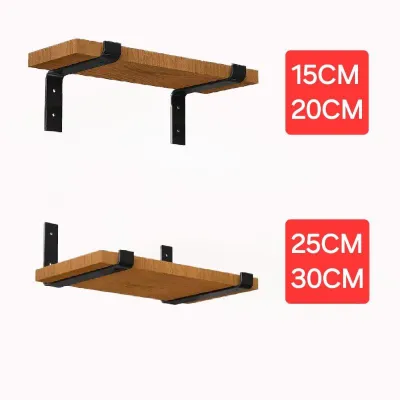
Prices are valid at publication and may change. Please refer to the product page for the latest price.
Finally, plan your drilling locations with extreme caution. Study room walls often house hidden electrical wiring for light switches, wall outlets, and air conditioning units, as well as plumbing lines if the room shares a wall with a bathroom. Before drilling, use a reliable wall scanner to detect live wires and pipes. If you do not have access to a scanner, consult your home’s architectural and electrical plans, or observe the alignment of nearby outlets and switches, as wiring typically runs vertically or horizontally from these fixtures. Taking these precautions prevents costly damage to your home’s infrastructure and ensures a safe installation process.
Evaluating Material Options for 60cm Shelves
The choice of material directly impacts the shelf’s durability, aesthetic appeal, and resistance to environmental factors. In tropical climates characterized by high humidity, material selection requires careful scrutiny. Solid wood is a popular choice for its natural beauty and structural strength. Hardwoods like mahogany, acacia, or tanguile are highly durable and resist sagging under heavy loads. However, solid wood must be properly sealed with a high-quality polyurethane or varnish finish to prevent it from absorbing moisture from the air, which can lead to warping, cracking, or mold growth over time.

Engineered wood, such as Medium-Density Fiberboard (MDF) or particleboard, is a common and cost-effective alternative to solid wood. While engineered wood offers a uniform appearance and is less prone to natural warping, it is highly sensitive to moisture. If water or high humidity penetrates the core, the fibers can swell and crumble. When evaluating engineered wood shelves, inspect the surface treatments and edge banding closely. High-pressure laminates or melamine coatings provide excellent moisture resistance, but the edges must be sealed with thick, high-quality PVC or ABS edge banding to prevent humidity from entering the joints. Check the product specifications for low formaldehyde emission ratings, such as E1 or E0 standards, to ensure healthy indoor air quality in your study room.
Metal and glass shelves offer distinct design alternatives. Metal shelves, typically made of powder-coated steel or aluminum, are exceptionally strong, thin, and resistant to scratches and moisture. They are highly suitable for modern or industrial-themed study rooms and require minimal maintenance beyond occasional dusting. Glass shelves, on the other hand, provide a sleek, minimalist aesthetic that allows light to pass through, making small study rooms feel more spacious. However, glass has a much lower load capacity, is prone to showing fingerprints and dust, and must be made of tempered safety glass to prevent dangerous shattering in the event of an accidental impact.
Determining Weight Capacity and Bracket Systems
To prevent your floating shelf from sagging or pulling away from the wall, you must calculate the total expected load and select a compatible bracket system. The total load is the combined weight of the shelf itself and all the items you plan to place on it. A standard 60cm shelf loaded with heavy textbooks, reference manuals, and binders can easily weigh upwards of 15 to 20 kilograms. Do not guess the weight of your items; use a small scale to weigh a representative stack of books to get an accurate estimate before finalizing your purchase.
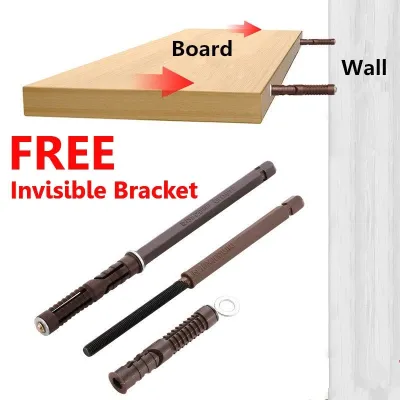
The hidden bracket system is the backbone of a floating shelf, and its design determines how the load is distributed. There are two primary types of concealed brackets: solid steel rods and flat mounting plates with welded prongs. Solid steel rods that insert deep into pre-drilled holes in the shelf body offer superior leverage and resistance to bending. These rods are typically welded to a heavy-duty steel backplate that is screwed into the wall. Flat mounting plates with shorter prongs are suitable for lighter decorative shelves but may allow the shelf to tilt forward under heavy loads. Ensure the bracket plate has multiple mounting holes to allow for flexible screw placement, especially when trying to align with wall studs.
It is crucial to distinguish between the bending strength of the shelf material and the pull-out strength of the wall anchors. Even if you have a solid steel bracket and a thick hardwood shelf that will not bend, the entire assembly can fail if the wall anchors pull out of the wall. In concrete walls, use high-quality nylon expansion plugs or steel sleeve anchors that expand tightly against the masonry. In drywall, standard plastic plugs are insufficient; you must use heavy-duty toggle bolts or metal self-drilling anchors that grip the back of the gypsum board over a wide surface area. Always match the anchor’s rated capacity to your calculated load, and remember that the overall weight limit of the system is only as strong as its weakest connection point.
Matching Design and Depth to Your Study Needs
The depth of your 60cm floating shelf should be directly tailored to the specific items you intend to store. Standard shelf depths generally range from 15cm to 25cm. A shallow depth of 15cm is ideal for displaying small decorative items, framed photographs, stationery organizers, or small paperback novels. These shallow shelves have a minimal visual footprint, making them perfect for tight spaces above a desk. If you need to store larger items, such as A4 binders, heavy textbooks, or reference manuals, you will require a depth of 20cm to 25cm. Avoid choosing a shelf deeper than 25cm unless it is supported by external brackets, as the increased leverage significantly multiplies the pulling force on the wall anchors, increasing the risk of failure.
The edge profile of the shelf also plays a significant role in both safety and aesthetics. Square edges offer a sharp, clean, and contemporary look that aligns well with minimalist study designs. However, in tight spaces where you might accidentally bump into the shelf, beveled or rounded edges are a safer choice, as they soften the impact and reduce the risk of injury. If you plan to store items that are prone to rolling or sliding, such as pens, markers, or round decorative objects, consider a shelf with a front lip or a gallery rail. This raised edge provides a physical barrier that keeps your items secure, especially in active study environments.
Coordinating the color and finish of your floating shelf with your existing study room furniture creates a cohesive and professional look. If you have a dark wood desk, matching the shelf to the same wood species or tone helps unify the space. For modern setups, matte black or white finishes complement minimalist desks and metal chair frames. Consider how the shelf’s finish interacts with your study room’s lighting; high-gloss finishes can reflect harsh glare from desk lamps or overhead lights, which can be distracting during long study sessions. A matte or satin finish diffuses light more softly, contributing to a more comfortable and focused working environment.
A Condition-Based Shortlist for Study Room Setups
To simplify your decision-making process, consider these three common study room configurations and their corresponding shelf specifications:
For heavy textbook storage, prioritize structural integrity above all else. Select a 60cm shelf with a thickness of at least 25mm to 40mm, made from solid hardwood or high-density engineered wood with a reinforced core. The bracket system must feature solid steel rods with a diameter of at least 10mm, welded to a thick steel backplate. This setup must be mounted onto a solid concrete or concrete hollow block wall using heavy-duty masonry anchors or sleeve bolts. Avoid mounting heavy textbook shelves on drywall partitions unless you can secure the bracket directly into multiple wall studs. Budgeting for high-quality, third-party masonry anchors is a wise investment if the hardware included in the package feels flimsy.
For light decor, stationery, and small plants, a lighter and more minimalist setup is appropriate. You can choose a thinner shelf profile (15mm to 18mm) made of lightweight engineered wood, aluminum, or tempered glass. A standard concealed bracket system with a flat mounting plate is sufficient for these lighter loads. This configuration can be safely mounted on drywall partitions using high-quality toggle bolts, or on concrete walls using standard nylon expansion plugs. This setup allows you to maximize vertical space for organization without adding unnecessary visual weight to the room.
If you are installing a shelf directly above your computer monitor, careful planning is required to prevent interference with your workspace. Limit the shelf depth to 15cm to ensure it does not cast deep shadows over your screen or block overhead ambient light. Observe strict weight limits, keeping the load light to eliminate any risk of items falling onto your monitor or keyboard. If you plan to run cables for a small desk clock, a smart speaker, or decorative LED strip lights mounted under the shelf, look for a shelf design that includes a built-in cable management slot or a small gap at the back to keep cords organized and hidden from view.
Installation Checks and Safety Boundaries
A successful installation relies on careful preparation and the use of correct tools. Before you begin drilling, unbox your floating shelf and verify that all the included hardware—screws, wall plugs, and brackets—is present and undamaged. Do not assume that the included wall plugs are suitable for your specific wall type. Many manufacturers include generic plastic plugs that are only safe for solid concrete; if you are mounting the shelf on drywall or hollow blocks, purchase the appropriate specialized anchors separately.
When you are ready to install, use a high-quality spirit level to ensure the bracket is perfectly horizontal before marking the drill holes. A slight tilt can cause items to slide off the shelf and put uneven stress on the mounting screws. Select the correct drill bit for your wall material: a masonry bit is essential for concrete and hollow blocks, while a standard wood or metal bit should be used for drywall and studs. Drill to the exact depth recommended by the anchor manufacturer, and clean any dust or debris out of the hole before inserting the wall plug to ensure a tight, secure fit.
Always establish clear safety boundaries and know when to stop a DIY installation. If you begin drilling and the wall material crumbles excessively, if the drill bit suddenly drops into an unexpected void, or if you detect any resistance that suggests you have hit a metal pipe or electrical conduit, stop immediately. Do not attempt to force the installation. In these situations, or if the manufacturer’s instructions are unclear or conflict with your specific wall setup, consult a qualified professional carpenter or contractor to assess the wall and complete the installation safely.
Frequently Asked Questions (FAQ)
Can I install a 60cm floating shelf on a drywall partition?
Yes, you can install a 60cm floating shelf on a drywall partition, but you must take specific precautions to ensure safety. Standard plastic wall plugs will not hold in drywall and can easily pull out, damaging your wall. Instead, you must use heavy-duty toggle bolts or metal self-drilling drywall anchors that expand behind the gypsum board to distribute the weight. For the best stability, use a stud finder to locate the wooden or metal studs behind the drywall and screw the shelf bracket directly into them. Keep the weight load on drywall-mounted shelves significantly lighter than what you would place on a concrete wall.
How do I prevent books from sliding off a floating shelf?
Preventing books from sliding off a flat, lipless floating shelf can be achieved through several practical methods. You can use weighted bookends placed at either end of your book stack to keep them upright and stable. Another option is to place a thin, non-slip drawer liner or silicone mat under the books to increase friction against the shelf surface. If you frequently store loose papers, folders, or softcover books that tend to lean, consider choosing a 60cm shelf design that features a built-in front lip, side rails, or a slightly recessed surface to keep your study materials securely in place.

Community discussion
Share your experience or ask a question. Comments are reviewed before publication.