
Finding a reliable, big-sized adult hammock (locally known as a duyan) in the Philippines requires looking past generic marketing buzzwords like “extra-large” or “heavy-duty.” Because there is no universal standard for these terms on local e-commerce platforms or in physical home improvement stores, you must evaluate physical dimensions, structural weight limits, and material specifications yourself. In a tropical climate characterized by high humidity, intense seasonal rains, and strong sunlight, choosing the wrong material or failing to verify the suspension hardware can lead to rapid fabric degradation or structural failure. A successful purchase depends on matching the physical dimensions of the hammock to your available space, verifying the load-bearing capacity of your anchor points, and selecting materials that can withstand local environmental conditions.
To make an informed decision, you must treat the purchase as a structural addition to your home or garden. This means measuring your available space before browsing, understanding how hammock physics affects your walls or trees, and knowing exactly what hardware specifications to look for. By focusing on verifiable physical properties rather than promotional claims, you can secure a safe, comfortable, and long-lasting duyan that accommodates adult users comfortably.
Understanding Big Size Hammock Dimensions and Weight Limits
When shopping for a big-sized duyan, the first point of confusion is often the difference between fabric dimensions and overall length. The fabric width and length define the actual sleeping bed where your body will rest. For a comfortable adult experience, particularly if you want to lie diagonally—which is the ergonomically correct way to sleep in a gathered-end hammock—the fabric width should be at least 150 centimeters (approximately 59 inches) for a single adult, and 180 centimeters (approximately 71 inches) or more for double or extra-large models. The overall length, which includes the end loops, suspension ropes, and attachment rings, determines how much physical distance you need between your anchor points. Always check the manufacturer’s specification sheet for these two distinct measurements rather than relying on a single “total length” figure.
Products mentioned in this guide
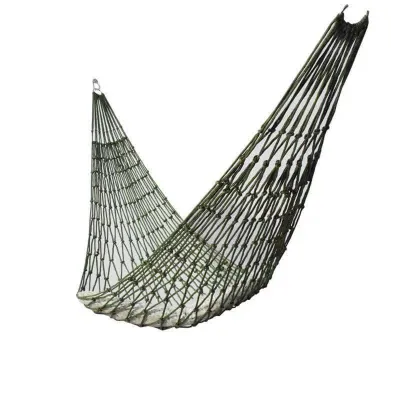
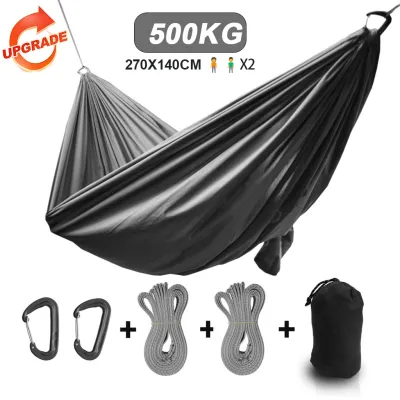
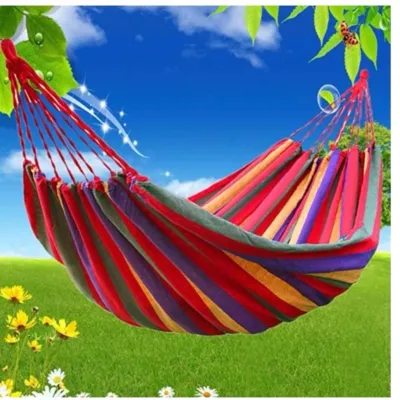
![[BAZZAR] Portable Cotton Rope Outdoor Hammock Duyan](https://img.lazcdn.com/g/p/b19a47f5cfbe15c149ec7e1699df4a1a.jpg_400x400q80.jpg_.webp)
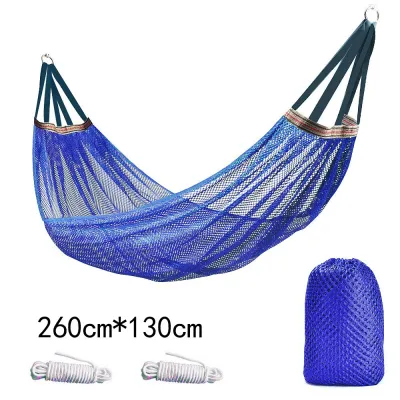
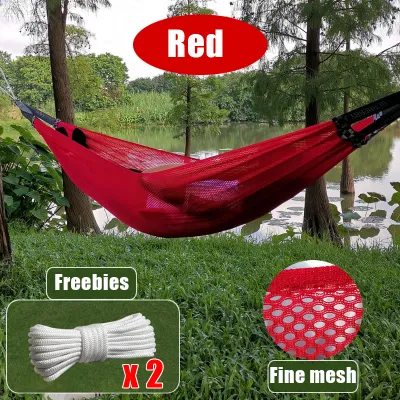
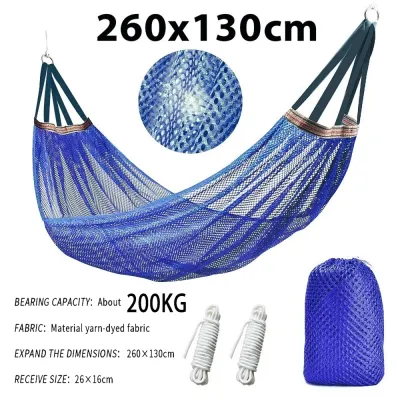
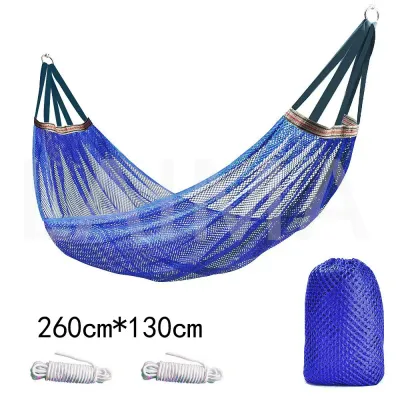
Prices are valid at publication and may change. Please refer to the product page for the latest price.
Weight capacity is another critical specification that requires careful verification. A hammock labeled “for adults” does not automatically guarantee it can safely support heavier individuals or multiple occupants. You should look for a clearly stated maximum weight capacity, typically rated in kilograms or pounds. For a heavy-duty adult hammock, a minimum capacity of 180 to 220 kilograms (approximately 400 to 500 pounds) is recommended to provide a safe buffer for dynamic weight. Dynamic weight refers to the force exerted when you sit down, shift positions, or gently swing, which temporarily increases the load on the fabric and suspension system far beyond your static body weight.
To verify the structural integrity of a hammock’s weight rating, inspect the construction details of the bed and the suspension loops. High-quality big-sized hammocks feature triple-stitched seams along the edges and reinforced end loops (often called loops or gathers) where the fabric meets the suspension ropes. If the product description or user manual does not specify the type of stitching or the denier (thickness) of the fabric, treat the weight rating with caution. Furthermore, the number of occupants a hammock can support is not just a matter of physical space; it depends entirely on whether the suspension ropes, carabiners, and anchor points are rated for combined weight. Never exceed the manufacturer’s specified weight limit, even if the fabric appears wide enough to hold more than one person.
Choosing the Right Material and Structure for Your Space
The structural design of your duyan dictates both how it feels and how much space it occupies. Gathered-end hammocks, which are traditional in the Philippines, gather the fabric at both ends, creating a cocoon-like shape that wraps around the body. This design lowers your center of gravity, making it highly stable and virtually impossible to tip over during normal use. However, to lie flat in a gathered-end hammock, you must position yourself at an angle rather than straight down the center line. In contrast, spreader-bar hammocks use wooden or metal bars at each end to keep the fabric flat and taut. While this design makes it easier to get in and out and provides an unobstructed view, it raises your center of gravity, making the hammock less stable and more prone to flipping if your weight is unevenly distributed.

Because the Philippines experiences high humidity, heavy rainfall, and intense UV exposure, the material of your hammock determines its lifespan. Cotton is highly breathable and soft against the skin, making it comfortable for hot afternoon naps, but it is highly susceptible to mold, mildew, and rot if exposed to moisture. If you plan to leave your hammock outdoors on a patio, balcony, or garden, cotton requires constant maintenance and must be brought indoors during rain. Synthetic materials like high-grade nylon (such as parachute nylon) or heavy-duty polyester are far more practical for outdoor use. They dry quickly, resist mold and mildew, and are generally lighter and easier to pack. However, you must verify if the synthetic fabric has been treated with a UV-resistant coating, as prolonged exposure to intense tropical sunlight can degrade untreated synthetic fibers, causing them to become brittle and tear.
Your choice of structure also depends on whether you will use a stand-alone frame or permanent hanging hardware. A stand-alone metal or wooden frame offers the ultimate flexibility, allowing you to move your hammock around the garden or patio to follow the shade. However, these frames have a large physical footprint, often requiring a flat, clear floor space of at least 3 to 4 meters in length. If you have limited space, permanent hanging hardware—such as heavy-duty eye bolts anchored into concrete walls or straps wrapped around mature trees—is a more space-efficient option. This setup keeps the floor area clear but requires careful assessment of the structural integrity of your chosen anchor points.
Installation and Safety Checks for Adult Hammocks
Before installing any hanging hardware, you must verify the structural integrity of your anchor points. In many residential structures in the Philippines, walls are constructed using concrete hollow blocks (CHBs) rather than solid poured concrete. CHBs are structurally weak and cannot safely support the high shear forces exerted by a loaded hammock; anchoring directly into them can cause the blocks to crumble and the hardware to pull out. Instead, you must anchor your hardware into solid reinforced concrete columns, structural concrete beams, or solid wooden wall studs. If you are hanging your duyan outdoors between trees, ensure the tree trunks are mature, healthy, and at least 15 to 20 centimeters (6 to 8 inches) in diameter. Never anchor a hammock to porch railings, drywall, or decorative wooden posts, as these structures are not designed to bear lateral loads.
Calculating the correct hanging geometry is essential for both comfort and safety. When you hang a hammock, the suspension lines should ideally form a 30-degree angle relative to the horizontal ground. Hanging a hammock too flat (tightly stretched) dramatically increases the tension on the anchor points and the suspension ropes. For example, a hammock hung at a shallow 10-degree angle can exert a force on the anchors that is several times the actual weight of the person sitting in it. To achieve the optimal 30-degree angle, the height of your anchor points should generally be about half the distance between them. If your anchor points are 4 meters apart, the anchors should be placed approximately 2 meters high on the walls or trees, allowing the lowest point of the empty hammock to sit at about chair height (45 to 50 centimeters above the ground) when occupied.
Safety must always be your primary concern during installation. If you encounter any of the following stopping conditions, halt the installation immediately and consult a qualified structural contractor or the manufacturer:
- The wall material crumbles, cracks, or flakes when you attempt to drill pilot holes.
- The anchor bolts do not tighten securely or feel loose inside the wall.
- The wooden posts or tree branches flex or creak when weight is applied.
- You are unsure whether a wall is made of solid concrete or hollow blocks.
Taking the time to verify these structural conditions prevents property damage and serious physical injury.
Building Your Shortlist: What to Verify Before Buying
When you are ready to build your shortlist of big-sized hammocks on e-commerce platforms or in local physical showrooms, you must cross-reference the product listings with official manufacturer documentation. Do not rely solely on the bullet points in an online product description, as these are often copied from generic templates. Instead, look for downloadable user manuals, official spec sheets, or high-resolution photos of the product labels. Verify that the dimensions listed in the description match the actual measurements printed on the packaging. If there is a discrepancy between the online listing and the physical product label, always trust the physical label or contact the manufacturer directly to clarify the specifications.
Next, evaluate the quality and specifications of the included suspension hardware. Many budget-friendly hammocks include low-grade ropes or thin metal S-hooks that are not rated for adult weight limits. A reliable heavy-duty setup should include climbing-grade carabiners (preferably made of aluminum or stainless steel with a rated breaking strength), thick nylon tree straps with multiple adjustment loops, or heavy-gauge steel chains. If the hammock does not come with high-quality hardware, you should budget separately for independent, load-rated suspension gear. Look for hardware that explicitly states its weight rating and material composition to ensure it will not rust or fail under tropical outdoor conditions.
Finally, carefully review the seller’s return policies and warranty terms before making your purchase. A reputable manufacturer or authorized retailer should offer a clear warranty that covers structural defects, such as unraveling seams, hardware failure, or premature fabric tearing under normal use. Be cautious of sellers who offer no warranty or list the product as “as-is,” especially when purchasing online. Check if the return policy allows you to inspect the product at home and return it if the physical dimensions or material quality do not match your expectations. Investing in a duyan with a solid warranty provides peace of mind and ensures you are getting a product built to last.
Frequently Asked Questions (FAQ)
How much space do I need to hang a large duyan?
To hang a large adult duyan safely, you generally need a horizontal distance that is about 30 to 60 centimeters (1 to 2 feet) longer than the hammock’s overall length. For a standard large hammock with an overall length of 3.3 meters (11 feet), your anchor points should be spaced between 3.6 and 4 meters apart. If your space is wider than this, you can easily bridge the gap using extra suspension straps or chains. However, if your space is shorter than the hammock’s overall length, you will not be able to achieve the proper sag, and the hammock will hang too low to the ground. Additionally, ensure you have at least 1 meter of clear space on both sides of the hammock’s swing path to prevent colliding with walls, furniture, or railings.
Can I hang a heavy-duty hammock on a standard balcony ceiling?
No, you should not hang a heavy-duty hammock from a standard residential balcony ceiling unless you have verified that the ceiling contains a structural concrete beam or solid steel joist. Standard balcony ceilings in the Philippines are often finished with lightweight fiber cement boards, plasterboard, or thin soffit panels, which cannot support any load. Drilling through these panels and anchoring into the thin concrete slab above is also highly risky, as balcony slabs are often engineered only for vertical gravity loads and may not handle the dynamic, lateral pull of a swinging adult. Always consult a structural engineer or your building’s property management office to review the structural plans before drilling into any ceiling.
What is the difference between a spreader bar and a gathered-end hammock?
A spreader bar hammock uses rigid bars at both ends to hold the fabric wide open, creating a flat, bed-like surface that is easy to step into and ideal for sunbathing. However, because the fabric is kept flat, your center of gravity sits high, making the hammock unstable and prone to tipping if you shift your weight off-center. A gathered-end hammock gathers the fabric into a single point at each end, allowing the material to sag naturally and wrap around your body like a cocoon. This design lowers your center of gravity, making it exceptionally stable and comfortable for long sleeping sessions, though it requires you to lie at a diagonal angle to keep your back flat.
Community discussion
Share your experience or ask a question. Comments are reviewed before publication.