
A C-shaped table is one of the most versatile space-saving furniture pieces you can introduce to a home. Designed with an open, cantilevered frame, it slides effortlessly under a sofa or bed, bringing the tabletop directly to you. This makes it an ideal solution for compact urban spaces, such as condominiums and studio apartments where traditional coffee tables might obstruct walkways.
Selecting the right c shaped table requires careful attention to three core dimensions: size, material, and stability. Because of its asymmetrical design, a mismatched table can easily wobble, fail to fit under your furniture, or quickly deteriorate under the demands of daily use and environmental conditions. To find a model that balances functionality with long-term durability, you must evaluate how it physically interacts with your existing furniture, how its base counterbalances weight, and how its components withstand local environmental factors like tropical humidity.
Step 1: Measure Your Furniture and Floor Clearance
Under-Furniture Clearance
The primary benefit of a C-shaped table lies in its ability to slide its base beneath your seating or sleeping setup. Before browsing online marketplaces or visiting local showrooms, grab a tape measure and determine the exact vertical clearance from your floor to the lowest point of your sofa or bed frame. This is often the lower edge of the wooden frame or the bottom of the dust cover. The thickness of the table’s base—including any pre-installed glides, felt pads, or casters—must be less than this clearance. If your sofa sits on low legs with only a 2-centimeter gap, a thick metal tubular base will not slide underneath, forcing the table to sit awkwardly in front of the furniture.
Products mentioned in this guide
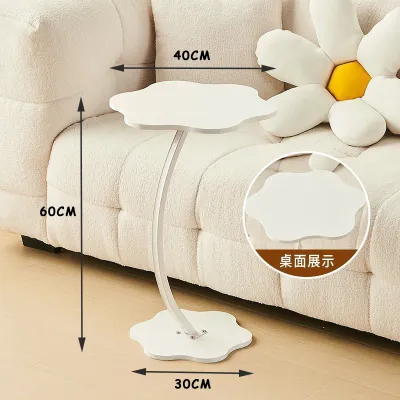
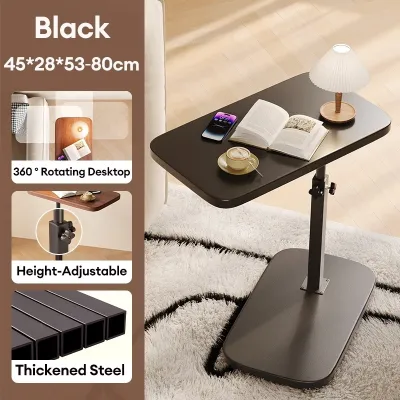
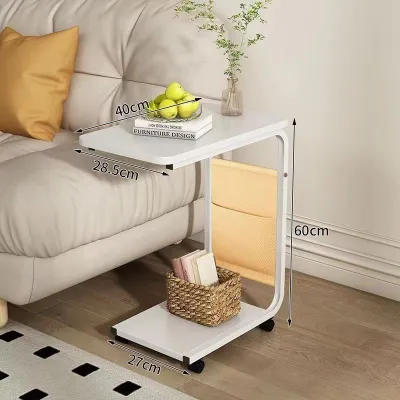
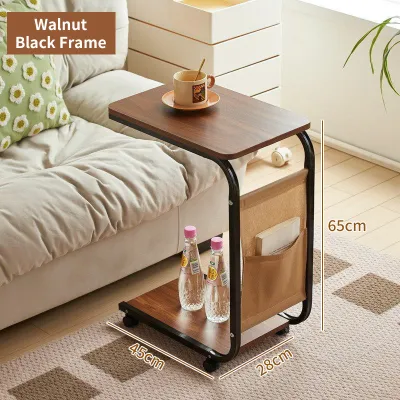
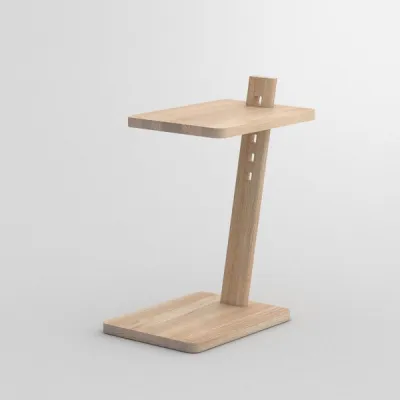
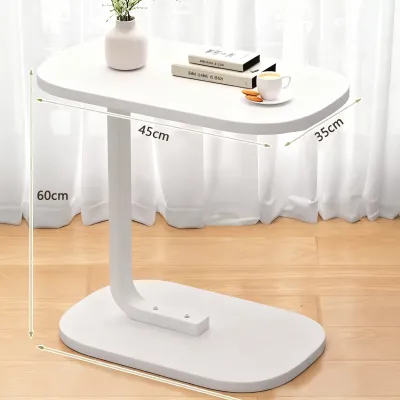
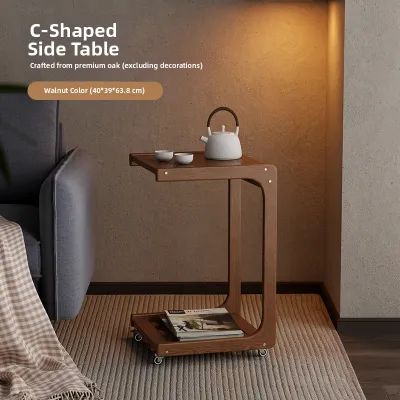
Prices are valid at publication and may change. Please refer to the product page for the latest price.
Base Depth and Width
Next, measure the available floor space around your seating area, paying close attention to traffic lanes. The depth of the table’s base determines how far it can slide under your sofa or bed, while its width dictates how much space it occupies alongside your furniture. If the base is too deep, it may strike the rear legs of your sofa or protrude into the walkway behind it. In tight living rooms, a base that extends too far forward becomes a constant tripping hazard, especially in high-traffic zones. Ensure that the table’s footprint leaves ample room for comfortable foot placement and clear pathways.
Tabletop Height Alignment
The height of the tabletop should align with your intended activities. If you plan to use the table primarily for typing on a laptop or enjoying a casual meal, the surface should sit roughly level with or slightly above your sofa’s armrests or your bed’s mattress. A tabletop that is too high forces your shoulders up, causing muscle strain over time, while one that is too low requires you to hunch forward. Measure the height of your sofa cushions while seated, as your body weight compresses the foam, lowering your actual sitting position relative to the table.
Surface Area Requirements
Finally, consider what you intend to place on the table daily. A compact surface of 30 by 40 centimeters is sufficient for a coffee mug, a remote control, and a smartphone. However, if you intend to work on a 15-inch laptop alongside a notebook and a beverage, you will require a larger surface area of at least 40 by 60 centimeters. Balance your spatial needs with the physical limits of your room; a larger tabletop provides more utility but requires a correspondingly larger and heavier base to remain stable.
Step 2: Evaluate Base Design for Tipping and Stability
Center of Gravity Dynamics
By design, a c shaped table features an asymmetrical structure where the tabletop overhangs the base without direct vertical support on one side. This offset configuration naturally shifts the center of gravity forward, making the table inherently more prone to tipping than a traditional four-legged side table. When you apply downward pressure to the overhanging edge—such as resting your forearms while typing or leaning on it to stand up—the base must act as a reliable counterbalance to prevent the entire structure from flipping forward.

Base Types and Footprints
Manufacturers use several base designs to address this physical challenge. Flat, solid steel or iron plates offer the lowest profile and the most concentrated weight, making them exceptionally stable while sliding easily under low-clearance furniture. U-shaped or rectangular tubular metal frames are also common; they distribute weight along a perimeter and are highly stable if the frame is constructed from heavy-gauge steel. Multi-leg bases or those with cross-bracing offer excellent structural rigidity, but they can be bulkier. As a general rule, look for bases that match or exceed the width and depth of the tabletop to ensure a wider, safer footprint.
Weight Capacity Verification
Always verify the manufacturer’s specified maximum weight capacity before making a purchase. While a high-quality C-table can typically support between 10 to 15 kilograms, lighter or budget-oriented models may only be rated for 5 kilograms or less. Exceeding these limits can bend the vertical support post or cause the table to tip. If you plan to load the surface with heavy textbooks, ceramic dinnerware, or multiple electronic devices, prioritize models with reinforced joints and explicit high-weight ratings.
Pre-Purchase Stability Checks
When shopping in physical retail stores, test the table by applying gentle downward pressure on the outermost corner of the tabletop to see if the base lifts off the floor. If you are purchasing online, carefully read customer reviews for specific mentions of wobbling, shaking during typing, or tipping when light pressure is applied. Be cautious of designs that require wall anchoring to remain upright, as this completely eliminates the mobility and versatility that make a C-table so appealing in the first place.
Step 3: Select Tabletop and Frame Materials for Your Climate
Tabletop Material Evaluation
- Wood and Engineered Wood: Solid wood and engineered wood (such as MDF or particleboard) bring a warm, natural aesthetic to your living space. However, in the tropical and highly humid climate of the Philippines, wood is susceptible to moisture absorption, which can lead to warping, swelling, or joint separation. If you select a wooden tabletop, verify that the manufacturer has applied a high-quality, moisture-resistant sealant on all sides, including the underside. Check that engineered wood options feature tight, professional edge banding to prevent ambient humidity or spilled drinks from penetrating the core.
- Glass and Stone: Tempered glass and sintered stone are excellent, highly durable alternatives that are entirely unaffected by humidity. They resist staining from coffee spills or condensation rings from cold glasses, and they are incredibly easy to wipe clean. When choosing glass, confirm that it is tempered safety glass with a minimum thickness of 6 millimeters, and ensure the edges are polished or beveled to prevent accidental cuts. Sintered stone offers the luxurious look of marble without the high maintenance, but you must check that the slab is securely bonded to the supporting frame.
- Laminates and MDF: High-pressure laminates over an MDF core offer a budget-friendly option with a wide variety of finishes, from faux wood grain to concrete textures. Budget-friendly laminates often range from ₱1,500 to ₱3,000, while premium sintered stone or solid wood models can exceed ₱6,000. While highly practical, their longevity depends heavily on the quality of the surface wear layer. Check the manufacturer's care guidelines to ensure the laminate is rated for water resistance, as condensation from iced drinks—a daily reality in tropical climates—can quickly cause cheap laminates to bubble and peel at the seams if left wet.
Frame Material and Coating
The vertical frame and base of a C-table bear the structural load and must resist environmental wear. For metal frames, which are typically made of steel or aluminum, powder coating is the gold standard. A high-quality powder-coated finish creates a thick, protective barrier that prevents moisture and oxygen from reaching the underlying metal, protecting it from rust and corrosion in humid coastal or urban environments. Avoid bare or poorly painted iron frames, which can rust rapidly when exposed to humid air.
If you prefer a solid wood frame, inspect the joints and the type of protective finish used, such as polyurethane or lacquer. These finishes seal the wood pores, protecting the frame from both moisture fluctuations and local wood-boring pests. Ensure that all joints are secured with high-quality screws or dowels rather than simple wood glue, which can degrade over time in warm, humid conditions.
Aesthetic and Practical Matching
While durability is paramount, your C-table should complement your existing interior design. A matte black metal frame paired with a dark wood or sintered stone top fits seamlessly into industrial or modern minimalist spaces. For a warm, Scandinavian or tropical-modern aesthetic, light oak or rubberwood finishes work beautifully. Always balance these visual choices with practical maintenance: a textured laminate top may hide fingerprints better than polished black glass, making it a more practical choice for daily, high-use spaces.
Step 4: Check Mobility, Adjustability, and Practical Features
Mobility and Casters
Some C-shaped tables come equipped with small wheels or casters, allowing you to roll the table smoothly from the side of the sofa to the center of the room. This mobility is highly convenient for multi-purpose spaces, but it comes with trade-offs. Casters add several centimeters to the base height, which may prevent the table from sliding under low-clearance furniture. If you choose a mobile model, ensure that at least two of the wheels feature reliable locking mechanisms to prevent the table from rolling away when you lean on it or try to type.
Adjustable Mechanisms
Height-adjustable C-tables utilize pneumatic lifts, manual turn-knobs, or pin-lock systems to raise or lower the tabletop. This feature is incredibly useful if you plan to share the table between a low-profile sofa and a taller bed frame, or if you want to switch between sitting and standing. Some models also offer a tilting tabletop mechanism, which is ideal for ergonomic reading or sketching. When evaluating adjustable tables, check the locking security of the mechanism to ensure the tabletop does not slip or tilt unexpectedly under load.
Extra Features Assessment
Modern C-tables often include integrated features like built-in storage shelves, side pockets for magazines, built-in USB charging ports, or dedicated cup holders. While these additions can enhance your productivity and keep your workspace organized, they also introduce potential points of failure and add weight. Evaluate whether these features align with your actual daily routine or if they simply add unnecessary clutter. For example, a built-in charging port is highly convenient, but it requires the table to be positioned near an electrical outlet, which may limit where you can place it in your room.
Frequently Asked Questions (FAQ)
Can a C-shaped table be used as a primary dining table?
No, a C-shaped table is not designed to serve as a primary dining table. Due to its cantilevered design, asymmetrical base, and limited surface area, it cannot safely accommodate multiple heavy dinner plates, serving dishes, and glassware at once. It is also structurally prone to tipping if someone accidentally leans their body weight on the edge. Instead, treat a C-table as a highly convenient auxiliary surface for casual, single-person meals, light snacks, or a morning cup of coffee while seated on your sofa or bed.
How do I prevent a C-table from scratching my hardwood floor?
To protect sensitive flooring like natural hardwood, engineered wood, or vinyl planks from scratches, check the underside of the table’s base before assembly. Many manufacturers include screw-in leveling feet, rubber grips, or adhesive felt pads. If your table comes with hard plastic or bare metal feet, apply high-quality aftermarket felt pads to the contact points. Alternatively, you can place a small, low-pile area rug or runner beneath your seating area to act as a protective barrier while allowing you to slide the table base back and forth smoothly.
Are glass C-shaped tables safe for homes with children or pets?
Glass C-shaped tables can pose safety risks in active households with young children or energetic pets. Because C-tables are lighter and have an offset center of gravity, they can be tipped over more easily than heavy, four-legged coffee tables. If a glass table is knocked over, there is a risk of breakage. If you choose a glass model, verify that it uses thick, tempered safety glass that is designed to fracture into small, blunt pieces rather than sharp shards if broken. Additionally, select designs with rounded or beveled edges rather than sharp, 90-degree corners to minimize the risk of injury during bumps.
Community discussion
Share your experience or ask a question. Comments are reviewed before publication.