
Maximizing floor space in a child’s bedroom is a common challenge for families living in compact townhouses or high-rise condominiums across the Philippines. A foldable bed offers a practical solution, transforming a sleeping area into a spacious playroom during the day.
To choose the right option, you must balance space-saving efficiency with strict safety standards and materials that can withstand tropical humidity. By focusing on precise room measurements, secure locking mechanisms, and the physical effort required for daily operation, you can select a bed that keeps your child safe and comfortable.
Measure Your Space Before Choosing a Foldable Bed
Before browsing online marketplaces or visiting local furniture showrooms, you must establish the exact physical limits of your child’s bedroom. Start by measuring the total floor footprint where the bed will sit when fully extended.
Products mentioned in this guide
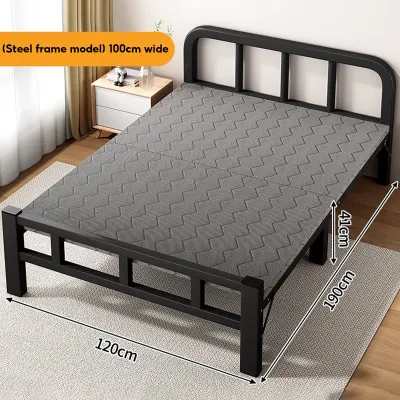







Prices are valid at publication and may change. Please refer to the product page for the latest price.
Do not rely on visual estimates. Use a metal measuring tape to map out the length and width on the floor, marking the boundaries with masking tape to visualize the layout.
Remember to measure the ceiling height as well, especially if you are considering a wall-mounted bed or a unit that folds vertically. Ensure the frame clears light fixtures, air conditioning units, and ceiling fans when in motion.
Next, trace the delivery path from your building’s entrance to the bedroom door. Many homeowners in urban areas face tight corners, narrow stairwells, or small condominium elevators that cannot accommodate bulky, pre-assembled furniture frames.
Measure the width and height of every doorway, hallway turn, and staircase landing along the route. If the foldable bed arrives partially or fully assembled, these clearance checks will prevent the frustration of a delivery that cannot physically enter your home.
Operating clearance is just as critical as the bed’s static footprint. You must calculate the physical space required for a parent or older child to stand, bend, and safely operate the folding mechanism without being pinned against a wall or wardrobe.
Ensure there is a clear path of at least 60 centimeters around the sides of the bed when it is fully deployed. This buffer zone prevents tripping hazards in the middle of the night and allows enough room for making the bed, changing sheets, and vacuuming.
Finally, consider how the room functions when the bed is tucked away. The primary goal of a foldable bed is to reclaim floor space for daytime activities, such as studying or playing.
Ensure that the folded unit does not block access to closets, study desks, or bedroom doors. If the room is shared, verify that unfolding one bed does not trap another sibling in their corner of the room, maintaining a safe and harmonious environment throughout the day and night.
Compare Foldable Bed Types for Compact Layouts
Different foldable bed designs address space constraints in unique ways, making it essential to match the mechanism to your room’s specific layout. Rollaway and trundle-style foldable beds are highly practical for rooms with ample floor space but limited wall area.

These beds typically feature a metal frame that folds in half or slides underneath an existing bed frame. When evaluating these options, check for robust wheel-locking mechanisms to ensure the bed remains stationary when your child moves at night.
Additionally, verify the under-bed clearance to see if it allows for extra storage boxes, which are invaluable in small households.
Wall-mounted beds, often called Murphy beds, and cabinet-style foldable beds offer a highly efficient vertical space-saving solution. These units fold flat against or inside a wall cabinet, completely freeing up the floor during the day.
However, they require careful structural evaluation. You must verify if your bedroom walls are made of solid concrete, brick, or hollow blocks, as heavy wall-mounted frames require secure anchoring into load-bearing structures or studs.
Cabinet beds that rest on the floor but secure to the wall offer an easier installation path while still providing integrated shelving or desk space.
Convertible sofa-beds and futons serve a dual purpose, acting as a cozy seating area during the day and a bed at night. This type is highly popular in multi-functional kids’ rooms, but it comes with trade-offs.
The mattress on a convertible sofa is often thinner and has more seams than a dedicated foldable bed mattress, which can affect sleeping comfort over time.
You must also consider the physical effort required to convert the sofa daily. Some mechanisms are heavy and require adult strength, meaning your child will not be able to tidy their room independently.
Verify Safety Features and Weight Limits for Kids
Safety is a critical priority when selecting furniture for a child’s room, particularly when the item features moving parts, hinges, and heavy frames. Always begin by checking the manufacturer’s stated weight capacity and minimum age recommendations, which are typically found on the product label or in the instruction manual.
Do not guess these limits. A bed designed for occasional guest use by a toddler may not support the active play, jumping, or rapid growth of an older child.
Inspect the physical safety mechanisms of the folding frame with extreme care. Look for heavy-duty locking pins, safety latches, and anti-tip straps that prevent the bed from accidentally folding upward or tipping forward when a child sits or climbs on the outer edge.
Hinge guards are another essential feature, as they cover the pinch points where small fingers can easily get caught during daily operation.
If you are choosing a wall-mounted bed, ensure the counterbalancing gas pistons or spring systems are fully enclosed and operate smoothly without sudden drops.
The mattress support system plays a vital role in both safety and comfort. Examine whether the frame uses solid wooden slats, flexible bentwood slats, or a wire mesh deck.
Solid wooden slats generally provide more even support for a growing child’s spine and are less prone to sagging than wire mesh. Ensure the slats are spaced closely together according to the manufacturer’s guidelines to prevent the mattress from slipping through or wearing out prematurely.
Lastly, run your hands along all exposed edges, corners, and metal joints of the bed frame. In a small room, children are highly likely to bump into furniture during active play.
Choose frames with rounded corners, or plan to install soft corner guards on sharp wooden or metal edges. Any exposed bolts or screws should be recessed or covered with plastic caps to prevent scratches and snagged clothing.
Plan for Installation, Clearance, and Daily Operation
A successful foldable bed setup requires careful planning that extends far beyond the initial purchase. If you select a wall-mounted or heavy cabinet-style bed, you must determine if your DIY skills are sufficient or if professional installation is required.
In the Philippines, many homes feature concrete walls that require specialized masonry drill bits and heavy-duty anchor bolts. Hiring a qualified carpenter or professional installer ensures the unit is anchored securely, eliminating the risk of the bed pulling away from the wall.
Once the bed is installed, establish a strict daily routine for folding and unfolding. Teach your children that the bed is not a toy and that they must keep their hands and feet clear of the hinges and moving joints during transition times.
For younger children, the folding process should always be performed by an adult. Make sure the immediate area is completely clear of toys, books, and electrical cords before lowering or raising the bed to prevent damage to the mechanism or the items themselves.
Bedding management is another practical factor that is easily overlooked. Foldable beds have strict manufacturer limits on mattress thickness, often requiring a profile of 15 centimeters or less to fold properly.
Using a mattress that is too thick can prevent the locking mechanism from engaging, putting dangerous stress on the hinges. Additionally, check if the bed can be folded with the sheets and blankets still attached, or if pillows and heavy duvets must be stored separately in a closet or basket each morning.
Finally, integrate the bed into your regular home maintenance schedule. The constant movement of folding and unfolding will naturally loosen screws, bolts, and brackets over time.
Every few months, inspect all connection points and tighten any loose fittings using the appropriate tools. If your bed uses a hydraulic or spring-assisted mechanism, check for smooth operation and listen for any unusual squeaks or resistance, which may indicate that the hardware needs alignment or lubrication according to the manufacturer’s care instructions.
Frequently Asked Questions (FAQ)
Can a standard mattress be used on a foldable bed frame?
Foldable beds generally require specific mattress dimensions, weights, and thickness limits to ensure the frame can close and lock securely. Standard mattresses, especially thick spring or pillow-top models, are often too bulky and heavy for foldable mechanisms.
Using an incompatible mattress can strain the hinges, damage the locking latches, or prevent the bed from folding flat against the wall or cabinet. Always consult the manufacturer’s specifications for maximum mattress thickness and weight before purchasing a replacement mattress for your foldable bed.
How often should the locking mechanisms be inspected?
You should perform a visual and functional inspection of all locks, latches, hinges, and safety straps every three to four months, or immediately if you notice any instability or unusual noise. Test the locking mechanisms in both the fully open and fully closed positions to ensure they engage completely and securely.
If you observe any bent metal, cracked plastic, loose brackets, or failing latches, stop using the bed immediately and contact the manufacturer or a qualified technician for replacement parts.
Community discussion
Share your experience or ask a question. Comments are reviewed before publication.