
A proper study setup for a child requires more than just a desk and a lamp; the foundation of focused learning lies in the kids chair. To support a child’s physical development and maintain their attention during study sessions, a suitable kids chair must feature precise height and depth adjustability, reliable lumbar support, and a stable footrest. In the warm, humid climate of the Philippines, where study corners can become uncomfortable during afternoon lessons, choosing a chair with breathable materials and easy-to-clean finishes is equally vital.
Investing in an ergonomic chair is not merely about buying furniture; it is an active step in preventing the physical fatigue that leads to restlessness. When a child’s body is poorly supported, their muscles must work continuously to keep them upright, draining the energy needed for reading, writing, and problem-solving. By understanding the key features of an ergonomic setup, parents can create a comfortable, distraction-free environment that grows alongside their child.
Why the Right Kids Chair Matters for Study Focus
The connection between physical comfort and cognitive focus is well-documented in developmental ergonomics. When children sit in chairs designed for adults or basic non-adjustable seats, they often have to compromise their posture to reach the desk. This misalignment forces their bodies into unnatural positions, leading to muscle strain in the neck, shoulders, and lower back. Over a short period, this physical discomfort manifests as fidgeting, squirming, and a general inability to stay on task.
Products mentioned in this guide
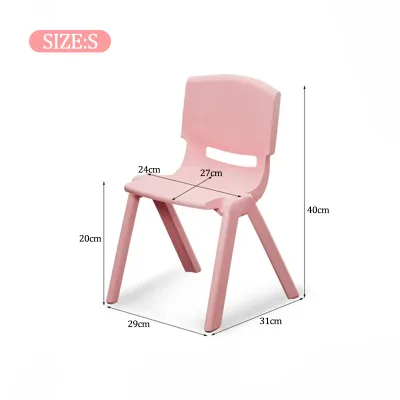
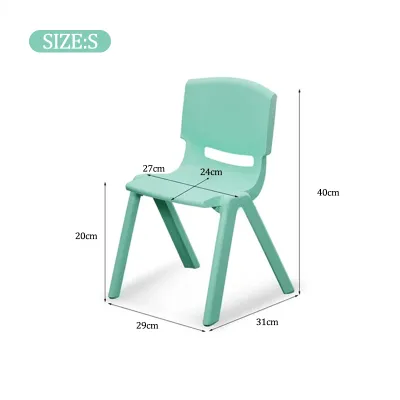
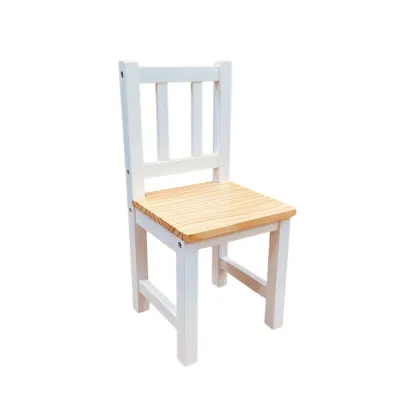
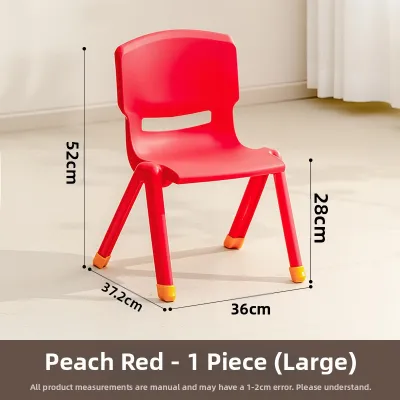
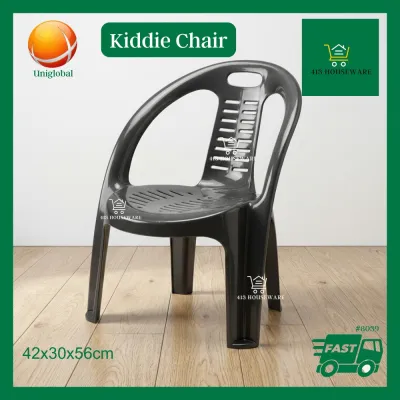

Prices are valid at publication and may change. Please refer to the product page for the latest price.
Fidgeting is often a child’s natural response to restricted circulation or muscle fatigue. If their feet are dangling or their back is unsupported, they will constantly shift their weight to find relief. This continuous movement disrupts their concentration, making simple homework tasks take twice as long. A properly fitted kids chair eliminates these physical distractions by distributing body weight evenly and supporting natural movement.
Establishing a dedicated, comfortable study area also has a psychological benefit. When a child sits in a chair that is specifically proportioned for their body, it signals to their brain that it is time to focus. This transition from playtime to study time becomes easier to manage, helping to build a consistent daily routine. In contrast, studying on a hard dining chair or a soft bed can lead to rapid physical fatigue or sleepiness, undermining their academic efforts.
Furthermore, establishing healthy sitting habits early in life protects a child’s developing skeletal structure. A child’s bones and joints are highly malleable, and prolonged slouching can contribute to long-term postural issues. By providing a dedicated study chair that encourages an upright, relaxed posture, you help your child build core strength and reinforce positive habits that will carry into their teenage and adult years.
Essential Adjustability Features to Accommodate Growth
Children grow at rapid and sometimes unpredictable rates, meaning a static piece of furniture can quickly become uncomfortable or unusable. To ensure a study chair remains a valuable asset over several school years, prioritize comprehensive adjustability features. A highly adjustable chair can be fine-tuned to match your child’s exact proportions at every stage of their growth.

Seat Height and Depth Adjustment
- The 90-90-90 Posture Rule: This foundational ergonomic guideline requires the child's hips, knees, and ankles to all rest at comfortable 90-degree angles, with their feet planted flat on a solid surface. To achieve this, the seat height must be adjustable. When evaluating a kids chair, measure the distance from the floor to the underside of your child's knees (their inseam) and compare this to the chair's minimum and maximum seat height specifications.
- Desk Alignment: The seat height must also allow the child's elbows to rest comfortably on the desk surface at a 90-degree angle without forcing their shoulders to shrug or slouch forward. If the desk is fixed at a standard adult height (typically around 75 centimeters), the chair must be raised higher, which makes a footrest absolutely essential to maintain the 90-90-90 alignment.
- Seat Depth and Circulation: Seat depth refers to the distance from the front edge of the seat cushion to the backrest. If the seat is too deep, the front edge will press firmly against the back of the child's knees (the popliteal area), pinching blood vessels and nerves. This pressure can cause numbness and forces the child to slide forward, leaving their lower back completely unsupported. Look for a chair with a sliding seat pan mechanism that allows you to adjust the depth, leaving a gap of about two to three fingers between the seat edge and the back of your child's knees.
Backrest Height and Tilt Mechanisms
- Independent Backrest Adjustment: As a child's torso elongates, the curve of their spine shifts upward. A quality kids chair should feature a backrest that adjusts vertically, independent of the seat pan. This ensures that the contoured section of the backrest always aligns perfectly with the child's lower back, providing targeted support where it is needed most.
- Safety and Locking Mechanisms: Because children are naturally active, any moving parts on a study chair must be built to withstand daily use. Carefully inspect the locking mechanisms for seat height, seat depth, and backrest height. They should lock securely in place without slipping under weight. Additionally, check that these mechanisms are shielded or designed to prevent small fingers from getting pinched during adjustment.
- Tilt Tension and Dynamic Sitting: While a rigid backrest supports focused writing, a slight recline or flexible tilt mechanism is beneficial during reading or listening tasks. Look for chairs with adjustable tilt tension, which allows the backrest to flex slightly when the child leans back, absorbing spinal pressure. Ensure the tilt can be locked completely upright when it is time for active writing or typing to prevent slouching.
Evaluating Lumbar Support for Healthy Posture
The human spine has a natural inward curve at the lower back, known as the lumbar curve. Without proper support, the muscles in the lower back must work continuously to maintain this curve, leading to rapid fatigue and eventual slouching. Effective lumbar support in a kids chair is critical to maintaining a neutral spine position during study sessions.
When shopping for a kids chair, you will encounter two primary types of lumbar support: fixed ergonomic curves and adjustable lumbar pads. Fixed curves are molded directly into the structure of the backrest. While these can be highly effective, they only work if the child’s height matches the pre-molded curve perfectly. Adjustable lumbar pads, on the other hand, can be slid up or down to target the exact lumbar region of your growing child, offering a more customized and long-lasting fit.
To evaluate the effectiveness of the lumbar support, observe the chair’s side profile. The backrest should feature a gentle S-shape. When your child sits in the chair, the lumbar curve or pad should comfortably fill the small gap between their lower back and the seat back. It should feel supportive and relaxing, not like a hard object aggressively pushing their lower back forward. If the support is too prominent, it will force the child to sit too far forward, rendering the rest of the backrest useless.
It is important to note that material names, such as “high-density memory foam” or “ergonomic mesh,” do not automatically guarantee proper lumbar support. Parents must physically check the firmness of the padding and the tension of the backrest material. A cushion that is too soft will compress completely under weight, offering zero support, while a mesh backrest with weak tension will sag over time. For the tropical climate of the Philippines, a high-tension, breathable mesh backrest is highly recommended to prevent heat buildup and sweating, provided the structural frame maintains its ergonomic shape.
Why a Footrest is Critical for Stability and Comfort
A common mistake when setting up a child’s study area is neglecting the feet. When a child sits in a chair that is raised to match a standard desk, their feet often dangle in the air. This lack of support has immediate negative consequences for their posture and comfort.
Dangling feet pull the child’s pelvis forward, causing them to slide down the seat and slouch. This position places immense pressure on the thighs, constricting blood flow and causing a tingling sensation or “pins and needles.” To relieve this discomfort, the child will naturally begin to fidget, swing their legs, or sit on their feet, all of which compromise their spinal alignment and break their concentration. A stable footrest acts as an anchor, transferring the weight of the legs off the thighs and stabilizing the pelvis.
When choosing a kids chair, look for models with built-in, adjustable footrests. Because your child’s legs will grow longer, the footrest must be easy to lower or remove entirely when they no longer need it. Some high-end ergonomic chairs feature a circular foot ring that attaches to the central cylinder, while others have an integrated platform that extends forward.
Before finalizing your choice, verify the structural integrity of the footrest. Children frequently use the footrest as a step to climb into the chair, meaning it must have a high weight capacity and a stable connection to the frame. Check that the footrest surface features a textured, non-slip grip to prevent feet from sliding off during study sessions. Finally, ensure that the footrest’s design does not interfere with the chair’s base or casters, allowing the chair to remain stable and balanced at all times.
Safety, Stability, and Space Verification Checklist
Before purchasing any kids chair, it is essential to perform a thorough safety, stability, and spatial check. A chair may have excellent ergonomic features, but if it is unstable or does not fit your home environment, it can become a safety hazard or a source of frustration.
- Base and Casters:
- 5-Point Star Base: Ensure the chair features a wide, 5-point star base made of heavy-duty nylon or metal. This design distributes weight evenly and prevents the chair from tipping over when the child leans sideways or reaches for a book.
- Weight-Activated Caster Locks: For younger children, look for chairs equipped with gravity-locked or weight-activated casters. These casters roll freely when the chair is empty, making it easy to move, but lock securely in place as soon as the child sits down. This prevents the chair from rolling backward when the child is trying to sit or focus.
- Manual Caster Locks: If weight-activated casters are not available, verify if the casters have manual lock switches on each wheel to keep the chair stationary during study hours.
- Space and Clearance:
- Floor Space: Measure the designated study area in your home, keeping in mind that ergonomic chairs often have wider bases than standard dining chairs. Ensure there is enough room for the chair to slide out easily.
- Desk Clearance: Measure the height of the desk's underside, especially if it has drawers or a keyboard tray. Verify that the chair's armrests can slide completely under the desk when not in use to save space.
- Doorway and Stairway Access: Check the dimensions of your doorways, hallways, and stairwells. Ensure that the packaged box or the fully assembled chair can easily pass through these spaces without damaging walls or furniture.
- Materials and Finishes:
- Breathability and Cleaning: In the humid Philippine climate, spills and sweat are inevitable. Look for materials that are easy to wipe clean, such as high-grade polyurethane (PU) leather or removable, washable fabric seat covers. If choosing mesh, ensure it is woven tightly to prevent dust and food crumbs from getting trapped.
- Rounded Edges: Inspect the chair's frame, armrests, and base for sharp edges or rough plastic seams. All corners should be smoothly rounded to prevent scratches or bruises.
- Manufacturer Specifications: Always check the manufacturer's official product label for the maximum weight capacity, recommended height range, and specific care instructions. Avoid relying solely on marketing claims of "heavy-duty" durability; instead, verify the structural materials used in the frame and base.
Recommended Kids Chair Types Based on Study Needs
To help you navigate the wide variety of options available on local online marketplaces and furniture stores, we have categorized the most common kids chair types based on their features, benefits, and trade-offs.
Fully Adjustable Ergonomic Study Chairs
These specialized chairs are engineered specifically for growing children and offer the highest level of physical support. They feature comprehensive adjustment mechanisms, including independent seat height, seat depth, backrest height, and an integrated, adjustable footrest.
- Best For: Children aged 5 to 12 who spend extended periods at their desks for online classes, reading, or homework, and whose bodies are changing rapidly.
- Key Specifications to Verify: Look for a minimum seat height of around 35 centimeters, a weight capacity of at least 80 kilograms, and a sturdy 5-point star base.
- Trade-offs: These chairs carry a higher price point, typically ranging from ₱5,000 to over ₱12,000. They also have a larger physical footprint, making them less suitable for tight study corners, and require careful, step-by-step assembly. Always check the maximum weight and height limits to ensure the chair will accommodate your child for several years.
Basic Height-Adjustable Task Chairs
These are scaled-down versions of standard office chairs, featuring a pneumatic gas lift for height adjustment, a swiveling base, and a fixed, gently curved backrest.
- Best For: Older children, teenagers, or shorter study sessions where complex adjustments are less critical. They are excellent space-saving options for compact bedrooms.
- Key Specifications to Verify: Ensure the gas lift is certified (such as SGS or BIFMA) for safety. Check if the minimum seat height matches your child's inseam.
- Trade-offs: They generally lack seat depth adjustment and integrated footrests. If purchased for a younger child, you must pair the chair with a separate, standalone desk footrest to ensure their feet are supported. Additionally, the swivel mechanism can sometimes be a distraction for younger kids who may use the chair as a toy.
Fixed-Height Chairs with Add-on Accessories
This category includes standard wooden or plastic high chairs, student chairs, or dining chairs that are adapted for study use through the addition of aftermarket ergonomic cushions and footstools.
- Best For: Multi-purpose spaces where the study chair must also serve as a dining chair or craft seat, or for families on a strict budget.
- Key Specifications to Verify: Check the stability of the chair joints and verify that any added cushions have non-slip backings or secure straps to prevent sliding.
- Trade-offs: This setup requires constant manual adjustments as your child grows and lacks dynamic spinal support. Cushions can slide around, causing discomfort and distraction, and the lack of integrated ergonomic features means it is not ideal for long, focused study sessions.
Frequently Asked Questions (FAQ)
At what age should a child transition to an adult study chair?
The transition from a kids chair to an adult study chair should be determined by your child’s physical dimensions rather than a specific age. As a general rule, a child is ready for an adult chair when their height allows them to sit fully back against the backrest with their feet resting flat on the floor, without the front edge of the seat pressing into the back of their knees.
You can verify this readiness using the 90-90-90 posture rule. If the adult chair’s minimum seat height is still too high for your child’s feet to touch the floor, or if the seat depth forces them to slouch to get back support, they should continue using a dedicated kids chair or an adjustable footrest.
Are gaming chairs suitable for kids' study setups?
While gaming chairs are popular among older kids and teenagers, they are generally not ideal for focused academic work. Most gaming chairs feature a bucket-seat design inspired by race cars, which curves the shoulders forward and encourages a relaxed, slightly reclined posture. This design conflicts with the upright, forward-leaning posture required for writing, drawing, and reading at a study desk.
Additionally, many standard gaming chairs lack the precise seat depth adjustment and integrated footrests needed to support younger, smaller bodies. For a proper study setup, a dedicated ergonomic kids chair that prioritizes upright spinal alignment and physical stability is a far more effective choice.
Community discussion
Share your experience or ask a question. Comments are reviewed before publication.