
Hosting large family gatherings in a compact home often feels like a balancing act. You want to accommodate everyone comfortably, yet a massive piece of furniture will permanently crowd your daily living area. Finding a light dining table that expands for special occasions allows you to maximize your space without sacrificing hospitality.
By focusing on smart dimensions, visual design, and robust extension mechanisms, you can select a versatile table that serves your daily needs and easily scales up when guests arrive. This guide breaks down the essential factors to consider when choosing a highly functional, space-saving dining table.
Assess Your Dining Space and Seating Requirements
Before browsing designs, you must establish the physical boundaries of your dining area. Compact homes, such as apartments, condominiums, and townhouses in the Philippines, often feature open-plan layouts where the dining zone transitions directly into the living room or kitchen. Accurate measurements prevent you from buying a table that blocks natural traffic paths.
Products mentioned in this guide
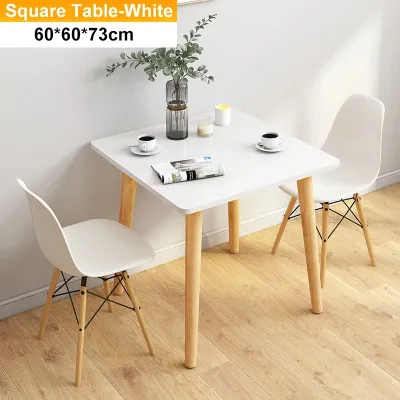
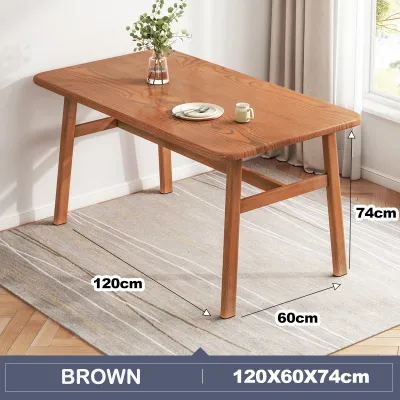
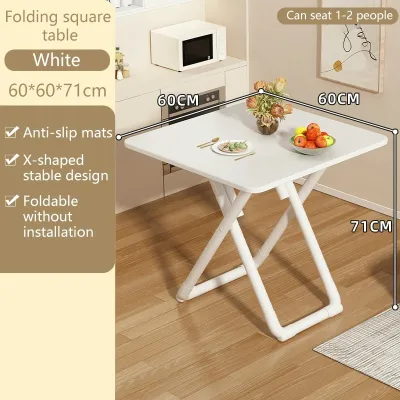
Prices are valid at publication and may change. Please refer to the product page for the latest price.
Start by measuring the available floor space with a tape measure. As a rule of thumb, you need 60 to 90 centimeters of clearance between the edge of the table and the nearest wall, kitchen island, or piece of furniture. This clearance allows family members to pull out their chairs and sit down comfortably without blocking walkways.
Next, define your daily seating needs versus your maximum hosting capacity. If your household consists of four to six people daily, your base table should comfortably accommodate this number without extension. Choosing a base table that is too large permanently wastes valuable floor space. The extension feature should only be utilized when expanding the seating capacity to eight or ten guests.
In tight layouts, pay close attention to structural transitions. If your dining area sits adjacent to a hallway or a kitchen island, ensure the extended table does not impede the opening of refrigerator doors, cabinets, or main entryways. A physical mock-up using painter’s tape on the floor can help you visualize how the extended table will impact daily movement.
Evaluate Physical and Visual Weight for a Light Dining Table
To keep a small room feeling open and airy, your chosen furniture must minimize both physical and visual weight. A heavy, bulky table anchors the room too intensely, making the entire space feel smaller and more cramped than it actually is.

Physical Weight and Mobility
A lightweight table is highly practical for flexible living. You will frequently need to slide, reposition, or turn the table when preparing to extend it for guests or when cleaning the floors. Heavy solid timber or stone tables are difficult to move without assistance and can scratch delicate flooring.
To ensure easy mobility, evaluate the structural materials of the table:
- Aluminum Frames: Powder-coated aluminum offers exceptional structural strength while remaining incredibly light and resistant to rust in humid environments.
- Engineered Wood: High-quality medium-density fiberboard (MDF) or plywood with natural wood veneers provides the warm look of solid wood at a fraction of the weight.
- Slender Solid Wood: If you prefer solid timber, look for designs utilizing lightweight species or slender, tapered cuts rather than thick, heavy planks.
Visual Weight and Openness
Visual weight refers to how much attention an object demands in a room. A table with high visual weight dominates the view, whereas a visually light table allows the eye to travel through and around it, creating an illusion of spaciousness.
To achieve a visually light aesthetic, look for these design features:
- Slim, Tapered Legs: Thin legs that taper toward the floor reduce visual clutter and maximize under-table clearance.
- Pedestal Bases: A central pedestal base eliminates corner legs, offering a clean look and preventing guests from bumping their knees.
- Glass or Light-Colored Tops: Tempered glass tops allow you to see the floor underneath, while light finishes like ash, white oak, or soft laminates reflect light to brighten the room.
What to Avoid
Avoid tables with deep, thick aprons (the wooden frame directly beneath the tabletop) as they block light and restrict legroom. Similarly, steer clear of dark, chunky rustic finishes and oversized block legs. These design elements visually anchor the table, making a small dining zone feel dark and congested.
Inspect Extension Mechanisms for Tight Spaces
An extendable table is only as good as its mechanism. In tight spaces, the way a table expands and how the extra pieces are stored can make a significant difference in daily convenience.
Self-Storing Mechanisms
For compact homes, self-storing extension mechanisms are highly recommended. These designs store the extra leaves directly inside the table frame, saving you from finding storage space elsewhere.
- Butterfly Leaves: This popular style features a central jointed leaf that folds in half and rotates down into a hidden compartment beneath the tabletop. It is incredibly convenient and can be operated by a single person.
- Drop-Leaf Tables: These tables feature hinged panels on the sides that hang down when not in use. While highly space-efficient, they may have visible seams and a slightly less seamless look when fully extended.
Removable Leaves
Traditional extendable tables use separate leaves that must be inserted into the center of the table when pulled apart. While effective, these leaves require external storage in a closet, under a bed, or behind a sofa. In smaller homes, storing these large panels safely without exposing them to warping from tropical humidity can be highly inconvenient.
Clearance and Operation
Before purchasing, verify how much physical effort and space are required to operate the extension. Some mechanisms require you to pull both ends of the table outward, which means you need ample clearance on both sides of the room during the transition. Look for smooth, ball-bearing glides that allow a single person to extend the table effortlessly without jerking or scraping the floor.
Verify Stability and Surface Durability
Because a lightweight table uses less material mass, you must carefully inspect its construction to ensure it remains stable and durable, especially when fully extended to host a large dinner party.
Stability and Joint Strength
A physically light table must not feel flimsy or wobble when loaded with serving dishes. When examining a table, check the underside construction and the joints connecting the legs to the tabletop. Look for robust metal corner brackets, secure locking latches for the extension leaves, and solid dowel or mortise-and-tenon joinery. Avoid tables that wobble or flex when you apply downward pressure to the extended edges.
Surface Durability and Finish
Your dining table will host hot dishes, condensation-heavy cold drinks, and daily spills. In a humid tropical climate, protecting the tabletop surface is crucial. Rather than assuming durability based on the material name, always verify the manufacturer’s care instructions and finish specifications.
- Veneer and Laminate: Ensure the edges are tightly sealed to prevent moisture from entering and causing the underlying wood to swell.
- Solid Wood Finishes: Look for protective polyurethane or lacquer coatings that resist water rings and heat marks.
- Tempered Glass: Ensure the glass is rated as tempered for safety, which resists shattering and thermal shock from hot serving plates.
Floor Protection
Because lightweight tables are easily moved, they can cause friction wear on your floors over time. To prevent scratches on tiles, vinyl, or engineered wood, apply heavy-duty felt pads to the bottom of the table legs. If you plan to keep the table extended frequently, placing a thin, low-pile area rug underneath can help distribute the weight and protect your flooring from scuffs.
Pre-Purchase Measurement and Clearance Checklist
To ensure your new table fits your home perfectly and arrives without any logistical issues, use this quick checklist before finalizing your purchase:
- Collapsed Dimensions: Confirm the table fits comfortably in your daily layout, leaving 60 to 90 centimeters of clearance on all sides for chairs and walkways.
- Extended Dimensions: Verify that the fully extended table fits within your dining area without blocking essential pathways, doors, or adjacent living zones.
- Physical Weight: Check the product specifications for the total weight to ensure you can easily move and extend the table without straining.
- Delivery and Packaging Dimensions: Measure your apartment doorways, elevator doors, ceiling height, and any narrow stairwells. Ensure the packaged box can safely navigate these tight spaces during delivery.
- Seating Compatibility: Measure the width of your existing dining chairs to ensure they can slide fully under the table when collapsed, preventing them from sticking out into the room.
Frequently Asked Questions (FAQ)
Can a lightweight table support heavy dishes for 10 people?
Yes, a physically light table can easily support heavy serving dishes if it features high-quality construction. Structural integrity depends on engineering rather than sheer weight. Look for tables with reinforced aluminum or steel sub-frames, robust leg joints, and secure locking mechanisms that prevent the center from sagging under load. Always check the manufacturer’s specified maximum weight capacity before purchasing.
What is the best table shape for a small dining room?
For narrow or rectangular dining areas, a rectangular or oblong table is highly efficient as it aligns with the room’s natural lines. If your space is square or serves as a multi-directional walkway, a round or oval table is often the better choice. Round tables facilitate smoother traffic flow because they lack sharp corners, making it easier to squeeze in extra chairs when the table is fully extended.
Community discussion
Share your experience or ask a question. Comments are reviewed before publication.