
Maximizing floor space in a compact bedroom requires smart furniture choices, and a loft bed with an integrated stair cabinet is one of the most effective solutions. By combining elevated sleeping areas with built-in storage, these pieces free up valuable square footage for workspaces, study areas, or lounging. However, selecting the right configuration involves more than just finding an appealing design. This guide outlines the critical dimensions, safety checks, and structural evaluations you need to make an informed purchase from online furniture stores, ensuring the piece fits your room and meets your daily needs in the Philippines.
Key Dimensions and Space Requirements
When planning to install a loftbed with stairs cabinet, the first and most critical step is taking precise measurements of your bedroom. Unlike standard beds, a loft bed utilizes vertical space, which introduces ceiling height as a primary constraint. To ensure comfortable use, you must calculate the clearance between the top of the mattress and your ceiling. Ideally, there should be at least 80 to 90 centimeters of headroom. This allows an adult or teenager to sit up straight in bed without bumping their head. Remember to factor in the thickness of your mattress when making this calculation; a thick spring mattress will reduce your overhead clearance far more than a slim foam mattress.
Beyond vertical clearance, you must measure the total floor footprint of the unit. A loft bed with a stair cabinet requires more floor space than a model with a vertical ladder. The stair extension typically adds significant length or width to the bed frame, depending on whether the stairs are positioned at the end or the side of the bed. You must map out this entire footprint on your bedroom floor using painter’s tape to visualize how much space remains for movement.
Products mentioned in this guide
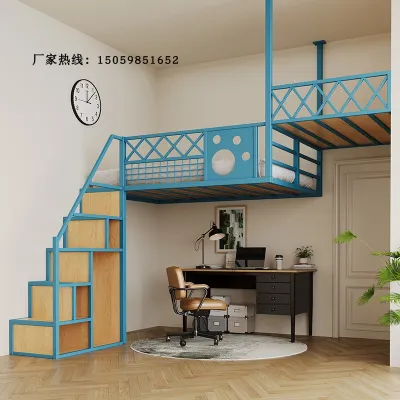
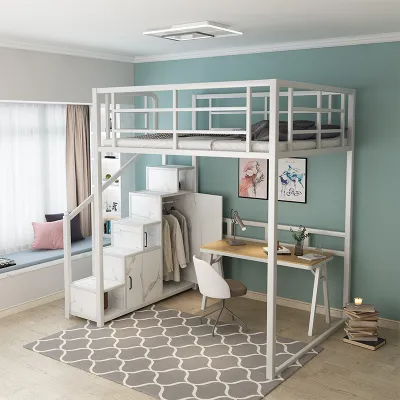
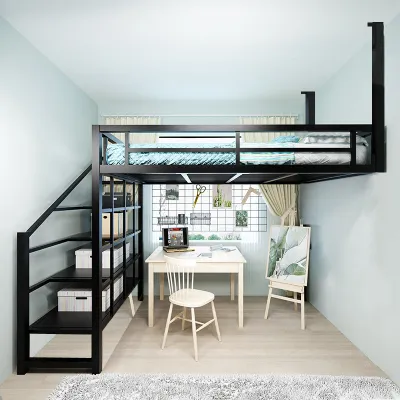
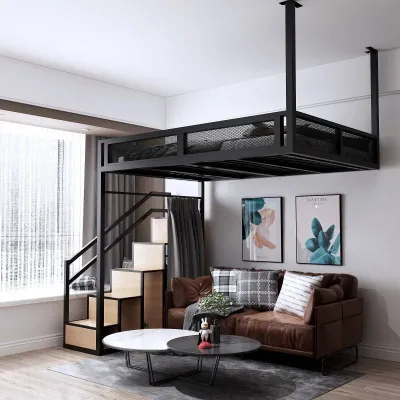
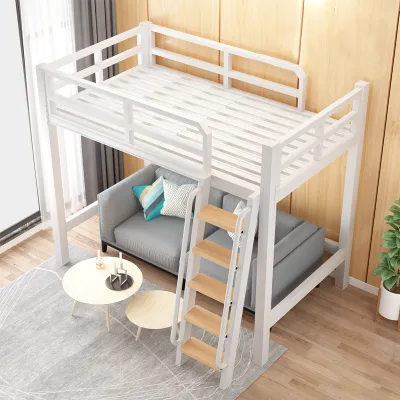
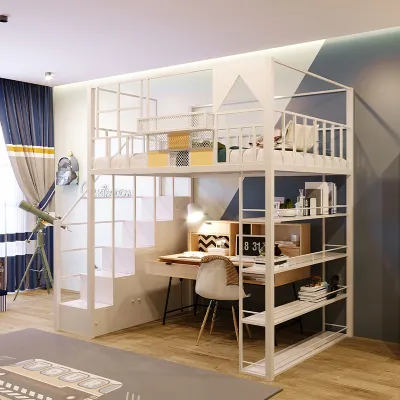
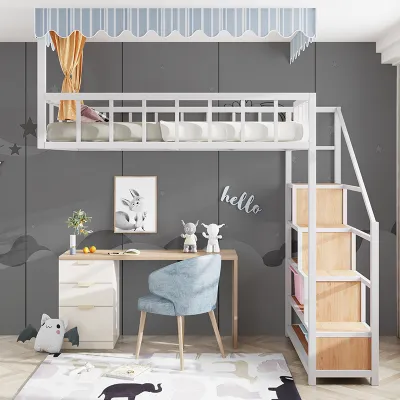
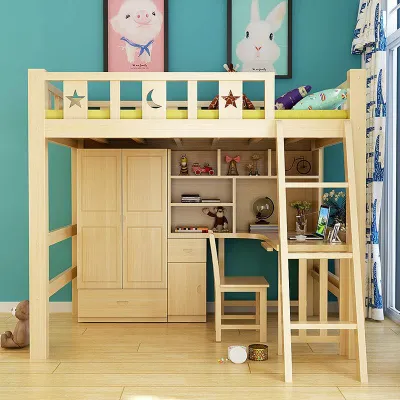
Prices are valid at publication and may change. Please refer to the product page for the latest price.
Furthermore, you must account for the clearance needed to fully open any drawers, cabinet doors, or shelving built into the stairs. If the stair cabinet faces outward, ensure there is enough clearance in front of the steps so you can access the storage without squeezing against walls or other furniture. A drawer that cannot open fully due to a nearby wardrobe or desk defeats the purpose of choosing a multi-functional storage bed.
Finally, do not overlook the logistics of delivery and assembly. Many loft beds are delivered flat-packed in large, heavy boxes. You must verify the dimensions of your doorways, hallways, stairwells, and especially condo elevators. If the largest unassembled panels cannot clear a tight turn in your hallway or fit inside the elevator, getting the furniture into your bedroom will become an incredibly difficult task. Always request the packaging dimensions from the seller before finalizing your purchase.
Evaluating Storage Capacity and Stair Design
The primary appeal of a loftbed with stairs cabinet is the dual-purpose nature of the steps. To get the most value out of this design, you must carefully evaluate the usability and safety of the stairs themselves. Start by checking the stair tread depth and the rise height of each step. The tread—the flat surface you step on—should be deep enough to accommodate a foot securely, minimizing the risk of slipping when climbing down in the dark. The rise—the vertical height between steps—should be uniform and comfortable to climb without requiring excessive effort.

Next, examine the configuration of the storage compartments within the stairs. Some designs feature pull-out drawers on metal glides, while others use cabinet doors that swing open, or even open cubbies. Drawers are excellent for keeping clothes, socks, or bed linens organized and dust-free. Open cubbies, on the other hand, offer quick access to books, toys, or decorative items but may require more frequent dusting in tropical environments.
You must also compare the internal storage dimensions with the external footprint of the stair unit. Sometimes, thick wooden frames or poorly designed drawer boxes eat up a significant amount of the internal space, leaving you with surprisingly shallow drawers. Look for product specifications that detail the inner drawer dimensions rather than just the outer cabinet measurements. This ensures you know exactly how much usable volume you are getting for your storage needs.
Additionally, consider the layout of the under-bed space. A loft bed frees up a large area directly beneath the mattress foundation. Depending on your needs, this space can be used to house a study desk, a small sofa, or additional wardrobe cabinets. If you plan to place a desk underneath, ensure the height of the bed frame allows for comfortable seating and adequate lighting. If you plan to use it for a wardrobe, verify that the wardrobe doors can open fully without interfering with the bed’s support posts or the stair cabinet.
Material, Durability, and Weight Limits
Because a loft bed elevates a sleeper high above the floor, structural integrity is paramount. You must look past generic marketing terms like “heavy-duty” or “premium quality” and focus on verifiable material specifications. Start by checking the manufacturer’s stated weight limits. It is crucial to distinguish between static weight capacity—the weight of the mattress and bedding resting stationary on the frame—and dynamic weight capacity, which accounts for the active movement of the user climbing up and down.
The choice of material plays a significant role in the bed’s long-term durability. Solid wood frames, such as those made from rubberwood, pine, or hardwood, generally offer excellent stability and can withstand being disassembled and reassembled if you move house. Engineered wood, such as medium-density fiberboard (MDF) or particleboard, is a common and budget-friendly alternative. If choosing engineered wood, ensure it features a high-density core and is sealed with a thick, water-resistant laminate or veneer to protect it from moisture absorption.
Examine the structural indicators in the product descriptions. High-quality loft beds utilize metal-on-metal connection hardware, such as barrel nuts and bolts, rather than simple wood screws that can strip the wood over time. Look for frames that include robust corner brackets and a center support beam if the bed is wider than a standard single size. The thickness of the support posts is another reliable indicator of stability; thicker posts provide a sturdier foundation that minimizes swaying.
Finally, review the surface finish specifications and care instructions. In the Philippines, furniture is exposed to high humidity and temperature fluctuations, which can affect wood and finishes. A durable polyurethane coating or a high-pressure laminate finish will protect the underlying material from moisture, scratches, and daily wear. Ensure the finish is easy to clean with a simple dry or slightly damp microfiber cloth, avoiding the need for harsh chemical cleaners that can degrade the protective seal.
Safety Features and Installation Checks
Safety should be your top priority when selecting and installing a loft bed. Begin by verifying the height of the guardrails on the top bunk. To prevent accidental falls, the guardrails must extend at least 12 to 15 centimeters above the top surface of the mattress. This means you must select a mattress that is thin enough to maintain this safety margin. If you use a mattress that is too thick, the effective height of the guardrail is compromised, posing a serious safety hazard.
The spacing between the guardrail slats is another critical safety check. Ensure the gaps between the slats or spindles are narrow enough to prevent a child’s head or limbs from getting caught. Standard safety guidelines generally recommend that gaps be no wider than 9.5 centimeters. Additionally, check that the stairs have a sturdy handrail or deep, easy-to-grip side panels to provide support as the user ascends and descends.
Because loft beds are tall and top-heavy, they present a potential tip-over hazard if not properly secured. You must check if the product includes an anti-tip kit or wall-anchoring hardware. Anchoring the bed frame directly to the wall is highly recommended, especially in areas prone to seismic activity or if the bed will be used by active children. If your bedroom has concrete walls, which are common in Philippine homes, you will need to use appropriate masonry wall plugs and a hammer drill to secure the anchors safely.
Lastly, assess your bedroom floor’s levelness. An uneven floor can cause a tall loft bed to wobble, putting uneven stress on the joints and compromising its structural integrity. Use a spirit level to check the floor where the bed will stand. If the floor is slightly uneven, you may need to use heavy-duty furniture shims or look for a loft bed model that features adjustable leveling feet to ensure a perfectly stable and safe setup.
Building Your Condition-Based Shortlist
To narrow down your options and find the perfect loft bed with a stairs cabinet, you should use a conditional decision framework based on your specific room constraints and lifestyle needs.
If your bedroom has a limited ceiling height (under 2.4 meters), you should prioritize low-loft profiles. These models typically stand around 120 to 140 centimeters tall, providing a safer distance from the ceiling while still offering valuable storage space underneath. For these setups, look for shallower stair cabinets with fewer steps, which naturally take up less floor space and keep the overall profile compact.
If your floor space is extremely tight and every centimeter counts, look for models that offer reversible stair placement. This feature allows you to install the stair cabinet on either the left or the right side of the bed frame during assembly, giving you the flexibility to adapt the bed to your room’s specific layout. Additionally, seek out flush-mount drawer designs or sliding cabinet doors on the stairs, as these do not require extra clearance to pull open, keeping your walkways clear.
If you require heavy-duty storage for heavy books, school supplies, or thick winter blankets, you must verify the structural reinforcement of the storage components. Look for stair cabinets that feature solid wood steps and drawers equipped with heavy-duty metal drawer glides. Avoid models that rely on thin fabric bins or flimsy plastic runners, as these will quickly sag or break under the weight of heavy items.
If you plan to set up a dedicated study or work area beneath the bed, prioritize high-loft models that offer a clear under-bed height of at least 140 centimeters. This ensures that an adult or teenager can sit comfortably at a desk without feeling cramped. Look for configurations that leave the under-bed space completely open, allowing you to place a freestanding desk and chair of your choice, rather than being locked into a pre-installed desk that may not fit your ergonomic needs.
Frequently Asked Questions (FAQ)
Can I assemble a loft bed with stairs by myself?
Assembling a loft bed with a stair cabinet is a complex task that typically requires at least two people. Because of the size and weight of the solid wood or engineered wood panels, attempting to lift and align the upper frame components alone can be dangerous and may lead to damaged parts or personal injury. You will need basic tools such as a rubber mallet, a spirit level, a measuring tape, and a set of screwdrivers or Allen keys. If you are not confident in your DIY skills, it is highly recommended to hire a professional assembly service to ensure the bed is structurally sound and safely anchored to your wall.
Are loft beds with stairs safe for young children?
Standard safety guidelines recommend that loft beds and top bunks only be used by children who are six years of age or older. Children under this age may lack the coordination and judgment needed to safely navigate the elevated platform and stairs, especially during the night. Even with a stair cabinet, which is inherently safer and easier to climb than a vertical ladder, parental supervision is essential. You should establish clear rules against playing, jumping, or roughhousing on the stairs or the top loft area, and ensure the pathway to the stairs is kept completely clear of toys and clutter.
How do I maintain the finish in a humid climate?
In the humid tropical climate of the Philippines, protecting your wooden furniture from moisture is essential to prevent warping, mold, and rust on metal hardware. Avoid using wet cloths or harsh chemical cleaners to wipe down the bed; instead, use a dry or slightly damp microfiber cloth for routine dusting. To control indoor humidity, ensure your bedroom has adequate ventilation, or consider using a dehumidifier or placing moisture-absorbing silica gel packs inside the stair drawers. Periodically check all metal joints, screws, and drawer glides for any signs of rust or loosening, and tighten them as needed to maintain structural stability.
Community discussion
Share your experience or ask a question. Comments are reviewed before publication.