
Finding the right microwave cabinet requires balancing physical dimensions, ventilation clearances, material durability, and weight capacities. A hasty purchase can lead to an appliance that does not fit, a cabinet that warps under tropical humidity, or a safety hazard due to restricted airflow. To make an informed decision, you must evaluate how the cabinet interacts with your appliance, your kitchen’s layout, and your daily cooking habits.
Measure Your Microwave and Kitchen Space First
Before browsing online marketplaces or local furniture showrooms, you must gather precise physical measurements. Do not rely on the nominal volume (such as 20 liters or 30 liters) listed on your microwave’s box, as these figures refer to internal capacity rather than external dimensions.
Tools needed: Keep a steel measuring tape and your microwave’s original user manual close at hand. While the tape measure provides the physical footprint, the manual contains critical manufacturer-specified clearance requirements that are essential for safe operation.
Products mentioned in this guide
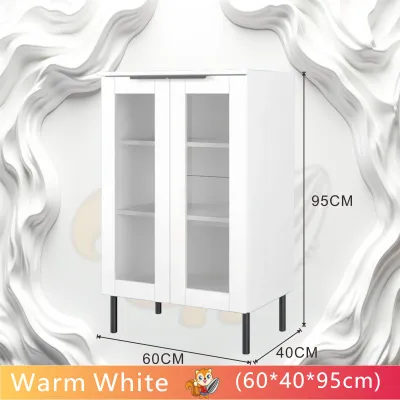
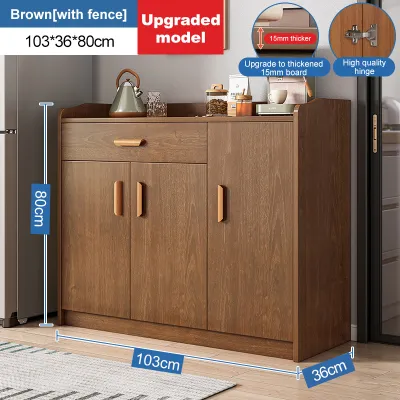

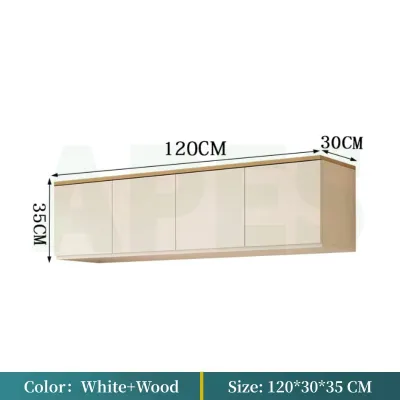
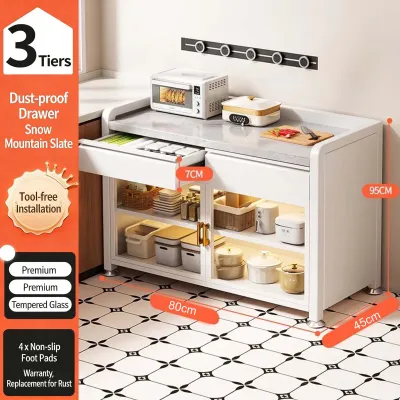
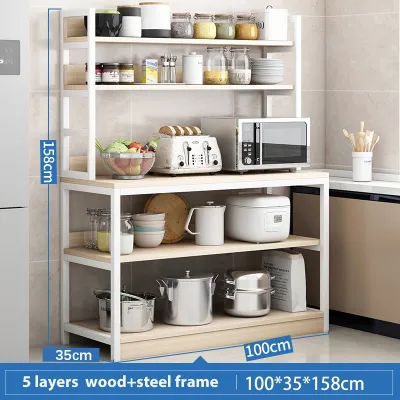
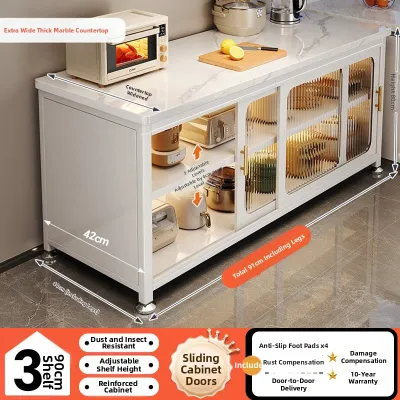
Prices are valid at publication and may change. Please refer to the product page for the latest price.
Appliance measurements: Use the steel tape to measure the absolute widest, deepest, and tallest points of your microwave. Ensure you measure from the outermost edges, including any protruding control knobs, handle bars, and the rubber feet at the base. Crucially, measure the depth with the power cord plugged into the back, as the plug head can add an extra 3 to 5 centimeters of required depth that is easily overlooked.
Space assessment: Next, turn your attention to the designated spot in your kitchen. Measure the available floor width, depth, and height, taking into account any baseboards, wall moldings, or backsplash tiles that might prevent the cabinet from sitting flush against the wall. If you plan to place the cabinet next to a refrigerator, wall, or doorway, check that there is sufficient clearance for both the cabinet doors and the microwave door to swing open fully without obstruction.
Delivery and assembly checks: If you are purchasing a fully assembled cabinet or a heavy unit with large, rigid panels, you must map out its path into your home. Measure the width and height of your main entryways, interior hallways, stairwells, and elevator doors. In compact urban apartments or multi-story homes, narrow corridors and tight stair turns frequently present logistical challenges during delivery.
Match Internal Dimensions, Clearances, and Weight Limits
Once you have your appliance and space measurements, you can begin comparing them against cabinet specifications. However, a common mistake is matching the microwave’s exterior dimensions directly to the cabinet’s exterior dimensions.

Internal vs. external dimensions: Always look for the internal shelf dimensions in the product description. A cabinet with an external width of 60 centimeters may only have an internal shelf width of 56 centimeters due to the thickness of the side panels, supporting pillars, or door hinges. Ensure the usable shelf depth and width comfortably exceed your microwave’s physical footprint.
Ventilation clearances: Microwaves generate significant heat during operation, which must escape to prevent the magnetron and internal circuitry from overheating. Consult your microwave’s manual for the required air gaps—typically, manufacturers recommend at least 5 to 10 centimeters of free space on the sides and back, and up to 20 centimeters of open space above the unit. Ensure the cabinet’s shelf height and width accommodate these safety margins.
Weight capacity verification: Microwaves are dense, heavy appliances. A standard solo microwave can weigh between 10 to 15 kilograms, while larger convection or grill models can easily exceed 20 to 25 kilograms. Verify the cabinet manufacturer’s load rating specifically for the microwave shelf, ensuring it features a safe working load that comfortably exceeds your appliance’s weight to prevent bowing or structural failure over time.
Shelf configuration: Consider whether the cabinet features adjustable shelves or a fixed-height compartment. Adjustable shelves allow you to customize the vertical space, which is highly beneficial if you decide to upgrade to a larger microwave or a multi-functional oven in the future. Fixed shelves offer high structural rigidity but limit your future appliance options.
Inspect Build Quality, Finishes, and Stability
A microwave cabinet must withstand a demanding environment characterized by heat, steam, and daily physical use. Evaluating the structural integrity and surface finishes of the unit is crucial for long-term durability.
Surface treatments and edges: In tropical climates, high humidity and ambient moisture can cause low-grade, untreated manufactured wood to swell, warp, or delaminate. Look for cabinets finished with water-resistant laminates, melamine coatings, or protective polyurethane sealants. Inspect the edge banding closely; fully sealed PVC or ABS edges prevent moisture from entering the core material during humid days or when wiping down spills.
Frame and joinery: Examine how the cabinet panels are joined together. High-quality units utilize metal brackets, dowels, or heavy-duty cam lock systems rather than simple thin nails or glue. Shake the display model or check customer photos to ensure the frame does not wobble when lateral pressure is applied, as a shaky frame will compromise safety when opening and closing a heavy microwave door.
Stability and tipping risks: Tall, pantry-style cabinets with a high center of gravity present a serious tipping hazard, especially when loaded with a heavy microwave on an upper shelf. Prioritize units that come with anti-tip wall anchoring hardware, or plan to purchase a separate anchor kit to secure the cabinet to your kitchen wall. A wide, weighted base is also essential for maintaining balance when cabinet doors or drawers are pulled open.
Casters and locking mechanisms: If you opt for a mobile microwave cart, the quality of the wheels is paramount. Look for heavy-duty, industrial-grade casters made of polyurethane or thick rubber rather than cheap, brittle plastic. At least two of the casters must feature robust, easy-to-engage locking brakes to ensure the cart remains completely stationary when you press the microwave’s control panel buttons or pull the door handle.
Evaluate Power Access, Airflow, and Storage Features
A functional microwave cabinet must integrate seamlessly with your kitchen’s utility setup, ensuring safe electrical connections and efficient storage organization.
Power outlet proximity: Microwaves pull high electrical currents, typically ranging from 800 to 1,500 watts, and must be plugged directly into a grounded wall outlet. Because microwave power cords are relatively short—often around 1 meter—you must position the cabinet close enough to an outlet to avoid using extension cords, which can overheat and pose a fire risk.
Cable management features: Look for cabinets equipped with pre-drilled grommet holes, back-panel cutouts, or integrated cord channels. These design features allow you to route the thick power cable neatly to the outlet without pinching the wire against the wall or allowing it to come into contact with the hot back panel of the microwave.
Heat dissipation design: To facilitate passive cooling, prioritize cabinets with open-back designs, slatted rear panels, or wire-mesh backings. If the cabinet has a solid back panel, ensure it features large ventilation cutouts directly behind the microwave’s exhaust vents to prevent hot air from becoming trapped inside the compartment.
Supplementary storage: Maximize your kitchen’s efficiency by choosing a cabinet that offers smart storage solutions. Lower drawers are excellent for heavy pots and pans, while adjustable shelves can hold dinnerware or pantry items. Some models feature side hooks for oven mitts, pull-out wire baskets for onions and garlic, or dedicated spice racks, helping clear clutter from your main kitchen countertops.
Run a Final Pre-Purchase Verification Checklist
Before finalizing your purchase at an online furniture store or local retailer, run through this quick checklist to ensure the cabinet meets all safety and functional requirements.
- Dimension check: Double-check that the internal width, depth, and height of the microwave shelf are larger than your appliance's physical dimensions, leaving at least 5 to 10 centimeters of clearance on all sides for proper ventilation.
- Load check: Confirm that the manufacturer's specified weight capacity for the main shelf is higher than your microwave's actual weight.
- Clearance check: Ensure the cabinet's intended location is situated at a safe distance from major heat sources like gas stoves or ovens, and away from direct water splashes from the kitchen sink.
- Retailer verification: Review the seller's return policy, warranty coverage, and assembly instructions. If the cabinet arrives flat-packed, verify if you have the necessary tools (such as a screwdriver or rubber mallet) or if the retailer offers an optional professional assembly service.
Frequently Asked Questions (FAQ)
Can I place a countertop microwave inside a closed cabinet?
No, you should not place a standard countertop microwave inside a closed cabinet with solid doors unless the doors remain fully open during operation. Countertop microwaves rely on passive airflow to dissipate heat from their side, rear, or top vents. Operating the appliance in a fully sealed enclosure traps heat and steam, which can damage the microwave’s internal components, warp the cabinet material, or create a serious fire hazard. If you prefer a hidden look, ensure the cabinet features active mechanical ventilation or a slide-out shelf that extends fully during use.
How do I prevent a mobile microwave cart from tipping over?
To prevent a mobile microwave cart from tipping, always distribute the weight strategically by placing the heaviest items on the lowest shelves. Store heavy items like bags of rice, cast-iron pans, or small kitchen appliances at the bottom to lower the cart’s center of gravity. Additionally, ensure the caster brakes are firmly locked whenever the microwave is in use, and avoid pulling or pushing the cart from the very top shelf, especially when navigating uneven floor transitions or thresholds.
Community discussion
Share your experience or ask a question. Comments are reviewed before publication.