
Finding a minimalist dressing table that fits a small bedroom without sacrificing storage requires balancing a compact physical footprint with highly efficient design solutions. In space-constrained homes, such as urban condominiums or townhouses, every square meter of floor space is valuable. A bulky vanity can quickly make a bedroom feel cramped, while a table without adequate storage leads to cluttered surfaces that disrupt the clean, minimalist aesthetic. By focusing on smart design configurations, precise spatial planning, and appropriate material choices, you can create a highly functional grooming station that enhances your room’s sense of openness.
Assessing Your Space and Clearance Requirements
Before browsing online marketplaces or visiting local furniture showrooms, you must establish the exact physical boundaries of your designated vanity area. Start by measuring the width and depth of the wall space where the dressing table will stand. Do not rely on general wall-to-wall measurements; instead, account for projecting baseboards, electrical outlets, light switches, and window sills that might prevent a table from sitting flush against the wall. If the vanity needs to be placed near a window, check that the height of the table or mirror does not obstruct natural light or interfere with window operations.
Equally important is calculating the clearance required for daily movement around the vanity. You must ensure that there is sufficient space to pull out a stool, sit comfortably, and walk past the area without obstruction. Measure the swing paths of nearby closet doors, bedroom entryways, and drawer units to prevent physical collisions. A practical method is to simulate the footprint of the vanity using painter’s tape on the floor, allowing you to physically walk through the room and verify that daily traffic flows smoothly.
Products mentioned in this guide
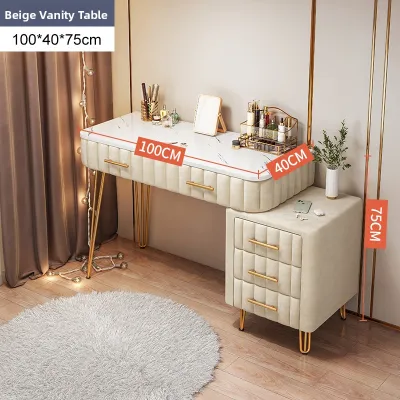
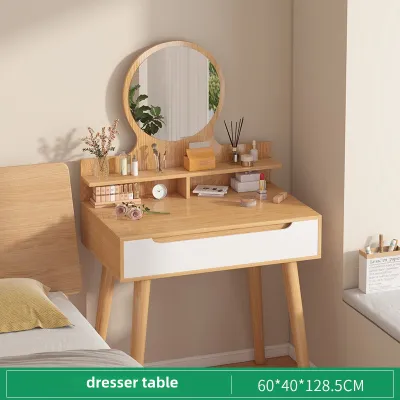

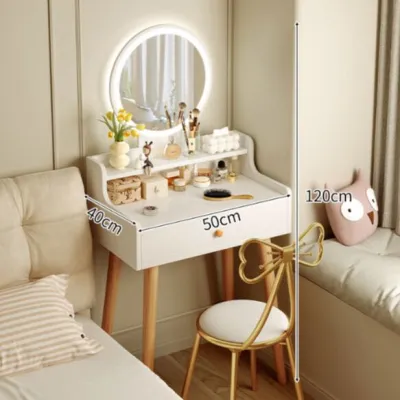
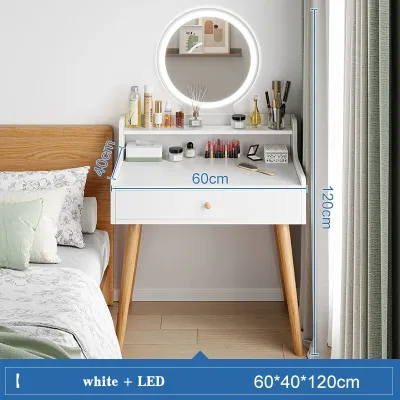
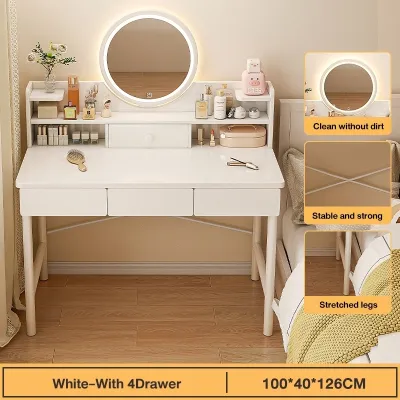
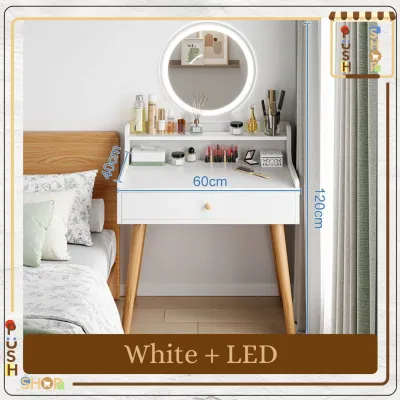
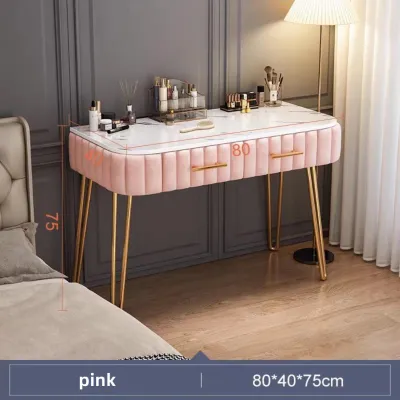
Prices are valid at publication and may change. Please refer to the product page for the latest price.
Finally, plan the delivery route from the entrance of your home to the bedroom. Measure the widths of your front door, hallway corridors, stairwells, and the bedroom doorway itself. If you live in a high-rise condominium, check the interior dimensions of the service elevator and the clearance of tight corridor corners. Ensuring the packaged furniture can physically navigate these passages prevents delivery failures and potential damage to your walls or the product.
Choosing Minimalist Designs That Maximize Storage
To maintain a clean, uncluttered look in a small bedroom, look for minimalist designs that hide cosmetics, skincare products, and accessories out of sight. Wall-mounted floating vanities are highly effective for tight spaces because they leave the floor underneath completely clear. This open floor area can be used to tuck away a small stool or storage basket, creating a visual illusion of more space. Alternatively, slim-profile freestanding units with narrow legs and shallow depths offer stability while maintaining a light, airy presence.

Vertical storage configurations are excellent for maximizing utility without consuming additional floor space. Look for dressing tables that feature integrated vertical shelving, tall and narrow side cabinets, or pegboards mounted directly above the table surface. These designs allow you to store taller bottles, hair styling tools, and daily essentials within arm’s reach while keeping the main tabletop clear of clutter.
Multi-functional furniture pieces provide double the utility in a single footprint. Consider a vanity with a fold-down or flip-top mirror mechanism; when the mirror is closed, the unit functions as a sleek writing desk or laptop station, and when opened, it reveals deep, compartmentalized storage for makeup and jewelry. Built-in dividers, shallow drawers, and hidden side compartments are invaluable features that keep small items organized, preventing the chaotic pile-up that often plagues smaller vanity surfaces.
Matching Dimensions and Proportions to Your Room
Achieving a balanced look requires aligning the dressing table’s dimensions with both your physical needs and the scale of your bedroom. Begin by determining the minimum usable depth you require for daily tasks. While standard desks are often deep, a dedicated minimalist vanity can be much shallower, often requiring only enough surface area to hold a mirror, a few daily cosmetics, and a small organizer. Ensure the depth is sufficient for your comfort but shallow enough to keep walkways clear.
Balance the overall width of the vanity against the available wall space to prevent the room from looking overcrowded. A vanity that is too wide will dominate the wall and make adjacent furniture, like the bed or wardrobe, feel squeezed. If you are working with an extremely narrow niche or corner, look for specialized corner vanities that utilize otherwise dead space while keeping the center of the room open.
Ergonomics should not be sacrificed for size. Verify that the height of the vanity top aligns comfortably with your seating. If you plan to use a stool that tucks completely under the table when not in use, measure the clearance between the underside of the vanity drawer and the top of the stool. This ensures your knees have adequate room when seated, and the stool can be fully concealed to save floor space when your grooming routine is finished.
Reducing Visual Weight with Finishes and Mirrors
The visual weight of a piece of furniture—how heavy or bulky it appears to the eye—greatly influences how spacious a room feels. In small bedrooms, choosing light-reflecting finishes can make the area feel brighter and more open. Light wood tones, soft whites, and pastel matte surfaces work exceptionally well in tropical climates, reflecting natural light and blending seamlessly with light-colored walls. If you prefer darker tones, ensure the room has sufficient lighting to prevent the vanity corner from looking like a dark, heavy shadow.
The choice of mirror plays a critical role in reducing visual bulk. Frameless mirrors or those with ultra-slim metal frames create a clean, modern look that expands the room’s visual boundaries. A large, well-placed mirror reflects the opposite side of the bedroom, making the entire space feel twice its actual size. For an ultra-minimalist approach, consider a wall-mounted mirror separate from the table, which keeps the tabletop completely free of support brackets.
Because a dressing table is exposed to liquid foundations, toners, and daily moisture, verifying the durability of the surface finish is essential. In humid tropical environments like the Philippines, look for surfaces with moisture-resistant laminates or sealed finishes that prevent warping, bubbling, or peeling. Check the manufacturer’s care instructions to ensure the material can be easily wiped clean with a damp cloth without degrading the protective coating over time.
Verifying Installation and Safety Requirements
Ensuring your dressing table is securely installed is vital for safety, especially in compact spaces where you are more likely to bump into furniture. For floating or wall-mounted designs, carefully review the manufacturer’s specified weight limits and mounting instructions. Never exceed the recommended load capacity, as overloading the unit with heavy cosmetic organizers or leaning on the edge can compromise the wall anchors and cause the unit to fall.
The type of wall in your bedroom determines the installation method and hardware required. Many homes in the Philippines feature concrete or concrete hollow block walls, which require a masonry drill bit, heavy-duty plastic wall plugs, or concrete anchors to secure heavy items. If your room has drywall partitions, you must locate the wooden or metal wall studs to secure the mounting brackets, or use specialized toggle bolts if mounting directly to the drywall sheet. If you are unsure of your wall’s structural integrity or lack the necessary tools, consulting a professional installer is highly recommended.
Finally, plan your cable management before finalizing the vanity setup. If you use lighted mirrors, hair dryers, or straighteners, position the dressing table near an electrical outlet to avoid running extension cords across walkways, which creates a serious tripping hazard. Use adhesive cable clips or under-desk cable trays to keep power cords organized and hidden from view, maintaining the clean, uncluttered aesthetic of your minimalist bedroom.
Frequently Asked Questions (FAQ)
Can I use a regular desk as a minimalist dressing table?
Yes, you can repurpose a regular desk, but you must consider the trade-offs in depth and storage. Standard writing or computer desks are typically deeper than dedicated dressing tables, which can eat into valuable floor space in a small bedroom. Additionally, standard desks often lack the shallow, compartmentalized drawers designed specifically for small cosmetic items, leading to cluttered drawer interiors. To make a regular desk work, look for a slim console table style and add customizable acrylic organizers, tabletop mirrors, or under-desk adhesive drawers to mimic the functionality of a dedicated vanity.
How do I prevent a floating vanity from damaging my wall?
Preventing damage to your wall starts with choosing the correct mounting hardware for your specific wall material. For concrete walls, ensure you drill precise holes matching the diameter of your masonry anchors to prevent loose fitting. For drywall, always attempt to secure the main mounting brackets directly into the wall studs for maximum load-bearing capacity. Avoid using standard plastic drywall anchors for heavy floating units, as they can pull out over time under constant downward pressure. If you notice any cracking, sagging, or movement, immediately remove the weight from the vanity and consult a professional carpenter or contractor to reinforce the wall support.
Community discussion
Share your experience or ask a question. Comments are reviewed before publication.