
Finding the right bedside table for a compact bedroom in the Philippines requires balancing limited floor space with daily convenience. In tight layouts, a traditional fixed nightstand often blocks wardrobe doors, restricts walkway clearance, or limits bed placement. A movable bedside table solves these issues by allowing you to slide, roll, or fold the surface away when it is not in use. To choose the best option, you must evaluate the table’s base clearance, wheel or glide design, and material durability against local environmental factors like high humidity.
Key Selection Criteria for Compact Spaces
When space is at a premium, the physical footprint of your furniture dictates the flow of the entire room. A standard bedside table sits permanently next to the bed, requiring a dedicated block of floor space that cannot be used for anything else. In contrast, a movable bedside table allows you to reclaim that space when the table is not active. The key is to look for a design where the base footprint is smaller than the usable tabletop surface, or where the base can slide under other furniture to minimize its physical presence.
Walkway clearance is another critical factor in small bedrooms. If your bed is positioned close to a closet or a doorway, a fixed table can create a tight bottleneck or prevent doors from opening fully. By selecting a table with smooth-rolling casters or lightweight frames, you can easily push the unit aside to access your wardrobe or step out of the room. This flexibility is especially valuable in studio apartments and compact condominium units where every square meter must serve multiple purposes.
Products mentioned in this guide
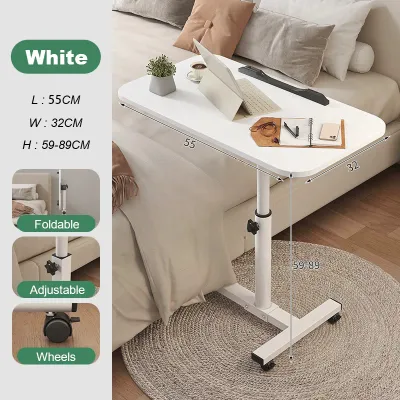
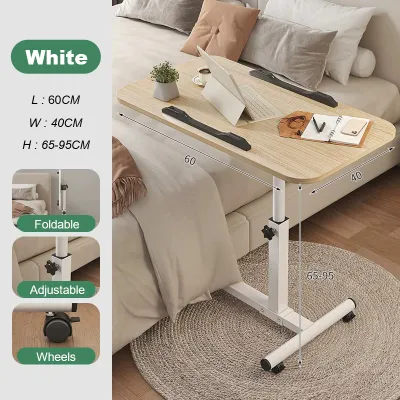
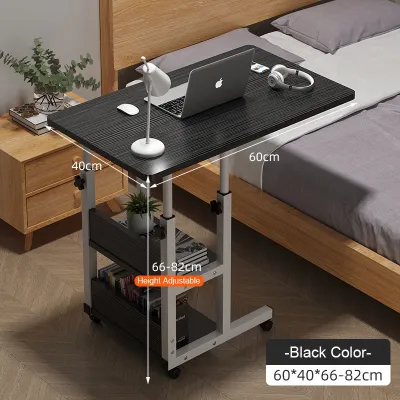
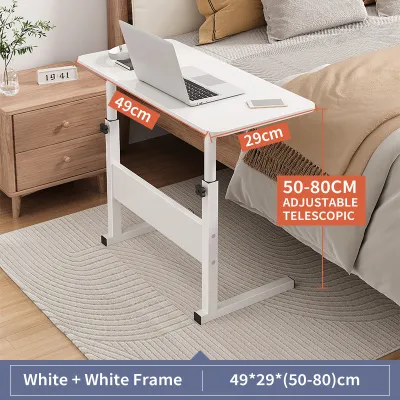
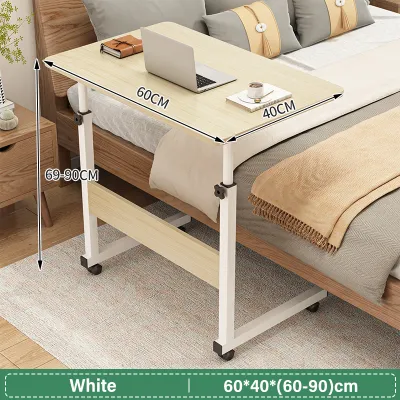
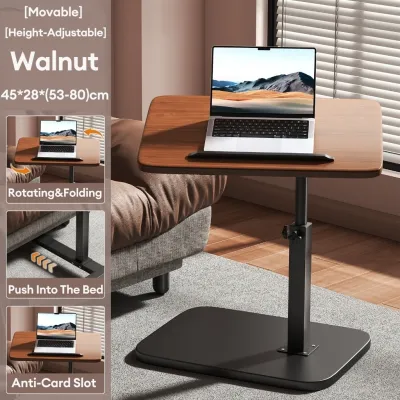
Prices are valid at publication and may change. Please refer to the product page for the latest price.
Mobility mechanisms vary widely, and the right choice depends on how often you plan to move the table. Casters, or small wheels, offer the highest level of mobility, allowing you to roll the table with a gentle push. If you choose a wheeled model, look for casters that rotate 360 degrees for easy maneuvering in tight corners, and ensure at least two of the wheels have reliable locking tabs to keep the table stable when parked. For carpeted floors or situations where you want a lower profile, smooth glides or protective felt pads are a better alternative, though they require a bit more effort to slide.
Multi-functionality is the ultimate space-saver in a compact bedroom. Many movable bedside tables feature adjustable height settings, allowing them to transition from a low nightstand to a laptop desk or a breakfast tray. Some designs incorporate built-in storage shelves, fabric pockets, or foldable leaves that can be expanded when you need extra surface area and tucked away when you do not. Investing in a multi-functional piece reduces the need for additional furniture, keeping your bedroom open and clutter-free.
Types of Movable Bedside Tables for Tight Layouts
Understanding the different structural designs of movable bedside tables will help you choose the one that best fits your room’s layout and your daily habits. C-tables, named for their distinct C-shaped profile, are among the most popular choices for tight spaces. These tables feature a cantilevered top supported by a single-sided vertical frame that connects to a flat base. This design allows the base to slide directly under your bed frame or sofa, bringing the tabletop over your mattress or lap without taking up any side floor space.

Before purchasing a C-table, you must measure the clearance under your bed frame. Many modern platform beds sit flush against the floor, leaving no gap for a table base to slide underneath. If your bed frame has legs, measure the height of the gap from the floor to the bottom of the frame to ensure the table’s base can slide in smoothly. Additionally, check the thickness of the table’s base, including any wheels or glides, to guarantee a seamless fit.
Rolling carts and tiered trolleys offer an excellent alternative for those who need more storage. Typically constructed with two or three open shelves, these utility carts provide ample vertical storage for books, chargers, water bottles, and personal care items. Because they roll on four casters, you can easily wheel the entire cart to another room when cleaning or rearranging. To ensure safety, verify that the cart features sturdy guardrails or deep baskets to prevent items from sliding off when the cart is in motion.
Nesting and foldable side tables are ideal for highly flexible spaces or guest bedrooms. Nesting tables come in sets of two or three graduated sizes that slide completely underneath one another, allowing you to expand your surface area when guests visit and tuck them away into a single footprint afterward. Foldable tables can be collapsed completely flat and stored behind a door, under the bed, or in a closet when not in use. When evaluating foldable designs, pay close attention to the hinge mechanisms and joint stability, as cheap hardware can wear out quickly and cause the table to wobble.
Building Your Shortlist: Dimensions, Weight, and Mobility Checks
To build a practical shortlist of potential bedside tables, you must take precise measurements of your bedroom’s layout. Start by measuring the physical gap between the edge of your mattress and the nearest wall or piece of furniture. This measurement represents the maximum width your bedside table can have if it is to sit permanently beside the bed. If the gap is exceptionally narrow—under 30 centimeters—a standard table will not fit, making a slide-under C-table or a folding tray your best option.
Next, measure the height of your mattress from the floor. For maximum comfort, your bedside table should sit roughly level with or slightly above the top of your mattress. If the table is too low, you will have to reach down awkwardly in the dark; if it is too high, you risk bumping your head or arms against the corners. If you share the bed with a partner or use mattresses of varying thicknesses, an adjustable-height table offers the versatility to match different heights perfectly.
Balancing the table’s weight with its weight capacity is crucial for safety and ease of use. A table that is too heavy will be difficult to roll or lift, defeating the purpose of a mobile design. However, an ultra-lightweight table can easily tip over if you place a heavy lamp, a stack of books, or a laptop on its edge. Look for a table with a low center of gravity, where the base is constructed from heavier materials like steel or solid wood, while the upper shelves are made of lighter materials. Always check the manufacturer’s specified weight limits for both the tabletop and individual shelves when planning your budget in ₱.
Floor protection is a critical consideration that is often overlooked. In the Philippines, bedroom floors are commonly finished with ceramic tiles, polished concrete, hardwood, or vinyl planks. Hard plastic wheels can easily scratch delicate wood or vinyl surfaces and can make a loud, disruptive scraping noise on ceramic tiles. For smooth, quiet movement, look for casters made of soft polyurethane or rubber. If your bedroom has tiled floors, ensure the wheels are large enough to roll smoothly over grout lines without getting stuck or causing the table to jar.
Pre-Purchase Verification and Assembly Considerations
Before finalizing your purchase from an online marketplace or local furniture retailer, you must verify several logistical and physical details. First, consider how the table will be delivered. Most movable bedside tables are shipped flat-packed to save on shipping costs and prevent damage during transit. Review the package dimensions to ensure they can easily clear your home’s entry points, including narrow hallways, tight stairwells, or condominium elevators.
Once the package arrives, proper assembly is vital to the table’s structural integrity and safety. Carefully read the manufacturer’s assembly instructions and verify that all necessary hardware, screws, and tools are included in the box. When assembling the table, ensure all joints are tightened securely, but avoid over-tightening screws into engineered wood, as this can strip the pre-drilled holes and weaken the frame. If the table features adjustable parts or folding joints, test their movement several times to ensure they operate smoothly without catching.
Stability is a primary safety concern, especially for tall, narrow, or cantilevered designs. A top-heavy table can easily tip over if bumped, posing a risk to pets, children, or nearby electronics. Check the base-to-height ratio of the table; a wider, heavier base provides significantly more stability than a narrow one. If you plan to place heavy items on the table, look for designs that feature a wide H-shaped or U-shaped base rather than a single central pedestal.
Finally, pay close attention to the materials used in relation to the local climate. The tropical climate of the Philippines brings high humidity and moisture, which can cause low-grade engineered wood (such as untreated particleboard or MDF) to swell, warp, or develop mold over time. To ensure longevity, look for tables constructed with moisture-resistant materials, such as powder-coated steel frames, solid bamboo, or high-pressure laminates with sealed edges. These materials are much easier to wipe clean and will withstand the humid conditions far better than untreated alternatives.
Frequently Asked Questions (FAQ)
Can I use a rolling bedside table on a thick rug?
Yes, you can use a rolling bedside table on a rug, but its performance depends heavily on the wheel design and the rug’s pile height. Small, narrow plastic casters tend to sink into thick, plush rugs, making the table difficult to roll and increasing the risk of tipping. If your bedroom has a thick rug, look for a table equipped with larger wheels—ideally two inches or more in diameter—made of hard rubber or heavy-duty plastic, which can glide over the fibers more easily. Alternatively, you can replace the wheels with wide, smooth glides, or position the table so that its wheels rest on the hard floor just off the edge of the rug.
How do I prevent a lightweight movable table from tipping over?
To prevent a lightweight table from tipping, you should always load it strategically by placing the heaviest items on the lowest shelf or base. This lowers the table’s center of gravity, making it much more stable. Avoid placing heavy objects, such as large water pitchers or heavy laptops, on the outer edges of cantilevered tops or high shelves. When purchasing, check the manufacturer’s specifications for stability ratings and weight limits. If the table is top-heavy by design and you do not need to move it constantly, consider using the manufacturer-provided anti-tip straps or wall anchors to secure it to the wall when it is parked in its primary position.
Community discussion
Share your experience or ask a question. Comments are reviewed before publication.