
Finding the perfect bedside companion requires balancing security, modern connectivity, and physical space. A nightstand featuring a hidden drawer, integrated charging ports, and organized storage solves multiple bedroom challenges at once. It keeps your most valuable items out of sight, eliminates tangled cords on your tabletop, and ensures your nighttime essentials remain within arm’s reach. To make the right choice, you must look beyond surface aesthetics and evaluate the mechanical integrity of the secret compartment, the safety of the integrated electrical components, and the physical dimensions of your bedroom layout.
Selecting this specialized piece of furniture involves understanding how different materials and mechanisms perform over time. Because this item combines structural woodwork with active electrical wiring, safety and durability are just as important as visual appeal. By focusing on verifiable construction details, realistic clearance measurements, and your specific daily habits, you can find a bedside table that offers both peace of mind and daily convenience.
Key Features to Evaluate: Hidden Drawers, Power, and Storage
The defining feature of a security-focused nightstand is its hidden compartment. Manufacturers use several mechanisms to conceal these spaces, ranging from double-bottom drawers and magnetic latches to electronic RFID (Radio Frequency Identification) locks. Magnetic locks use a detached magnetic key that you place over a specific, unmarked spot on the wood surface to release the latch. RFID locks offer a seamless, modern alternative, opening with a key card or fob, though they require battery power to operate. Mechanical combination locks or physical keys are highly reliable but are often visible, which may compromise the “secret” nature of the drawer. When evaluating these options, check the smoothness of the drawer slides; ball-bearing slides are preferable because they prevent sticking and allow the hidden compartment to glide open quietly without drawing attention.
Products mentioned in this guide




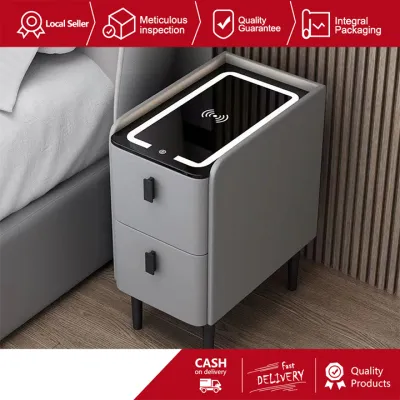

Prices are valid at publication and may change. Please refer to the product page for the latest price.
Integrated power modules bring convenience but require careful scrutiny to ensure safety. Look for a nightstand that offers a mix of USB-A, USB-C, and standard AC outlets to accommodate both legacy devices and modern fast-charging smartphones or smartwatches. Because these ports are built directly into the wood frame, they must feature built-in surge protection to safeguard your expensive electronics from voltage spikes. In tropical regions where high humidity and dust are common, look for power modules that feature sliding covers or are mounted vertically inside an open shelf rather than facing upward on the top surface. Upward-facing outlets easily collect dust, lint, and accidental spills, which can create electrical hazards over time.
Organized storage is what keeps your bedside from becoming cluttered. A well-designed nightstand balances open shelves, standard drawers, and dedicated compartments. Open shelves are ideal for items you grab frequently, such as books or a glass of water, while standard drawers keep personal items out of sight. Look for drawers that include built-in dividers or shallow trays, which prevent smaller items like reading glasses, medications, and charging cables from rolling around. The hidden drawer itself should have sufficient internal depth to hold your specific valuables, whether those are important documents, personal defense items, or spare cash, without forcing you to cram them inside and risk jamming the locking mechanism.
Sizing, Clearance, and Bedroom Fit
Before purchasing any bedside furniture, you must ensure its height aligns comfortably with your bed. Ideally, the top surface of the nightstand should sit level with or up to two inches higher than the top of your mattress. If the table is too high, you risk bumping your elbows or head when reaching for items in the dark; if it is too low, reaching down to turn off an alarm or grab a drink can strain your back. Measure from the floor to the top of your mattress, including any mattress toppers, and use this exact measurement as your primary guide when filtering product specifications.

Physical footprint and clearance are critical, especially in compact bedrooms or urban apartments where space is limited. Measure the available width and depth on either side of your bed frame, leaving at least a few inches of breathing room between the nightstand and the mattress to allow for tucking in bedsheets. Additionally, map out the walkway space around the bed. A nightstand that is too deep can obstruct the path to the closet or bathroom, creating a constant tripping hazard in a darkened room.
Do not forget to calculate the clearance required for drawer and door swings. Both standard drawers and hidden compartments need sufficient space to open fully without striking the bed frame, nearby wardrobe doors, or adjacent walls. If your secret drawer is located on the side of the nightstand, ensure there is enough clearance between the table and the wall to access the compartment comfortably. If the hidden space is accessed via a sliding top panel, verify that lamps, picture frames, or decorative items placed on top will not block the sliding mechanism or be knocked over when you open it.
Build Quality, Materials, and Cable Management
When assessing durability, do not rely solely on material names like “solid wood” or “hardwood finish.” Instead, focus on the actual joint construction and surface treatments. High-quality nightstands utilize dovetail or mortise-and-tenon joints in the drawers, which withstand years of pulling and pushing far better than simple glued or stapled joints. If the nightstand is made of engineered wood, such as MDF or particleboard, check that all edges are sealed with thick PVC edge banding. Unsealed edges are highly susceptible to moisture absorption, which causes the material to swell, warp, and eventually ruin the alignment of both standard and secret drawers.
Stability is directly tied to the base design and weight distribution of the furniture. A nightstand with a wide, solid plinth base or low, sturdy legs is inherently more stable than one with tall, spindly legs. This stability is crucial when you have multiple drawers, as pulling out a heavily loaded top drawer can cause a poorly balanced table to tip forward. Always check the manufacturer’s specified weight limits for both the top surface and the individual drawers. If you plan to place heavy items, such as a large ceramic lamp or a stack of hardcover books, on top, ensure the frame is rated to support that load without bowing.
Effective cable management is what separates a truly functional charging nightstand from a cluttered one. Look for furniture designed with built-in grommets, rear cutouts, or dedicated channels that guide power cords cleanly from the wall outlet to the nightstand’s power strip. The main power cord of the nightstand should exit from the bottom or rear in a way that prevents it from being pinched against the wall or baseboard. Inside the storage compartments, look for small routing holes that allow you to run charging cables directly into drawers, keeping your devices plugged in and charging out of sight while you sleep.
Matching the Nightstand to Your Nighttime Routine
Your choice of nightstand should directly reflect your personal security needs and daily habits. If you share your home with roommates, frequent guests, or service workers, a lockable secret drawer provides a secure zone for sensitive documents, jewelry, or prescription medications. However, if your primary goal is simply to keep clutter out of sight rather than securing high-value items, a simple magnetic latch or a push-to-open hidden compartment without a lock may be more convenient, as it eliminates the hassle of managing keys or replacing electronic batteries.
Consider your device charging habits to determine the best power configuration. If you prefer a minimalist look and own compatible devices, a nightstand with an integrated wireless charging pad built directly into the top surface can eliminate cords entirely. However, keep in mind that wireless charging can generate noticeable heat, which may be amplified in warm, tropical environments. If you charge multiple high-power devices simultaneously, such as a laptop, tablet, and phone, a multi-port hub with dedicated USB-C Power Delivery (PD) ports and standard AC outlets will serve you better than a basic low-wattage USB strip.
Household safety is a paramount consideration if young children or pets share your bedroom. Tall, narrow nightstands present a significant tip-over risk if a child attempts to climb them or pull open the drawers. Look for furniture that includes wall-anchoring hardware, and use it to secure the unit firmly to the wall studs. Additionally, inspect the nightstand for sharp corners or protruding metal hardware at toddler height. Choosing a model with rounded edges or recessed drawer pulls can prevent painful bumps and scrapes during active daytime play.
Pre-Purchase Checklist and Verification Steps
Before finalizing your purchase from any online marketplace or local furniture retailer, run through a systematic verification process to ensure the product meets your expectations.
First, perform an electrical safety check on the integrated power components. Verify that the built-in power strip or charging module carries recognized safety certification marks on its product label. These marks indicate that the electrical components have undergone rigorous testing for fire safety, insulation quality, and shock prevention. Avoid purchasing nightstands that use unbranded, uncertified power modules, as low-quality wiring poses a genuine fire hazard in close proximity to bedding and wooden furniture.
Second, double-check all physical dimensions. Use a metal measuring tape to confirm the height, width, and depth of your bedside space, and compare these numbers directly against the retailer’s detailed dimension diagram. Do not rely on product photos alone, as clever staging can make a small nightstand appear much larger than it actually is. Ensure you also measure your bedroom doorway, hallway, and any stairwells or elevator doors to guarantee the packaged furniture can be delivered into your room without getting stuck.
Finally, carefully review the retailer’s policies and assembly requirements. Many nightstands with complex hidden compartments and integrated electronics require extensive assembly. Read through customer feedback to see if other buyers found the instructions clear and if all necessary hardware was included. Check the shipping weight of the package; solid, high-quality furniture is naturally heavier, which may affect shipping costs or require you to arrange for assistance on delivery day. Lastly, understand the return policy, specifically whether the retailer covers return shipping if the unit arrives damaged or if the electronic components fail to function out of the box.
Frequently Asked Questions (FAQ)
Do secret drawers compromise the structural stability of a nightstand?
No, a properly engineered secret drawer does not compromise the structural stability of a nightstand. High-quality manufacturers design these hidden compartments within the existing dead space of the frame, reinforcing the surrounding structure with internal bracing and solid back panels. To ensure stability, check the drawer slide ratings and avoid overloading the hidden compartment beyond the manufacturer’s specified weight limits. If the nightstand uses cheap, thin fiberboard for its internal dividers, the structure may sag over time, which can cause the secret compartment to stick or fail to open.
What electrical safety marks should I look for on built-in charging ports?
When inspecting the built-in charging ports or power strip, look for recognized national or international safety certification marks printed directly on the module’s label. These marks confirm that the electrical assembly has been tested for overcurrent protection, short-circuit prevention, and heat resistance. Avoid using unverified power modules that lack clear safety labeling, as they may use substandard wiring that cannot handle the electrical load of modern devices, increasing the risk of overheating or electrical fires.
Can I add aftermarket charging ports to a regular side table?
Yes, you can add aftermarket charging ports to a standard side table, provided you have the correct tools and the table’s material can support the modification. Before drilling any holes for grommets or recessed power strips, verify the thickness and composition of the wood; solid wood and high-density MDF drill cleanly, whereas cheap hollow-core tables or thin particleboard may crumble or split. Always measure twice before cutting, ensure the power strip you install is rated for furniture use, and stop immediately if you suspect the cut will weaken the load-bearing legs or joints of the table.
Community discussion
Share your experience or ask a question. Comments are reviewed before publication.